Appaloosa colour question ?

The_snoopster

Well-Known Member
Joined
5 September 2009
Messages
3,968
Location
shropshire
Visit site
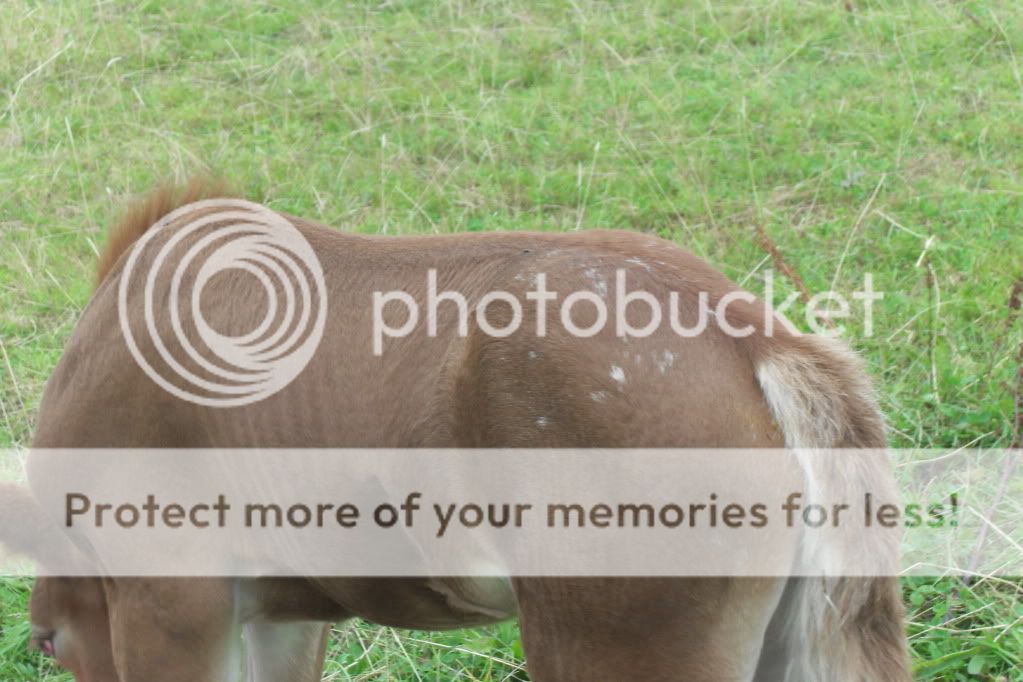
Could anyone answer the question why some appaloosa foals have a completely different coat colour/pattern to their adult coat. My filly was born with a solid chestnut coat with about 5 tiny white spots on her bum, now at the age of 14 months she has lots of different shaped spots and what looks like a white stripe down her back. She is roaning out all over especially on her face, and is developing freckles around her eyes.
At what age will I know exactly what type of spotty coat pattern she will have, if she continues to roan out will her white spots fade into the roaning or will she develope chestnut spots over a much lighter coat ?
Why are some spotties born with pretty much the coat colour they will have has a adult, and some constantly changing (roaning out,spotting out) at a later age.
Sorry for all the questions but if I dont ask I shall never know :D
 
I've posted appy coat colour questions and had no response before, so I hope someone knowledgeable replies! :D Mine came to me with just spotty patches on his hips. A year ish down the line and he has a proper blanket and the rest of his coat is very roany. Hes rising 4yr old and his eyes have developed more sclerea (sp?) on the last few months.
 
By the sounds of it, they are both varnishing out.
So their colour would be "base colour" varnish roan.
Varnish roan is completely different from 'normal' roan, and caused by different genes.

There are two genes for spots - LP and PATN.

LP basically causes a malfunction that stops pigment production in the hair, causing it to go white.
If a horse is Lplp (heterozygous for LP), parts can 'ignore/overcome' it, meaning a spotty appy.
If a horse is LpLp (homozygous for LP), everything goes white.

PATN basically controls how big an area LP can affect.
If there is no PATN genes however, LP causes what are called appy characteristics - mottled skin, striped hooves and white sclera. Varnish roans are also a characteristic, those with spots will be Lplp, those without LpLp.

The biggest PATN, PATN1, allows LP to be whole body (head to feet).
Lplp PATN1- is a leopard.
LpLp PATN1- is a fewspot.

The other PATNs are considered 'less powerful', as they cause a smaller area of spots. So a blanket appaloosa is going to have a smaller PATN gene then a leopard.
Lplp PATN - is a blanket.
LpLp PATN - is snow cap.

The size of the blanket/snow cap will depend on what PATN gene they have, and you'll see it be described as PATN2, which is a term that covers every PATN gene that isn't PATN1.

For PATN to work however, you must have LP, else it does nothing.

Random things:
-Being heterozygous for PATN1 is thought to be what's called extended blankets and/or near leopards. Being homozygous is thought to be full leopards. But you have to take into account the next two points, which can screw things.
-Being red based, having a sabino gene or testosterone will increase white expression/the rate of which they shred/show/varnish.
-Being black based, or a mare, will suppress it. The biggest change I know about is a filly born with a small blanket, shredding out to be a near leopard.
(not taking into account the other theorized suppression genes. )
-There is now a test for LP.


I'm hoping I got that correct to the most recent knowledge/research, a lot is still unknown.
I'll add photo examples in the morning :)
 
This is my filly at 1 day old
SDC10539.jpg

Think she was around 2 months on this one
SDC10644.jpg

around the yearling stage
2a595dbf.jpg

this was taken around 8 weeks ago so she would be around 13 months old
3506d124.jpg

and this was around 3 weeks ago
10d00aa5.jpg

She does have stripey hooves developing and anywhere you can see skin it is very speckly and spotty. Sorry for the piccy overload, I love her no matter what colour she ends up but find it really interesting about all the different colour patterns appys can and do have. Thankyou for the info, must admit I may need to read it several times to actually understand it all :D
 
It was Dottys face that seemed to start roaning out first, closely followed by the rest of him, and once it started to happen it seemed to be quite quick. I wonder if your filly will do the same?
 
Daisy started to get a tiny amount of roaning as soon as she lost her foal coat, but as she got this years winter coat its going mental with white hairs, and developing spots where she had none before. :confused:
 
I'm not sure how well you can see, but Dottys white bits over his hips and loin have got bigger and crept forward. And he had almost no roaning when I bought him as a 2 yr old. I dont know what he looked like as a foal, but I would imagine he just had a smallish white bit on his bum
 
Yes the varnish gene, there are two types of varnish the slow progressive with ageing and the rapid aggressive varnish that happens in a couple of years.

I do not hold wioth the Lp model it does far too many U turns when something does not fit the theory.

I beleive that yes there is a "breed gene" that gives basic skin mottling, this can be progressive and start with no visible mottling on the horse, mottling can actually be internal with many spotted horses having stripped teeth. Mottling causes this in the same way it causes the stripy hooves both result from mottled skin.

There are several levels of minimal spotty markings, there are true solids who have not inherited the breed gene for mottling, they will show no colour and cannot produce it, they are an ordinary horse.
There are “Non Characteristics”, who show no Characteristics externally but who are capable of producing minimally marked spotted offspring to solid outcrosses with the right genetic combination for white modifiers.

Then there are Characteristics, who have mottled skin etc but no coat pattern as such, they have no varnish gene so will not colour out though they may develop more pink skin as they get older.
There are some that just have the base gene plus the varnish and they will be born solid and will “colour” out as you describe. Some will colour out with spots being revealed if they have inherited the leopard pattern and some will just get whiter and may have the occasional spot, these will eventually look like a “Fewspot” and are often mistakenly described as one.

A fewspot is as described, born white ALL over with a few spots. It does not have any colour that fades on it.


The thing you need to watch for is white hairs appearing in the coat, this is the tell for varnish, you may start off with one or two but they will increase with each coat change and eventually they will spread faster. The presence of white skin around the eye (Sclera) and stripy hooves will improve your chance if they are present. I met a lady with a registered New Forest at a show, who was starting to colour out as a five year old!!!

If you look in my pictures on my profile there are a series showing varnish at work on a near leopard of mine and a solid born filly who is now very white.
 
Thankyou for that K, so because my filly had white around her eyes and very spotty skin and some stripey hooves my chances of keeping some spots rather than just varnish out ?. I really dont mind what colour she ends up being, but all these appy genes facinate me , there is so much to learn:)
 
What was the colouring of the App parent ? It all depends on if the leopard pattern was passed on or just the varnish. The varnish can go slowly or fast, some will show spots underneath the varnish and some like one of mine don't. There are a load of pics of her on the Hihills FB page (Hihills Perfect Storm is the one). I don't beleive she has the leopard gene but just the varnish and she will get progressively whiter as she ages but her varnish is very rapid.
 
The sire is called Rainbow Jack from rainbow stud he is an appiano blue and white with black spots on the blue, dam is bay and white skewbald. I hoped for an unusual colour, although healthy mare foal was more important. She does have the most fantastic temprement and I am so pleased with my first and proberly only attempt at breeding, I have really started to get into the appy colour genes but its so confusing with the varnish gene lol the way some varnish out very quick, almost one coat change and they are a new colour, then others that take years.
 
Top