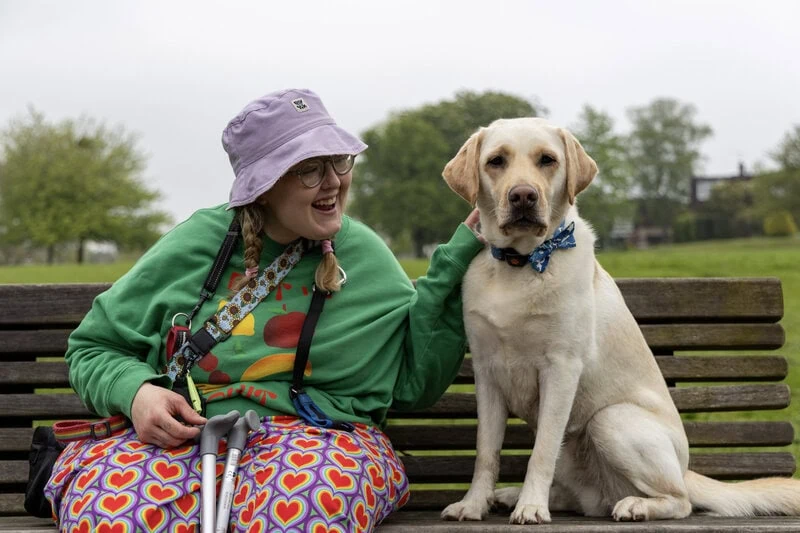
Assistance dog - can you owner train in conjunction with the support of an organisation? Anyone have knowledge in this area?

maya2008

Well-Known Member
Joined
10 August 2018
Messages
4,489
Visit site
Would be for a teen with autism to enable them to access more independence away from their family.

I don’t think their needs are desperate enough to qualify for a trained dog - hence wondering about schemes that support owners to select and train their own.

Tasks needed:
- regulation: identifying the tipping point and encouraging them to leave the situation while they can still think logically. Providing physical contact to help regulate in busy/crowded places to enable shopping, travelling independently.
- Reminders to eat/drink at appropriate times. They don’t really feel hunger/thirst cues accurately and will go all day on a piece of fruit if not reminded to eat.
- Alerting them to being unwell. Again, the physiological cues don’t register and they don’t feel unwell until so ill they can’t function. An alert to check their temperature or similar before they go out or to head home before it gets urgent.

Currently, the young person is still young enough that the parents/older siblings can do this for them. As they grow, they will want more of a ‘life’ away from their family but will need to access that safely. These needs will persist into adulthood and a dog would enable that independence. This is very much planning in advance, there are several years yet before such a dog would be needed.

So - does anyone know anything about this sort of thing? Could suggest organisations/information?
 
Yes, of know someone who uses a wheelchair has been in training with her dog(Lab x BC), dog has done brilliantly but they've just been told dog is too old to take the test.
It all seems ridiculous to me, as the wheelchair use has only become necessary recently and the dog was already a family member.
Sorry I don't know which organisation but they were quite happy to provide the training. Dog is nearly 6
 
Theres no official training or recognition which is ridiculous, but thats a rant for another day!

These are the people you need to speak to

 
I looked at this the other day, £15k for a trained ASD support dog 😳

I don’t even think it’s the money. It’s a lot, but to pay that much you still have to get approved and to the top of the list. Wait lists from what I can see are 2+ years, highest need prioritised due to lack of capacity.
 
Would definitely recommend looking into the links above. Would say you’d need to be able to be quite careful in your dog selection from a temperament POV as not all dogs will deal well with the pressure of having to be the decision maker re judging when to leave situations when he’s becoming stressed / will be able to deal with the person they’re attached to feeling like that & them having to be the one to deal with it. (Having a “get me out of here” cue to help him find the nearest exit, similar to how some guide dogs can guide to specific places may be a bit easier but may not work for him if he struggles with recognising when he’s getting over threshold). I suppose what I’m trying to say is that you don’t want a dog who is unconfident and prone to anxiety themselves but rather one that is calm, confident & outgoing. Would also say a medium to large sized dog would probably be more use in that kind of situation than a small one as they’ll be better able to physically clear him a bit of a path through crowds / will be less likely to be stepped on (also will be easier for them to physically pull / guide him along)

Would guess the training for reminding to eat/ drink & to alerting him to being unwell would be similar to medical alert dogs as guessing you’d be wanting dog to pick up that his BG is getting low / he’s getting dehydrated? (Alternatively would likely be possible to alert at certain times of day to remind to eat / drink/ even to fetch something from the fridge / cupboard if alert being ignored with the right setup) Unsure re how possible it is to train for vague unwellness but you could probably teach to alert for specific clinical signs that you know he struggles to recognise? Looks like they do run some kind of program for dogs you already own but unsure of ins & outs / whether he’d qualify

 
Last edited:
I’d think very carefully about the ethics of this sort of set up. It’s a huge pressure to put on an animal. What happens when it’s sick and who makes the call when it needs to retire. Dealing with the attention of having a dog in ‘non dog’ places and inevitable questioning is unlikely to be easy for the teen to deal with.
 
I’d think very carefully about the ethics of this sort of set up. It’s a huge pressure to put on an animal. What happens when it’s sick and who makes the call when it needs to retire. Dealing with the attention of having a dog in ‘non dog’ places and inevitable questioning is unlikely to be easy for the teen to deal with.
Are you saying dogs shouldn’t be assistance dogs at all? Obviously when sick they don’t work - and their human cares for them. Not that any of the dogs we have had have been sick. Closest I could imagine would be a hurt paw or a bee sting. They retire and get to stay home when they get old - obviously - with the added advantage of knowing they can stay with their family when that time comes.

In terms of would a dog cope? My mum’s dog took on a similar role voluntarily as her dementia worsened. So did my friend’s dad’s dog. Both would guide their owner home, remind them to eat, bring them to a family member if they were particularly confused. One was a collie/gsd mix, the other a cocker spaniel. Neither had any training. They chose to look after their human friends. My mum lived in a country where dogs can go into shops and cafes. So he went into town with her all his life.

In terms of would the teen cope with the attention of being different? They’re already different - having an animal companion is the only time they currently can interact with their peers fully. So around their own pets, they can meet with a friend and play, talk, be like anyone else. Without that companion they don’t do so well and they stand out, sadly, and cannot connect with others.

The base need is for alerting: to eat a meal, to leave a situation, to illness in its most obvious form - fever would do. The young person would probably ignore a watch alert, but they’re incredibly responsive to animals and would never say no, they put them first always. Hence thinking of a dog.
 
Dealing with the attention of having a dog in ‘non dog’ places and inevitable questioning is unlikely to be easy for the teen to deal with.

Actually thats a really good point. Floyds a medical detection dog for diabetes. I have very rarely taken him places as I need him overnight not during the day usually. Its not easy to manage. People want to fuss and coo over him and just generally make a nuisance of themselves. People challenge you about going in places even though they shouldnt. Floyds a literal saint in dog form and still remembers his training for working but I just dropped taking him places as I could manage without him and didnt want to put him in a situation where such a happy gregarious dog was getting conflicting signals from over excited people trying to interact with him.
 
The best 'detection dogs' IME are those who have grown up with a person and know when something is 'off'. As you have pointed out, a lot of dogs adapt with no formal training.

It also takes a very particular type of temperament and the training is long and hard and expensive and the dog becomes very wrapped up in the human's own stress/emotions, which isn't always good for the dog.

When my friend developed dementia, his dog became unpredictable and dangerous and bit several people (including me, he tore a hole in my trousers and I did nothing to warrant it).
The dog is now a much nicer person now he is living in a situation with much less stress and confusion and erratic behaviour.

I agree it IS a lot of pressure and stress for the dog, which is why assistance dogs are generally selectively bred from with very particular temperaments, but washing out still exists.

Pet dogs, show dogs, sport dogs, agility dogs, police dogs also undergo stress, some cope, some don't. It is something we need to acknowledge and accept, if we want to proceed with these things, even if the dog's job is something more 'noble'.
 
The best 'detection dogs' IME are those who have grown up with a person and know when something is 'off'. As you have pointed out, a lot of dogs adapt with no formal training.

It also takes a very particular type of temperament and the training is long and hard and expensive and the dog becomes very wrapped up in the human's own stress/emotions, which isn't always good for the dog.

Thats Floyd. He pretty much trained himself and we just refined it. But he worries about me all the time which I dont like, but cant do anything about. He is by nature very caring and nurturing, loves everyone and everything, raises puppies like a pro, and will make a bee line for anyone sad or not well. Its just part of his personality. Not sure how you assess that as an 8week old puppy though if it hasnt been bred for the job.

I routinely tell people not to get whippets as assistance dogs. They just dont tend to take to it. Floyd is a bit of a freak of nature and his help is very low key and limiited. He wouldnt cope if I needed more intensive help, it would be too much for him. If I tried to find another one like him I doubt I could either.

I orignally commented as I knew the details of the organistaion I posted about, but its given me a lot to think about, and quite possibly the topic of my masters dissertation 🤔
 
How does the dog retire whilst still living with the person it supports? I don’t think many cope very well with 24/7 companion with alerting, to being left home. Or does everyone just stay home once the dog is struggling? One of the assistance dogs I know is in this situation. Too arthritic to work but too bonded to stay home. Some guide dogs retire in situ, others change homes or go to family. Every element of their life is super controlled, the charity take great care to ensure the health and welfare of them. And yes, even they get sick sometimes!

I have zero interest in interacting with my peers in Tescos- I want to get in and out with the minimum human interaction possible. No calling before hand to check/risking quibbles with security as 50% don’t know the rules. No over enthusiastic children shouting doggy. Head down in and out thank you! Yes I’m fortunate that is an option for me, but honestly the assistance dog route wouldn’t be an option for me. Everyone with ASD is different and maybe that’ll help them thrive, but not simple as responds well to animals = responds well to an assistance dog day to day. I just wouldn’t shop in ‘real life’ if that was my only option.

One lady I know with a support dog ended up off work (usually works full time, dog comes too) for 6 weeks after a conference as she was so overwhelmed by the attention he got. He loved it without getting over excited, he’s very suited to the work. But that level of attention even with don’t pet me I’m working signs on the harness isn’t for everyone!

Even purpose bred assistance dogs have a high failure rate. Your 1 puppy may well turn into a wonderful assistance dog. But odds are against it from the outset, whatever experts you have in on the training.

There are great well adjusted assistance dogs out there that thrive in the work. Thousands probably. But I see far more stressed and anxious over bonded ones day to day in the real world. Some organisations acknowledge this. Others are sooner to tick the box and sign the form. I don’t know between the organisations just what I see day to day as an emergency vet and generally horsey/doggy person with AuDHD and pet dogs (that also come to work with me!).

Ps. Definitely do not get a doodle or poo.
 
Thats Floyd. He pretty much trained himself and we just refined it. But he worries about me all the time which I dont like, but cant do anything about. He is by nature very caring and nurturing, loves everyone and everything, raises puppies like a pro, and will make a bee line for anyone sad or not well. Its just part of his personality. Not sure how you assess that as an 8week old puppy though if it hasnt been bred for the job.

I routinely tell people not to get whippets as assistance dogs. They just dont tend to take to it. Floyd is a bit of a freak of nature and his help is very low key and limiited. He wouldnt cope if I needed more intensive help, it would be too much for him. If I tried to find another one like him I doubt I could either.

I orignally commented as I knew the details of the organistaion I posted about, but its given me a lot to think about, and quite possibly the topic of my masters dissertation 🤔
If you do your masters dissertation on the subject, can I please read it?!

There is a lot to think about and it's good that people are thinking about it.
First of all, dogs are amazing and can really enrich people's lives, whether as pets or assistance animals. I think I've ranted on here before, but assistance animal is a "real job", that an animal has to be trained for, which is only possible if it has the right temperament from the start. I think it's a shame that as far as I'm aware, there is no general recognition for assistance animals (aside from guide dogs) to officially differentiate them from pets. As to training your own assistance dog, there was a piece in the Times this morning about a teenager who has trained his dog as an assistance dog and was competing at Crufts.

However, I'm aware of studies that show that other species used in therapy, such as dolphins, show higher signs of stress after a session. Horses used for equi-therapy are also generally more stressed after a therapy session than after an RS lesson, despite therapy sessions normally being less physically taxing. As an aside, I also suspect individual horses may be more suited to different issues. I know an RS pony who used to carry a non-verbal autistic child with no issue. The same pony once tried to bite with intent a boy with developments delays. I have never seen that pony behave so aggressively before or since, but something about that particular boy really upset him.

For detection dogs, I suppose one of the issues is that they're always "on call". A guide dog is "off duty" when the harness comes off. I would be very curious to know if they differ in stress levels, health and longevity. I imagine it would also be complicated for a detection dog to retire, as they can't just switch their nose off.
 
I think it can be difficult to separate the effect of living with a human with a chronic condition vs being trained to alert/do tasks related to that condition.

For example I have a pet cat. She’s extremely laid back and sweet and does a fantastic job as unintentional emotional support cat for my ASD daughter. That job, unintended as it was, doesn’t cause her stress. She’s a happy, sociable cat who merrily bosses us around to get her own way. My dad coming to stay though, who has Parkinson’s, stresses her out beyond all belief. She rarely interacts with him and he loves cats - but she always loses weight by the end of his stay and will hide a lot. He can’t come with us to a good friend’s house either without shutting their dogs away, as his condition makes the dogs unpredictable and upset. Nothing he does at all. But they can smell the illness and see the tremors and it really unsettles them.

I also know a family with one of their members who has a long term pain condition which has caused anxiety and mental health impacts. Every pet animal they have had except for a Labrador has been affected by the presence of an in pain, anxious human.

I also know a lovely lady with anxiety and ADHD who sets off every horse she has ever met except for my adult New Forest (who is the pony equivalent of a Labrador!). Not just mine, ponies at riding schools, that she has met on holiday - they all become anxious and spooky around her. She’s really nice and loves horses. She literally does nothing wrong, just has this effect!

I don’t think animals can switch off their awareness of our health whether trained or not. My horse told me I was pregnant before I ever could have known. My cat now, childhood cats and dog always knew when someone was coming down with something. One of our old ponies used to be very good at sniffing out teenage sharers who needed to eat before they keeled over. I have had three New Forests who can regulate a human like a pro with deliberate intent. It’s partly why we always have multiple ponies - the next size up for my daughter needs to do that job too, and not every pony wants to or can do so.
 
I don’t think animals can switch off their awareness of our health whether trained or not. My horse told me I was pregnant before I ever could have known. My cat now, childhood cats and dog always knew when someone was coming down with something. One of our old ponies used to be very good at sniffing out teenage sharers who needed to eat before they keeled over. I have had three New Forests who can regulate a human like a pro with deliberate intent. It’s partly why we always have multiple ponies - the next size up for my daughter needs to do that job too, and not every pony wants to or can do so.

Its not the awareness, its the responsibility. My other dog is well aware, but as he doesnt have to do anything its less stressful for him. Floyd feels responsible and it worries him.
 
If you do your masters dissertation on the subject, can I please read it?!

Of course. Ive just about finished my undergrad one which is The Anthropomorphic Filter: Biological and Cultural Dimensions of Human Interpretation of Canine Signals. Its a biological anthropology diss, so takes the bio stuff and looks at it through a social science lens. Ive learnt a ton writing it. Dogs are amazing creatures!
 
Of course. Ive just about finished my undergrad one which is The Anthropomorphic Filter: Biological and Cultural Dimensions of Human Interpretation of Canine Signals. Its a biological anthropology diss, so takes the bio stuff and looks at it through a social science lens. Ive learnt a ton writing it. Dogs are amazing creatures!
Sounds really interesting, especially looking at the biological side from a different perspective.
 
Actually thats a really good point. Floyds a medical detection dog for diabetes. I have very rarely taken him places as I need him overnight not during the day usually. Its not easy to manage. People want to fuss and coo over him and just generally make a nuisance of themselves. People challenge you about going in places even though they shouldnt. Floyds a literal saint in dog form and still remembers his training for working but I just dropped taking him places as I could manage without him and didnt want to put him in a situation where such a happy gregarious dog was getting conflicting signals from over excited people trying to interact with him.
I think you need to go and live in Scotland. There are very few places, including shops, where you can't take a dog which means that they are unremarkable and so attract very little unwanted attention.
 
Top