Bites on horse

Horsegirl25

Well-Known Member
Joined
1 February 2022
Messages
418
Location
Scotland
Visit site
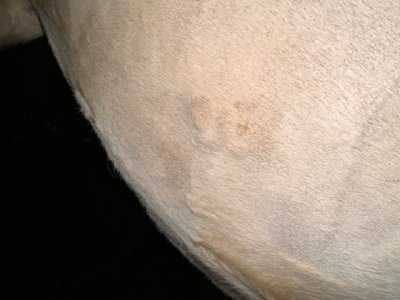
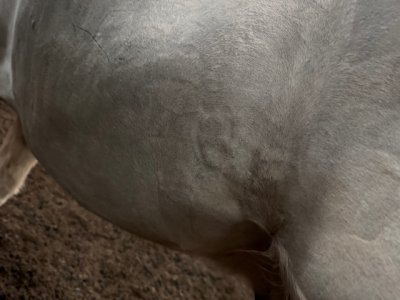
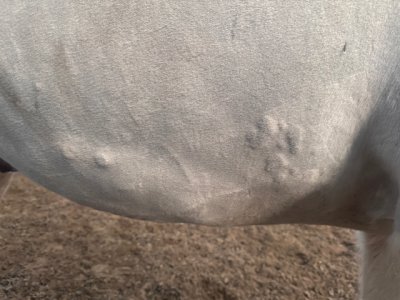
Has anyone got any ideas on what to do to help my horse being bitten alive. I posted a thread about some bumps he had on him last week these had went away but now he’s came out in large what I presume is bites (they have a head on them) and keeps getting more of them. They are itchy.
I’m giving antihistamines but they haven’t really helped with the swelling.
There was a black bug crawling up his leg when I came down so I presume that is the culprit.
I thought it was flys as there had been an awful lot however they have now gone it’s quite cold and the bites keep getting worse.
He’s a Welsh D but no feathers as I did think mites? But don’t think they leave such a bite although correct me if I’m wrong
 

Attachments

  • IMG_7019.jpeg
    IMG_7019.jpeg
    129.9 KB · Views: 60
  • IMG_7015.jpeg
    IMG_7015.jpeg
    73.7 KB · Views: 58
  • IMG_6974.jpeg
    IMG_6974.jpeg
    106.2 KB · Views: 52
  • IMG_6977.jpeg
    IMG_6977.jpeg
    115.2 KB · Views: 49
  • IMG_6975.jpeg
    IMG_6975.jpeg
    94.5 KB · Views: 59
Has anyone got any ideas on what to do to help my horse being bitten alive. I posted a thread about some bumps he had on him last week these had went away but now he’s came out in large what I presume is bites (they have a head on them) and keeps getting more of them. They are itchy.
I’m giving antihistamines but they haven’t really helped with the swelling.
There was a black bug crawling up his leg when I came down so I presume that is the culprit.
I thought it was flys as there had been an awful lot however they have now gone it’s quite cold and the bites keep getting worse.
He’s a Welsh D but no feathers as I did think mites? But don’t think they leave such a bite although correct me if I’m wrong
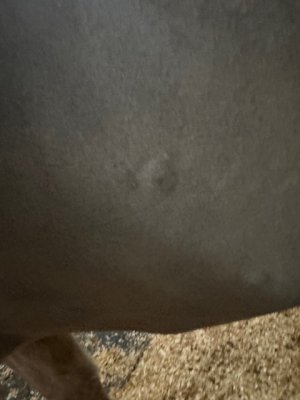
Did you catch the beetle?
might be worth identifying - to rule in / out / how best to eliminate, etc. At least the others are unaffected!
 
Did you catch the beetle?
might be worth identifying - to rule in / out / how best to eliminate, etc. At least the others are unaffected!
I didn’t sadly however it fell into the bed didn’t fly, I’m currently removing all bedding and disinfecting the stable…. Very frustrating I have no idea what it is!
 
Has anyone got any ideas on what to do to help my horse being bitten alive. I posted a thread about some bumps he had on him last week these had went away but now he’s came out in large what I presume is bites (they have a head on them) and keeps getting more of them. They are itchy.
I’m giving antihistamines but they haven’t really helped with the swelling.
There was a black bug crawling up his leg when I came down so I presume that is the culprit.
I thought it was flys as there had been an awful lot however they have now gone it’s quite cold and the bites keep getting worse.
He’s a Welsh D but no feathers as I did think mites? But don’t think they leave such a bite although correct me if I’m wrong
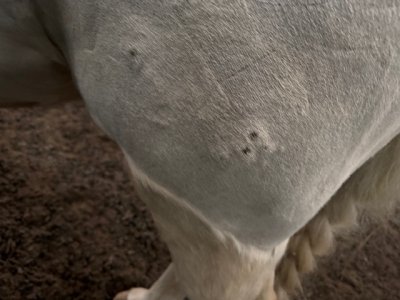
Sorry had to smile, your horse has turned round as if to say, why you taking photos of my butt!!!
 
I’ve noticed recently with the very mild weather, some small black flies appear. They look like the flies that usually come early spring that do bite, having bitten my dogs sparse haired belly before, leaving round welts.
I was wondering if these flies have hatched early due to the very mild weather. They don’t appear too active though, as i’ve found them on surfaces, sitting around, not moving much/flying. They appear to be seeking out warmth, so likely attracted to horses and stables.

Maybe grey horses are more attractive to certain biting flies as they can be more easily seen? My grey unclipped gelding can suffer more with these small fly bites in spring than the black horse beside him. He gets the bites where your has, once he’s shed his winter fluff coat. He has a very short sleek summer coat, enabling them to bite through to skin easily. (The black horse suffers worse with the summer large horse flies though.)
Your grey, being clipped (and rugged) also could have a higher heat signature to the visual field of flies than unclipped. Biting insects generally have thermal vision.
Male dogs and horses ive had suffer their bites more too - unsure why, perhaps they give off a scent/pheromone that attracts these flies, and females dont?

These springtime small black biting flies we get here always go for barer skin/thin hair areas, rather than dense hairy areas. Generally underneath near the sheath/udder area, but in a clipped horse, it’s possible they can bite anywhere as the skin is easier to bite into without the long hair.
These flies tend to not climb into dense hair to bite through, maybe due to their small size and size of biting pincers.

Im in a damp wet mild climate in west Ireland and i suspect these flies are associated with this climate as i’ve never seen/suffered them before in drier rural uk south east/midlands counties. With you listed as scotland, its quite likely you’d get them there too with your climate.
It’s been the last 2-3 weeks of this mild weather i’ve spotted them, but theyre definitely not as active as they are in spring as they’ve emerged at the wrong time.
The colder weather coming should kill them off, giving your horse a break from them, if it is them getting at him.
 
Probably have already checked this but is he over rugged? Sometimes they can get a heat rash from being too hot… have seen this before on horses. Are they under a rug?

Has he been washed in anything different like a new shampoo or anything? Or changed feeds? Could be reacting to something he’s eaten?
 
Probably have already checked this but is he over rugged? Sometimes they can get a heat rash from being too hot… have seen this before on horses. Are they under a rug?

Has he been washed in anything different like a new shampoo or anything? Or changed feeds? Could be reacting to something he’s eaten?
Not over rugged if anything I’ve been trying hard this year to under rug. It has been mild about 12 degrees so he has been without a rug or of raining then just a rain sheet.
Nothing new feed wise, he’s been getting grass pellets soaked which are fairly new but he has been on them for over a month now. He has taken reactions to feeds before and he came up in hives all over his body and lots of them, they looked a bit different to how these look as they almost have a head on them. So so strange
 
I’ve noticed recently with the very mild weather, some small black flies appear. They look like the flies that usually come early spring that do bite, having bitten my dogs sparse haired belly before, leaving round welts.
I was wondering if these flies have hatched early due to the very mild weather. They don’t appear too active though, as i’ve found them on surfaces, sitting around, not moving much/flying. They appear to be seeking out warmth, so likely attracted to horses and stables.

Maybe grey horses are more attractive to certain biting flies as they can be more easily seen? My grey unclipped gelding can suffer more with these small fly bites in spring than the black horse beside him. He gets the bites where your has, once he’s shed his winter fluff coat. He has a very short sleek summer coat, enabling them to bite through to skin easily. (The black horse suffers worse with the summer large horse flies though.)
Your grey, being clipped (and rugged) also could have a higher heat signature to the visual field of flies than unclipped. Biting insects generally have thermal vision.
Male dogs and horses ive had suffer their bites more too - unsure why, perhaps they give off a scent/pheromone that attracts these flies, and females dont?

These springtime small black biting flies we get here always go for barer skin/thin hair areas, rather than dense hairy areas. Generally underneath near the sheath/udder area, but in a clipped horse, it’s possible they can bite anywhere as the skin is easier to bite into without the long hair.
These flies tend to not climb into dense hair to bite through, maybe due to their small size and size of biting pincers.

Im in a damp wet mild climate in west Ireland and i suspect these flies are associated with this climate as i’ve never seen/suffered them before in drier rural uk south east/midlands counties. With you listed as scotland, its quite likely you’d get them there too with your climate.
It’s been the last 2-3 weeks of this mild weather i’ve spotted them, but theyre definitely not as active as they are in spring as they’ve emerged at the wrong time.
The colder weather coming should kill them off, giving your horse a break from them, if it is them getting at him.
Thank you! This is interesting and I think you could be right, it had been mild but extraordinarily wet these past few days.
I did notice the other morning a swarm of flies/midgies flying around the lights… so I do wonder if it has been them to irritate him.
As you say the cold snap is happening so here’s hoping that kills them off
 
I don't know of any beetles that feed on blood.

These bites, do they have a head/scab on them and do they ever ooze? Or are they raised and then loose hair in a circular patch?
Most of them have a head however not all, I’m not sure if some are bites and some are a reaction to the bites? They don’t ooze but when I shone my torch on them the day I first noticed them, there was a small bit of yellow ooze if you like however this was dried up.
 
Most of them have a head however not all, I’m not sure if some are bites and some are a reaction to the bites? They don’t ooze but when I shone my torch on them the day I first noticed them, there was a small bit of yellow ooze if you like however this was dried up.
Okay that sounds like mosquitoes then, unless it is over a week at 5 degrees or lower then mossies will still be alive. Worth making sure there is no standing water around and using good fly repellent.
 
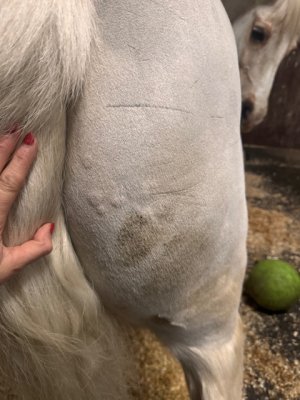
IMG_7069.jpegMore have appeared 😭 I am genuinely stumped as these look more like hives to me than bites.
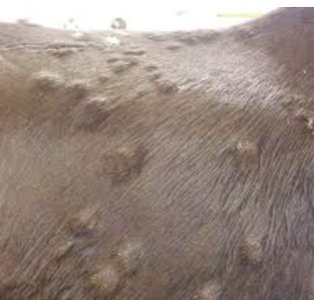
Nothing has changed diet wise apart from having hayledge through this cold snap rather than soaked hay but he had hayledge most days before this as an afternoon net and I’ve got him on antihistamines too..
 
Swap his stable with your other horse and see if other horse gets bitten or he continues? That should wipe out the source being the stable.. I would then hoof some antihistamines into him (you can buy tubs of 200 online, core out a carrot and feed 20-30 of them that way) and rule out an allergy to something - I would also stop using all sprays/ointments/treatments in this time. If neither of those work then I would get the vet in to do a skin scrape, see if that gives any indication of anything.
 
Swap his stable with your other horse and see if other horse gets bitten or he continues? That should wipe out the source being the stable.. I would then hoof some antihistamines into him (you can buy tubs of 200 online, core out a carrot and feed 20-30 of them that way) and rule out an allergy to something - I would also stop using all sprays/ointments/treatments in this time. If neither of those work then I would get the vet in to do a skin scrape, see if that gives any indication of anything.
Currently giving 10 cetirizine twice a day but not really helped, to be fair only used them for 2 days at this point.
Good idea swapping their stables, will do that at least then could rule out the stable if she doesn’t get bitten
 
These new pictures look a bit ring worm ish. I think I would also get a vet to skin scrape, plus remove bedding and wash down whole stable and then new bedding in.
Did that yesterday with the stable disinfected it and fresh bed.
Interesting I don’t really know about ring worm, what makes you think it looks like that and also how do they catch it?
 
Did that yesterday with the stable disinfected it and fresh bed.
Interesting I don’t really know about ring worm, what makes you think it looks like that and also how do they catch it?
Doesn't look like ringworm to me. It's caught from other animals who have it or things they have been in contact with. When it's been about stables I've been at it has come from cattle.
 
Doesn't look like ringworm to me. It's caught from other animals who have it or things they have been in contact with. When it's been about stables I've been at it has come from cattle.
Mine had it once and was very similar presentation. Vet didn't believe it would be but agreed to test and it was! No cattle or anything, caught it from the soil.
 
Top