Box rest

Tiffany

Well-Known Member
Joined
25 October 2007
Messages
6,922
Location
Derbyshire
Visit site
What's you view on it? Just thinking about it upsets me because for a horse to be in 24/7 for weeks on end is not natural. I know throughout their lives, most horses will have at least one stint but how much harm would it do to take a horse for a daily walk in hand providing ground was flat and horse was sensible?
I know it depends on the injury and severity of lameness but how many times or, for how long would you keep yours in 24/7?
 
Last edited:
I'm not a fan of box rest on the whole, but have had horses do long stints. A 2yr old with a fractured tibia - she did 5 months. Healed perfectly and 16 yes later still sound as a pound.
Older horse 1st time, cut her leg to the bone, did 3 months. Few years later she severed her tendons in a hind leg an degloved it from hock to fetlock. This time she did 6 months box rest until it fully healed.
Currently dressage pony had damaged ddft before the knee. He's not box testing as he would go nuts.
I can do it if its/absolutely necessary, but my overall choice is not too.
 
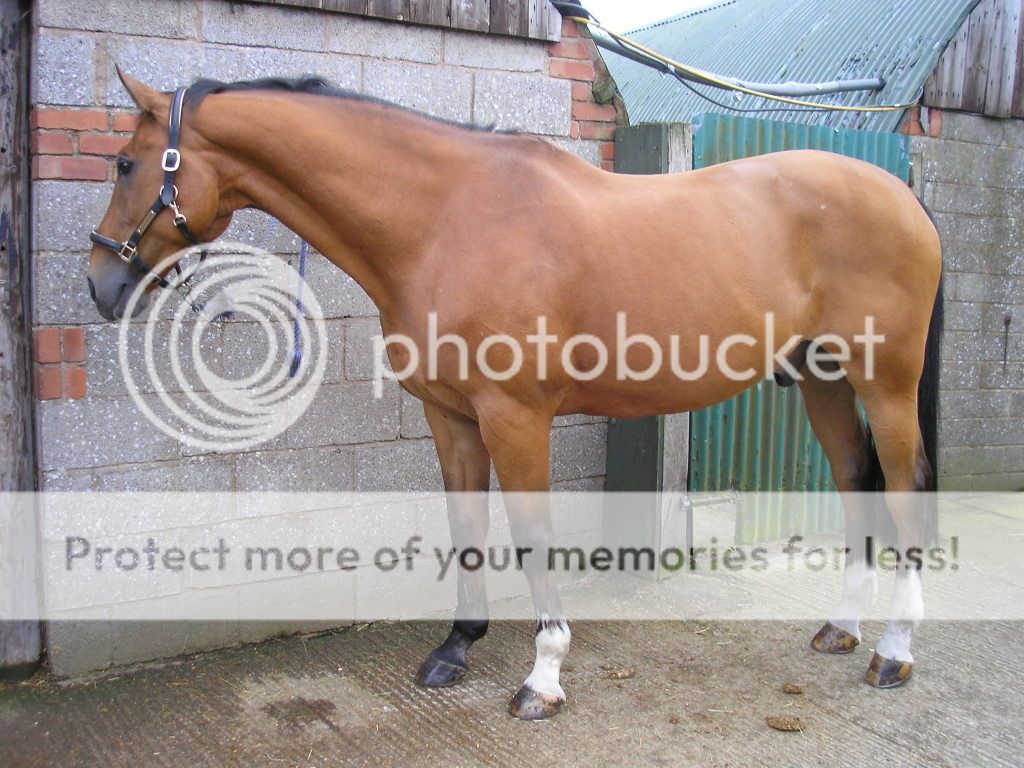
The horse below was in the box for 11 months, as you can see he has no muscle mass left. The picture was taken a week into rehab which failed at week 6. Faced with further box rest it was decided to turn him into a tiny paddock with a shelter.

You can only be guided by your vet as to how you manage an injured horse, they are all different.

Leoretirestoday772012011.jpg
 
WOW Britestar and Adorable Alice the length of box rest for your horses must have been difficult because you do it on vets advice but we all know it's not natural for a horse. At the end of the day, I suppose I would do it if need be but I'd worry about a horses mental health.
 
I think some horses adapt better than others I suppose. I was very lucky with my boy, who was on box rest for nearly 12 months as he never seemed to mind at all. He did have a separate 'day' stable though, which was about 3 times the size of his normal stable and had a good view of the yard so he could see all the comings and goings throughout the day.

The ultimate goal though was to get him back out in the field as I didn't want him to live his life like this so it was a bit soul destroying when he went lame again the first time he went back out in the mud but thanks to my fabulous farrier, he is now back out every day.

As AdorableAlice has said though, muscle wastage was a huge problem but it hasn't taken long for that to return.
 
I have my mare on box rest at the moment, she has had treatment for an infection in her pedal bone which was done on the 18 December so just over a month now, I am not a keen on them having box rest but sometimes its the only way, hopefully another 6 weeks or so and she will be ready to go out and start some work, she is a horse that lives to be in the field too so she is not very happy being in and have had to use sedalin on occasions to keep her sane, I lost my first mare whilst on box rest to colic so was not looking forward to it.


Aalice I think your horse looks quite good after being in for 11 months.
 
Last edited:
I have had a horse who had 4 months boxrest due to a corneal ulcer. (He wasn't allowed out in the sunlight) He coped well with it, but we did have issues getting him to turn back out when he was allowed out. As all he wanted was the safe space of his stable. We ended up having to move yards so he could be turned out in a big herd and learn to be a horse again.

I have also had other horses on boxrest and have stayed in with no issues at all. But depending whats wrong with them some of them have been allowed in a tiny paddock during the day and in at night or out 24/7 if the weather has been dry enough.
 
I think box rest is prescribed far too often and if a horse is very distressed I do believe a frank risk assessment should be done rather than long term sedation. Horses are evolved to move almost constantly and there are often physical and psychological negative effects. I'm pretty convinced a lifestyle and management that promotes calmness is the way to go but may be difficult to achieve on many liveries with strict stabling/turnout routines.
I don't think enough thought is given to possible ways round it.

Obviously some fractures etc. there is no other option.
 
One of my mares is currently on box rest, following significant damage to her superficial tendon :(

She'll be 22 in March and as we have our horses at home is used to being out with her small herd and is hating it... luckily I have a couple of other oldies who are quite happy to stay wandering on the yard to keep her company. Small paddock sadly just isn't an option for her as she's a frequent fence hopper so fear she'd just end up doing more damage! So as much as we both hate it, are just going to have to grin and bare it for the time being....
 
What's you view on it? Just thinking about it upsets me because for a horse to be in 24/7 for weeks on end is not natural. I know throughout their lives, most horses will have at least one stint but how much harm would it do to take a horse for a daily walk in hand providing ground was flat and horse was sensible?
I know it depends on the injury and severity of lameness but how many times or, for how long would you keep yours in 24/7?
My late mare was on it a long time, I brought a massage pad and mit and she coped as well as I would expect and more.
 
I never thought my horse would cope with box rest, to the extent that when he suffered a bad kick to the stifle my vet allowed him out in a small area during the day while he monitored it...unfortunately he deteriorated and when we took him to horsepital days later it turned out to be a fractured tibia! He would have been a lot better box rested (and cross tied) - thankfully it didn't displace. So there are instances where, in retrospect, it is best to be on the safe side.

He was cross tied in horsepital for over 2 months, then a week of un-tied box rest there, then moved to a local equestrian centre for box rest with 3x daily hand walking.

He settled very well in each environment. Firstly, in horsepital as well as being drugged up to the eyeballs for pain management, there was always loads going on. I think it helped being in a strange environment, so he didn't stress trying to escape, as he didn't know where to escape to. Many of the horses became frustrated and difficult to handle because of all of the painful procedures they were subjected to (as you can well understand), however mine seemed to enjoy any interaction, so got lots of attention (staff and students were fabulous!).

I tried to follow similar principles for his box rest - he went to an equestrian centre rather than home, so he wouldn't see his field and friends and want out with them, would have company all of the time, and would be in a busy bustling environment. They put him in the first stable on entry to the barn, so everyone, horse and human had to go past his box, and most stopped for a chat. He settled remarkably well, which gave me great peace of mind (as well as having staff on hand to walk him 3x a day which I couldn't manage working full time).

Now he is home and out in a small paddock during the day and stabled at night. Unfortunately now he can see his friends, his pony is also on small paddock rest to keep him company!

ETA, AdorableAlice, I would have been pleased if my horse had that muscle mass before he broke his leg - we are now dealing with a whole other level of 'lack of topline', exacerbated by the huge amount of weight he lost when not eating due to pain / drugs. Hopefully it will come back slowly but surely though!
 
Last edited:
Top