Brief, infrequent hobbling... then trying to bog off?

Woolly Hat n Wellies

Well-Known Member
Joined
1 April 2014
Messages
482
Visit site
I sometimes read 'should I call the vet?' posts and think "if you need to ask...." but now I'm a bit stumped myself.

Share gelding: cobby type of indeterminate breeding, 15.1hh, 14 years old, in light work (mostly hacking and the odd pop over 60-65cm clear round) recently re-shod (29th May).
Last time he was shod he was a little bit cautious to start with, but we put it down to getting studs for the road for the first time, and after he had been out for a day or two he was ridden again and was totally sound.

This time, after shoeing, he's sound 99% of the time, but just occasionally he almost trips (I've only seen this from the top so I don't know what his legs are doing), then hobbles a couple of steps, then carries on as though nothing happened. Of course when he did this I leapt off in panic and cleared his feet out, but there were no stones, sticks, thorns, anything, and as soon as I put his feet down he set off and tried to march off without me (rude!)

So we had the farrier back (5th June). We walked and trotted him back and forth on all sorts of ground in front of the farrier but he was absolutely sound. Farrier said he appeared to be well and sound, and had good-shaped feet. He pressed all over his sole looking for a sensitive area, but the big dope just stood licking his back (!) He fitted a layer (like a rubbery hoof shape with an indented bit for the frog) between hoof and shoe but said he couldn't see what could be causing it. We then left him until today so that any bruising the farrier might have missed could hopefully start to heal up.

Owner hacked him today and said he was fine but still did it slightly on a stony patch, on the same leg, the right fore. Neither we nor the farrier can find any marks of overreaching, although he has been seen to do it very occasionally.

So... do we call a vet for a horse that might well present as completely sound? Do we rest him? Do we carry on and see if it continues to reduce? The thing that gets me is that it's so infrequent, the only thing that seems to trigger it is very stony ground (well duh), but he had never done it before he was shod this time, and if I make him stand as soon as he trips he will then walk on a few seconds later with no apparent pain, no hobbling, no caution, no shortened strides. If you make him stand longer than a few seconds he will start stamping and digging (with either foot, he's not choosy then, apparently), generally messing about and throwing a hissy fit until you let him march on. (Yes he's rude, and we're working on that, but I'm currently more concerned about the hobbling than the manners!)

Has anyone else experienced anything similar? Are we being over-fussy about a big ugly cob, or are we recklessly endangering our beautiful boy? Help!

P.S. The forum hasn't let me reply to anything lately, so if I can't reply to my own thread either, any advice will be very gratefully received.
 
Just spent £200 on rubbish advice. I box rested him and pointed out that the stifle was the problem! Told he was sound and then to carry on with what I was doing as it was working? Got a lami shetland (only happens after heaving rain), box rest and restricted grazing.... Should I get the vet out?
 
You say he has road studs in, does he have one on the outside or one each side and are they in front as well as behind?
 
Try taking him off grass for a couple of weeks and feeding him soaked hay instead and seeing if that makes a difference. It might be sugars in the spring grass causing him to be a bit footsore.
 
be positive: I believe they are one on each side, they're definitely in all four feet. I am back and forth from uni at the moment so not as up on his particulars as I ought to be. (the shame!)

Gloi: that does make sense. He lost a bit too much weight over winter. Not drastic amounts, but enough that we've been letting the weight get back on him, rather than cutting him down like his fat mates.
 
If you call the vet all you have is intermittent lameness and there is not much they can do. In order to do a lameness block you need a certain amount of consistant lameness. I know because I had a simular problem but without any hissy fits, as Ffin really would not have bothered with that waste of energy. Mine started the same, a few strides of uneveness, a couple of longer periods of lameness, lasting just a couple of days. I had the vet and I had all the checks done with no results. The advice I was given was to ride through it. He would either get over it or come up lame enough to do the lameness blocks. I afraid for me it was the latter. Ffin had arthritus of the foot. Now your horse might not have this but what worried me was when you spoke about him being lame after shoeing, my farrier would not add road pins to his shoes as it made him worst. Ffin had an injection and then was on danilon, he worked on for over four years, I have just retired him.
 
If they are on the front feet I would be concerned that they are just altering his balance and putting a little extra pressure on his joints, just enough that on the odd step it hurts but quickly goes away, I dont like having studs in the fronts even competing I use them as little as possible to avoid compromising the joints in any way and would not use road studs in front except as a last resort or under vets advice for some reason, not that I can think of a reason a vet would want them used .
At 14 he is likely to be at risk of some arthritic changes using the studs may be too much for him to cope with, if he has been slipping more than normal, which is why he now has them, it may be something going on that needs looking into before he goes lame.
 
Sorry I can't quote. I have to switch to mobile view to reply to threads.

Amymay: Yes, just after being shod. Doesn't look good for the farrier does it? I'm beginning to think a chat with the owner might be in order. Bit awkward as he's her choice of farrier, and he's a lovely man, but it's not a good pattern.

be positive: Again, as he has an owner who isn't me, I wasn't my choice to put road studs on. Owner had become very nervous, and him slipping on the wet in winter made her very nervy. It wasn't that he was slipping excessively, but I think she may have gone into overkill to stop it happening EVER. As it's now drying up, and the odd slip doesn't worry me, and considering what you say, I think they'd better come off.

Oh dear. Looks like 'serious talk' time.
 
It maybe a case of shoes being put on too tight, or a slight re-sighting of the nails needed.

So owner needs to speak to farrier of her thoughts (if they're along these lines) so that he can make some adjustments.
 
My last horse had road nails in the back as he had a big walk and used to slide all over on the roads and was fine with these in but moving yards meant I needed them all round as the roads were like ice! My horse used to feel like he sort of lost his legs or buckled and would stumble and then be fine. It happened occasionally and my blacksmith said it was the nails in the front. I decided to try without and it stopped so we had to creep along to try and prevent him sliding on the worst bits of the road.
 
Last edited:
I've got one exactly the same. He's 20, and mostly sound as a bell, but occasionally trips and comes up lame for a while afterwards. I think that it hurts, and that's why he trips - rather than the other way round. He does it both unshod and shod, and is never lame when the vet is here. I suspect he has navicular/sidebone/ringbone - and at his age, I'm not that bothered about investigating as he is fine 98% of the time. - he will hack, school and pop a 1m20 fence without any problem - then stumbles walking across the yard and come up lame for a few strides.

I'm hosting a thermal imaging demo at my yard soon, and am thinking about getting his front legs and feet scanned - be interesting to see if anything obvious gets flagged up
 
In my experience the safest way to avoid slipping on roads is barefoot, .. yes another excuse to promote healthy feet!
I don t have a lot of experience with this, my old farrier used to put one small road stud on the hinds in the dead of winter, which may be acceptable, but no way would I allow them on fronts as it goes against the balance of the foot.
Personally [me] I have had knee problems, and I had to to stop wearing heavy soled [walking] boots as my proprioreceptors were not kicking in, I now only wear thin soled boots, and have no problem. The horse also uses proprioreceptors on every stride and anything which interferes is not a good idea.
 
Last edited:
Try taking him off grass for a couple of weeks and feeding him soaked hay instead and seeing if that makes a difference. It might be sugars in the spring grass causing him to be a bit footsore.
I think this is worth a try along with looking at his diet overall.

With him being gimpy on stones and the farrier adding a pad I wonder if his soles are thin? Often sole is trimmed at the toe when shod to fit the shoe which wont help if he has thin soles. Try and avoid stony areas if possible and also check for thrush.

If you do quote post you may find you can reply. I am back to having to do this to sign in today!
 
Is there any reason he couldnt go barefoot? Ive never had a problem with road work and bare feet with any of mine but sometimes it does take them a little while for their feet to harden off
 
If this where my horse I would start by having a series of flex tests to see what that threw up.
And I would do some lunging on the hard and the soft .
It's probably the foot but there's a whole lot of other things as well .
Fetlock pain can present like this sometimes .
Edited to add a equine vet would do the flex tests of course.
 
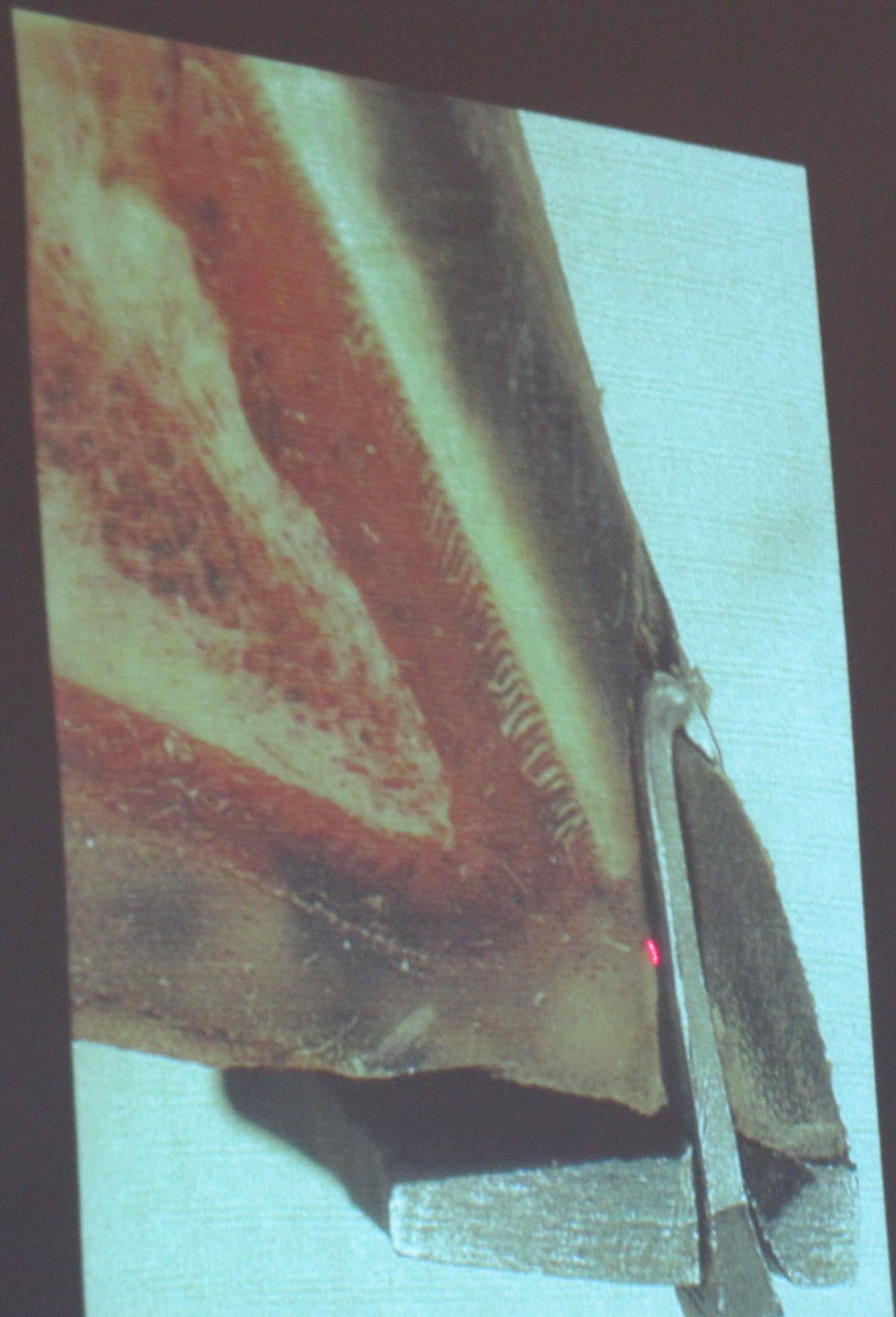
I think that people often don't realise how tiny the room for error is when putting nails in (see photo). If the nail is placed even slightly off, you get a nail bind and I do think that this is one possibility with your share cob.

nail+placement.jpg


Tripping always makes me wonder if the toes are too long, so that should also be checked.

I also agree that it does sound like his soles are sensitive, so going through his diet, checking for low grade laminitis and seeing if the Farrier pared the soles are all things to look into. I don't like pads that cover the sole and frog (is that what he has?) as thrush can have a field day underneath them, which can also make the poor horse very sore.
 
check his feet and go through his diet/management with a fine toothcomb - there's some good suggestions above.

Don't know where you are in the country but down here the grass has been exceptionally strong this spring and even horses/places that don't normally have problems are having all sorts of ailments.

Look at him really carefully - how does he stand, does he back off under saddle at all, is he 'funny' about being touched or picking his feet out, look at the right hind particularly. If you have any senses of him being not quite right perhaps discuss gut issues with your vet as well as feet/soundness.
 
I think that people often don't realise how tiny the room for error is when putting nails in (see photo). If the nail is placed even slightly off, you get a nail bind and I do think that this is one possibility with your share cob.

nail+placement.jpg


Tripping always makes me wonder if the toes are too long, so that should also be checked.
The margin for error gets much less if the outer wall has been rasped heavily as well.
I noticed with one of mine when gimpy on stones that stride is shortened and there is the odd trip. I wonder if some smaller stones caused enough discomfort to be alter stride suddenly to avoid putting full weight down = trip but bigger stones that poke the sole = ouch and oo ow for a few steps?
 
If he is still doing it with the pads on then it might not be just sole sensitivity and perhaps wants looking at a bit. F isn't the best over stones due to his flat soles but is fine in boots and if it were nail placement I'd wonder if it would show up on all hard surfaces? just ponderings.
 
Flipping forum! Have to reply with quote to log in at all (thank you for that suggestion!) and then switch to mobile as the page is so wide the Proclaimers would give up the trek to the other side!

Anyway,

I think my first step is going to be pushing for the studs to be taken off.

A slightly misplaced nail was my first thought. The farrier completely reshod that foot when he fitted the pad (yes it is one that covers the whole sole and frog). If he was mine I would be inclined to look for a second opinion, but that's not my decision to make.

Barefoot, I'm not sure about. Again, it's not my decision to make. His owners are quite new to horse-ownership, and I have ended up helping them rather more than I had anticipated. I'm painfully aware of the limits of my own knowledge, and have occasionally been a bit worried about them. The little I know about barefoot tells me how important the right diet is, and I'm not sure that's the right path to go down when I don't personally know anyone local who knows about barefoot who could help them with it. The chance to get it wrong just feels so much higher.

Feed. As I posted earlier, he lost too much weight around March. He gets TopChop, a general supplement, Biotin, and a bit of oil (supplements are in quantities for resting horses as he is only ridden once or twice a week when I'm away at uni), hay when he comes in, but he's generally turned out as much as possible when the weather is half decent. His mate is a bit fat (exceptionally good doer) so is restricted to the box in the daytime and allowed out at night. Should he perhaps be kept on a similar routine, but with an easier haynet and his feed?

I'm supposed to be concentrating on my uni work so I can go back and enjoy him in summer, but instead I'm just worrying about him all the time. I had very bad luck with ponies as a kid, and this is the closest I've got to having my own since I was 13. I've fallen head over heels for this horse, and now this. I feel like I'm a curse to horses :-(
 
A good diet is essential to hoof growth in most horses, and it sounds as though the horse has problems, so that is number one.
try Pro hoof from Pro Earth or similar [phone advice, or Forage plus or similar, these have more magnesium than the average mineral balancer.
I would feed every day, when we are talking horses in competition, we assume that more minerals are needed, but in this case the feet are in trouble, so you can't be sure minimal amounts are going to do do the job, in fact the current diet is probably not adequate for this horse.
I would try him stabled for a few hours with soaked hay to provide fibre, again soaking will remove minerals so again essential to supplement. Beware of feeding pony nuts which are often cereal based and molassed [moglo] to make them more palatable.
 
Last edited:
Top