Grass sickness

xXShelleyBXx

Well-Known Member
Joined
11 April 2008
Messages
112
Location
Norfolk
Visit site
Hi, I was just wondering whether anyone has had or known of a horse that has suffered from this awful disease?
I lost my horse to this 6 weeks ago and my sister had her put to sleep yesterday because of this.
Both horses were kept on the same field, 24/7 all year round.
I cannot get my head round this. It all happened so quickly with both of them.
My horse displayed minimal symptoms and died before the Vet reached us. My sisters horse became overly friendly, stopped eating/drinking and struggled to pass faeces or urine. She became lethargic and depressed within a matter of hours and her heart rate was scarily high. It appeared she couldn't swallow. We called the vet immediately at which she informed us that her gut motility had stopped. We tried fluids to rehydrate and get things moving, tubing amongst other things for a period 12hours with plans to treat her through diet if she improved. She deteriorated. Her heart rate was still high, she began to have muscle tremors and I was terrified she would collapse if I left her any longer. I spent all night and day with her in the hope she would improve but I could no longer tolerate seeing her so restless. We phoned the Vet to have her put to sleep.
I just cannot get over how quickly it all happened and wondered whether anyone has any knowledge of this?
There's not much known about Grass Sickness as far as I am aware, but there is another horse on the same field which worries me. The vet said it doesn't often affect all horses so it is unlikely that he will come down with the disease, she just suggested that my sister and I were unlucky that both had died from this within 6 weeks of each other?

I'm still in shock and don't think I could I could own another horse just through the shear fear of this happening again 😢
 
I'm so sorry about you loss - it's heartbreaking when it is so sudden isn't it. I lost one of mine when he got stuck in a ditch a few months ago :(

Are you postive it was grass sickness and not sycamore poisoning? Grass sickness tends to result in massive muscle wastage (breakdown) over a short time, sycamore poisoning tends to have the same symptoms as grass sickness, bar the muscle wastage. One typical sign is extremely dark coloured urine. Are there sycamore trees or seedlings on your grazing?
 
Oh I am so sorry to hear that. Must have been awful :(

This is what I thought. Neither of the horses had muscle wastage and although they had lost a little weight it wasn't an obvious amount. They looked healthy to be honest, just suddenly came down with this. The Vet suggested that it was Grass Sickness.
Her urine was bright orange, very concentrated. Indicative of liver failure, secondary to loss of gut motility. I did ask could it be ragwort poisoning but the bloods were not bad enough to indicate that this was the cause.
I don't think we have any of those trees :(
X
 
Oh I am so sorry to hear that. Must have been awful :(

This is what I thought. Neither of the horses had muscle wastage and although they had lost a little weight it wasn't an obvious amount. They looked healthy to be honest, just suddenly came down with this. The Vet suggested that it was Grass Sickness.
Her urine was bright orange, very concentrated. Indicative of liver failure, secondary to loss of gut motility. I did ask could it be ragwort poisoning but the bloods were not bad enough to indicate that this was the cause.
I don't think we have any of those trees :(
X

Bright orange urine sounds just like sycamore poisoning. You may not have the trees, it may just be seedlings that have blown over from neighbouring fields :(

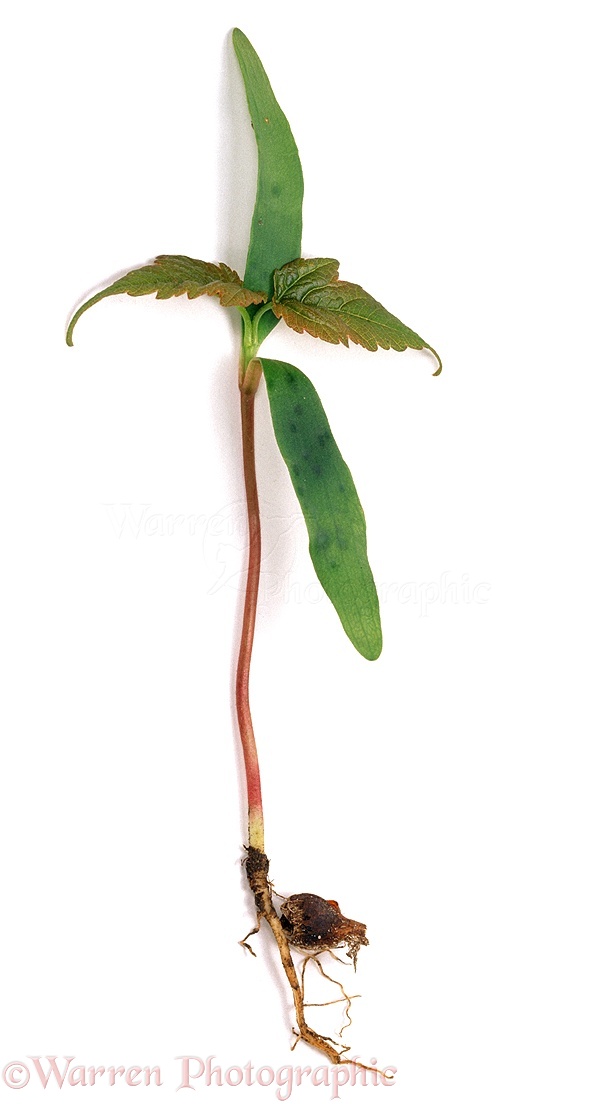
Look out for these

6a00e551cf6c9a883301347fc74ffd970c-pi


and these

05268-Sycamore-seedling-white-background.jpg


ETA - google Atypical Myopathy and sycamores
 
Last edited:
Bright orange urine sounds just like sycamore poisoning. You may not have the trees, it may just be seedlings that have blown over from neighbouring fields :(

Look out for these

6a00e551cf6c9a883301347fc74ffd970c-pi


and these

05268-Sycamore-seedling-white-background.jpg


ETA - google Atypical Myopathy and sycamores

Agree with this. Blood in the urine is more a sign of am than grass sickness, it comes on and kills them so quickly its untrue. A lot of vets haven't seen am so they assume its grass sickness as there are similar symptoms ( muscle tremors, inability in swallow or move) . a pony local to us died from what they said was grass sickness but the symptoms said am , she had been turning her pony out on a scrubby bit of ground with seedlings on it, we have also have three at local yards in the past month, again. All had seedlings in the field and all went from being fine to dead in less than an hour.
 
Hi, I was just wondering whether anyone has had or known of a horse that has suffered from this awful disease?
I lost my horse to this 6 weeks ago and my sister had her put to sleep yesterday because of this.
Both horses were kept on the same field, 24/7 all year round.
I cannot get my head round this. It all happened so quickly with both of them.
My horse displayed minimal symptoms and died before the Vet reached us. My sisters horse became overly friendly, stopped eating/drinking and struggled to pass faeces or urine. She became lethargic and depressed within a matter of hours and her heart rate was scarily high. It appeared she couldn't swallow. We called the vet immediately at which she informed us that her gut motility had stopped. We tried fluids to rehydrate and get things moving, tubing amongst other things for a period 12hours with plans to treat her through diet if she improved. She deteriorated. Her heart rate was still high, she began to have muscle tremors and I was terrified she would collapse if I left her any longer. I spent all night and day with her in the hope she would improve but I could no longer tolerate seeing her so restless. We phoned the Vet to have her put to sleep.
I just cannot get over how quickly it all happened and wondered whether anyone has any knowledge of this?
There's not much known about Grass Sickness as far as I am aware, but there is another horse on the same field which worries me. The vet said it doesn't often affect all horses so it is unlikely that he will come down with the disease, she just suggested that my sister and I were unlucky that both had died from this within 6 weeks of each other?

I'm still in shock and don't think I could I could own another horse just through the shear fear of this happening again ��

Yes my friends - she nursed it and sat round the clock with it and managed to pullher through when she was on the brink of death.
 
It's horrible disease .
All you can do is stable your horses part of every day and provide some forage and other food daily and hope .avoid bare paddocks and don't use fields after ditches have been dug in them
This is a grass sickness area .
There's a lovely Georgian house near here with stables and paddocks in front horses cannot live there they all get grass sickness .
This time do year is the worse time .
I am so sorry for you both OP it is one of my biggest dreads .
 
Not all ponies/horses have muscle wastage... I lost my pony to EGS last summer and he was bloated like a balloon where he kept drinking trying to clear the blockage in his gut. Initial thought was colic so he went in for surgery, and at the same time they did some Biopsy's to rule out EGS. the tests came back positive. Before he went to Newmarket the Vet had removed over 20litres of reflux. Its is a horrible illness but as mentioned above it dosnt affect all horses on the same land. Its all to do with the toxins in the gut as well as the grass.
 
Years ago my friend lost her pony to gs, he went down so quickly, gut just stopped and he was pts that day. A girl at my livery yard when I was a teenager had a horse which had gs and she nursed him back, sometimes you can. He was young, 6 or so, and she was 100% dedicated to him, she slept at the yard for weeks. I know now that the first one had the acute and the second one the sub-acute/chronic form.
It scares me too, living in east central scotland, as this is a high risk area. What I do is: don't over graze fields, give all of them a long rest each year (4-6 months), feed hay every day, lift all droppings by hand and I don't harrow if the horses will be in the field, ie I might harrow during the rest period. I am lucky I can rotate the fields this way, I know most people can't.
A yard near us, about 3 miles away, had had repeated cases of gs, but it has been grazed continuously for many years and densely stocked with horses, and I think they harrow their droppings instead of lifting them, which is madness, they'd be better just leaving the droppings.
It is a horrible disease and I wish more was known about the all the causes.
 
Thank you all for your responses.
I am just very confused as to why it affected 2 horses yet the 3rd pony seems fine? We have had both horses since we were 11 & 13.
Can't get my head round it :(
I stayed at the stable for 2nights, I am a small animal student veterinary so knew what I was doing it was just on a larger scale. I had 2 hours sleep in 3days. She just didn't respond to treatment and I couldn't put her through days/weeks of this. It was heartbreaking to see the change in her. For her welfare it was kindest thing to do, PTS.
I hadn't heard of grass sickness before, I genuinely would like to do something to promote and raise money towards research for this.
Might check with the Vet about sycamore poisoning but I can't see this being the case. Still I will check the fields today for any seedlings, try rule things out.
Thank you all again for responses. Xxxx
 
I suspect it's difficult to tell the difference between acute grass sickness & AM without doing a detailed exam & blood tests. The lack of gut motility would point in the direction of GS but tbh I don't know whether that would also apply as AM progresses. Whichever it was you have my deepest sympathy.
 
She became jaundice very suddenly, but the results of her blood tests weren't shocking which surprised both the Vet and I. The Vet said she had hepatitis but felt it was a secondary reaction to the loss of gut motility consequently throwing out toxins. If it was Atypical Myopathy I'm sure it would have come up when the bloods were done? I know the only test for GS currently is to take a sample from the lining of the stomach/intestine.
Terrible disease and scares me how little is known about it considering the fatality rate is so high. Don't think I could have done much more than we did.
Thank you for your sympathy xxx
 
So sorry for your losses. Poor horses
Have you heard of the Equine Grass Sickness Fund? There is a mine of information on their website and if you are thinking about raising money for a charity it would be a great choice. Hope this link works http://www.grasssickness.org.uk/
 
its a dreadful thing and sometimes there is no rhyme or reason for it. I've known people give up breeding because they had it repeatedly on their property-also knew a 10yo mare come down on it, she'd lived in the same field since birth. I've seen cases where 1 horse in 10 came down with it and where all horses in the paddock came down with it. Acute GS can happen that quickly (in less than a few hours- a friend had a 2yo colt go down with in between 2 hourly field checks-she then lost one more to AGS and another to SA. These colts were only on hay due to bad snow cover). I agree that there has probably been some misdiagnosis between GS and AM over the last few years-so many vets are not clued up enough about either but there are some key differences-how important they are isn't clear. You can only do what you can do wrt prevention, there are guidelines thanks to comprehensive epidemiological studies but they are just guidelines at the end of the day.

I am so sorry OP for your and your sister's loss.


For anyone interested please check out the website that LeneHorse posted the link to-the EGSF have done amazing fundraising to get a vaccine trial off the ground. They are just a small charity and a very worthy one.
 
Sorry to hear the story. My niece has a 'survivor' of grass sickness. He was turned out in a paddock with another horse and got the illlness/disease but the other one didn't. I think it was about 5 years ago now. He's gets lightly ridden and generally enjoys a steady life but he has to be very carefully managed and always loses condition every spring time. I think it a very small percent that survive.
 
Thank you all so much for your response and particularly for the web link. I will be doing something for this cause, it's something I feel very strongly about now. Even if it is only to raise awareness.
95% survival rate, dependable on the which type of GS they develop. Will Take me a while to come to terms with this :( x
 
What age were the two horses ? I live in an area known for it's high incidences of cases and all the horses that I've known with grass sickness have been young and stressed in some way, usually by arriving at a new home. I'm not saying an older horse can't get it but I would have thought it very unlikely for 2 older horses at a settled home in Norfolk. Your vet might well be guessing at what killed the horses. The weather also seems to be a factor and nearly all the cases I've known have been in the spring during a dry spell.
 
They were 18 and 14.
I have heard it tends to effect young horses but it's not unknown to effect older horses, it's just less likely. They weren't stressed. They had been on the yard for 4/5yrs now. They are on grass 24/7. The Vet couldn't think of anything else it could be as the symptoms all led to GS. She said she had seen quite a few cases very similar this year.
Unless they were poisoned but that would have shown in the bloods?
I haven't slept since all this. I'm complete shock over it :(
 
incidence in the East of England has always been high-not as bad as Eastern Scotland but historically worse than the rest of the country. GS at Newmarket studs was the worst kept secret for decades. The highest incidence is seen in horses 7 and under but older horses (and physiologically speaking, anything over 14 ish is considered older) are also susceptible.

some chronic cases recover very well but it can take a long time-years-for them to come right. The website has lots of info on research and case management.
 
I don't have experience of this but I am very, very sorry to hear of this.

This is something that has always frightened me and I have always worried about this.

There is some link between soil disturbance and GS but I am not sure if this was the case in every situation.

My thoughts are with you at this sad time xxxxxx
 
Agree with the others that that apparent choke and muscle tremors sound more like AM than GS. Did you have chance to check the fields OP for seedlings or the presence locally of sycamore?
 
Hi I am sos so sorry to read your post, I know exactly how you feel I lost my horse William to acute grass sickness 3 years ago, it is a horrible disease that comes out of nowhere!! The BHS are backing the national campaign this year to raise awareness and funds for the nationwide vaccine trial, I am enclosing the link for you so you can read all the info on grass sickness. If you have any questions please contact me I have a facebook page in aid of grass sickness awareness. http://www.bhs.org.uk/welfare-and-care/our-campaigns/the-fight-against-grass-sickness, herre is a little extract from it (It's clear that grass sickness is a truly appalling disease that kills the vast majority of horses that encounter it. Because of that, a great deal of research has been put into the disease, much of it financed by the Equine Grass Sickness Fund. Despite all of this research, the cause of the disease is not definitively known. Over the years there have been many suspected causes ranging from plants to chemicals, insects to vitamin deficiencies.

In recent times, attention has been very sharply focused on the bacterium Clostridium botulinum and more specifically, a neurotoxin that it produces. Clostridium botulinum can be found in the soil, which would explain why grass sickness affects horses at pasture.

What it doesn’t explain is why only some horses get grass sickness, or why horses that consume spoiled silage or contaminated water are susceptible to botulism and not grass sickness. The truth is that Clostridium botulinum produces a range of toxins and it is believed that grass sickness is actually a toxico-infectious form of botulism caused by the Clostridium botulinum Type C neurotoxin being produced locally in the horse’s gastro-intestinal tract.) Here is a link to my facebook page https://www.facebook.com/groups/219636401382141/ if you join it there is an article written by Catriona Rowan who lost 8 horses to grass sickness, in it is lots of advice on what she does to minimise the risks and why. I hope this helps some of your questions, so sorry once again. PS another brilliant website is www.grasssickness.org.uk and www.equinegrasssickness.co.uk
 
Top