
You are using an out of date browser. It may not display this or other websites correctly.
You should upgrade or use an alternative browser.
You should upgrade or use an alternative browser.
Heat Kills Australian Horses
- Thread starter PeterNatt
- Start date
MagicMelon
Well-Known Member
So they're killing brumbies and camels? Is there no way they can get water to the animals? Whats happening to the communities there, surely they're getting water somehow?

Clodagh
Playing chess with pigeons
So they're killing brumbies and camels? Is there no way they can get water to the animals? Whats happening to the communities there, surely they're getting water somehow?
The distances are huge. Brumbies and camels are pests anyway, so there is no point trying to save them. Farmers are shooting stock as well.

Northern
Well-Known Member
So they're killing brumbies and camels? Is there no way they can get water to the animals? Whats happening to the communities there, surely they're getting water somehow?
You need to understand that there is NO water and NO feed left in these regions, it hasn't rained for years in some places and some children have never even experienced rainfall. Communities out there are relying on bottled water transported in on trucks, from thousands of kms away. Unfortunately culling the animals is the kindest way to deal with this, they should never have died like that. I know its hard, but until you experience a drought so severe farmers are having to kill off their stock due to lack of feed and water, do not judge the humane culling of suffering animals.

JanetGeorge
Well-Known Member
Santa Teresa is not that far from Alice Springs - but if you think WAY back (I think it was about 1977) - Alice Springs literally blew away on Christmas Eve/Christmas Day (tail of a cyclone). There was NO communication - it was basic anyway and it was all blown down! It was late on Boxing day when the first hints of trouble came to Melbourne. There would be very little communication in Santa Teresa - it's a tiny, impoverished Aboriginal community.
The 'management' of brumbies in these far-away places is horrendously difficult. The BEST way to do it - would you believe - is from light planes or choppers with high calibre rifles - and then a ground party following to despatch the wounded. The older alternative was FAR worse - wild horses herded - often well over 2,000 miles in extreme heat - into huge corrals with 6 fot fences. At least 1 in 10 (of hundreds at a time) would break neck/legs etc trying to jump. The survivors were herded into railway carriages and traveled te 950 miles to 'outlets' in Adelaide. The trips often took 5 days or more (sometimes weeks if organising the tracks was forgotten) - no water, no food, temperatures almost always at LEAST 35 degrees. It was quite a while ago - I was a teenager and got involved in a campaign to stop it. Some of the facts/figures/pictures and videos I saw were horrendous - their deaths were FAR worse than just lack of water and food because they were often badly injured when the were forced in - and sufferred horrendous conditions in carriages crammed full - stallions, mares, foals, yearlings - all in together. On a bad trip - and that means MOST of them - more than 50% were dragged off dead or so close you'd struggle to tell they weren't without a stethoscope.
Things DID get a bit better for brumbies closer to big cityies - various charities try to help - but in the current dreadful conditions, farmers are in more of a hurry to put their own stock out of their misery - with some then ending their own! They can't/don't waste time and limited money on a wild animal considered vermin that helped send them bankrupt.
And of course it's not just brumbies - wild donkeys, kangaroos etc - hell, I'd say even fresh water crocks are dying. But they are cared even less about at times like this - and they're not nearly as 'sexy' in media terms as wild horses.
The 'management' of brumbies in these far-away places is horrendously difficult. The BEST way to do it - would you believe - is from light planes or choppers with high calibre rifles - and then a ground party following to despatch the wounded. The older alternative was FAR worse - wild horses herded - often well over 2,000 miles in extreme heat - into huge corrals with 6 fot fences. At least 1 in 10 (of hundreds at a time) would break neck/legs etc trying to jump. The survivors were herded into railway carriages and traveled te 950 miles to 'outlets' in Adelaide. The trips often took 5 days or more (sometimes weeks if organising the tracks was forgotten) - no water, no food, temperatures almost always at LEAST 35 degrees. It was quite a while ago - I was a teenager and got involved in a campaign to stop it. Some of the facts/figures/pictures and videos I saw were horrendous - their deaths were FAR worse than just lack of water and food because they were often badly injured when the were forced in - and sufferred horrendous conditions in carriages crammed full - stallions, mares, foals, yearlings - all in together. On a bad trip - and that means MOST of them - more than 50% were dragged off dead or so close you'd struggle to tell they weren't without a stethoscope.
Things DID get a bit better for brumbies closer to big cityies - various charities try to help - but in the current dreadful conditions, farmers are in more of a hurry to put their own stock out of their misery - with some then ending their own! They can't/don't waste time and limited money on a wild animal considered vermin that helped send them bankrupt.
And of course it's not just brumbies - wild donkeys, kangaroos etc - hell, I'd say even fresh water crocks are dying. But they are cared even less about at times like this - and they're not nearly as 'sexy' in media terms as wild horses.

Mule
Well-Known Member
I can't bear anything over 30c. I don't know how people manage to live in these parts of the world. Give me rain and cold any day of the week.

shanti
Well-Known Member
Its really shocking here at the moment. Im lucky as I live in a coastal area, but even so half of my once lush green property is now dirt an the other half is brown, burnt grass. If we don't get any rain the nex month or so will have to solely hand feed everything as there will be no grass at all. My massive dam dried up last month, which has never happened long as I have been here. I took some old bath tubs into the back paddocks and have been carting water up to them with some hay every few days for the wildlife, but hay has tripled in price so I'm not sure how long I can manage that for once I start feeding my lot.

Circe
Well-Known Member
Its really shocking here at the moment. Im lucky as I live in a coastal area, but even so half of my once lush green property is now dirt an the other half is brown, burnt grass. If we don't get any rain the nex month or so will have to solely hand feed everything as there will be no grass at all. My massive dam dried up last month, which has never happened long as I have been here. I took some old bath tubs into the back paddocks and have been carting water up to them with some hay every few days for the wildlife, but hay has tripled in price so I'm not sure how long I can manage that for once I start feeding my lot.
This ^
My local feed store stopped writing up the price of hay and feed, as it was changing and going up so quickly. I managed to get some sourced, at a pretty high price, just before Xmas.
Where my horse is there have been 2 days where the temp has been below 30degrees, most days are over 35 degrees, and several have been over 40degrees in the last month. No one can remember a drought this bad. We're lucky, in that we had some rain, and Ive had some grass growth in my paddocks, but I dont' think we are out of the woods yet.... many more days of heatwave, and it will kill off any grass we have. The paddocks were dirt before xmas.
Kx
Read more at https://forums.horseandhound.co.uk/threads/heat-kills-australian-horses.772155/#MzgHCHdLVRv2U0t6.99
Northern
Well-Known Member
Its really shocking here at the moment. Im lucky as I live in a coastal area, but even so half of my once lush green property is now dirt an the other half is brown, burnt grass. If we don't get any rain the nex month or so will have to solely hand feed everything as there will be no grass at all. My massive dam dried up last month, which has never happened long as I have been here. I took some old bath tubs into the back paddocks and have been carting water up to them with some hay every few days for the wildlife, but hay has tripled in price so I'm not sure how long I can manage that for once I start feeding my lot.
Shanti, I think I remember you were on the East Coast somewhere? I moved from autumn/winter with absolutely no rain and nothing on the ground to a very wet and wintery Tassie. Now the tables have turned, although the hay season has been excellent and hay is eye wateringly cheap in comparison ($2.50-$10 a bale), we have had only 1mm of rain this month (average is 40mm
 ). Bush is dry, hence the bushfires and this month will go into the record books for lowest rainfall recorded. What I find increasingly sad is the imminent destruction of Gondwana forests here, they will take thousands of years to regenerate and that part of earths history will be gone forever. Worrying times :/
JanetGeorge
Well-Known Member
I really feel for you, Circe. I KNOW how bad it is at home - and while I'd really welcome a bit of the heat and dry weather here in England......... Can I swap a bit of dust and heat for our cold and wet, lol. And I bet you're not too close to Alice Springs, where I doubt there IS any hay at all.This ^
My local feed store stopped writing up the price of hay and feed, as it was changing and going up so quickly. I managed to get some sourced, at a pretty high price, just before Xmas.
Where my horse is there have been 2 days where the temp has been below 30degrees, most days are over 35 degrees, and several have been over 40degrees in the last month. No one can remember a drought this bad. We're lucky, in that we had some rain, and Ive had some grass growth in my paddocks, but I dont' think we are out of the woods yet.... many more days of heatwave, and it will kill off any grass we have. The paddocks were dirt before xmas.
Kx
Mule
Well-Known Member
Is this level of drought unusual or is it a regular occurrence?
Northern
Well-Known Member
Is this level of drought unusual or is it a regular occurrence?
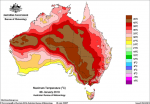
Drought itself is quite a regular occurrence, we are quite dependent on the ENSO weather phenomenon, which has been teetering on switching to dry conditions (El Nino). What is pretty unusual are the sustained, country wide heat waves which are pulling the moisture out of everything. Adding to that, hay growing regions that normally supply the dry areas are themselves in drought and have been unable to grow the amount of hay needed to sustain both coastal and inland demand. I will attach a heat map from early January, the heatwaves were relentless over most of the temperate regions.

Gusbear
Well-Known Member
https://en.m.wikipedia.org/wiki/Drought_in_Australia
I’m in Melbourne around 10km outside the city centre so although we are struggling in the heat, it’s nothing compared to those poor souls out in the regional and outback areas. I really do feel for them and their livestock.
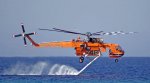
My horse is on a yard 25kms from me along the coast. He’s from County Durham so is really struggling in this heatwave, We have a large lake on the property and are often visited by ‘Elvis’ the water bombing helicopter to collect water to help put out grass and bushfires.
It’s been an horrendous few weeks. Praying for rain and a cool change.
The bushfire threat is a big worry and one that is constantly at the back of your mind.
I’m in Melbourne around 10km outside the city centre so although we are struggling in the heat, it’s nothing compared to those poor souls out in the regional and outback areas. I really do feel for them and their livestock.
My horse is on a yard 25kms from me along the coast. He’s from County Durham so is really struggling in this heatwave, We have a large lake on the property and are often visited by ‘Elvis’ the water bombing helicopter to collect water to help put out grass and bushfires.
It’s been an horrendous few weeks. Praying for rain and a cool change.
The bushfire threat is a big worry and one that is constantly at the back of your mind.
Attachments
shanti
Well-Known Member
Shanti, I think I remember you were on the East Coast somewhere? I moved from autumn/winter with absolutely no rain and nothing on the ground to a very wet and wintery Tassie. Now the tables have turned, although the hay season has been excellent and hay is eye wateringly cheap in comparison ($2.50-$10 a bale), we have had only 1mm of rain this month:/
Thats the worry, places that usually don't become drought effected are starting to dry up. Hope you are safe from the fires!
Fransurrey
Well-Known Member
Ah, but climate change is fake news, right? Hope you guys out there get some rain, soon. I can't imagine how hard it is for farmers and rural communities. :-(
CrazyMare
Well-Known Member
I can believe its awful. My sister lives in Melbourne. She has been sending pictures with heat tags of 42 deg c.
She organises events like Equitana, Ironman etc and has been having real problems because of the weather and keeping people safe
She organises events like Equitana, Ironman etc and has been having real problems because of the weather and keeping people safe
TPO
Fly paper for freaks 🍀
I worked on cattle stations in the territory way back in 2003. The hottest it got to then was 42 degrees C but that was during their winter and before the wet seasons. It was a different type of heat and being that dry we still done 5am-6pm of manual labour in it. The worst day was when it had rained the night before, it was so humid that from 5am-9.30am we were all soaked through jeans and shirts with sweat (nice image) because of the humidity. Where we were there was lots of bore water and they even used to manage to water "lawn" so that there was some green amongst all the red dust, cactus and termite mounds!
The stations that I was on used choppers (as described above) and horses to muster and move stock (40,000 on 1million acres at one station). We'd often come across herds of wild donkey's and camels when out mustering... I did think I was having a hallucination the first time I spotted camels!
Australia (I think specifically outback QLD) has been suffering from a serious drought for a few years now. Lots of station owners are having to shoot their stock because there's no hay/grass/water. It's been really bleak and, as you can imagine, there is a lot of ill feeling towards the government for not providing any sort of support and help. There are lots of fundraisers to organise hay runs to get feed to the places that need it.
It is desperately sad and I really hope there are no bushfires
The stations that I was on used choppers (as described above) and horses to muster and move stock (40,000 on 1million acres at one station). We'd often come across herds of wild donkey's and camels when out mustering... I did think I was having a hallucination the first time I spotted camels!
Australia (I think specifically outback QLD) has been suffering from a serious drought for a few years now. Lots of station owners are having to shoot their stock because there's no hay/grass/water. It's been really bleak and, as you can imagine, there is a lot of ill feeling towards the government for not providing any sort of support and help. There are lots of fundraisers to organise hay runs to get feed to the places that need it.
It is desperately sad and I really hope there are no bushfires
Aru
Well-Known Member
Its been an unusual season here so far this summer. I'm on the Gold coast and we usually get a lot of summer storms rolling in. Minimal this year....we have been lucky enough here thanks to the local geography that the severe extremes of 40 plus haven't appeared...yet. Queensland over the early summer had a massive amount of fires though even compared to normal. At one stage there was a satellite image from the space station showing the level of smoke and fire present.
Australia however is drought prone thanks to the climate type here and its reliance on the ENSO system which isn't always following a reliable pattern...but it does appear to be getting more extreme.
There is also an element where a lot of the land simply cannot withstand the european farming methods and the holding of non native animals on the land. Farmers have tried to adapt here but desalination, drought conditions and the reliance of irrigation(thats pulling from the limited ground water) mean this issue was a ticking time bomb....and this year the grasslands/breadbasket regions that usually grow the hay and grain were in severe drought so limited amounts was grown so there was massive animal food shortages as a knock on effect. Hay runs and charity runs etc occurred but those are short term measures and unsustainable if this becomes a repeated pattern.
Brumbies also are not native to Australia and are less well adapted then some of the native wildlife-native animals are also struggling btw.
Its been a host of tragedies with the drought this year with thousands of stock being shot out west. There simply isn't any food or water available to feed them and theres nowhere better to send or sell them to...so they tried to cull numbers so at least some could survive. There has been a lot of farmers following the same path as the stock as they lose entire livelihoods and generations of farming livelihoods to the banks due to debt....and theres a lot of unhappiness with the level of aid the government provided.
This isn't just brumbies dying at the moment, the way of life on the farms and stations across the drought affected lands are under threat of being lost. They are struggling to keep owned animals alive at the moment,its improved a little but it hasn't improved significantly enough for the regions to recover yet...and Australian summer isn't over yet. The worse of the heat may still occur....it amazes me that this place was colonised so well sometimes, there a massive amount of Australia that is a harsh landscape and very unforgiving.
The brumbies are a pest, and as a non native species they are not very high on the list of priorities here at the moment. Nature is cruel in its way of population control and in times of drought only the lucky or those who can adapt to the climate will survive....and thats also before you get into the logistics of it.
A cull may be kinder then letting nature run its course...but its actually not that easy to do. Australia is bigger then Europe after all and many of these areas are very very remote. Bringing water/food to a pest species, bar perhaps in the areas close the cites, is not something that would be done here.
They also tend to just poison a lot of the predators in the outback as feral control (with 1080-nasty stuff!) There is a VERY different attitude towards dealing with pest specie's here.
Australia however is drought prone thanks to the climate type here and its reliance on the ENSO system which isn't always following a reliable pattern...but it does appear to be getting more extreme.
There is also an element where a lot of the land simply cannot withstand the european farming methods and the holding of non native animals on the land. Farmers have tried to adapt here but desalination, drought conditions and the reliance of irrigation(thats pulling from the limited ground water) mean this issue was a ticking time bomb....and this year the grasslands/breadbasket regions that usually grow the hay and grain were in severe drought so limited amounts was grown so there was massive animal food shortages as a knock on effect. Hay runs and charity runs etc occurred but those are short term measures and unsustainable if this becomes a repeated pattern.
Brumbies also are not native to Australia and are less well adapted then some of the native wildlife-native animals are also struggling btw.
Its been a host of tragedies with the drought this year with thousands of stock being shot out west. There simply isn't any food or water available to feed them and theres nowhere better to send or sell them to...so they tried to cull numbers so at least some could survive. There has been a lot of farmers following the same path as the stock as they lose entire livelihoods and generations of farming livelihoods to the banks due to debt....and theres a lot of unhappiness with the level of aid the government provided.
This isn't just brumbies dying at the moment, the way of life on the farms and stations across the drought affected lands are under threat of being lost. They are struggling to keep owned animals alive at the moment,its improved a little but it hasn't improved significantly enough for the regions to recover yet...and Australian summer isn't over yet. The worse of the heat may still occur....it amazes me that this place was colonised so well sometimes, there a massive amount of Australia that is a harsh landscape and very unforgiving.
The brumbies are a pest, and as a non native species they are not very high on the list of priorities here at the moment. Nature is cruel in its way of population control and in times of drought only the lucky or those who can adapt to the climate will survive....and thats also before you get into the logistics of it.
A cull may be kinder then letting nature run its course...but its actually not that easy to do. Australia is bigger then Europe after all and many of these areas are very very remote. Bringing water/food to a pest species, bar perhaps in the areas close the cites, is not something that would be done here.
They also tend to just poison a lot of the predators in the outback as feral control (with 1080-nasty stuff!) There is a VERY different attitude towards dealing with pest specie's here.
Last edited:
TPO
Fly paper for freaks 🍀
Its been an unusual season here so far this summer. I'm on the Gold coast and we usually get a lot of summer storms rolling in. Minimal this year....we have been lucky enough here thanks to the local geography that the severe extremes of 40 plus haven't appeared...yet. Queensland over the early summer had a massive amount of fires though even compared to normal. At one stage there was a satellite image from the space station showing the level of smoke and fire present.
Australia however is drought prone thanks to the climate type here and its reliance on the ENSO system which isn't always following a reliable pattern...but it does appear to be getting more extreme.
There is also an element where a lot of the land simply cannot withstand the european farming methods and the holding of non native animals on the land. Farmers have tried to adapt here but desalination, drought conditions and the reliance of irrigation(thats pulling from the limited ground water) mean this issue was a ticking time bomb....and this year the grasslands/breadbasket regions that usually grow the hay and grain were in severe drought so limited amounts was grown so there was massive animal food shortages as a knock on effect. Hay runs and charity runs etc occurred but those are short term measures and unsustainable if this becomes a repeated pattern.
Brumbies also are not native to Australia and are less well adapted then some of the native wildlife-native animals are also struggling btw.
Its been a host of tragedies with the drought this year with thousands of stock being shot out west. There simply isn't any food or water available to feed them and theres nowhere better to send or sell them to...so they tried to cull numbers so at least some could survive. There has been a lot of farmers following the same path as the stock as they lose entire livelihoods and generations of farming livelihoods to the banks due to debt....and theres a lot of unhappiness with the level of aid the government provided.
This isn't just brumbies dying at the moment, the way of life on the farms and stations across the drought affected lands are under threat of being lost. They are struggling to keep owned animals alive at the moment,its improved a little but it hasn't improved significantly enough for the regions to recover yet...and Australian summer isn't over yet. The worse of the heat may still occur....it amazes me that this place was colonised so well sometimes, there a massive amount of Australia that is a harsh landscape and very unforgiving.
The brumbies are a pest, and as a non native species they are not very high on the list of priorities here at the moment. Nature is cruel in its way of population control and in times of drought only the lucky or those who can adapt to the climate will survive....and thats also before you get into the logistics of it.
A cull may be kinder then letting nature run its course...but its actually not that easy to do. Australia is bigger then Europe after all and many of these areas are very very remote. Bringing water/food to a pest species, bar perhaps in the areas close the cites, is not something that would be done here.
They also tend to just poison a lot of the predators in the outback as feral control (with 1080-nasty stuff!) There is a VERY different attitude towards dealing with pest specie's here.
I have relatives in rural QLD and they were always suffering with the drought when raising cattle. Approx 20yrs ago they switched from livestock to citrus fruits as they couldn't cope with the suffering the drought inflicted on the animals (buy Bliss lemons and limes
 ). It genuinely has a devastating effect on station owners/managers/staff.
 So much of Australia is being bought up by other countries I'm guessing that way of life will be changing radically in coming decades. I don't think anyone can really appreciate the magnitude of the country unless you've been there and seen it, it's immense. The further into the outback the further back in time you travel...
Aru
Well-Known Member
This country is occasionally indescribable to be honest. Worlds apart from the uk and Ireland. So so similar in some ways but so distinctly different in others. The urban areas trick people into seeing one small section of the place.
I've the TV on at the moment, have had a flood warning ad with advise on preparing for flood season and the various risks and dos and dont's with that, then a few moments later and ad for have you got a fire plan and examples of various scenarios that may get you killed all playing out on scene....both are equally likely to be an issue over the next month in this region...and I live in a relatively urban area in one of the least extreme regions.
There's massive changes a coming here over the next decade I fear, the governments a disaster and keeps changing prime minister as well.
They do say may you live in interesting times as a curse for a reason.
I've the TV on at the moment, have had a flood warning ad with advise on preparing for flood season and the various risks and dos and dont's with that, then a few moments later and ad for have you got a fire plan and examples of various scenarios that may get you killed all playing out on scene....both are equally likely to be an issue over the next month in this region...and I live in a relatively urban area in one of the least extreme regions.
There's massive changes a coming here over the next decade I fear, the governments a disaster and keeps changing prime minister as well.
They do say may you live in interesting times as a curse for a reason.
TPO
Fly paper for freaks 🍀
This country is occasionally indescribable to be honest. Worlds apart from the uk and Ireland. So so similar in some ways but so distinctly different in others. The urban areas trick people into seeing one small section of the place.
I've the TV on at the moment, have had a flood warning ad with advise on preparing for flood season and the various risks and dos and dont's with that, then a few moments later and ad for have you got a fire plan and examples of various scenarios that may get you killed all playing out on scene....both are equally likely to be an issue over the next month in this region...and I live in a relatively urban area in one of the least extreme regions.
There's massive changes a coming here over the next decade I fear, the governments a disaster and keeps changing prime minister as well.
They do say may you live in interesting times as a curse for a reason.
I've got friends near Rockhampton who were affected by the flood waters previously and are bracing for it again. It was just crazy! I saw the flooding at one national park and all I could think of were how many crocs there would be!!
Mule
Well-Known Member
The little green patch on the map must be heaven!Drought itself is quite a regular occurrence, we are quite dependent on the ENSO weather phenomenon, which has been teetering on switching to dry conditions (El Nino). What is pretty unusual are the sustained, country wide heat waves which are pulling the moisture out of everything. Adding to that, hay growing regions that normally supply the dry areas are themselves in drought and have been unable to grow the amount of hay needed to sustain both coastal and inland demand. I will attach a heat map from early January, the heatwaves were relentless over most of the temperate regions.
View attachment 29224
Mule
Well-Known Member
Why aren't the government providing support?I worked on cattle stations in the territory way back in 2003. The hottest it got to then was 42 degrees C but that was during their winter and before the wet seasons. It was a different type of heat and being that dry we still done 5am-6pm of manual labour in it. The worst day was when it had rained the night before, it was so humid that from 5am-9.30am we were all soaked through jeans and shirts with sweat (nice image) because of the humidity. Where we were there was lots of bore water and they even used to manage to water "lawn" so that there was some green amongst all the red dust, cactus and termite mounds!
The stations that I was on used choppers (as described above) and horses to muster and move stock (40,000 on 1million acres at one station). We'd often come across herds of wild donkey's and camels when out mustering... I did think I was having a hallucination the first time I spotted camels!
Australia (I think specifically outback QLD) has been suffering from a serious drought for a few years now. Lots of station owners are having to shoot their stock because there's no hay/grass/water. It's been really bleak and, as you can imagine, there is a lot of ill feeling towards the government for not providing any sort of support and help. There are lots of fundraisers to organise hay runs to get feed to the places that need it.
It is desperately sad and I really hope there are no bushfires
Northern
Well-Known Member
Why aren't the government providing support?
Too busy playing puppet to Fake News America, spending money on submarines for an imminent invasion of course and squabbling amongst themselves. Not to mention they tried to keep the megatonnes of hay and animal feed stockpiled in the harbours for export quiet...
MagicMelon
Well-Known Member
You need to understand that there is NO water and NO feed left in these regions, it hasn't rained for years in some places and some children have never even experienced rainfall. Communities out there are relying on bottled water transported in on trucks, from thousands of kms away. Unfortunately culling the animals is the kindest way to deal with this, they should never have died like that. I know its hard, but until you experience a drought so severe farmers are having to kill off their stock due to lack of feed and water, do not judge the humane culling of suffering animals.
So if there is often no water in these regions, why on earth do people think "hell I know, I'll bring in some animals, oh and big ones that need plenty of water"?!?!
Mule
Well-Known Member
No wonder the farmers are angry. The government shouldn't allow exportation of animal feed when it's needed at homeToo busy playing puppet to Fake News America, spending money on submarines for an imminent invasion of course and squabbling amongst themselves. Not to mention they tried to keep the megatonnes of hay and animal feed stockpiled in the harbours for export quiet...


Blazingsaddles
Well-Known Member
But the land owners/farmers must be complicit in the exportation of hay & feed, surely?Too busy playing puppet to Fake News America, spending money on submarines for an imminent invasion of course and squabbling amongst themselves. Not to mention they tried to keep the megatonnes of hay and animal feed stockpiled in the harbours for export quiet...
Northern
Well-Known Member
So if there is often no water in these regions, why on earth do people think "hell I know, I'll bring in some animals, oh and big ones that need plenty of water"?!?!
I don't think you quite understand the scale of the livestock stations here. Millions of acres, space to run stock (meat supply for Australia and export), this isn't something that can be done in the more fertile regions which are more highly populated. They don't just eat the grass, small shrubs form part of their diet and they do get moisture from those. Stations use bores to provide water, but the groundwater is now so depleted it is starting to affect supplies. Generally most farms are quite prepared for drought, but drought on the current scale is unheard of and that's why they're starting to suffer. The wild animals are feral, and have been there for hundreds of years. Numbers are hard to control because of the sheer size of the outback.
Gusbear
Well-Known Member
I went to school with a girl whose family owned a cattle station. It was 1 million acres! Their ‘next door’ neighbours were over a 100km drive away.
The largest cattle station here in Oz is around 5 million acres.
These places are incredibly remote. It takes days to drive to them from the nearest towns.
To compare England is 60 million acres, Australia’s cattle stations alone cover 120 million acres.
The largest cattle station here in Oz is around 5 million acres.
These places are incredibly remote. It takes days to drive to them from the nearest towns.
To compare England is 60 million acres, Australia’s cattle stations alone cover 120 million acres.

SEL
Well-Known Member
I worked on the west coast back in 2002/03. There was a drought then, but nothing like what you have now. It was heartbreaking to see sheep that were literally fleeces hanging off skeletons - much better to shoot than to put them through that. We'd come across horses that were obviously not feral but had just been turned away to fend for themselves. I got in an argument with a local when I said I would prefer to shoot them than turn them away to starve.
Australian equivalent of the RSPCA turned up on my first day at work having been called out by a British tourist on holiday nearby. The horses on the ranch were definitely skinny by UK standards but nowhere near welfare cases. The inspector had a good look round and asked that the ones that were on the more skinny side were fed separately so they couldn't be bullied, but admitted that the stock on the farm was in far, far better condition than most locally - and there was little farmers could do anyway. We had grain on order at the time but it was stuck on a ship somewhere. Round bales of straw going out every day so at least they had fibre in their bellies - but definitely no grass!
I really don't envy you at the moment. I'd much rather have the snow today than be sitting in 40 degrees worrying about fires and feeding my horses.
Australian equivalent of the RSPCA turned up on my first day at work having been called out by a British tourist on holiday nearby. The horses on the ranch were definitely skinny by UK standards but nowhere near welfare cases. The inspector had a good look round and asked that the ones that were on the more skinny side were fed separately so they couldn't be bullied, but admitted that the stock on the farm was in far, far better condition than most locally - and there was little farmers could do anyway. We had grain on order at the time but it was stuck on a ship somewhere. Round bales of straw going out every day so at least they had fibre in their bellies - but definitely no grass!
I really don't envy you at the moment. I'd much rather have the snow today than be sitting in 40 degrees worrying about fires and feeding my horses.