Horse’s confirmation

egemini

New User
Joined
9 July 2022
Messages
3
Visit site
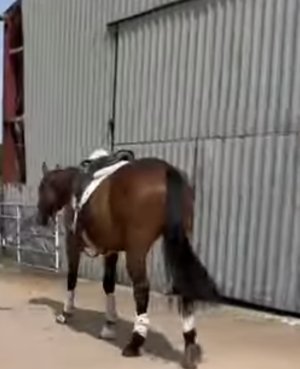
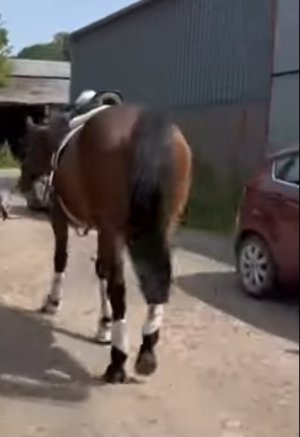
Hi just wondering if anyone has any experience or advice they can offer. I went to view a horse yesterday he’s 6yo TB and he was lovely, he’s established in his flat work and loves hacking has been to XC country courses etc my only worry is that he has a wide back legs behind, I’ve been told that he’s always been that way and it’s never caused him any problems or lameness but he won’t pass a vetting. Struggling to attach a video but there’s a couple of pics below in the meantime :)


IMG_4948.jpegIMG_4947.jpeg
 
The photos aren't brilliant but he doesn't look to be especially wide behind, maybe a bit for a TB but unless you want to show him, I wouldn't think it's significant.
I think if it's the vendor who has told you he won't pass the vet, there is something else going on. If it's not the vendor who said it, ignore whoever it was.
If you do have him vetted, ask for bloods to be taken.
 
I dislike base narrow or base wide. Essentially every step they take is going to put pressure somewhere on the skeletal system. For me it would be about how they stand in rest with their posture. I suspect it won't be great and that tells you a lot. If their comfortable position looks odd that is essentially because they have learnt already to compensate.
 
What would worry me particularly is stifle problems but it just as easily be hock problems or both plus other things .
If you really like this horse then you must get a five stage vetting ftom an experienced equine vet that does lots of pre purchase examinations.
Also consider if you have the experience time and facilities to develop a horse like this properly.
I do hope they are not asking a lot of money for him.
 
Putting aside the lack of empathy with people who might have dyslexia, struggle with spelling and/or grammar in other ways, are beholden by the autocorrect on their phone or English is not their first language ....

OP, if you like the horse definitely get him 5* vetted. Conformation alone isn't likely to influence the suitability of a horse in a vetting but it can influence factors such as what do you want to do with them.

The same horse with the same conformation issues can be deemed suitable for one job (e.g hacking and light schooling) but not be deemed suitable for another (e.g BE90) so you really need to have an honest chat with the vet about what you hope to do with the horse and go from there.

I'd be very wary of any seller that actively discouraging a vetting, personally.
 
Last edited:
I've got a very wonky pony who is capable of low level ridden activities so the vet will want to know your aspirations before the vetting. If the horse is lame then they'll stop the vetting but if every horse with less than perfect conformation failed vettings we'd have very few sales!
 
Wide or narrow, front or behind, is more about posture and movement patterns and less immutable conformation. Poor movement patterns are very common and have both cause (may be back in the mists of time, even foaling trauma) and effect, ie wear and tear as body parts work less than optimally.

Some horses cope all.theor lives and barely show effects, downsides, but most will show that wear and tear and with joint and back issues over time. Many of these are absolutely seen as normal, just "one of those things", and we inject and crack on.

In short it could be something or nothing, I'd want to look very closely at his patterns of movement static posture, and see what history is known. Equitopiacenter.com has some great resources including Sue Dysons work on assessing mild lameness, and you may have a professional contact of course who could have you assess him without needing to go to a vetting yet.
 
Red flags! 🚩 🚩

Probably has a stifle issue or hocks or something else from racing days, how much are they wanting for him? If you really like him I’d pay the £300-400 for a 5 stage vetting then you will know…has he already been vetted?? Did someone else try and buy him? I would ask this question. Like the others say it’s not a reason to not pass a vetting, not that they pass or fail now anyway it’s about suitability
 
Wide or narrow, front or behind, is more about posture and movement patterns and less immutable conformation. Poor movement patterns are very common and have both cause (may be back in the mists of time, even foaling trauma) and effect, ie wear and tear as body parts work less than optimally.

Some horses cope all.theor lives and barely show effects, downsides, but most will show that wear and tear and with joint and back issues over time. Many of these are absolutely seen as normal, just "one of those things", and we inject and crack on.

In short it could be something or nothing, I'd want to look very closely at his patterns of movement static posture, and see what history is known. Equitopiacenter.com has some great resources including Sue Dysons work on assessing mild lameness, and you may have a professional contact of course who could have you assess him without needing to go to a vetting yet.

In an ex racer its far more likely to be a physical issue than being posture/movement patterns. They are just a side effect in a lot of horses.
 
In an ex racer its far more likely to be a physical issue than being posture/movement patterns. They are just a side effect in a lot of horses.

Where does one end and another start? I'm not saying it's NOT a physical issue, just putting it all in context, because even most vets don't talk about movement patterns and their contribution to physical issues, it's a vicious circle. Minor issue causes movement compensation and a change in posture, more issues show up elsewhere as the horse compensates.
 
Top