Horse can't cross hind leg over to move back end away!

cblover

Well-Known Member
Joined
1 October 2009
Messages
1,887
Visit site
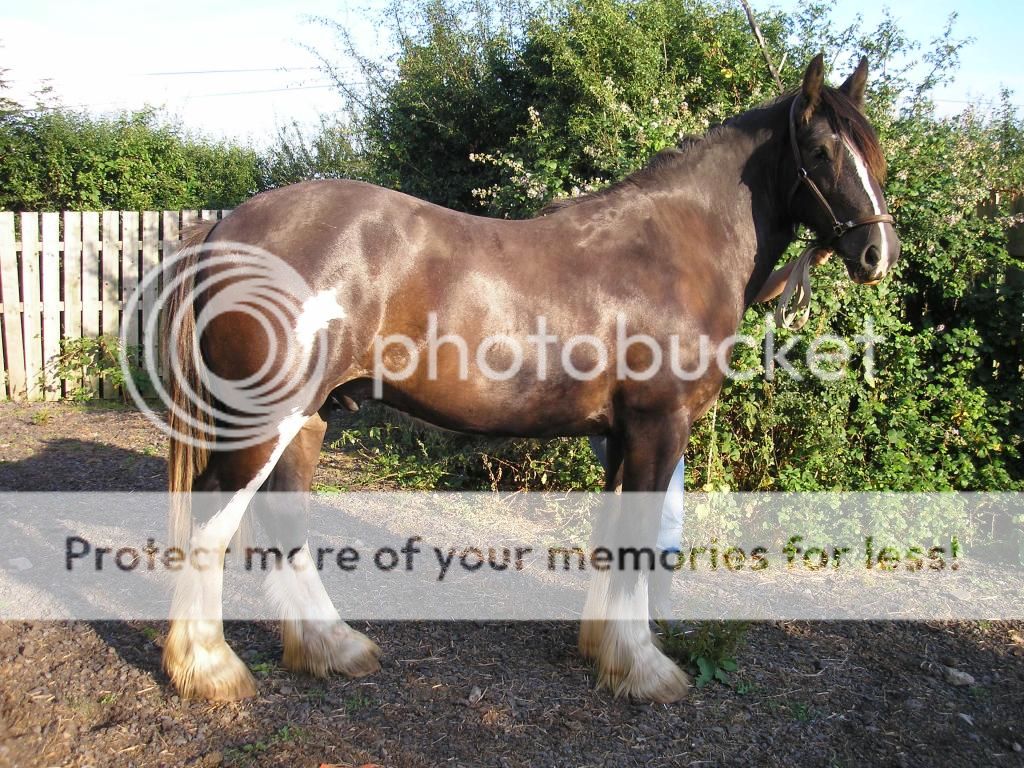
Hi peeps. My Clyde x trad cob is coming 4 this July and 16hh. He's a well built lad and until now hasn't been anywhere near ready for backing. I'm hoping this spring he will be but there's no rush really.
Anyway.....on and off for the last couple of years I've noticed that when I've worked on ground work and asked for 'over' he sometimes can't cross his hind leg over to move his back end away. It's more of a shuffle/pivet type movement. Not always as I say. I've spoke to my vet about it in passing who hasn't seemed too worried but I've asked him to come back again this Wednesday. I've put it down to him growing as he's always had a very powerful back end and I've been waiting for the rest of him to catch up. Lol

I can ask for 'over' and get a swishy tail and reluctance to move over. I may be reading way too much into it, but need to know one way or another.

Anyone got any ideas or experiences of a similar thing? Opinions/views could be great. Thanks.
 
Not too much to contribute but will watch this post carefully, my guy is the same, he is broken and rides well, jumps well but again turning him, he doesn't cross over! It will be interesting to see what comes back. Best of luck with your guy :-)
 
Instead of asking them to move over, turn them about themselves. Stand yourself at their head, ask them to flex their neck (use a treat if needed) as they flex gently ask the hind quarter to step over by using your hand behind the girth.

Work in both directions and do it slowly allowing the inside hind to step under and across, you can't rush them because balance will be lost.
 
Thanks that what I have been doing but you explained it better than me. Sometimes he does and other times he can't/won't. I was thinking the tail swishing and general look of either annoyance or pain was the bit to worry about. I have to say, he's a big slow growing and thinking gelding who can only do one thing at a time. Maybe I just need to be real slow with him.
 
Thanks that what I have been doing but you explained it better than me. Sometimes he does and other times he can't/won't. I was thinking the tail swishing and general look of either annoyance or pain was the bit to worry about. I have to say, he's a big slow growing and thinking gelding who can only do one thing at a time. Maybe I just need to be real slow with him.

I have a clyde x RID who was wooden, so wooden she could not turn around to allow me to close a gate behind her. I used carrot stretches and then moved onto to the turns on the forehand/stepping through and over behind. It took a while to free her up, she was 6 and had never been ridden in anything more than a straight line on the forehand before I bought her. She could not canter as both her hinds worked together.

Just keep doing the exercises, don't back off him but just keep encouraging him to step under and through. At the end of the day it is a simple movement that is used in all sorts of ridden work, once he is free in hand you can move onto leg yield under saddle. Remember to work equally on both reins and you will succeed. My horse will stiffen again if I don't keep her supple, these heavy types are built to pull barges not do fancy footwork so need all the help they can get.
 
Thanks so much. I've got it into my head that he's got OCD or something equally awful and serious. Bless him he hasn't had it easy having to endure over 20 abscesses in his feet before he was 18 month old. I got that sorted and then noticed this. I hope it's just his build and not the fact he's written off before I back him. I'd be heart broken. Do you think the tail swishing and ears back is because he finds it hard to do rather than OCD or anything serious? I don't mind working on stretches with him.
 
Hi

That kind of movement could be a possible symptom of ataxia, which is caused by wobblers type conditions - sorry not wishing to alarm :)

A simple test for this is a sway test - one person leads the horse and the other stand by his tail. When the horse is walking the person by the tail takes hold of the tail and pulls sideways, gentle but firm. A normal horse may get pulled off balance (as he won't be expecting it) but will immediately correct himself. If you immediately try the same thing again, you wont be able to pull him off his line. An ataxic horse will allow you to pull his hind end sideways with no resistance at all, and may not even recognise that you're doing something. One of mine is ataxic, when I first did this test (with the vet) I couldn't believe how light he was to pull over. My dog has more strength on her lead. The pulling in small circles as described by Adorable Alice is another test that vets use.

The symptoms you describe could be ataxia, but I think that big slow growing horses can sometimes show these symptoms whilst they are developing and then grow out of them.

I'd advise trying the sway test, if he's fine with that it's probably just big baby syndrome and not knowing where to put his feet!


Edit - just read the updates, hopefully nothing as worrying as ataxia. Good luck!
 
Last edited:
Thanks blue horse, I'll try that tomorrow. He's had an mot recently and the lady pulled his tail to which he immediately corrected himself and stood up square.
AA - he seems to play ok with his shettie pal and move ok albeit a bit slow and dopey for want of a better word. He gets down to roll ok but I did notice when he got back up today he seemed to rush and put his back legs underneath him to stand up. I could be reading too much into that tho. The ground is wet and it could of been a one off.
 
Morning all.
Bluehorse-I tried the tail pulling this morning with hubby leading and he corrected himself immediately and there was no way I could pull him off balance again. He was rock steady.
AA-I worked very slowly with him today asking him to turn around himself and he crossed his back leg over most of the time. He didn't at first but the slower I went the more times he got it right. When I ask in his stable I still get the tail swishing so it could be a dominance thing or maybe he feels the space isn't enough to do that....I'm not sure.
Thanks both for yr help. X
 
Morning all.
Bluehorse-I tried the tail pulling this morning with hubby leading and he corrected himself immediately and there was no way I could pull him off balance again. He was rock steady.
AA-I worked very slowly with him today asking him to turn around himself and he crossed his back leg over most of the time. He didn't at first but the slower I went the more times he got it right. When I ask in his stable I still get the tail swishing so it could be a dominance thing or maybe he feels the space isn't enough to do that....I'm not sure.
Thanks both for yr help. X

Excellent, remember to do both sides equally.

It is a long way from his feet to his brain ! he will soon pick it up and the more you do with him the easier it will be for him as he strengthens.

The tail swishing in the stable is likely to be dominance, I am rather old in my ways and hold the view that when I ask them to do move or do something they do it. A horse that pulls faces or resists stepping back or over will be asked once, told once and then receive a poke in the ribs. Try to be consistent, fair and firm with a young horse, it will pay dividends in the future.
 
AA as always brilliant advice, my girly was always gangly and still has supermodel legs but from 16 months old when I got her to now (rising 4 ) I have always done carrot stretches, it helps stretch her, engage her brain and recently whilst on box rest to keep stitches in and dry I taught her to bow :) OP you'll be cursing the day you got him so nimble ;) but keep it up, I like to do a few carrot stretches before and after work . In fact when I backed her she would stretch and no my toes cross he felt presence there :)
 
Thanks. I think because I've been doing lots of backing up with him, he is thinking 'back' all the time. So asking for a sidewards movement always seems to start with a step back and of course it makes crossing his hind legs under more difficult. I need to break it down and set him up for success.

He's built like a tank too! Lol
 
Hi

That kind of movement could be a possible symptom of ataxia, which is caused by wobblers type conditions - sorry not wishing to alarm :)

A simple test for this is a sway test - one person leads the horse and the other stand by his tail. When the horse is walking the person by the tail takes hold of the tail and pulls sideways, gentle but firm. A normal horse may get pulled off balance (as he won't be expecting it) but will immediately correct himself. If you immediately try the same thing again, you wont be able to pull him off his line. An ataxic horse will allow you to pull his hind end sideways with no resistance at all, and may not even recognise that you're doing something. One of mine is ataxic, when I first did this test (with the vet) I couldn't believe how light he was to pull over. My dog has more strength on her lead. The pulling in small circles as described by Adorable Alice is another test that vets use.

The symptoms you describe could be ataxia, but I think that big slow growing horses can sometimes show these symptoms whilst they are developing and then grow out of them.

I'd advise trying the sway test, if he's fine with that it's probably just big baby syndrome and not knowing where to put his feet!


Edit - just read the updates, hopefully nothing as worrying as ataxia. Good luck!

I immediately thought this too. (these words are almost parrot fashion from my previous reply on the subject)! :)
 
Thanks applecart14. I did the tail test thing and he's rock solid. Although I was doing a bit of reading about it just in case.

I'm beginning to think some along the lines of him just being a big cart horse type who needs time and every movement broken down into small steps for him to understand.
 
Thanks applecart14. I did the tail test thing and he's rock solid. Although I was doing a bit of reading about it just in case.

I'm beginning to think some along the lines of him just being a big cart horse type who needs time and every movement broken down into small steps for him to understand.

Just remember fast growing 'cart horse' types are prone to wobblers so just be very careful how much hard feed you give him and make sure it is balanced correctly and is suitable for a young horse and if necessary contact a feed manufacturer help line for advice on the subject.

Just be aware that Shires, Quarter horses and WB are most commonly affected with wobblers, and geldings are more prevalent too.

This bloke is the bees knees on the subject, and here is an article he has written on the subject. http://www.learningabouthorses.com/savvy/wobblers.html

According to Dr. Cruz another cause may be Equine Protozoal Myeloencephalitis (EPM). But most often the etiology of the condition has been linked to osteochondrosis and nutritional factors including mineral imbalances.

When I talk to most horse owners who are feeding a variety of supplements and concentrates, they usually can’t tell me how the horse’s nutritional needs are being “balanced.” It is amazing how little most horse owners know about horse nutrition, but how much they are willing to feed “because he might need it.”
 
Last edited by a moderator:
Just remember fast growing 'cart horse' types are prone to wobblers so just be very careful how much hard feed you give him and make sure it is balanced correctly and is suitable for a young horse and if necessary contact a feed manufacturer help line for advice on the subject.

Just be aware that Shires, Quarter horses and WB are most commonly affected with wobblers, and geldings are more prevalent too.

This bloke is the bees knees on the subject, and here is an article he has written on the subject. http://www.learningabouthorses.com/savvy/wobblers.html

According to Dr. Cruz another cause may be Equine Protozoal Myeloencephalitis (EPM). But most often the etiology of the condition has been linked to osteochondrosis and nutritional factors including mineral imbalances.

When I talk to most horse owners who are feeding a variety of supplements and concentrates, they usually can’t tell me how the horse’s nutritional needs are being “balanced.” It is amazing how little most horse owners know about horse nutrition, but how much they are willing to feed “because he might need it.”


Very interesting article, thanks for posting it. There is 12 months between the two pictures below. I have never seen a yearling grow like this lad has. Feed wise he had half the recommended measure Suregrow in his first winter (12/13) with adlib haylage. He lived out most of the time. This winter he has had nothing other than haylage, no grass since December, he is barned overnight purely to save the fields. I have wondered what would have happened had I fed him at the rates the manufacturers of the bagged specialist feeds suggest.

Ted2009.jpg


26thjuly13005_zpsfcb43a53.jpg
 
Grown a bit !

He does not have any problems with crossing his back legs over and underneath him. As for his balance, well that all depends on whether he is looking in the direction of travel or not. He has has several crashes, but I am confident he is not a wobbler.
 
Thanks AA - Ted is fab. My boy is also called Ted...or Teddy...or Tedbert...or his real name Teddy 2 Shoes! My ted is tri coloured and currently covered in mud! lol

Feed wise he is on a bespoke recipe of vitamins and minerals from Forage Plus that is balanced to the analysis results of his hay. He's suffered with abscesses in the past which is how the analysis came about and he's been on it for two years now with only one abscess in that whole time. I'm hoping after this winter I can start to feed him a general winter/summer hoof balancer from the same company. But for now I'm happy to leave him on his special recipe. He gets that with fast fibre, hi fibre nuts, micronized linseed and bran. He never gets a carrot but sometimes has an apple. This is his breakfast and he has adlib hay.

I'll read that article later today, thanks for posting it.
 
Morning all. Saw something odd this morning with Ted.

He went down to roll, got down on his knees but his bum seemed to be stuck in the air. I was waiting for his back end to flop down and him to have a good roll, but he just got up again. I've never seen him do that. Saying that he did seem to have his eyes and ears fixed on something at the top of the field....so I'm not sure if he just decided not to roll rather than actually being stuck.

Horses eh!!!!!
 
I came upon your message while trying to find information on a problem my horse has. I was told by a vet and a chiro vet that not crossing over in behind is a sign of unevenness in build of muscles. In other words one side is weaker than the other or both sides can be weak. In my case, my just purchased four months ago 7 year old gypsy cob (the horse I've wanted all my life) has evidently been hurt somehow in her past, long ago, has a neurological issue with one hind leg. She can't cross over, at least well, because she isn't sure where her hind leg is and is afraid she might fall. The nerves stimulate the muscles which stimulate the leg. And it is also causing her pain as well. At first I naturally thought her bratty behavior was just that. But as I bonded with her, I came to realize that is was something medical. I would suggest a thorough exam by a chiro vet and a regular vet to be sure you aren't dealing with the same problem. When turning or moving her hindquarters over, instead of crossing over, she shuffles one foot next to the other. Since she doesn't know where her bad leg is going, she is resistant to crossing over since she could be stepping into a big black hole for all she knows. Hope this helps. Both vets said this kind of problem gets missed all the time and people chalk it up to "oh the horse is being a brat" "he is just being resistant and doesn't want to do what I ask" until one day the horse blows up under saddle like a rodeo horse or the horse suffers in silence until he is asked to do something he can't do due to weakness and falls down, which as we riders all know can be deadly. Hope this helps. Today was it a good day for me obviously as I have a long road ahead of me and I can't afford to send my horse off to an expensive therapeutic facility.
Cheers from Colorado

Hi peeps. My Clyde x trad cob is coming 4 this July and 16hh. He's a well built lad and until now hasn't been anywhere near ready for backing. I'm hoping this spring he will be but there's no rush really.
 
I also wanted to add that as I continued trying to get my mare to cross over in the hind, she would stomp defiantly her good rear leg and put her ears back because it hurt to make that movement. So I stopped doing it and called in the vets because that is not her typical demeanor. It's been a long day and I am heading off to bed. Hope everything works out for your horse, keep us posted please.
Cheers from Colorado

Hi peeps. My Clyde x trad cob is coming 4 this July and 16hh. He's a well built lad and until now hasn't been anywhere near ready for backing. I'm hoping this spring he will be but there's no rush really.
 
Haven't read all replies, but it could be something as simple as tight muscles... Just like how some people can tough their toes with straight legs and some can't. It is easy to improve, you just need to stretch out the muscles and make them more flexible. Lots of suppling work, carrot stretches... etc :)
 
Top