How to tell if a horse is a true black?

@Faracat - need you! :P I don't think there is though unless you know the breed only comes in like black and chestnut (Friesian only comes in Black for example)
 
If one of the parents carries one copy of cream then you could have a smoky black (50% chance). If one parent is homozygous cream, then you do have a smoky black. One smoky black I met had creamy fur inside her ears. She was a Welsh D, a breed that has lots of cream, so knowing the breed helps. You aren't going you get a smoky black purebred arab for example.

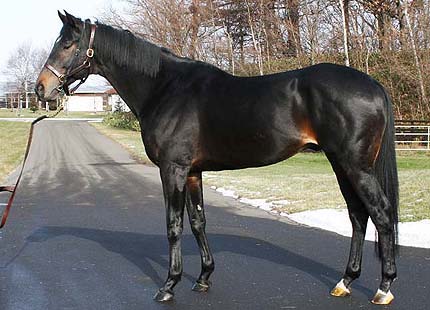
I have seen very dark seal browns wrongly called black but you can tell by looking at them.
legolas-etalon09.jpg


ETA - it also depends on how you define 'true' black. Is Ee with no black modifiers good enough, or does it need to be EE with no black modifiers, so it can't have chestnut based foals?
 
Last edited:
My yearling has been DNA tested and he is certainly a proper black, Ee. Same for my shetland he is a true black. I am now looking into getting my clydesdale tested to find out for sure what he is.

I don't know of any other way bar the test.
 
Interesting, thank you. I have always thought my horse was black, he does fade in the summer but this year he has 'brown tinge' round his eyes and muzzle, would this in fact make him a dark bay instead?
 
@Faracat - need you! :P I don't think there is though unless you know the breed only comes in like black and chestnut (Friesian only comes in Black for example)

Freisians come in chestnut too, (but rarely) google Red friesian for pics
 
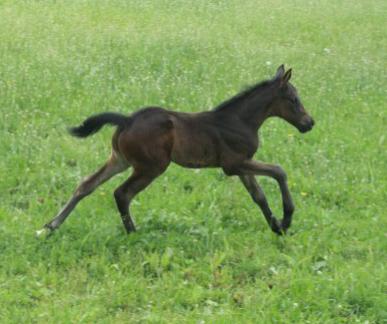
You can as a foal. A dark bay foal will have black legs, a black foal will have 'grey' legs

Bay

audi_gallop3.jpg


Black

mara050610a.jpg


My black boy :)

imagejpg1_zps9d3207a2.jpg


And now

f81cecf2-79ea-413a-958e-695a6148a15e_zpsfce63fa1.png
 
Interesting, thank you. I have always thought my horse was black, he does fade in the summer but this year he has 'brown tinge' round his eyes and muzzle, would this in fact make him a dark bay instead?

Copper deficiency can cause fading.

If the brown tinge around the eyes and muzzle was due to a modifying gene, it would be At, so seal brown, not bay. The fact that this has happened for the first time though, does make me wonder if it's not genetic. You can test for agouti (A = bay, At = seal brown, A+ = wild bay) but not all labs differentiate between the types.
 
Hmm that's interesting. I feed an all round vit + min supplement, will have to check if it contains copper. Would it hurt to feed extra? How long would it take to see a change in colour if it was that?

Does anyone know how much it costs to get DNA tested? (Not that I'm bothered what colour he technically is, just find it interesting!)
 
Yes and for some reason a few purebred greys have come out over the past years somehow both are very rare and purebred Friesians generally will only ever come into black

The greys aren't pure Friesian though, the chestnuts are.

http://www.eurodressage.com/equestrian/2007/03/21/nero-white-mystery-friesian-equitana-2007

Remember a grey has to have a grey parent unless you have a somatic mutation that happens to be exactly the same as the grey gene, or causes loss of pigment like the grey gene.

ETA - http://animalgenetics.eu/Equine/Coat-Color-Testing/equine-coat-colour-index.html
 
It's easy to tell true blacks when they are born. They have a silvery sheen to them. I always have my black foals DNA tested as once they shed out and sun bleach in the summer they take on a bay hue right in time for their inspections, so having the DNA results to hand there means they are registered correctly.
 
Top