Is it bred into them?…………..

Toby_Zaphod

Well-Known Member
Joined
8 August 2005
Messages
9,301
Location
Midlands
Visit site
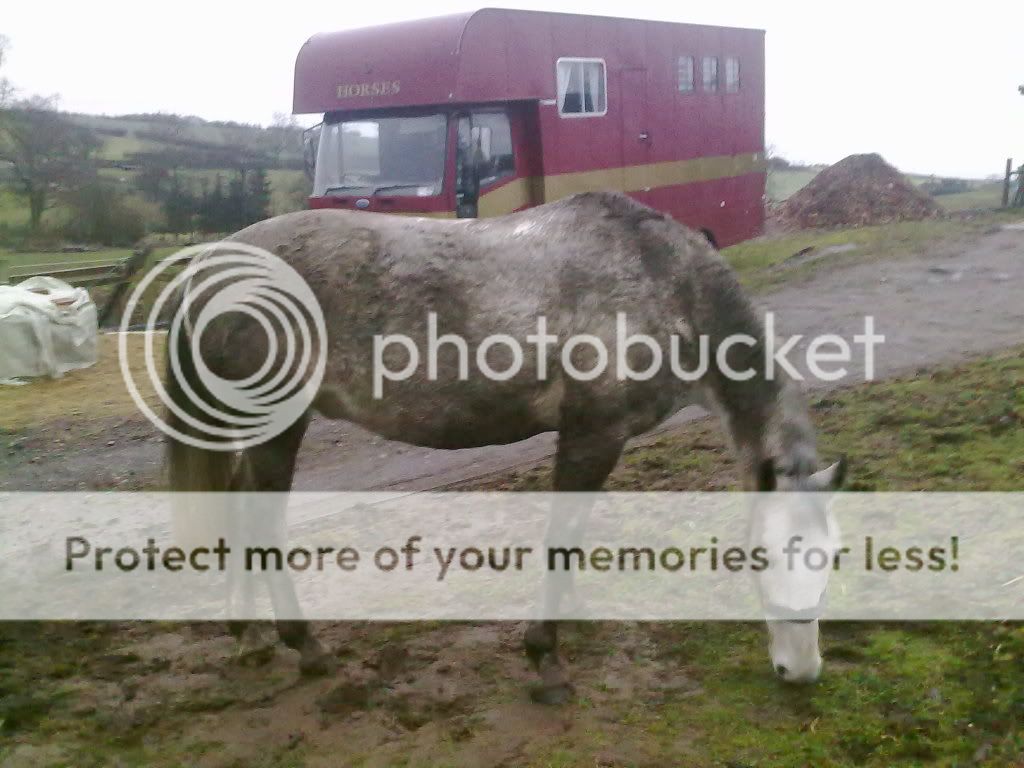
I have a bay & a grey. Each morning I get them out of their stables & the bay is normally clean but the grey is always horrible. He smells, he looks like he’s been tarmaced, you could enter him in a Chaps class with all the poo stains on him. He’s washed off every morning to try & keep the flies away that I know he’d attract. Is it all in the genes of a grey that they have to roll in poo more than any other horse? :(
 
Ok, there's a VERY good chance I'm making this up BUT I'm sure I remember reading somewhere that it was a build in survival mechanism for greys to make themselves dirty. As a grey they stand out in the environment yet dirty they camouflage in much better. Also horses will also often group together according to colour partly for the same reason but also because if they are being chased by a predator they don't want to be the one standing out.

Anyone else heard this :confused::D
 
Ok, there's a VERY good chance I'm making this up BUT I'm sure I remember reading somewhere that it was a build in survival mechanism for greys to make themselves dirty. As a grey they stand out in the environment yet dirty they camouflage in much better. Also horses will also often group together according to colour partly for the same reason but also because if they are being chased by a predator they don't want to be the one standing out.

Anyone else heard this :confused::D

Not heard this, but it makes perfect sense. Although I think there may be something to the pig gene theory as well! :D
 
Snap, I have a bay & a grey, & in both field & stable the grey is filthier by far. The bay rolls/sleeps on the dry, the grey actually wees, then digs up the wet to roll in. Especially round eyes where you can't scrub it with a stiff dandy.
I too have heard henbugs theory. And I did read somewhere that the grey is the lookout horse when its particularly dark/gloomy/ low vision etc. Partly because they are most vulnerable, but also cos the herd can read a greys body language at a greater distance/easier in those conditions, thus giving more warning time. Plus read while greys aren't more spooky or nervous, they are traditionally more alert to possible danger because of their vulnerability, at least in types that haven't had much breeding interference. Can't remember where I read either so don't quote me on it!
 
Silver was very into his camouflage! I mean really?! He was the only one ever in this state, plus this was last summer and it hadn't rained for an age and the ground was so hard it was cracking.... So how?!!
They have special skills :p
225136_10150287387484989_912388_n.jpg
 
Ok, there's a VERY good chance I'm making this up BUT I'm sure I remember reading somewhere that it was a build in survival mechanism for greys to make themselves dirty. As a grey they stand out in the environment yet dirty they camouflage in much better. Also horses will also often group together according to colour partly for the same reason but also because if they are being chased by a predator they don't want to be the one standing out.


Anyone else heard this :confused::D


Yes I read that somewhere too, makes sense actually!

My grey was always incredibly dirty.
 
Ok, there's a VERY good chance I'm making this up BUT I'm sure I remember reading somewhere that it was a build in survival mechanism for greys to make themselves dirty. As a grey they stand out in the environment yet dirty they camouflage in much better. Also horses will also often group together according to colour partly for the same reason but also because if they are being chased by a predator they don't want to be the one standing out.

Anyone else heard this :confused::D

Do you think horses have an idea of what colour they are, ok they recognise the friends from a distance proberly from colour first. Stable mirrors work as they can fool the horse that there is company with them, so they dont recognise themselves as being the reflexion. What an interesting subject, I have heard that brighter colour horses like greys and palominos can be more alert as they stick out in the herd to preditors, So covering themselves in dirt would darken down the brightness of their colour.
 
Ok, there's a VERY good chance I'm making this up BUT I'm sure I remember reading somewhere that it was a build in survival mechanism for greys to make themselves dirty. As a grey they stand out in the environment yet dirty they camouflage in much better. Also horses will also often group together according to colour partly for the same reason but also because if they are being chased by a predator they don't want to be the one standing out.

Anyone else heard this :confused::D

I think you are right; a few years ago I watched a David Attenburgh documentary about wild horses in America. In an area where there were no preditors the wild horses were all sorts of different colours but in another area where there were preditors (definately moutain lions & possibliby wolves) most of the horses were in various shades of brown.
He explained that this was because the greys, spotties & coloureds stood out more so were easier for preditors to pick off.
 
Here is my bay, sorry grey :p

His body is meant to be the same colour as his face :eek:

20012012422.jpg

Ha ha ha ha ha ha ha ha ha ha ha . . . :eek:

That is a wry laugh of recognition . . . Kal has done this more than once. In the depths of winter. With a long coat. When it was too cold to bathe him. Sigh.

I swear he's part hippo.

P
 
PS - this was last winter when he was on box rest and restricted turnout, I tried to improve his life by letting him graze round the yard, he did not repay me kindly :mad:
 
Snap, I have a bay & a grey, & in both field & stable the grey is filthier by far. The bay rolls/sleeps on the dry, the grey actually wees, then digs up the wet to roll in. Especially round eyes where you can't scrub it with a stiff dandy.
I too have heard henbugs theory. And I did read somewhere that the grey is the lookout horse when its particularly dark/gloomy/ low vision etc. Partly because they are most vulnerable, but also cos the herd can read a greys body language at a greater distance/easier in those conditions, thus giving more warning time. Plus read while greys aren't more spooky or nervous, they are traditionally more alert to possible danger because of their vulnerability, at least in types that haven't had much breeding interference. Can't remember where I read either so don't quote me on it!

This is really interesting . . . makes much sense, and could certainly explain why Kal loses the plot if left out with only either a non-leadery grey or a coloured for company. He is one of a herd of three - all greys. J is most definitely in charge - calm, confident, a little arrogant but most definitely boss. B can be jealous and possessive and makes sure he runs Kal off the best grass/hay, etc., but you wouldn't call him a natural leader. And then there's Kal . . . a born worrier, insecure, and very alert to anything out of the ordinary. If J is brought in first, and it's a particularly windy/scary day, Kal panics and turns himself inside out with worry.

P
 
Ok, there's a VERY good chance I'm making this up BUT I'm sure I remember reading somewhere that it was a build in survival mechanism for greys to make themselves dirty. As a grey they stand out in the environment yet dirty they camouflage in much better. Also horses will also often group together according to colour partly for the same reason but also because if they are being chased by a predator they don't want to be the one standing out.

Anyone else heard this :confused::D

That explains a lot. I have grey Shagya and bay Clevelands. My herd watch is a grey Shagya mare who if she hears the hunt in the distance immediately finds a hippo wallow to roll in.

We have a lot of feral cats in our yard. The siamese looking ones and multi-coloured cats all disappear eventually, the tabbies are born survivors.
 
Top