Is this viable grazing land?…

MummyMoo

Active Member
Joined
13 February 2018
Messages
32
Visit site
IMG_0354.jpegIMG_0353.jpeg

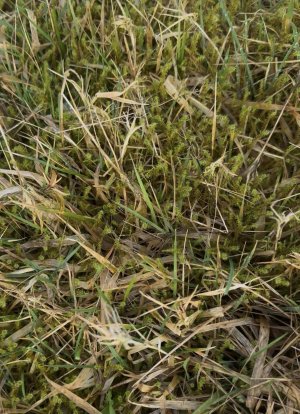
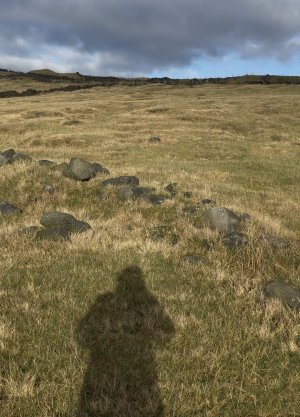
Hi. We went to see a property with this land. We’d want to graze 2/3 horses on it immediately but it hasn’t been grazed or maintained for a few years. It’s mossy and feels very spongy to walk on. I know very little about land management/grazing quality as we’ve always been on livery. From the photos, could anyone tell me if my horses will be able to graze it straight away or, if not, where would we start to improve the land. Please tell me if you think the field looks unsuitable and we should walk away…The stables and yard are fantastic but the fields are off putting. TIA
 
The larger pic looks fab, but the close-up pic tells us that currently there’s significant winter moss growth with majority grass die-off. For winter use the fields might at the moment quickly become a mud pit for 24/7 grazing, as you describe it’s soft under human foot, it’s likely easily poached land. I have a mossy field that I close off for winter completely. But the advantage you have is it is sloped and so will drain quicker than flat fields, and also the grass growth should increase quite well in spring with warmer temps. You’ll likely find the moss dies off during warmer months.
That slope is valuable for drainage.

Most moss isn’t toxic to horses, so it would be ok to use fields like that if that’s all you have, until improvements can be made. It may well be that moss is growing due to choked soil of dead grass material, if it hasn’t been used for a few years, so there’s less oxygen at soil level and moss takes over. I’d guess that’s more the reason for the moss as it’s usually found in flatter boggier fields over winter.

You could re sow with hardier grasses like cocksfoot/fescue/tall fescue/timothy mix as they root deep and help stabilise softer soils, aswell as provide stalkier less sweet grasses that tend to do well through wet and dry periods.

Try to find out the type of soil of the fields - bear in mind each field could have a different soil type - I have 3 different soil types in 5 fields on just 8 acres!

Jamie Jackson would applaud you for finding fields that are already on their way to becoming his ‘paddock paradise’ idea, with those random rocks strewn about! 🙂
 
View attachment 173271View attachment 173272

Hi. We went to see a property with this land. We’d want to graze 2/3 horses on it immediately but it hasn’t been grazed or maintained for a few years. It’s mossy and feels very spongy to walk on. I know very little about land management/grazing quality as we’ve always been on livery. From the photos, could anyone tell me if my horses will be able to graze it straight away or, if not, where would we start to improve the land. Please tell me if you think the field looks unsuitable and we should walk away…The stables and yard are fantastic but the fields are off putting. TIA
How many acres? Looks ideal, and far less issues with laminitis on moorland grazing. Looks like some sphagnum in there, probably get boggy if there’s over-concentration of horses in too small a patch.
Is it where you want to be? Plenty of hacking opportunities locally? Right sort of price? Be quick if so, likely to be other horse-folk pricking their ears. Good luck.
 
I would put some sheep on the roughest bits asap, some hard standing where you can feed the horses in winter. Depending on where it is, it is probably the wettest it will ever be just now, just about everywhere in the UK has had a very wet winterwith almost constant rain for weeks, so the water hasnt been able to drain away..
Of course you need the acreage. For 2 or 3 equines and a few sheep I would recommend at least 5 acres of that type of land
 
Last edited:
I'd have to get those rocks out, and those near the surface

It's amazing what can be done with improving land, miraculous infact

How many horses are there and how many acres?

You can see the new grass coming through, get some of that rough sturdy grass seed to add

Hopefully the water won't drain to the stables, you can put in drains to the worst parts

At least you are looking at it in the worst wettest winter to know the score
 
What a stunning location! I would be worried that the horses may trip and injure themselves on those rocks if going full pelt across the land. But other than that if everything else adds up yard and house wise it would be an opportunity not to be missed.
 
What a stunning location! I would be worried that the horses may trip and injure themselves on those rocks if going full pelt across the land. But other than that if everything else adds up yard and house wise it would be an opportunity not to be missed.
It looks to me as if 'those rocks' are what remains of drystone walls, they will be relatively easy enough for a couple of string lads to.puck up if you really want to, although, ime the horses soon learn to avoid obstacles like that.
 
What area of the country is this in??

OK....... so looking at this land, and the surrounding geography: the reservation I would have, and the question(s) I would want answered, are - what are those ridged bits on the escarpment on the skyline there?? They look like they could be old open-mine or extraction workings?? Possibly some kind of "industrial" history to the place? The shape of that hillside at the top of the picture just hints at a possible open-mining or extraction history. This is why I ask what area of the country this land is in. Because if there have been earthworks on that site, or near it, then it might benefit you to know exactly what has gone on, as there could be some very toxic and/or at the very least unhealthy mineral deposits in the soil left because of industrial activity in the past, some of which you might not want your horse to have access to, particularly as the geography of this field is such that the water-course would be on the downhill site of whatever is up there on the escarpment in the distance and therefore any mineral deposits would naturally come downhill through water course/seepage.

If I were looking to rent/buy this field, my first course of action would be to do some research into exactly what industrial activities might have occurred on the land in preceding years, and depending on that result, I would deffo get some soil tests to verify exactly what is residual in the soil.

On the plus side, it would be ideal for a good doer (like mine!), and because it also looks like it is fairly high-up in a windswept location would also be imminently suitable for a horse with sweet itch (I've had one). However the downside is that with those rocks present and the undulating surface, it would present very real difficulties if you ever wanted to get machinery onto the site for stuff like rolling/harrowing, or indeed any other groundworks required.

Hope these observations are helpful.
 
I was once on a livery yard with sloping fields. Not awful by any means, but not flat. A local pro showjumper kept 5-6 horses there one winter for a few months as he was between yards. He couldn’t turn out at all - they raced out on day one, leapt about and several fell over 😬! They were all successful enough to be worth a fair bit. He had them fetched back in and that was that!
 
Top