

PapaFrita
Well-Known Member
Tschiffely, Mancha and Gato and their trek from Buenos Aires to Washington DC, as it wouldve been told on the HHO forum
BTW, whilst the tone has been changed, the FACTS are correct (even the pepper)
If youd like to know the full story, click here: http://www.aimetschiffely.org/heroes1.htm
In 1925, a novice rider named Aimé Tschiffely set out on a mammoth, inhumane trek of 10,000 miles from Buenos Aires to Washington DC.
An unscrupulous breeder and dealer, called Emilio Solanet, plucked the horses off the Pampan scrub advising that if they havent died yet, theyre not going to any time soon. Mancha (an overo) and Gato (a buckskin or dun) were elderly, geriatric project horses, unbacked and virtually unhandled at 16 and 15 years of age. Both had temperament issues, but a bit of Parelli wouldve sorted them right out.
Needless to say Tschiffely didnt have them vetted to make sure they were fit for the task ahead, nor did he have saddles properly fitted. There wasnt a scrap of matchy-matchy in sight, but most shockingly of all, he weighed over 12stone and his mounts were only ponies around 14hh!!!
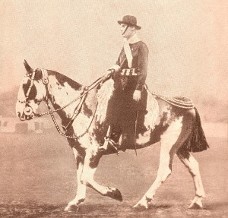
Tschiffely and Mancha
Unsurprisingly both horses bucked, kicked and bit for Argentina. Obviously they were savage and shouldve been shot then and there, or at least whacked in the head a bit with a very long rope with a heavy clip, but Tschiffely, remorselessly, didnt have their backs, tack or teeth checked and in fact rode both horses in a humungous curb bit; a VERY harsh bit for novice hands!!! In addition to all of this, neither horse had ever seen a city, or traffic, or been in a stable and rather than eat the oats and alfalfa provided, chose to eat the straw bed instead. Clearly they had ulcers, the result of years of neglect.
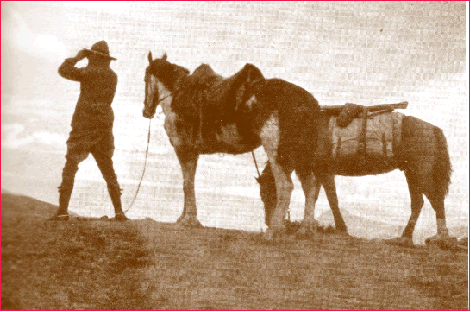
Tschiffely vastly overloaded Mancha, his pack horse, mounted Gato, who by now had given up bucking and was showing signs of depression from Tschiffely not bothering to find out whether he was left or right-brain extrovert or introvert, and set off on his epic voyage, travelling an average of 20 miles a day with his incredibly unfit little horses of unremarkable conformation. Some would call them fugly, but then they would just be jealous.
Not bothering to give his horses days off or make sure they had access to hay at least every couple of hours so as to prevent ulcers and/or colic, he rode alternately in baking heat or bottomless mud. It is unclear whether the horses were shod or not, but almost certainly theyd not been properly balanced and so lameness was bound to ensue.

Most surprisingly was that not bothering to join up with either horse, they were both devoted to him, and he was able to turn them loose at night, confident they would never stray far. NEVER stabled or rugged! Unbelievable!!
Journeying through Bolivia, Tschiffely noted his horses had not even begun to show signs of fatigue. Having already covered 1300 miles, they came to the 11,000 ft summit of Tres Cruces Pass. Tschiffelys nose bled in the thin air, which was the least he deserved for putting his ponies through such unwarranted torture. Hail the size of small eggs beat down on them and sandstorms whipped Tschiffely and his horses. When he arrived in La Paz, no one was expecting him.
After a brief rest at the Argentine embassy, the horses were again mercilessly re-loaded with over 12stone, and they continued over the Andes on their way to Peru. The path was so steep in places that Tschiffely sent Mancha on ahead, and hung onto his tail. Mancha responded to voice commands, undoubtedly a result of contact with an Animal Communicator. Tschiffely and his horses were assailed by mosquitos and also vampire bats. Having inexplicably failed to pack fly repellent or fly rugs, Tschiffely coated his horses with ground pepper. Clearly he was secretly planning on making steak au poivre out of his loyal horses. Bloody foreigners! When will they learn; horses are friends, not food!!
Their troubles were not over. On one occasion, Gato, no doubt as a result of his poorly-balanced feet and inadequate schooling, lost his footing and started to slide down the perilous incline of the mountainside. Miraculously a tree interrupted his fall, and with enormous care and luck, Tschiffely was able to use Mancha to haul Gato back onto the path. This was clearly inadvisable as Gato was MUCH too heavy for the geriatric Mancha to pull and had never been properly trained as a draught horse. But worse was to follow! Spanning a wild river, and made of coarse fibre matting, they came across a rope bridge resembling a hammock. It was no more than four feet wide, and more than 150 yards long. Faced with the choice of either crossing the bridge, or turning back and having to wait many months for the dry season in order to cross the river below, Tschiffely inconsiderately decided to cross. He sent Mancha on ahead and again hung on to his tail. Mancha hesitated, probably because his pelvis was out, from his tail being yanked around for several thousand miles, sniffed the matting and advanced. The bridge sagged in the middle and started to sway. Mancha stopped to wait until the swaying had stopped and then moved cautiously on again. Once Mancha was over, Gato followed easily, no doubt in fear (after being sprinkled with pepper) of being smeared in tartar sauce and made into lunch.

The next few days on their descent to Lima, were a terror of torrential rain, slick trails and land-slides. The sun disappeared and the temperatures dropped. Then they descended into the Matacaballo (Horsekiller) desert. The horses sank into the sand down to their knees and hocks, clearly VERY unsuitable terrain predisposing them to tendon and ligament injuries, passing the bleached bones of dead cattle and horses as they went.

From Peru they entered Ecuador and the mountains, freezing once again, with not a single heavy-weight rug with neck cover between them!!. At one point a landslide had washed away the trail. To turn back meant a detour of 2 or 3 days and ahead of them lay an 8-foot gap between both sides of the trail. Mancha was the saddle horse that day. As the saddle (which hadnt been professionally fitted, nor was it treeless!) needed adjusting, Tschiffely dismounted. He walked back to Gato, carelessly abandoning Mancha. Mancha was, of course, probably starving having lost rather a lot of condition over the winter due to his masters rubbish management, and had almost certainly spotted a blade of grass he fancied, promptly leaped over the gap like a goat. His questionable jumping technique indicates that he had sacroiliac problems and was in desperate need of a back person to sort him out.
Tschiffely quickly tied Gato to a tree without using baler twine OR a quick release knot. How Gato didnt break his neck Ill never know. He then jumped over the gap himself, recklessly tethered Mancha in a similar manner, then went back for Gato. He DID take the precaution of unsaddling Gato, but it was probably just to make sure he didnt lose his supplies, should Gato plummet into the ravine, clumsy sod that he had proven to be. In the event, Gato also jumped over the gap without incident although really, there shouldve been a placing pole so as not to confuse him.
From Ecuador into Colombia, more rain, more washed out trails, and jungles to boot. By now Tschiffely had been riding for 2 years and was proving to be a bit of a fair-weather rider, as his enthusiasm was inexplicably waning. He had also been writing to friends and family in Buenos Aires, but was unaware that many of his letters were being published in the newspapers and that he was becoming famous and he received a warm welcome in Panama. He was now more than 5000miles into his trip, and beginning to believe he might actually make it to the end.
He made his way through the jungles of Central America, avoiding hostile revolutionaries, poisonous snakes and bandits who would plait horses manes before stealing them or wouldve done if Tschiffely hadnt foiled their nefarious schemes by hogging Mancha and Gatos manes. This was of course a bit cruel as they would need the manes to protect them from the inclement weather. However, after crossing into Mexico, Gato suddenly, but unsurprisingly, went lame, and Tschiffely had him shipped to Mexico City to await his arrival. He and Mancha marched on alone, eventually retrieving a sound Gato who had probably been faking lameness in order to get himself a bit of shuteye.
At last the trial became easier. They crossed into the United States at Laredo, Texas, and continued northwards. Eventually, after more than 3 years in the saddle, the novice rider and his geriatric horses, arrived in Washington DC to a heros welcome. He was received by President Calvin Coolidge at the White House and spoke at the National Geographic society.
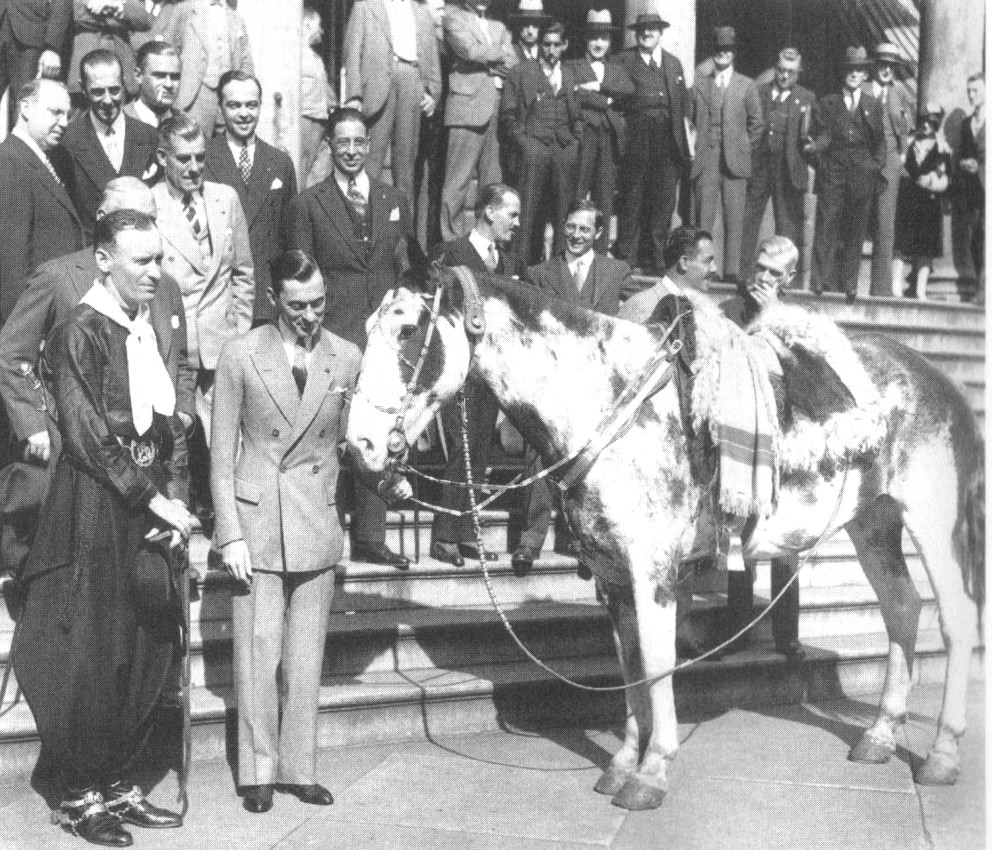
Eventually, Tschiffely, Mancha and Gato arrived back in Buenos Aires. Inexplicably, travelling by ship. The horses were retired to the unscrupulous dealers Estancia, where they died prematurely at 36 and 40 years of age respectively. Tschiffely himself died in 1954, but managed to squeeze in a ride across England in the 1930s. He wrote 2 books about his ride; Tchiffelys Ride; Southern Cross to Pole Star, and The Tale of Two Horses which is written from Mancha and Gatos perspective.
BTW, whilst the tone has been changed, the FACTS are correct (even the pepper)
If youd like to know the full story, click here: http://www.aimetschiffely.org/heroes1.htm
In 1925, a novice rider named Aimé Tschiffely set out on a mammoth, inhumane trek of 10,000 miles from Buenos Aires to Washington DC.
An unscrupulous breeder and dealer, called Emilio Solanet, plucked the horses off the Pampan scrub advising that if they havent died yet, theyre not going to any time soon. Mancha (an overo) and Gato (a buckskin or dun) were elderly, geriatric project horses, unbacked and virtually unhandled at 16 and 15 years of age. Both had temperament issues, but a bit of Parelli wouldve sorted them right out.
Needless to say Tschiffely didnt have them vetted to make sure they were fit for the task ahead, nor did he have saddles properly fitted. There wasnt a scrap of matchy-matchy in sight, but most shockingly of all, he weighed over 12stone and his mounts were only ponies around 14hh!!!
Tschiffely and Mancha
Unsurprisingly both horses bucked, kicked and bit for Argentina. Obviously they were savage and shouldve been shot then and there, or at least whacked in the head a bit with a very long rope with a heavy clip, but Tschiffely, remorselessly, didnt have their backs, tack or teeth checked and in fact rode both horses in a humungous curb bit; a VERY harsh bit for novice hands!!! In addition to all of this, neither horse had ever seen a city, or traffic, or been in a stable and rather than eat the oats and alfalfa provided, chose to eat the straw bed instead. Clearly they had ulcers, the result of years of neglect.
Tschiffely vastly overloaded Mancha, his pack horse, mounted Gato, who by now had given up bucking and was showing signs of depression from Tschiffely not bothering to find out whether he was left or right-brain extrovert or introvert, and set off on his epic voyage, travelling an average of 20 miles a day with his incredibly unfit little horses of unremarkable conformation. Some would call them fugly, but then they would just be jealous.
Not bothering to give his horses days off or make sure they had access to hay at least every couple of hours so as to prevent ulcers and/or colic, he rode alternately in baking heat or bottomless mud. It is unclear whether the horses were shod or not, but almost certainly theyd not been properly balanced and so lameness was bound to ensue.
Most surprisingly was that not bothering to join up with either horse, they were both devoted to him, and he was able to turn them loose at night, confident they would never stray far. NEVER stabled or rugged! Unbelievable!!
Journeying through Bolivia, Tschiffely noted his horses had not even begun to show signs of fatigue. Having already covered 1300 miles, they came to the 11,000 ft summit of Tres Cruces Pass. Tschiffelys nose bled in the thin air, which was the least he deserved for putting his ponies through such unwarranted torture. Hail the size of small eggs beat down on them and sandstorms whipped Tschiffely and his horses. When he arrived in La Paz, no one was expecting him.
After a brief rest at the Argentine embassy, the horses were again mercilessly re-loaded with over 12stone, and they continued over the Andes on their way to Peru. The path was so steep in places that Tschiffely sent Mancha on ahead, and hung onto his tail. Mancha responded to voice commands, undoubtedly a result of contact with an Animal Communicator. Tschiffely and his horses were assailed by mosquitos and also vampire bats. Having inexplicably failed to pack fly repellent or fly rugs, Tschiffely coated his horses with ground pepper. Clearly he was secretly planning on making steak au poivre out of his loyal horses. Bloody foreigners! When will they learn; horses are friends, not food!!
Their troubles were not over. On one occasion, Gato, no doubt as a result of his poorly-balanced feet and inadequate schooling, lost his footing and started to slide down the perilous incline of the mountainside. Miraculously a tree interrupted his fall, and with enormous care and luck, Tschiffely was able to use Mancha to haul Gato back onto the path. This was clearly inadvisable as Gato was MUCH too heavy for the geriatric Mancha to pull and had never been properly trained as a draught horse. But worse was to follow! Spanning a wild river, and made of coarse fibre matting, they came across a rope bridge resembling a hammock. It was no more than four feet wide, and more than 150 yards long. Faced with the choice of either crossing the bridge, or turning back and having to wait many months for the dry season in order to cross the river below, Tschiffely inconsiderately decided to cross. He sent Mancha on ahead and again hung on to his tail. Mancha hesitated, probably because his pelvis was out, from his tail being yanked around for several thousand miles, sniffed the matting and advanced. The bridge sagged in the middle and started to sway. Mancha stopped to wait until the swaying had stopped and then moved cautiously on again. Once Mancha was over, Gato followed easily, no doubt in fear (after being sprinkled with pepper) of being smeared in tartar sauce and made into lunch.
The next few days on their descent to Lima, were a terror of torrential rain, slick trails and land-slides. The sun disappeared and the temperatures dropped. Then they descended into the Matacaballo (Horsekiller) desert. The horses sank into the sand down to their knees and hocks, clearly VERY unsuitable terrain predisposing them to tendon and ligament injuries, passing the bleached bones of dead cattle and horses as they went.
From Peru they entered Ecuador and the mountains, freezing once again, with not a single heavy-weight rug with neck cover between them!!. At one point a landslide had washed away the trail. To turn back meant a detour of 2 or 3 days and ahead of them lay an 8-foot gap between both sides of the trail. Mancha was the saddle horse that day. As the saddle (which hadnt been professionally fitted, nor was it treeless!) needed adjusting, Tschiffely dismounted. He walked back to Gato, carelessly abandoning Mancha. Mancha was, of course, probably starving having lost rather a lot of condition over the winter due to his masters rubbish management, and had almost certainly spotted a blade of grass he fancied, promptly leaped over the gap like a goat. His questionable jumping technique indicates that he had sacroiliac problems and was in desperate need of a back person to sort him out.
Tschiffely quickly tied Gato to a tree without using baler twine OR a quick release knot. How Gato didnt break his neck Ill never know. He then jumped over the gap himself, recklessly tethered Mancha in a similar manner, then went back for Gato. He DID take the precaution of unsaddling Gato, but it was probably just to make sure he didnt lose his supplies, should Gato plummet into the ravine, clumsy sod that he had proven to be. In the event, Gato also jumped over the gap without incident although really, there shouldve been a placing pole so as not to confuse him.
From Ecuador into Colombia, more rain, more washed out trails, and jungles to boot. By now Tschiffely had been riding for 2 years and was proving to be a bit of a fair-weather rider, as his enthusiasm was inexplicably waning. He had also been writing to friends and family in Buenos Aires, but was unaware that many of his letters were being published in the newspapers and that he was becoming famous and he received a warm welcome in Panama. He was now more than 5000miles into his trip, and beginning to believe he might actually make it to the end.
He made his way through the jungles of Central America, avoiding hostile revolutionaries, poisonous snakes and bandits who would plait horses manes before stealing them or wouldve done if Tschiffely hadnt foiled their nefarious schemes by hogging Mancha and Gatos manes. This was of course a bit cruel as they would need the manes to protect them from the inclement weather. However, after crossing into Mexico, Gato suddenly, but unsurprisingly, went lame, and Tschiffely had him shipped to Mexico City to await his arrival. He and Mancha marched on alone, eventually retrieving a sound Gato who had probably been faking lameness in order to get himself a bit of shuteye.
At last the trial became easier. They crossed into the United States at Laredo, Texas, and continued northwards. Eventually, after more than 3 years in the saddle, the novice rider and his geriatric horses, arrived in Washington DC to a heros welcome. He was received by President Calvin Coolidge at the White House and spoke at the National Geographic society.
Eventually, Tschiffely, Mancha and Gato arrived back in Buenos Aires. Inexplicably, travelling by ship. The horses were retired to the unscrupulous dealers Estancia, where they died prematurely at 36 and 40 years of age respectively. Tschiffely himself died in 1954, but managed to squeeze in a ride across England in the 1930s. He wrote 2 books about his ride; Tchiffelys Ride; Southern Cross to Pole Star, and The Tale of Two Horses which is written from Mancha and Gatos perspective.


