Navicular- The facts please

welshcobnewbie

Well-Known Member
Joined
6 October 2008
Messages
242
Visit site
I am goin to see a horse who may come to me on loan he is older around 15 But has navicular

The person who owns him has said he is perfectly sound as long as he doesn't jump (fine with me) and is happy to school hack and have a gallop or two when ever.

He has supposedly never been lame and has to wear specialist shoes other than that is ok.

So what is navicular these days? Years ago im sure it was something to do with inflamation of the navicular bone?

How can it just affect a horse when jumping and at no other time? is it the stress to the legs?

Is it really possible for a horse with navicular not to go lame every few days?

It is not something i have had any contact with so don't know an awful lot about it, so please hit me with the facts.
 
Im afraid I dont know much about Navicular but a horse on my yard has it - he's about 18 years old and cant be ridden (even with his special shoes) :(
 
There's so many difference ways it can affect a horse. One I can to have never have gone lame n is jumping and eventing still, others that bed injections every 6 months to stay sound and then there's the ones that are really bad and are used as field companions. My horse has sistes on her navicular bone was in bar shoes for 18 months n has been put bk in to her everyday normal shoes n must say she bin sound since being back in normal shoes :/ I was always told not to jump her but that's fine with me coz we do dressage anyway. I think Mayb take the horse on trial 1st and she eat you think :)
 
Like my pony who is recovering from a minor attack of laminitis, a horse with navicular shouldn't jump because of the stress landing would put on the front feet.

My friend's horse had it and by the time it was diagnosed it was fairly advanced. She had a lot of treatment including special shoes (eggbars) and drugs such as Tildren and Adequan which help with bone regeneration but they couldn't keep her field sound on bute so sadly she was PTS last autumn.

However there are a few others on our yard which have it which are managed by shoeing with eggbars and some which have one bute a day. As well as not jumping because of the concussion generally they can't trot on the road. There are quite a few people on this forum who talk about barefoot management as a successful treatment for navicular but I don't know any horses personally who are managed that way so hopefully someone more knowledgeable than me will fill you in on that. Also if the horse is coming to you on loan I guess you won't be able to change his management. The only navicular pony I know who is barefoot is that way because she is retired and she is still lame.

Navicular is a syndrome not a disease so it can cover quite a few problems around the navicular bone. I think it generally means any changes seen around the bone on x-ray not just inflammation - that is how I have seen my vet diagnose horses on my yard anyway.

Things to think about with this horse - I am not saying don't go ahead as he might well be a really great horse, just go ahead with your eyes open:
- if he is in egg bars or heart bars they are much more expensive than ordinary shoes. Mine cost £100 a set and you can never be late with them - they have to be every 4-6 weeks, at least mine do.
- from what I have seen with my friends' horses it is often a degenerative condition. I would speak to the owner openly and honestly about this and what will happen if the horse goes lame. Will he stay with you or go back to his owner? Who will pay his vet's bills? It is extremely unlikely that he is still insured for navicular. These things could happen with any loan horse and you should always have a contract of course but it is probably even more important to lead with your head not your heart in this case.
Good luck and I hope it all works out for you. As I said I am not saying don't get the horse, he might be great for you and you might have many years of fun together but you just need to think about things in advance to save heartache later I think.
 
Like my pony who is recovering from a minor attack of laminitis, a horse with navicular shouldn't jump because of the stress landing would put on the front feet.

My friend's horse had it and by the time it was diagnosed it was fairly advanced. She had a lot of treatment including special shoes (eggbars) and drugs such as Tildren and Adequan which help with bone regeneration but they couldn't keep her field sound on bute so sadly she was PTS last autumn.

However there are a few others on our yard which have it which are managed by shoeing with eggbars and some which have one bute a day. As well as not jumping because of the concussion generally they can't trot on the road. There are quite a few people on this forum who talk about barefoot management as a successful treatment for navicular but I don't know any horses personally who are managed that way so hopefully someone more knowledgeable than me will fill you in on that. Also if the horse is coming to you on loan I guess you won't be able to change his management. The only navicular pony I know who is barefoot is that way because she is retired and she is still lame.

Navicular is a syndrome not a disease so it can cover quite a few problems around the navicular bone. I think it generally means any changes seen around the bone on x-ray not just inflammation - that is how I have seen my vet diagnose horses on my yard anyway.

Things to think about with this horse - I am not saying don't go ahead as he might well be a really great horse, just go ahead with your eyes open:
- if he is in egg bars or heart bars they are much more expensive than ordinary shoes. Mine cost £100 a set and you can never be late with them - they have to be every 4-6 weeks, at least mine do.
- from what I have seen with my friends' horses it is often a degenerative condition. I would speak to the owner openly and honestly about this and what will happen if the horse goes lame. Will he stay with you or go back to his owner? Who will pay his vet's bills? It is extremely unlikely that he is still insured for navicular. These things could happen with any loan horse and you should always have a contract of course but it is probably even more important to lead with your head not your heart in this case.
Good luck and I hope it all works out for you. As I said I am not saying don't get the horse, he might be great for you and you might have many years of fun together but you just need to think about things in advance to save heartache later I think.


Thank you everyone for your replies, Unbalanced thank you for taking the time to type that all out for me.
 
I have a livery here also with Navicular. I havent had hands on when he got it but since he has been here he has glucosimine - flexi joint special shoes. and he is still hacked and he is 29 and still schooled also
 
The facts (simplified version) -

In most cases its caused by an incorrect toe first landing usually because the back of the foot isn't strong enough to take the impact of the landing.

In many cases remedial shoeing will give a limited woking life, and is more of a sticking plaster than a cure which is why people still think its a degenerative disease.
Remedial shoeing usually comes with conditions of no work on hard ground/jumping/galloping etc..

Barefoot rehabilitation has a good success rate and horses return to full work ie.. hunting, eventing etc etc. Showing that it isn't a degenerative disease but that the damage can often be repaired if the foot is used correctly.


The problem you have is you're unlikely to be able to change the management of a loan horse so will be governed by his current owners wishes.
 
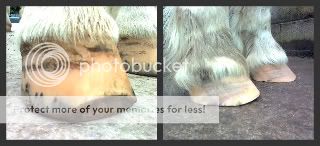
photo0114-1-1.jpg


This was a navicular case.... had remedial shoeing 2 years progressively worse. Shoes off Aug 2010, that photo is 7 months apart.

Horse now competing.

It's not the end of the world. Alternative treatments coming to the fore.

www.rockleyfarm.blogspot.com
 
Top