
Sidebone

SpotsandBays

Well-Known Member
Joined
7 December 2017
Messages
2,314
Visit site
Anyone have/had horses with sidebone? Are they in any form of work etc? How do you manage them?

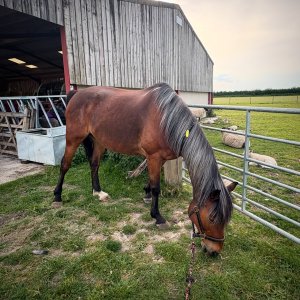
My 20yo WelshX had what we assumed to be an abscess a few months ago. Various vet visits/scans/antibiotics and copious amounts of Bute later (I won’t bore you with the full story) it was deemed that the swelling he had was likely due to sidebone which had then caused some strain/thickening of one of the ligaments nearby. (Antibiotics also helped so we believe there was some sort of infection going on).

Vet report stated “full athletic soundness is guarded”, so I kind of thought that was it in terms of his ridden life. However after weeks of box rest and then weeks of restricted turnout, he’s back out and looking as good as ever on himself (and off of the Bute!)

He doesn’t need to do anything else for me, and I’m more than happy for him to remain the beautiful pasture ornament that he currently is - but I do wonder if perhaps he could cope with steady plods and maybe venture out to an inhand show on an occasion (which is basically what he did anyway plus the odd fun ride).
 

Attachments

  • 5D53A11D-B124-4D1C-8078-29E712FFD9DC.jpeg
    5D53A11D-B124-4D1C-8078-29E712FFD9DC.jpeg
    721.6 KB · Views: 35
I had a heavy with side bones, was an incidental finding on xray, not the cause of the lameness that was being investigated.
They never really bothered him & he was sound well into his 20's.
Never did road work anyway (live on darrmoor) & had an excellent farrier - vet couldn't fault gis foot balance.
Vet commented that side bone is very common in heavier breeds
 
Anyone have/had horses with sidebone? Are they in any form of work etc? How do you manage them?

My 20yo WelshX had what we assumed to be an abscess a few months ago. Various vet visits/scans/antibiotics and copious amounts of Bute later (I won’t bore you with the full story) it was deemed that the swelling he had was likely due to sidebone which had then caused some strain/thickening of one of the ligaments nearby. (Antibiotics also helped so we believe there was some sort of infection going on).

Vet report stated “full athletic soundness is guarded”, so I kind of thought that was it in terms of his ridden life. However after weeks of box rest and then weeks of restricted turnout, he’s back out and looking as good as ever on himself (and off of the Bute!)

He doesn’t need to do anything else for me, and I’m more than happy for him to remain the beautiful pasture ornament that he currently is - but I do wonder if perhaps he could cope with steady plods and maybe venture out to an inhand show on an occasion (which is basically what he did anyway plus the odd fun ride).
In both fore feet? Generally once they have formed, sidebones don’t give much bother, it’s while the lateral cartilage is altering there’s tenderness. It’s common with draught horses and harness horses even today, our farrier calls it quittor, or quitter.
We’ve had a couple of horses ‘throw sidebones’, and they were fine back in work once the bone was solid. Farrier shod to support them. I think it would be remarked in any vetting (can usually see, or feel, them anyway), but not necessarily an unsoundness. Reading this, it sounds as tho your horse had already formed sidebones, but the imbalance from them was what impacted the ligaments. Chain reaction to the other issues. You do need a decent farrier to shoe for supportive balance, or a trimmer who properly understands this.
If ligaments are stable and the infection is now cured, I’d be surprised if yours couldn’t keep tootling round, be good for you both.
 
Rosie pony has sidebone! Vet thought she'd probably been in harness and hammered on the roads at somepoint. Hacks everywhere although I try to avoid trotting on hard ground.
 
In both fore feet? Generally once they have formed, sidebones don’t give much bother, it’s while the lateral cartilage is altering there’s tenderness. It’s common with draught horses and harness horses even today, our farrier calls it quittor, or quitter.
We’ve had a couple of horses ‘throw sidebones’, and they were fine back in work once the bone was solid. Farrier shod to support them. I think it would be remarked in any vetting (can usually see, or feel, them anyway), but not necessarily an unsoundness. Reading this, it sounds as tho your horse had already formed sidebones, but the imbalance from them was what impacted the ligaments. Chain reaction to the other issues. You do need a decent farrier to shoe for supportive balance, or a trimmer who properly understands this.
If ligaments are stable and the infection is now cured, I’d be surprised if yours couldn’t keep tootling round, be good for you both.
Quittor isn't the same as sidebone, it is an infection of the cartilage, whereas sidebone is the calcification of same. Your farrier really ought to know the difference, although quittor is fairly rare these days.
 
I was loaned and then given a 17 yr old which had sidebone. She was sound and continued to be hacked and do low level dressage until I had to retire her with a grade 6 heart murmer at the age of 26. She lived until she was 31 and never had a lame day.
 

^^^ good explanation
@SpotsandBays does actually sound a bit like what he started out with when he was very poorly. Very happy to ride past last weekend and see him out with your gang.
 
Yes, a heavy weight cob, Shire x Friesian. Diagnosed at 15yrs-ish via x-ray due to moving lameness. He had complications of floating bone chips too. Which may or may not have been related. We had his fetlocks medicated to keep him comfortable with the intention of retiring him. He came sound, the chips encapsulated and he was back in ridden work until he was @20yrs. Carrying my husband out on very active hacks. We lost him at 24yrs old. Which we felt was a good 'innings'. He was barefoot with us, with scheduled 6 week trims, from the age of 4. Never hammered, hunted or jumped excessively. Just a big heavy lump! We always commented that his mind was faster than his body. It made him an interesting ride when younger.
 
Quittor isn't the same as sidebone, it is an infection of the cartilage, whereas sidebone is the calcification of same. Your farrier really ought to know the difference, although quittor is fairly rare these days.
I’ll ask him next time, he’s the only person I’ve heard use the term. But neither of ours had any infection while forming sidebones (which his uncle shod both of them for, a couple of years apart), and once the bone hardened up, in both cases were sound.
That description sounds more like OP’s account of her horse’s sidebone - with the infection - than ours, tbh.
 
Thanks all, reassuring to hear these stories. Whatever it was we were dealing with, it had us all stumped. But he’s on the mend now and that’s the main thing. It did present like quittor (large bump on coronet) however vets didn’t mention this despite 3 lots of Ultrasounds, X-rays and a CT so god knows. We were going to open it up at the hospital however the CT confirmed no infection so they opted not to due to the risk and at that point he had improved. He scared the life out of me but has back to his usual shenanigans now which is lovely.
 
I’m still not sure on the infection bit because although we could see something going on with the ultras, it never drained despite rigorously treating as an abscess (poulticing and tubbing twice daily for a couple of weeks). Vets also popped a needle in guided by the ultra - but couldn’t draw anything out of it. It may well be that he improved because of the box rest? initially he was still on turnout but we kept him in a few days prior to taking him to hospital and typically the day before he went he seemed a bit more comfortable.
 
Just wanted add that when we discovered my horse’s side bones we took his shoes off and he’s now hacked out in Equine Fusion Active boots as they have thick soles to give some suspension.
 
Just wanted add that when we discovered my horse’s side bones we took his shoes off and he’s now hacked out in Equine Fusion Active boots as they have thick soles to give some suspension.

does yours move better without shoes on? Was he tripping before you took the shoes off? This is where I am at now with my boy (he has mild sidebone) and I think we have tried as much as we can with shoeing adjustments.
 
Thanks all, reassuring to hear these stories. Whatever it was we were dealing with, it had us all stumped. But he’s on the mend now and that’s the main thing. It did present like quittor (large bump on coronet) however vets didn’t mention this despite 3 lots of Ultrasounds, X-rays and a CT so god knows. We were going to open it up at the hospital however the CT confirmed no infection so they opted not to due to the risk and at that point he had improved. He scared the life out of me but has back to his usual shenanigans now which is lovely.
That’s great to hear, anyway, very positive!
if all you are dealing with now is formed sidebones, should be ok to start some activity - unless the vet has specifically advised not?
With ours, they were shod ‘supportively’, both while forming and subsequently. One consideration was working on any camber - better going along the crown of the road!
As per as asmp, I think if you could reduce ongoing concussion with rubber hoof boots that fit well, that would be sensible - didn’t exist for ours, back then.
 
That’s great to hear, anyway, very positive!
if all you are dealing with now is formed sidebones, should be ok to start some activity - unless the vet has specifically advised not?
With ours, they were shod ‘supportively’, both while forming and subsequently. One consideration was working on any camber - better going along the crown of the road!
As per as asmp, I think if you could reduce ongoing concussion with rubber hoof boots that fit well, that would be sensible - didn’t exist for ours, back then.
Thank you, he’s awful for keeping shoes on so I’ll look into boots for him. I don’t hack on roads, so any work he does do will literally be plodding along in the fields.
 
does yours move better without shoes on? Was he tripping before you took the shoes off? This is where I am at now with my boy (he has mild sidebone) and I think we have tried as much as we can with shoeing adjustments.

Don’t recall him tripping beforehand. He just wouldn’t be quite sound now and then over the years. He also began to not liking the nails being banged in when being shod. Regarding riding on the road mine is often happier on the roads in the summer as the surface is flat, rather than the ruts of the fields when it’s dry (obviously I don’t do much trotting).
 
Anyone have/had horses with sidebone? Are they in any form of work etc? How do you manage them?

My 20yo WelshX had what we assumed to be an abscess a few months ago. Various vet visits/scans/antibiotics and copious amounts of Bute later (I won’t bore you with the full story) it was deemed that the swelling he had was likely due to sidebone which had then caused some strain/thickening of one of the ligaments nearby. (Antibiotics also helped so we believe there was some sort of infection going on).

Vet report stated “full athletic soundness is guarded”, so I kind of thought that was it in terms of his ridden life. However after weeks of box rest and then weeks of restricted turnout, he’s back out and looking as good as ever on himself (and off of the Bute!)

He doesn’t need to do anything else for me, and I’m more than happy for him to remain the beautiful pasture ornament that he currently is - but I do wonder if perhaps he could cope with steady plods and maybe venture out to an inhand show on an occasion (which is basically what he did anyway plus the odd fun ride).
Had a horse with sidebone who went to HOYS twice! Douglas the showjumping stallion had terrible sidebone. If you’re careful on hard ground and manage foot balance it’s rarely a problem
 
Don’t recall him tripping beforehand. He just wouldn’t be quite sound now and then over the years. He also began to not liking the nails being banged in when being shod. Regarding riding on the road mine is often happier on the roads in the summer as the surface is flat, rather than the ruts of the fields when it’s dry (obviously I don’t do much trotting).

yes mine is also happier walking on the road than on rutted bridleways. We’ve had a lot of rain these past few days so will be interesting what difference it makes now that there is a bit more ‘give’ in the ground.
 
I worked with one who had an enormous one at 4 years old. He was carefully shod and had a long and happy career, including much road work and school work, including jumping.

In his early teens he did start to need some bute.

It got him in the end, but he had a happy career first.
 
Yes..... another 'heavy horse' here. Diagnosed at 5 (ish). Had a few moments of being 'off' over the years. No jumping, avoid excessive road work. Has been sound in pads and packing for many years - done two Endurance seasons and a Man V Horse - OK'd by vet as straight lines on grass is better for him than lots of turning in a school.
 
Yes..... another 'heavy horse' here. Diagnosed at 5 (ish). Had a few moments of being 'off' over the years. No jumping, avoid excessive road work. Has been sound in pads and packing for many years - done two Endurance seasons and a Man V Horse - OK'd by vet as straight lines on grass is better for him than lots of turning in a school.
😀great!
Tbh, lots of turning in a school isn’t a bundle of laughs for most of them.... I think any horse, if asked, would opt for going places through grassland!
 
Top