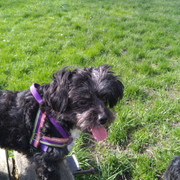
I am a learner dog owner so this is just my beginners view. As far as I can tell the dogs reward for pulling is getting to go further ahead and get where he is wanting to go. So you need staying with you to be more rewarding than pulling ahead. So if he pulls you stop moving forwards, it doesnt gain him what he wants. If you stop and call him back to you and reward and then start to walk again he should eventually learn that pulling stops the walk and walking nicely next to you gets it going again and maybe gets him a treat too.
In my puppy class we are starting with a sit at heel with reward. Then take one step forwards, reward if he stays with you, stop, reward. Then progress to 2 steps forwards, and repeat, building up the distance where his attention is on you.
As my puppy is still learning I try not to walk him much where he has to be on a short lead at heel for long as he cant focus long enough and I dont want to start him off set up to lose. So we do a little bit on short lead, then allow him some bouncing time on a long line, then come back to heel again and repeat. I work on heel a lot in the garden between playing with toys too.
Hope that helps but someone more experienced may come along to help. I have just bought 2 books, Control Unleashed and Total Recall which cover a lot of these issues.
Checking back doesn't really work, they get a sore neck for a millisecond and then carry on as before. I am not really qualified as I have only ever had puppies to teach, and the rehomes were all OK too, but I think stopping or changing direction would be the best thing. Stay calm! It is a PITA and may take you ages to get anywhere to start with.
If he is walked in a harness, then he will pull. There is no real incentive to stop, cause its rather comfortable on them. As said, they want forward, so take it step by step and either stop and wait 79345909090 times, or turn around 878939894 times. Like with horses its an endurance of patience game.
To add to the good advice above, yes, it's exactly the same as horses. If there is constant tension, the dog will resist. And if he gets where he wants to go anyway, why would he stop?
Like a stubborn old pony trekking cob in a snaffle, who will haul you wherever he wants to go because that's what he's learned, gets him results.
The minute she starts I turn around and March a few feet in the other direction and when she pulls I turn back to the original direction.
We looked like idiots to begin with just marching in the same spot but it didn't take her long to realise that if she wanted to go to the park/home for dinner then she needed to walk sensibly.
it doesn't matter if he's in a harness or not-I have two dogs that walk on a loose lead on harnesses.
Never use an extendable lead. Set off walking, as soon as he takes a pull-you stop, for as long as you like but its best to vary the amount of time you are stopped for-and repeat, when there is no pressure on the lead he gets to walk. when you are stopped you can build in sit/down etc and make him work a bit. but when walking, as soon as he pulls you stop even if you only go one step-be consistent.
you can reward him by using what he wants to get to-so if he knows he gets let off for a run or if there's interesting weemails at a certain bush-he walks on a loose lead or he doesn't get to go there. or put a toy where he can see it and use that (this worked really well for Quarrie as I used a dummy-his favourite thing). combine the walking with a heel command . This method worked better for my two than the change direction one
I like the reversing direction method. I spent some time doing volunteer dog walking at a rescue, pretty much all of the dogs had no idea how to walk on a lead and I found this really helped with most.
The stopping method is probably just as effective though, and is also a good way of teaching the dog to sit quietly