Thought I would make a Hives post so it may help others who get odd hives bouts and don't know the cause.

ILuvCowparsely

Well-Known Member
Joined
5 April 2010
Messages
15,068
Visit site
My mare got really bad hives 2023, tried many things, piriton vet said, many other things. Then I thought back to an old livery who was really itchy and scabby, and another mare who I suggested removing alfafa as it helped *M* so with *D* we removed alfafa and she improved. . So I removed the HI fi lite, and within 1 day the sores were less angry and gradually cleared up. So no Alfafa for her.

Well yesterday, I had to buy the blue Marksway Fibre Haylage, and this morning. oh bother, Hives again. So the haylage fibre is a no-no, thank god my pallets of Timothy turned up today.

This may help others, with sudden hives. Check the diet, as usually something they eaten, well did with this mare.

.
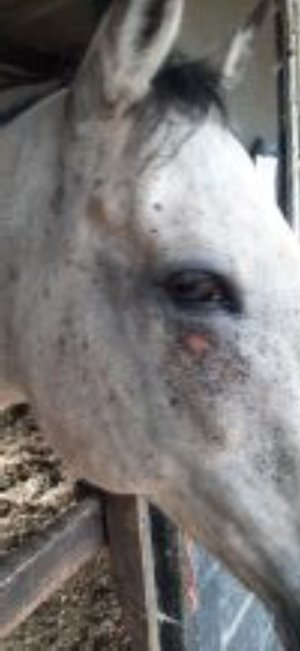
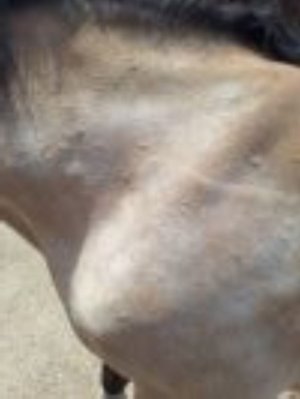
1st Picture an old livery the first to be allergic to alfafa mare *M*
2nd picture really bad hives sores all over caused by alfafa. my mare *S* 2023
3rd picture cause by haylage Hi Fibre. my mare *S* 2025


My help others in future
 

Attachments

  • 20161007_154026 - Copy.jpg
    20161007_154026 - Copy.jpg
    97.4 KB · Views: 18
  • 20230908_151049.jpg  resize.jpg
    20230908_151049.jpg resize.jpg
    126.3 KB · Views: 18
  • 20250520_141555.jpg  new hives.jpg
    20250520_141555.jpg new hives.jpg
    60 KB · Views: 18
Last edited:
My 2-year-old filly has hives this summer. We are 4 weeks in. No idea why. I have changed diet, paddocks, tried piriton, bathed her, tried rugs on and rugs off, fly spray. They are still there but not bothering her. I'll add again to the thread once they finally go!
 
My mare had them as a 2yo, then bad as a 3yo. We tried various things and nothing has worked. Until this year, shes only got a few. Our vet said some can outgrow them if they have them while young.

This year we have ruled out fly bites, as they started before they turned up. But they started when the weather got warmer, so im thinking a reaction to heat , possibly a reaction to her own sweat ?

Changes this year have been, in during the day and out at night ( previously out 24/7) Added the following to her diet : oily herbs and a immune booster supplement.

Shes now under saddle so every time shes ridden she gets a full wash down in cold water.
 
My Appy came in one day with them all down one side. A walk of the field found a flattened nettle patch - why oh why snooze there? Piriton to the rescue.
 
It would be useful to have liver function blood tests done on your mare OP, as Lucerne/alfalfa and clover, ryegrass are known to cause UV daylight-induced photosensitivity hives/sores in some horses as they have compounds in the feeds making them prone to it - IF they eat enough of it.
That would be called primary photosensitivity.
Secondary sensitivity would be these foods causing it to a horse with liver issues (primary cause liver issue = secondary cause photosensitivity/hives/sores), even if they eat small amounts.

The liver when healthy usually clears these photosensitive compounds in these feeds, and many horses eat them no issues at all - providing they’re not 100% of the diet. If a small amount affects the horses skin, consider liver issues as the root cause.

The solution would be to keep the horse out of UV light/daylight/sunlight while the skin is being reactive to such feeds. The uv light of daylight is triggering the skin to react, so the horse kept in a shady are and night turnout would be useful to help the horse feel more skin relief, while the liver slowly clears the UV reactive compounds from the blood.
 
My Appy came in one day with them all down one side. A walk of the field found a flattened nettle patch - why oh why snooze there? Piriton to the rescue.
Our vets had a shocking stinging nettle case a few years ago -
The owners (understandably) thought the horse was dying until the vets realized what was going on.
 
It would be useful to have liver function blood tests done on your mare OP, as Lucerne/alfalfa and clover, ryegrass are known to cause UV daylight-induced photosensitivity hives/sores in some horses as they have compounds in the feeds making them prone to it - IF they eat enough of it.
That would be called primary photosensitivity.
Secondary sensitivity would be these foods causing it to a horse with liver issues (primary cause liver issue = secondary cause photosensitivity/hives/sores), even if they eat small amounts.

The liver when healthy usually clears these photosensitive compounds in these feeds, and many horses eat them no issues at all - providing they’re not 100% of the diet. If a small amount affects the horses skin, consider liver issues as the root cause.

The solution would be to keep the horse out of UV light/daylight/sunlight while the skin is being reactive to such feeds. The uv light of daylight is triggering the skin to react, so the horse kept in a shady are and night turnout would be useful to help the horse feel more skin relief, while the liver slowly clears the UV reactive compounds from the blood.
gd idea, the only thing is these appeared over night after the haylage and the mare is on box rest. Vet did bloods at the time of the worst ones in picture 2. She has been off alfafa 2 years now, she now on pure feeds range suggested by vet.
 
gd idea, the only thing is these appeared over night after the haylage and the mare is on box rest. Vet did bloods at the time of the worst ones in picture 2. She has been off alfafa 2 years now, she now on pure feeds range suggested by vet.
Your mare might be more susceptible, and would still get some UV exposure from standing at the stable door opening, hence the neck hives. Those with liver compromised susceptible horses have a UV proof fly rug and head mask to try to minimise UV exposure as much as possible. UV sunscreen for the face, nose etc.
It would be interesting to rule out her liver function with a fully detailed liver test.

My gelding had a secondary ryegrass photosensitivity episode after his liver was affected by toxic buttercup leaves in very moist haylage.
So while his liver and gut was compromised dealing with that toxic load from just 1 days feed of new batch haylage - hives had started alerting me to the feed issue - i immediately changed feeds and switched to ryegrass haylage (all I could get as emergency replacement as I had a pallet of the buttercup haylage! I had no idea I was about to make him worse)
He was out 24/7 and the hives got worse because the ryegrass grasses especially contain photosensitive compounds which then got to high levels in the blood, because his liver couldn’t clear them fast enough due to the liver assault of toxic buttercup. He was out and the hives became full body.
I didn’t know this at the time about photosensitivity, but eventually it became clear. He healed slowly over 2 weeks, which is about the amount of time it takes for the liver to fully clear toxins/drugs from the body. He was/is then fine on ryegrass (marksway brand blue bag) once his liver healed and can have it 24/7 if need be, when supplies have been compromised of my mixed grasses forage stock.

Hives are so frustrating to deal with because there can be so many causes of them. It’s easy to attribute them to feeds - but i just wanted to explain why the feeds can cause an issue, especially photosensitive-prone feeds, that they’re often not the primary culprit root cause in an absolute sense, and can often point to liver issues.
We have to stop the feeds as they are making a root cause issue worse. Often equine vets miss photosensitivity causes, but cattle vets see more cases due to many cows eating a ryegrass heavy diet, with compromised livers due to mycotoxins from mouldy silage and hay.

There’s photosensitive compounds in vet prescribed antibiotics/certain grasses/some weeds/legumes - various sources that most horses clear with a low daily dose, but sometimes they can be tipped over the edge dose-wise, and their blood can’t clear them quickly enough, so hives and sores can result.

Liver compromised horses don’t want to be fed any ryegrass feeds or legumes primarily due to the photosensitive compounds in them.
 
The hooligan (if anyone can remember him) was diagnosed by Derek Knottenbelt as having an allergy to a type of sugar found in grass at certain times of year (I can’t remember the full details but I’ll try and dig out the notes he sent me).
He would come out in huge hives all over.
 
It would be useful to have liver function blood tests done on your mare OP, as Lucerne/alfalfa and clover, ryegrass are known to cause UV daylight-induced photosensitivity hives/sores in some horses as they have compounds in the feeds making them prone to it - IF they eat enough of it.
That would be called primary photosensitivity.
Secondary sensitivity would be these foods causing it to a horse with liver issues (primary cause liver issue = secondary cause photosensitivity/hives/sores), even if they eat small amounts.

The liver when healthy usually clears these photosensitive compounds in these feeds, and many horses eat them no issues at all - providing they’re not 100% of the diet. If a small amount affects the horses skin, consider liver issues as the root cause.

The solution would be to keep the horse out of UV light/daylight/sunlight while the skin is being reactive to such feeds. The uv light of daylight is triggering the skin to react, so the horse kept in a shady are and night turnout would be useful to help the horse feel more skin relief, while the liver slowly clears the UV reactive compounds from the blood.
That's an interesting idea about possible liver function involvement in hives. My filly had raised liver enzymes last year when she had a funny bout of something or other. I think I will test again when vet comes next week.
 
Your mare might be more susceptible, and would still get some UV exposure from standing at the stable door opening, hence the neck hives. Those with liver compromised susceptible horses have a UV proof fly rug and head mask to try to minimise UV exposure as much as possible. UV sunscreen for the face, nose etc.
It would be interesting to rule out her liver function with a fully detailed liver test.

My gelding had a secondary ryegrass photosensitivity episode after his liver was affected by toxic buttercup leaves in very moist haylage.
So while his liver and gut was compromised dealing with that toxic load from just 1 days feed of new batch haylage - hives had started alerting me to the feed issue - i immediately changed feeds and switched to ryegrass haylage (all I could get as emergency replacement as I had a pallet of the buttercup haylage! I had no idea I was about to make him worse)
He was out 24/7 and the hives got worse because the ryegrass grasses especially contain photosensitive compounds which then got to high levels in the blood, because his liver couldn’t clear them fast enough due to the liver assault of toxic buttercup. He was out and the hives became full body.
I didn’t know this at the time about photosensitivity, but eventually it became clear. He healed slowly over 2 weeks, which is about the amount of time it takes for the liver to fully clear toxins/drugs from the body. He was/is then fine on ryegrass (marksway brand blue bag) once his liver healed and can have it 24/7 if need be, when supplies have been compromised of my mixed grasses forage stock.

Hives are so frustrating to deal with because there can be so many causes of them. It’s easy to attribute them to feeds - but i just wanted to explain why the feeds can cause an issue, especially photosensitive-prone feeds, that they’re often not the primary culprit root cause in an absolute sense, and can often point to liver issues.
We have to stop the feeds as they are making a root cause issue worse. Often equine vets miss photosensitivity causes, but cattle vets see more cases due to many cows eating a ryegrass heavy diet, with compromised livers due to mycotoxins from mouldy silage and hay.

There’s photosensitive compounds in vet prescribed antibiotics/certain grasses/some weeds/legumes - various sources that most horses clear with a low daily dose, but sometimes they can be tipped over the edge dose-wise, and their blood can’t clear them quickly enough, so hives and sores can result.

Liver compromised horses don’t want to be fed any ryegrass feeds or legumes primarily due to the photosensitive compounds in them.
She does have the door open with slip rails, but with the over hang sun does not reach her. Must add 2nd day back on the Timothy Haylage and the hives are gone.
 
She does have the door open with slip rails, but with the over hang sun does not reach her. Must add 2nd day back on the Timothy Haylage and the hives are gone.
That’s good she has a stable overhang to protect from the strongest sunlight IF photosensitivity is an issue for her, but bear in mind UV light is present in daylight, even cloudy days - its just strongest in bright sunlight.
Timothy is a great ‘safe’ forage for most issues, i love it. Whether hay or haylage, its not prone to innate mycotoxins, nor photosensitive compounds or very high sugars, so it great for a convalescing horse.
Fingers crossed your mare continues her speedy recovery 🙂
 
It would be useful to have liver function blood tests done on your mare OP, as Lucerne/alfalfa and clover, ryegrass are known to cause UV daylight-induced photosensitivity hives/sores in some horses as they have compounds in the feeds making them prone to it - IF they eat enough of it.
That would be called primary photosensitivity.
Secondary sensitivity would be these foods causing it to a horse with liver issues (primary cause liver issue = secondary cause photosensitivity/hives/sores), even if they eat small amounts.

The liver when healthy usually clears these photosensitive compounds in these feeds, and many horses eat them no issues at all - providing they’re not 100% of the diet. If a small amount affects the horses skin, consider liver issues as the root cause.

The solution would be to keep the horse out of UV light/daylight/sunlight while the skin is being reactive to such feeds. The uv light of daylight is triggering the skin to react, so the horse kept in a shady are and night turnout would be useful to help the horse feel more skin relief, while the liver slowly clears the UV reactive compounds from the blood.
Update: the vet came and gave her a steroid injection. The hives have slowly subsided over a few days. We did a liver function test as well and this has come back with raised GGT (205). Everything else is normal. She had raised liver enzymes this time last year too but not so high. Another set of bloods are going off to Liphook for more detailed analysis and we are testing my other two horses just in case. I think it's because we have a lot of field bindweed in the paddocks at this time of year. There hasn't been much grass growth so she's eating that?? From what I can see on the internet field bindweed does seem to be mildly toxic to horses and a devil to get rid of. But from what I can see it causes digestive issues rather that liver issues? Horse is now on milk thistle and liver tonic. She is looking well and acting normally.
 
Update: the vet came and gave her a steroid injection. The hives have slowly subsided over a few days. We did a liver function test as well and this has come back with raised GGT (205). Everything else is normal. She had raised liver enzymes this time last year too but not so high. Another set of bloods are going off to Liphook for more detailed analysis and we are testing my other two horses just in case. I think it's because we have a lot of field bindweed in the paddocks at this time of year. There hasn't been much grass growth so she's eating that?? From what I can see on the internet field bindweed does seem to be mildly toxic to horses and a devil to get rid of. But from what I can see it causes digestive issues rather that liver issues? Horse is now on milk thistle and liver tonic. She is looking well and acting normally.

Just checking on bindweed, and the DVM gives it a 4 out of 10 toxicity level. As mostly with toxic plants, it’s generally the dose ingested that’s the problem. Many plants considered mildly toxic they can accidently graze and be fine, but if they regularly eat a mildly toxic weed daily - accumulation of the toxins then run daily through their system causing an effect.
Symptoms for bindweed are mainly gastric - but the toxic effects on the gut are likely to show in liver tests as the liver filters all blood for toxins -you may well find that GGT level goes down with a period of time off bindweed.
Maybe you have one horse more reactive to it than the others. They tend to sample most things that is not too awful tasting, and only by watching them grazing can you know whether she’s developed a taste for it or purposefully leaves the bindweed.
I watch mine graze and the mare is more plant selective than the gelding.
If the bindweed is looking lush and full, and the grass everywhere is short - that suggests they’re mostly leaving it. But if the bindweed is all over the field, there’s likely the chance theyre inadvertently nibbling it.

The milk thistle and liver tonic is a great addition to help the liver inflammation. It’s great news she’s responding well to treatment.

If the field bindweed is significant - and you see them graze it - you likely are best to either rehaul each paddock with targeted mature bindweed spraying, then surface tilling once it’s died-off from the spray, then re-seeding and rolling.
Or keep the bindweed cut, to continually weaken it. It’s a fairly low-laying plant usually, so not easy to cut without really cutting your field grass very low….which can impede your grass growth.
Field contractors would likely glyphosate the whole fields and re-seed. Ideally you want to speak with a contractor who has successfully regenerated a paddock from bindweed, as there are targeted sprays for certain weeds that could be more effective than glyphosate.

If however the bindweed is mostly growing in a certain part of your fields, you could electric tape the worst sections off so they leave it alone and mow that bindweed as close a shave to the ground as you can. When we cut a plant of its green growth we weaken its roots. It uses root energy to regenerate green leaves….so continual cutting of problem plants eventually after several mowings will weaken it to the point of dying-off.
This is why over-grazing fields leads to weak grass with little nutrition, which can leave bare patches where weeds take root. A thick grass ley impedes weed take-over. Rotating and resting fields is a must to prevent any weed take-over. It’s a hard job managing fields with heavy grazers like horses, so we all have weeds we rather not have, but as much as possible, if we can keep the grasses thick sown, and field moderately grazed, it’ll keep the fields nutritious.
 
We have bind weed too and mine love eating it.

We also have oak trees and once the acorns are falling, I always introduce milk thistle to combat the negatives.
 
Just checking on bindweed, and the DVM gives it a 4 out of 10 toxicity level. As mostly with toxic plants, it’s generally the dose ingested that’s the problem. Many plants considered mildly toxic they can accidently graze and be fine, but if they regularly eat a mildly toxic weed daily - accumulation of the toxins then run daily through their system causing an effect.
Symptoms for bindweed are mainly gastric - but the toxic effects on the gut are likely to show in liver tests as the liver filters all blood for toxins -you may well find that GGT level goes down with a period of time off bindweed.
Maybe you have one horse more reactive to it than the others. They tend to sample most things that is not too awful tasting, and only by watching them grazing can you know whether she’s developed a taste for it or purposefully leaves the bindweed.
I watch mine graze and the mare is more plant selective than the gelding.
If the bindweed is looking lush and full, and the grass everywhere is short - that suggests they’re mostly leaving it. But if the bindweed is all over the field, there’s likely the chance theyre inadvertently nibbling it.

The milk thistle and liver tonic is a great addition to help the liver inflammation. It’s great news she’s responding well to treatment.

If the field bindweed is significant - and you see them graze it - you likely are best to either rehaul each paddock with targeted mature bindweed spraying, then surface tilling once it’s died-off from the spray, then re-seeding and rolling.
Or keep the bindweed cut, to continually weaken it. It’s a fairly low-laying plant usually, so not easy to cut without really cutting your field grass very low….which can impede your grass growth.
Field contractors would likely glyphosate the whole fields and re-seed. Ideally you want to speak with a contractor who has successfully regenerated a paddock from bindweed, as there are targeted sprays for certain weeds that could be more effective than glyphosate.

If however the bindweed is mostly growing in a certain part of your fields, you could electric tape the worst sections off so they leave it alone and mow that bindweed as close a shave to the ground as you can. When we cut a plant of its green growth we weaken its roots. It uses root energy to regenerate green leaves….so continual cutting of problem plants eventually after several mowings will weaken it to the point of dying-off.
This is why over-grazing fields leads to weak grass with little nutrition, which can leave bare patches where weeds take root. A thick grass ley impedes weed take-over. Rotating and resting fields is a must to prevent any weed take-over. It’s a hard job managing fields with heavy grazers like horses, so we all have weeds we rather not have, but as much as possible, if we can keep the grasses thick sown, and field moderately grazed, it’ll keep the fields nutritious.
Thanks for replying. I always find your advice/knowledge really useful. I'm planning to spray and rest the paddocks one at a time and see if that works. The grass has just been so slow to grow in the shorter paddocks. I will move them to one with longer grass shortly but that's quite lush grass so has other risks. We have 3 x 15hh on 4 acres divided into 4 x 1 acre paddocks and are on well-draining chalk on a gentle slope so hopefully not overgrazed. I'm bringing them in for a minimum of 6 hrs a day so reducing the time they are exposed to whatever it is that is causing it. The more detailed blood results came back today and ALP results and bilirubin results are normal which means the liver is still functioning well.
 
Thanks for replying. I always find your advice/knowledge really useful. I'm planning to spray and rest the paddocks one at a time and see if that works. The grass has just been so slow to grow in the shorter paddocks. I will move them to one with longer grass shortly but that's quite lush grass so has other risks. We have 3 x 15hh on 4 acres divided into 4 x 1 acre paddocks and are on well-draining chalk on a gentle slope so hopefully not overgrazed. I'm bringing them in for a minimum of 6 hrs a day so reducing the time they are exposed to whatever it is that is causing it. The more detailed blood results came back today and ALP results and bilirubin results are normal which means the liver is still functioning well.
Great news on the test results, that’s a relief 🙂 Hopefully that suggests they’ve had minimal accidental intake and are not gorging on the bindweed.
I haven’t dealt with bindweed extensively, so couldn’t say which spray is best for them. It might be useful to google some agri forums/articles for spray recommendations for that particular type weed structure. Sprays are more targeted these days, and designed specifically for certain weeds, so would likely be more effective than a generic broad leaf weed spray.
 
Great news on the test results, that’s a relief 🙂 Hopefully that suggests they’ve had minimal accidental intake and are not gorging on the bindweed.
I haven’t dealt with bindweed extensively, so couldn’t say which spray is best for them. It might be useful to google some agri forums/articles for spray recommendations for that particular type weed structure. Sprays are more targeted these days, and designed specifically for certain weeds, so would likely be more effective than a generic broad leaf weed spray.
Thanks, Purbee. I'm planning to spray with Thrust once the wind and rain have gone. Hopefully that will work on the bindweed. I'm also testing my soil just in case there's something funny going on there. I've had both other horses tested now. 9 year old gelding has moderately raised GGT (90). Other one (aged 15) is completely normal. Gelding now on milk thistle and liver tonic too.
 
Top