
Worming advice

Callies.mum

Active Member
Joined
22 February 2025
Messages
33
Visit site
Hi all,

Just after a bit of advice. I am working with westgate on this but just want to see if anyone else has been in the same/similar situation.
We seem to be testing and worming for the positive tests, yet it’s the negative tests that seem to be coming out. (If that makes sense)
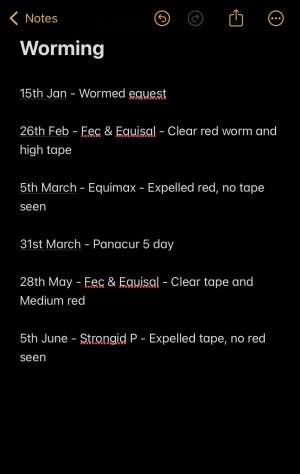
I have attached my tracking list of what we have been doing with Westgate so far.
Has anyone else had this?

IMG_8702.jpeg
 
Is that all since Jan this year? What sort of numbers of eggs are being found when they do counts?
If after 6 months of fairly intensive worming - if I understand correctly - you still have high numbers I'd speak to my vet. I don't know Westgate that well, but at this point a second opinion from someonewho knows your horse might be useful.
 
Hi all,

Just after a bit of advice. I am working with westgate on this but just want to see if anyone else has been in the same/similar situation.
We seem to be testing and worming for the positive tests, yet it’s the negative tests that seem to be coming out. (If that makes sense)
I have attached my tracking list of what we have been doing with Westgate so far.
Has anyone else had this?


View attachment 161346
What’s paddock management and co-grazers like?
Might as well go back to routine worming if that’s all the testing’s achieving, very disappointing, maybe involve your vet?
 
For me, the worming protocol doesn't follow the currently advised best practice, and wormers seem to be being used rather randomly at times which is not only counter-productive for the horse in question, but it will lead to resistance in worms developing even quicker than it is already.

Rather than working through the likely reasons for these results, I would just start a better protocol:

1. FEC, and worm/don't worm according to the results. If worming is necessary, another FEC two weeks later to assess the effectiveness of the wormer. Take advice on the results.
2. 8-12 weeks later, repeat step 1.
3. Repeat step 2 until you get to the end of the year.

Twice per year an Equisal (unless advised more regularly for any reason), ideally in the spring and autumn, and take advice on whether to worm/not worm according to the result and horse's history. I would ensure the directions are followed regarding not testing for at least 4 months after the last wormer (unless advised otherwise), and also I'd take any steps to minimise the likelihood of getting an inaccurate result by removing the chance of eating or exercise in the 30min before taking the saliva sample, as per the Equisal website.

Once a year in late winter worm for encysted small redworm and bots. This bit is good in the history you gave, as this was done in January. It's just the rest of the history seems to get a bit erratic after that.


To offer a bit of insight into the worming notes you shared:

1. All horses have worms all the time. FECs only determine how many eggs were being expelled at the time. The Equisal test determines the amount of tapeworms the horse has at the time - a low number of tapeworms is felt to be an acceptably low risk.
2. First FEC done only 5.5 weeks after previous worming. Not sure when last FEC was before this.
3. Wormed for redworm with ivermectin (in Equimax) even though FEC was clear which would have disturbed the agreeably low egg expelling population of redworm.
4. No tapeworm seen in manure suggests an erroneous Equisal result for some reason, perhaps due to horse's worming history or what the horse was doing immediately before the saliva sample was taken? Or perhaps the segments were just hidden in the manure and missed?
5. Panacur 5 day given with no apparent need for it as recent clear redworm count, ivermectin recently given too, and encysted small redworm were already covered in Jan worming.
6. Medium redworm count in May test potentially due to the low egg expelling worms killed off earlier in the year by the ivermectin and then Panacur being replaced with higher egg expelling worms, or just because a different sample of manure on a different day gave a different result due to a multitude of reasons.
7. There's widespread resistance to pyrantel (Strongid-P) in redworms, so this wormer looks to have been fairly ineffective against them unless some worms were just missed when the manure was examined. This is where egg count reduction tests (another FEC 2 weeks after worming) are really useful.
8. From the Equisal website: 'The small number of horses diagnosed as negative by the test had burdens considered non-pathogenic by experts (i.e., burdens comprising less than 20 tapeworms).' So a 'don't need to worm' Equisal result doesn't mean there are no tapeworms in the horse, it means there are less than 20 which is the number which is felt to be the 'cut off' point to being a safe number of tapeworms for a horse to carry. Using the Strongid-P (presumably a double dose?) with a low Equisal result could still kill up to 19 tapeworms which could then be seen in the manure.
9. It's worth being aware that the second Equisal was done only 2.5 months after the last tapeworm wormer was given, and it's advised to be at least 4 months between the last wormer and the next test.
10.Worming for any worms after a low result for that species just encourages resistance to develop quicker.
 
Field maintenance is critical if you've got persistent positive results. It's tapeworm with me as the horses on the fields before we're riddled. Tapeworm can reinfect quickly but if you are seeing segments after worming then the equisal test wasn't done properly - it's pretty accurate and to see dead tape segments would imply a high burden.

What about other horses in the field? Could they be reinfecting yours?
 
Just saw this and bumping it to see if anybody can help. Do you mean despite getting negative on FEC tests, you’re then seeing those types ‘physically’ in poo?
Hi, yes negative on both tests, then seeing it in her poo when wormed for the positive test.
 
Is that all since Jan this year? What sort of numbers of eggs are being found when they do counts?
If after 6 months of fairly intensive worming - if I understand correctly - you still have high numbers I'd speak to my vet. I don't know Westgate that well, but at this point a second opinion from someonewho knows your horse might be useful.
Yes since Jan. Her first positive was for high tape, then latest was medium count for red. Thank you :)
 
What’s paddock management and co-grazers like?
Might as well go back to routine worming if that’s all the testing’s achieving, very disappointing, maybe involve your vet?
Paddock management isn’t the best so we are expecting higher worms than standard. But all horses routinely wormed and rotational field moving etc.
 
For me, the worming protocol doesn't follow the currently advised best practice, and wormers seem to be being used rather randomly at times which is not only counter-productive for the horse in question, but it will lead to resistance in worms developing even quicker than it is already.

Rather than working through the likely reasons for these results, I would just start a better protocol:

1. FEC, and worm/don't worm according to the results. If worming is necessary, another FEC two weeks later to assess the effectiveness of the wormer. Take advice on the results.
2. 8-12 weeks later, repeat step 1.
3. Repeat step 2 until you get to the end of the year.

Twice per year an Equisal (unless advised more regularly for any reason), ideally in the spring and autumn, and take advice on whether to worm/not worm according to the result and horse's history. I would ensure the directions are followed regarding not testing for at least 4 months after the last wormer (unless advised otherwise), and also I'd take any steps to minimise the likelihood of getting an inaccurate result by removing the chance of eating or exercise in the 30min before taking the saliva sample, as per the Equisal website.

Once a year in late winter worm for encysted small redworm and bots. This bit is good in the history you gave, as this was done in January. It's just the rest of the history seems to get a bit erratic after that.


To offer a bit of insight into the worming notes you shared:

1. All horses have worms all the time. FECs only determine how many eggs were being expelled at the time. The Equisal test determines the amount of tapeworms the horse has at the time - a low number of tapeworms is felt to be an acceptably low risk.
2. First FEC done only 5.5 weeks after previous worming. Not sure when last FEC was before this.
3. Wormed for redworm with ivermectin (in Equimax) even though FEC was clear which would have disturbed the agreeably low egg expelling population of redworm.
4. No tapeworm seen in manure suggests an erroneous Equisal result for some reason, perhaps due to horse's worming history or what the horse was doing immediately before the saliva sample was taken? Or perhaps the segments were just hidden in the manure and missed?
5. Panacur 5 day given with no apparent need for it as recent clear redworm count, ivermectin recently given too, and encysted small redworm were already covered in Jan worming.
6. Medium redworm count in May test potentially due to the low egg expelling worms killed off earlier in the year by the ivermectin and then Panacur being replaced with higher egg expelling worms, or just because a different sample of manure on a different day gave a different result due to a multitude of reasons.
7. There's widespread resistance to pyrantel (Strongid-P) in redworms, so this wormer looks to have been fairly ineffective against them unless some worms were just missed when the manure was examined. This is where egg count reduction tests (another FEC 2 weeks after worming) are really useful.
8. From the Equisal website: 'The small number of horses diagnosed as negative by the test had burdens considered non-pathogenic by experts (i.e., burdens comprising less than 20 tapeworms).' So a 'don't need to worm' Equisal result doesn't mean there are no tapeworms in the horse, it means there are less than 20 which is the number which is felt to be the 'cut off' point to being a safe number of tapeworms for a horse to carry. Using the Strongid-P (presumably a double dose?) with a low Equisal result could still kill up to 19 tapeworms which could then be seen in the manure.
9. It's worth being aware that the second Equisal was done only 2.5 months after the last tapeworm wormer was given, and it's advised to be at least 4 months between the last wormer and the next test.
10.Worming for any worms after a low result for that species just encourages resistance to develop quicker.
Hi,
So the first fec and Equisal was done after equest as she was looking poor (yearling) so got tests done to rule out. Came back high tape so wormed for that. Then advised to retest after 12 weeks.
She pooped quite a lot of red worm out despite negative test, so they said 4 weeks after Equimax, to do Panacur.
Retested, medium count red worm, negative tape so advised with StrongidP (single dose as no tape tested)
Tapeworm seen, and is where we are at now.
She is turned out with quite a few others but they are all routinely wormed and move fields etc.
I think I will just retest in 2 weeks for reduction and hope that’s it until autumn!
Thank you for advice :)
 
Field maintenance is critical if you've got persistent positive results. It's tapeworm with me as the horses on the fields before we're riddled. Tapeworm can reinfect quickly but if you are seeing segments after worming then the equisal test wasn't done properly - it's pretty accurate and to see dead tape segments would imply a high burden.

What about other horses in the field? Could they be reinfecting yours?
Hi SEL
Yes I think they must be. She is turned out with quite a few others, they are routinely wormed etc but something is circulating it!
I’ve mentioned to field owner and he’s going to test his I think and worm if needed.
 
A couple of things stand out to me-no eggs seen doesn’t mean no worms, it just means that at that particular point in time, in that small piece of poo, they weren’t shedding eggs. The negative tapeworm is a little bit more puzzling, but it's not a super reliable test for a low burden.
Another is that the aim is not a zero count, it's normal (and healthy) for horses to have a low worm burden. Because she is young you have done the right thing in trying to do targeted worming with different chemicals, so I would leave well alone for now and test/ worm again in the Autumn
 
Oh gosh, being a yearling and with the additional info for why these wormers were given this all makes alot more sense!
Note to self - I should have asked the question and waited for the answer before ploughing on writing lots!

It is quite normal for youngsters to have a higher worm burden, and it does take time for them to build up their resistance to redworm in particular.

One other thing you could consider would be to give her a tonic/immune boost if she is looking poor - this will also help her be more resilient to the worms she is carrying too.
 
Oh gosh, being a yearling and with the additional info for why these wormers were given this all makes alot more sense!
Note to self - I should have asked the question and waited for the answer before ploughing on writing lots!

It is quite normal for youngsters to have a higher worm burden, and it does take time for them to build up their resistance to redworm in particular.

One other thing you could consider would be to give her a tonic/immune boost if she is looking poor - this will also help her be more resilient to the worms she is carrying too.
Haha that’s ok, I appreciate the info and effort you put in :)
What is a tonic/immune boost? She looks a lot better than she did now she accepts vits & mins/food and spring grass :)
 
Well you won’t find more worming knowledge and expertise anywhere than with Westgate so keep asking the questions there. Everyone always has opinions about worming and sometimes good knowledge or only a smattering. Westgate have seen and heard it all. They write the guidelines along with vets and SQPs for Canter.
 
Well you won’t find more worming knowledge and expertise anywhere than with Westgate so keep asking the questions there. Everyone always has opinions about worming and sometimes good knowledge or only a smattering. Westgate have seen and heard it all. They write the guidelines along with vets and SQPs for Canter.

Absolutely agree with this, Westgate are always the people I turn to for further advice. I almost wrote this but thought I'd written enough already!

With the further information given on age of horse and body condition, the reasons for using the various wormers makes total sense - I rewrote my initial reply a few times, and think I omitted the important question of 'How old is the horse and what is their current health like?' in the version I posted.

Further note to self: Trying to be succinct isn't always a good thing!

Callies.mum - a tonic is generally something you give to give the whole body a boost, often focusing on detoxifying the liver. I like Restore from Global Herbs (I'm not on commission, I just find their products beneficial), but others are available. An immune boost would be something which boosts the immune system, usually herbs - Echinacea is the best known, and lots of companies offer immune boosting supplements based on or including Echinacea. You don't need to give them long-term, they're just used as a boost when needed.

With the extra info given, it still looks like a repeat FEC 2 weeks after worming could help, so that you know how effective the various wormers are that are being used.
 
Well you won’t find more worming knowledge and expertise anywhere than with Westgate so keep asking the questions there. Everyone always has opinions about worming and sometimes good knowledge or only a smattering. Westgate have seen and heard it all. They write the guidelines along with vets and SQPs for Canter.
Yes we’ve been working with Westgate since day one, they’ve been fab :)
 
Absolutely agree with this, Westgate are always the people I turn to for further advice. I almost wrote this but thought I'd written enough already!

With the further information given on age of horse and body condition, the reasons for using the various wormers makes total sense - I rewrote my initial reply a few times, and think I omitted the important question of 'How old is the horse and what is their current health like?' in the version I posted.

Further note to self: Trying to be succinct isn't always a good thing!

Callies.mum - a tonic is generally something you give to give the whole body a boost, often focusing on detoxifying the liver. I like Restore from Global Herbs (I'm not on commission, I just find their products beneficial), but others are available. An immune boost would be something which boosts the immune system, usually herbs - Echinacea is the best known, and lots of companies offer immune boosting supplements based on or including Echinacea. You don't need to give them long-term, they're just used as a boost when needed.

With the extra info given, it still looks like a repeat FEC 2 weeks after worming could help, so that you know how effective the various wormers are that are being used.
Thanks, I thought it would be the herby bits. Yes planning to do a retest in 2 weeks, let’s keep everything crossed ;)
 
Top