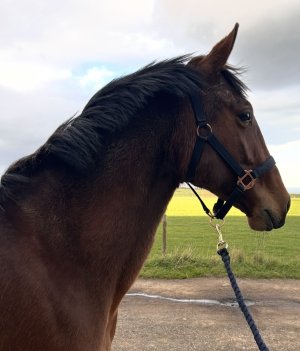
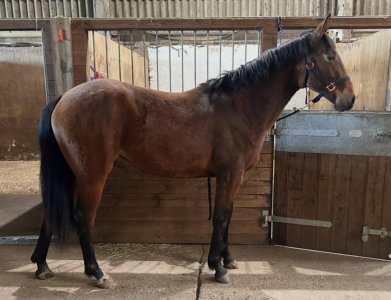
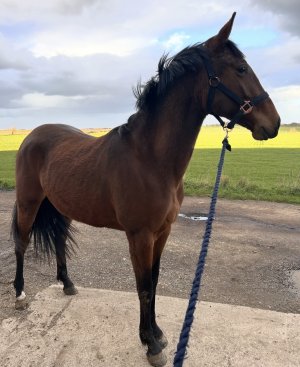
2 year old filly being a big %%**

katastrophykat

Well-Known Member
Joined
24 November 2011
Messages
1,216
Location
North and East, of England
Visit site
My rising two year old filly is in a herd where the existing mares are aged or keep out of her way and the geldings all back off from her. This situation has been evolving over a few months, but over the winter she’s happily come to the gate, come in without silly drama and generally been fine- if a little pushy as she’s gone up in the herd- but we’ve always been firm and pushed back and she’s been fine.

However, with moving into summer fields, a routine change and spring grass for the first time, this has become a perfect storm and she has turned into a night-mare. In the last ten days, she’s refused to come in as usual, and has got the best of the livery who usually gets her in (who had enough of being spun around and threatened/barged and let her off for safety reasons) then my OH (managed to get him to the end of the lead rope, kicked him- she hasn’t kicked anyone before now, ever- then continued escalating until she spun him round and he lost his footing meaning that he’s currently sat in the hospital having liver scans)so it now takes two people to bring her in safely and she’s taken to chasing the other horses around in the last day or two since they moved into the summer field, meaning that I’ve had messages today asking me to do something about her biting another mare- again, not normal for her at all.

She hasn’t ever been healthy and had spring grass at the same time as last spring she was really poor at a rescue holding facility- and ours is cow grass 🙄 so I’m aware that we have a perfect storm at the moment. We’ve had a number of youngsters and none have really been this arsey when they’re usually pretty chill as she is 🙈

Yard move isn’t an option for us, field move isn’t either really. I suppose i’m hoping for ‘continue with consistency and it’ll improve’ and will continue to bring her in, giving praise and fuss when she’s walking nicely and blocking the escalating with a second handler until it passes, but if anyone has better ideas, please do share!
 
Is she led in a bridle? I'd probably try that first as it's easy to implement.
Does she do any work? If she's overburdened with energy a bit of (age appropriate) groundwork/long reining might help, it also means you have an opportunity to work on her manners. I've found if they're working there are more opportunities to praise the good behaviour as well as correct the bad, when they're a bit bolshy and just being handled minimally it's easy to get to a point where every interaction is negative.
 
She’s not yet properly bitted as she’s just rising 2- vet thinks late foal but hard to tell as she was rescued at foot and the mare PTS instantly.

But yes- I had just started bitting and walking out before this kicked off- was thinking of picking it up again so this might be the way forward.

Will try a muzzle with a slightly larger hole too- little witch can’t bite other mares then either 🫣!
 
Sounds like the grass is an issue. I would try the muzzle and also give her some magnesium there must be products in the UK for grass affected horses. Also get a rope halter and do some ground work with her, you will have much more control. You don't need to put up with her dangerous bad manners. If she tries to barge off (my pet hate) work her hard in the halter. If you don't know how to do this get someone to show you.
 
Personally, I would hold off biting her at this age and certainly wouldn’t use a bridle to enforce discipline in being led - it’ll only set you up with contact issues when you start correctly backing her. It’s a completely different thing leading in a bridle a fully backed adult horse who understands all the nuances of a bit.

I’d still be doing basic manners/ handling groundwork but working on these as part of daily handling as opposed to specific “training sessions”. She doesn’t need to be doing anything as a two year old except for growing and spending time being a horse (although absolutely needs to learn ground manners)

Is there a reason she’s being “bought in”? Can she stay turned out 24x7 ?
 
Personally, I would hold off biting her at this age and certainly wouldn’t use a bridle to enforce discipline in being led - it’ll only set you up with contact issues when you start correctly backing her. It’s a completely different thing leading in a bridle a fully backed adult horse who understands all the nuances of a bit.

I’d still be doing basic manners/ handling groundwork but working on these as part of daily handling as opposed to specific “training sessions”. She doesn’t need to be doing anything as a two year old except for growing and spending time being a horse (although absolutely needs to learn ground manners)

Is there a reason she’s being “bought in”? Can she stay turned out 24x7 ?
Honestly, simply just because she has said ‘no’ and got her way by escalating for the last week or so, I figured bringing her in for a couple of carrots and a groom for five mins daily would mean that it was standard again for when we need to for farrier/vet etc.
 
Honestly, simply just because she has said ‘no’ and got her way by escalating for the last week or so, I figured bringing her in for a couple of carrots and a groom for five mins daily would mean that it was standard again for when we need to for farrier/vet etc.
Horses don’t have that same logic as humans. I honestly don’t think she’s escalating her behaviour to “get away with” anything. It sounds more a case of insecurity and adolescent. She’s at an age where she’s finding her place in the herd, and will also naturally test boundaries with both the herd members and humans. Can you just leave her out for a few days/ a week or so. Give her a break from what she may be perceiving as pressure, then start a fresh. Maybe starting with just leading her out the gate for a few yards, a carrot, a scratch and then popping her back in again. Choosing a nice quiet day/ time and low stress levels.
 
It sounds as if she has had a really hard start in life missing the natural discipline from Mum and has had to fight for her place in the world. I am wondering (in addition to all the good ideas above) if a session with a behaviourist might help? She is a bit too old and big to go to youngstock livery to learn some basic herd manners and, if the older mares in her current livery aren't setting her boundaries, it is a really difficult situation. She certainly be left to hurt people so that is all I can think of to help.
 
If it's any consolation at all my younger horse was difficult as a 2 year old - not as extreme as yours, but the last straw was when he ran me over and I realised I needed help. I was lucky to get Joe Midgley after seeing his praises sung on here.

Joe transformed our relationship. The exercises he did with AJ both set boundaries and gave him something to think about. Turned out AJ thrives on learning (and being praised) and once I started doing these exercises with him he became a different horse. He went from being the delinquent to the 'good' one. I think he was bored and insecure before Joe came.
 
Extra nutrition and hormones and I would think insecurity in the herd, where perhaps she hasn't got another to stands and watches her. I used to have a mare herd and they are funny things, like teenage girls who like being in a group with a girl boss, I find them sillier than colts.
If she is fighting and biting I think she needs taking out and putting in with something that will perhaps be clearly more dominate than her, an older no sh!ts pony is usually a good match. My baby sitters are older Section A's or a NF mare. Leave her to settle, and then try getting them in together, to work on her handling. If you make things a battle it becomes an issue.
 
My rising two year old filly is in a herd where the existing mares are aged or keep out of her way and the geldings all back off from her.

I'd say this is the crux of your issues, coupled with the spring grass and it being cow grass.

If she's only rising 2 and has no one to play with, she's probably very bored, now on a sugar high, and seeing her interactions with you as play time.

If you aren't willing to move her, then could you buy or loan her a friend her own age?

If she were mine, I'd stick her out with friends, on less rich grass, leave out 24/7 and not handle her too much except for checks scratches and feet when necessary. I'd probably start doing more at rising 3 not rising 2.
 
Terrible 2's!!

If everything in the field is avoiding her she needs a different herd. If at 2 she thinks she's top dog in the field, she'll expect to be top dog over you too.

Is there a stud or youngstock livery near you where she can have age appropriate field mates? She'll get the rough and tumble she's looking for and will learn about pecking orders too. At which point it will be much easier to establish yourself as her leader outside of the field.

Fillies are much harder than colts at this age IMHO. Both my colts were walking out in hand to start seeing the world, wearing different things, loading, travelling etc etc. It was very obvious if I'd given them a few days off from learning. They get bored very easily.
 
I agree that she needs similar age companions but for leading, I use a rope halter and a schooling whip. The whip is held in front of the horse to prevent rushing forwards and the halter encourages sensible forward movement. With a really difficult horse, I have used 2 handlers, each with a rope halter to keep the horse straight.
 
Thanks all, food for thought which is what I was looking for! She has come in today (again double handed, between two handlers) but significantly quieter, more back to her usual chilled self and had a fuss and gone back out happily. For clarity, the herd are a real mix- there are a few geldings under 10, nothing under 7 but the only other ‘head’ mare is currently stuffing her face and not interested in keeping the young enforcer in her place 🙈
The reason for livery here- we drive and there is no other yards in the area at all where we can have carriages, so we have very little choice. I’m going to look at a muzzle and reduce the green green grass then add some magnesium too, and yes- more basic handling and a bit of messing about to get her brain working. She was walking out happily in a roller and exercise sheet with a bridle on or off under her headcollar until we got busy preparing our pony for camp which was this weekend gone- then we went to camp from Good Friday and returned late Monday so she was in/wormed/turned out on the new field without me being there- livery yard had decided on field change at short notice 🫣
Thanks all for your thoughts!

Hoping that a couple of these will upload to show ASBO filly 🤣IMG_0724.jpegIMG_0726.jpegIMG_0723.jpeg
 
A Chiffney is a wonderful tool, used correctly. One leadope on the headcollar as normal, and a different, easily distinguishable rope on the Chiffney. They usually say 'what the *** was that?? ' the first time you use it, and test it again. After the 2nd time, rarely 3rd time, they respect it and respect you. It has no effect whatsoever if you don't use it, and just sits there unobtrusively. They know when it's not there though! I have never found it to cause issues when the horse is properly bitted later down the line.

I consider it to be a piece of safety equipment, to be used to pervent situaltions like your OH. Hopefully you'll never need it, but you can't use it if it's not there.

ETA too many people are scared to use a Chiiffney, and think that it's harsh. It isn't meant to brought into action constantly. If you are actually applying any sort of pressure on it more that 2 or 3 times in a session, I'd say it isn't being used properly. It should lie at a comfortable angle in the mouth, as chosen by the horse, with a very loose leadrope. As soon as you pickup the leadsope, they feel the angle change and that is usually enough, once they have learned that the next step IS pressure. It is the ultimate pressure and release tool, and you must be very quick to release the pressure, and keep it released, until needed again. There must be NO pressure at all until it is needed. Too many people hang on it's rope, which just causes constant pressure and winds the horse up more because they can't escape it.

Sorry, rant over 🤣
 
Last edited:
A chifney can be a useful tool for a horse which knows it's manners, knows what is expected of it, understands pressure and release and has been bitted and is thoroughly understanding and accepting of what that means. Trying to use one in this situation would be as much use as giving a toddler a plug socket, a screwdriver and a book on 'how not to get electrocuted' - you'd end up with at best a very upset youngster and at worst a broken jaw and PTS bill
 
A Chiffney is a wonderful tool, used correctly. One leadope on the headcollar as normal, and a different, easily distinguishable rope on the Chiffney. They usually say 'what the *** was that?? ' the first time you use it, and test it again. After the 2nd time, rarely 3rd time, they respect it and respect you. It has no effect whatsoever if you don't use it, and just sits there unobtrusively. They know when it's not there though! I have never found it to cause issues when the horse is properly bitted later down the line.

I consider it to be a piece of safety equipment, to be used to pervent situaltions like your OH. Hopefully you'll never need it, but you can't use it if it's not there.

ETA too many people are scared to use a Chiiffney, and think that it's harsh. It isn't meant to brought into action constantly. If you are actually applying any sort of pressure on it more that 2 or 3 times in a session, I'd say it isn't being used properly. It should lie at a comfortable angle in the mouth, as chosen by the horse, with a very loose leadrope. As soon as you pickup the leadsope, they feel the angle change and that is usually enough, once they have learned that the next step IS pressure. It is the ultimate pressure and release tool, and you must be very quick to release the pressure, and keep it released, until needed again. There must be NO pressure at all until it is needed. Too many people hang on it's rope, which just causes constant pressure and winds the horse up more because they can't escape it.

Sorry, rant over 🤣
I’m very anti chiffney. My current horse has a significant tongue injury from his time being a stallion and being led in a chiffney by an experienced handler in his previous home ans having an accident.
I definitely wouldn’t be using one on a 2 year old.

I’ve seen a horse that got away from a handler, get tangled in the rope, fell over and managed to hook its back hoof in the chiffney strap. How it didn’t break its jaw I’ll never know.
 
I’d use a rope halter rather than a bit.
Or a chain over the nose on the head collar. Nothing in the mouth though.
If I were another person with a livery there and your filly was causing distress and possible injury I’d be complaining a lot. Owning the yard bully is no fun!
I also agree with muzzle (she’ll want to come in as she’ll be hungry) but watch it doesn’t mean frustration means her chasing the others more.
 
I’m going to go against the grain and say chucking his horse out to get more feral is the last thing I’d be doing. She’s not an accident waiting to happen, she’s already nearly killed someone.

I’d get a rope halter on her and a lunge line, hat, BP and a schooling whip and if she spun on me she’d only be doing it the once.
 
To me, this is a management issue, not a handling issue. Unfortunately her management isn’t right so you are getting problems- get her out in a better herd on more appropriate grazing and dial down the handling. Every time you handle her and she behaves negatively she is only learning that, nothing positive or useful
 
I’m going to go against the grain and say chucking his horse out to get more feral is the last thing I’d be doing. She’s not an accident waiting to happen, she’s already nearly killed someone.

I’d get a rope halter on her and a lunge line, hat, BP and a schooling whip and if she spun on me she’d only be doing it the once.
And gloves! Don't forget gloves!
 
To me, this is a management issue, not a handling issue. Unfortunately her management isn’t right so you are getting problems- get her out in a better herd on more appropriate grazing and dial down the handling. Every time you handle her and she behaves negatively she is only learning that, nothing positive or useful

Yup this. Over handling youngsters causes so many problems. I appreciate you need to be at that yard but at 2 shes not driving yet so can go off on youngstock livery and come back when your ready to start her. They change a lot between 2 and 3 coming 4.
 
Top