Anyone have a 'life hack' for this issue?

That’s his feed in a standard size feed bucket, I don’t think it’s a huge amount 🙈
Above you said it fills the bucket to the brim, which is the information we were working with. Average horse stomach is about the size of a rugby ball, if that's any help. Horses eat around 0.5 - 1 kg of grass per hour when grazing (and grass is mostly water) so he's presumably consuming at a much faster rate than when grazing, if he's eating that feed in 20 minutes. From that point of view alone, more and smaller meals are better for them.
 
Above you said it fills the bucket to the brim, which is the information we were working with. Average horse stomach is about the size of a rugby ball, if that's any help. Horses eat around 0.5 - 1 kg of grass per hour when grazing (and grass is mostly water) so he's presumably consuming at a much faster rate than when grazing, if he's eating that feed in 20 minutes. From that point of view alone, more and smaller meals are better for them.
I don’t think it’s necessarily as straightforward with soaked feed as 2/3 of it is water, so presumably no different to them eating a feed and drinking water. I was always advised to base feed size on dry weight and limit portion sizes of concentrates.

Either way I could feed him 20 feeds a day and he’d still drop them all on the floor :D
 
I don’t think it’s necessarily as straightforward with soaked feed as 2/3 of it is water, so presumably no different to them eating a feed and drinking water. I was always advised to base feed size on dry weight and limit portion sizes of concentrates.

Either way I could feed him 20 feeds a day and he’d still drop them all on the floor :D
Large amounts of concentrates (grain) are obviously bad as they can really upset the gut flora if pushed through to the small intestine in an insufficiently digested state. But dry weight matters only in terms of calories - in terms of the stomach being able to handle the feed, volume is what matters and water takes up a lot of space. Smaller feeds could fit in a nosebag and be better absorbed, win-win ;)
 
I don’t think it’s necessarily as straightforward with soaked feed as 2/3 of it is water, so presumably no different to them eating a feed and drinking water. I was always advised to base feed size on dry weight and limit portion sizes of :D


It seems that you have misunderstood the principles of safe feeding.
 
I don’t think it’s necessarily as straightforward with soaked feed as 2/3 of it is water, so presumably no different to them eating a feed and drinking water. I was always advised to base feed size on dry weight and limit portion sizes of concentrates.

Either way I could feed him 20 feeds a day and he’d still drop them all on the floor :D
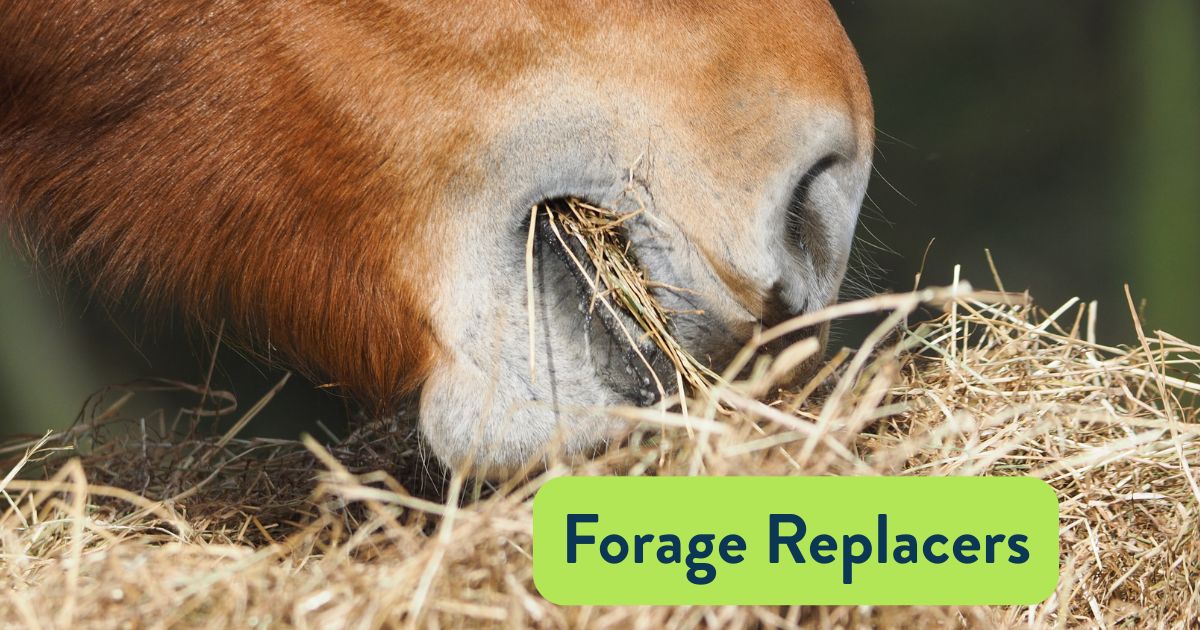
Forage replacers (e.g. your grass nuts and fibre beet) can be fed in larger quantities.

“While it’s recommended to keep bucket feeds small, it is safe to feed forage replacers for horses in large amounts as you would hay or haylage in a haynet. As with any change in feeding regime, it is important to gradually introduce a forage replacer and slowly increase the amount used.”

“One of the first concerns many horse owners have about feeding forage replacers is meal size. It is appropriate to leave large meals of fibre based feeds for your horse to eat just as you would a net of forage. It is only cereal based feeds that that need to be fed in restricted amounts due to the relatively high levels of starch they contain. ”
 
Forage replacers (e.g. your grass nuts and fibre beet) can be fed in larger quantities.

“While it’s recommended to keep bucket feeds small, it is safe to feed forage replacers for horses in large amounts as you would hay or haylage in a haynet. As with any change in feeding regime, it is important to gradually introduce a forage replacer and slowly increase the amount used.”

“One of the first concerns many horse owners have about feeding forage replacers is meal size. It is appropriate to leave large meals of fibre based feeds for your horse to eat just as you would a net of forage. It is only cereal based feeds that that need to be fed in restricted amounts due to the relatively high levels of starch they contain. ”

Thank you this is what I’ve always thought too so this is reassuring. 🙏

The volume of his final feed can be anything from 1/2 to a full bucket depending how much water I put it in but I’ve never really worried about water volume and always thought it was a positive in cold weather when they might not be drinking as much 🤷🏼‍♀️ The Cushcare & grass nuts technically don’t need soaking, if I fed them dry his feed would be fairly small and well within guideline's but when I soak them they swell quite a lot so it does look like a lot of ‘bulk’, but I’d assume unsoaked they’d absorb similar water and swell in the gut themselves anyway?

It’s a minefield when you go down the rabbit hole of stressing about it all 😳

In an ideal world I’d feed him more often but I work full time and have no help so twice a day is the best I can do right now. It is something I worry about when his teeth fail and I have to switch to full time forage replacers I’ll need to sort something, but thankfully at the moment he’s eating grass and hay fine and does well on this regime.
 
It seems that you have misunderstood the principles of safe feeding.
I can’t find any evidence that forage replacers need to be limited in feed quantity? He’s left to eat in his own time and takes 20 mins-30 mins to eat a bucket of feed in his own meandering way.

My vet has advised in the past if he starts to struggle with hay to leave him with a larger bucket trug of soaked forage replacers overnight, I’m not sure how that would be any different?
 
I can’t find any evidence that forage replacers need to be limited in feed quantity? He’s left to eat in his own time and takes 20 mins-30 mins to eat a bucket of feed in his own meandering way.

My vet has advised in the past if he starts to struggle with hay to leave him with a larger bucket trug of soaked forage replacers overnight, I’m not sure how that would be any different?
I have one who cannot eat hay, I give her the equivalent ( dry) weight in forage replacers which form a mash. It's not great for your back, but the horse does extremely well on it .
 
I have this problem aswell and sympathise!
A pony I look after has large buckets of mash/speedibeet mixed.
I don’t really view them as large feeds but in her case they are hay replacers. So she gets a bucket every so often.
Much of it ends up all over the floor and I hate to think how much gets wasted a day.
I have put an extra rubber mat in her door way. It’s a light Eva one so I can take it out and hose it but it sweeps off ok as well.
This sort of stops it getting mashed into her bed. She doesn’t eat hay so I can’t empty it onto hay as suggested above.
If you’re there when feeding I did go through a stint of hovering round with a dustpan and brush and keep putting it back in the bucket.
Mine takes ages over it and it’s not feasable to do really. I just accept we waste food 😩
 
My old lad couldn’t manage long stem forage at all in his last couple of winters but did well on ‘feeds’ of cushcare plus micronized linseed and/or copra, with ‘haynets’ of Alfa beet (I prefered this to fibrebeet as only has alfalfa and unmollassed sugar beet; fibrebeet has oatfeed and a couple of additives) and simple systems haycare and sainfoin. He needed a LOT of calories though so came in overnight to be able to eat enough. He used to stick his head right to the bottom (huge water bucket/trug) and snorkel up the best bits first 🙄 Rather messy but he was happy!

We’ve just lost an ancient pony on a similar system to yours, he did fine being out 24/7 but had two big top-up forage replacement buckets daily. Looked and felt super until the end.
 
My 30yo is similar to yours, and dentally challenged. Doesn't like to eat with his head in the bucket. I bought a builder's/plasterer's mixing bath. It's like a heavy duty baby bath, and his half trug of soaked forage is shaken out into it. He happily 'grazes' from it, and any spillage drops back in. My old boy can cope with soft meadow grass haylage, but cannot consume as much as he used to, hence the soaked stuff.
 
I can’t find any evidence that forage replacers need to be limited in feed quantity? He’s left to eat in his own time and takes 20 mins-30 mins to eat a bucket of feed in his own meandering way.

My vet has advised in the past if he starts to struggle with hay to leave him with a larger bucket trug of soaked forage replacers overnight, I’m not sure how that would be any different?

But you are not just feeding a forage replacer, you are feeding a soaked forage replacer. If you were leaving him with the bucket overnight you wouldn't expect him to eat the lot in one go, just as you wouldn't expect him to eat forage all at once.
 
My mare is a very messy eater and I have not yet found the best way. I have also tried large buckets, small buckets, wide buckets etc. She will hoover lots of it up so it's not too bad but it's very frustrating at the wastage. I have tried it on a flake of hay but she wont then eat the hay its been on as its damp. So that just wastes the feed and the hay
 
My old lad couldn’t manage long stem forage at all in his last couple of winters but did well on ‘feeds’ of cushcare plus micronized linseed and/or copra, with ‘haynets’ of Alfa beet (I prefered this to fibrebeet as only has alfalfa and unmollassed sugar beet; fibrebeet has oatfeed and a couple of additives) and simple systems haycare and sainfoin. He needed a LOT of calories though so came in overnight to be able to eat enough. He used to stick his head right to the bottom (huge water bucket/trug) and snorkel up the best bits first 🙄 Rather messy but he was happy!

We’ve just lost an ancient pony on a similar system to yours, he did fine being out 24/7 but had two big top-up forage replacement buckets daily. Looked and felt super until the end.

That's interesting on the FibreBeet thank you, I hadn't actually realised it has anything in it other than Alfalfa & Speedibeet but you're right. They do say you can replace up to 60% of daily forage with it and he seems to love the stuff, plus it is high calorie for a forage based feed, so I see it as a nice little fibre booster for him. I will take a look at the AlfaBeet and see if he eats it as readily as I do try and keep everything as forage based as possible :) I tried switching the FibreBeet for just grass nuts but he wasn't keen so we settled on a compromise of 50/50!
 
I have this problem aswell and sympathise!
A pony I look after has large buckets of mash/speedibeet mixed.
I don’t really view them as large feeds but in her case they are hay replacers. So she gets a bucket every so often.
Much of it ends up all over the floor and I hate to think how much gets wasted a day.
I have put an extra rubber mat in her door way. It’s a light Eva one so I can take it out and hose it but it sweeps off ok as well.
This sort of stops it getting mashed into her bed. She doesn’t eat hay so I can’t empty it onto hay as suggested above.
If you’re there when feeding I did go through a stint of hovering round with a dustpan and brush and keep putting it back in the bucket.
Mine takes ages over it and it’s not feasable to do really. I just accept we waste food 😩

I usually go off and poo-pick while he is eating and he comes and stands at the gate once he's done, but this morning I found myself hovering over him scooping up the stuff he dropped and putting it back in his bucket and it did all get eaten. albeit I'm not sure I have time to personally hand feed him every day :rolleyes:😁
 
I usually go off and poo-pick while he is eating and he comes and stands at the gate once he's done, but this morning I found myself hovering over him scooping up the stuff he dropped and putting it back in his bucket and it did all get eaten. albeit I'm not sure I have time to personally hand feed him every day :rolleyes:😁
No! That’s my thinking now. It works but….
 
Just to add to the volume of feed debate I think the difference with the forage replacer is that it’s meant to be eaten gradually as hay would be and so the horse doesn’t eat more than the recommended rugby ball amount in one go.

At the end of the day the horse’s stomach is the size of a rugby ball and it will be filled by water or food as they both take up space. It doesn’t matter what type of food it is, it’s still going to fill the volume and anything more than that will be wasted and stop the horse being able to digest it properly.

I wonder if dropping the size of the feed would actually also solve your problem of the feed being dropped as if there’s a smaller amount that’s quicker to eat he might be more inclined to concentrate on eating?
 
Just to add to the volume of feed debate I think the difference with the forage replacer is that it’s meant to be eaten gradually as hay would be and so the horse doesn’t eat more than the recommended rugby ball amount in one go.

At the end of the day the horse’s stomach is the size of a rugby ball and it will be filled by water or food as they both take up space. It doesn’t matter what type of food it is, it’s still going to fill the volume and anything more than that will be wasted and stop the horse being able to digest it properly.

I wonder if dropping the size of the feed would actually also solve your problem of the feed being dropped as if there’s a smaller amount that’s quicker to eat he might be more inclined to concentrate on eating?
He doesn’t eat particularly quickly though he enjoys his food, it’s more take each mouthful, then gaze around the field pensively while he slowly chews it and it drops out of his mouth 🙄

He always empties his bowl and then eats some of the scraps, but he’s usually trodden them around by then, if I scrape them back into his bowl he eats them and when I bring the buckets up to wash them out he enthusiastically licks his field mates bucket out too, so I don’t think he’s struggling with the amount of food, just has a messy eating style!
 
Could you manage to split the feed into 3 meals? 1 before you go to work, 1 as soon as you get to the yard after work and another when you do a last evening check.
I'm not sure how that would solve the issue? he drops it on the floor regardless of the amount of feed he gets, in summer he only gets a token feed and half of it still ends up on the floor. 🙈

But no not feasibly, I do them at 6am before I leave for work - I'm at out work 7-7 and then do them again at 7pm when I get back from work before going to the other yard to sort the ridden one.

When his teeth go and he has to switch over to forage replacers completely I will have to pay someone to come in and feed them at lunchtime but we will cross that bridge when we get to it!
 
My lad picks his food bucket up in his teeth and chucks it everywhere. I put his bucket in an old manger he has at the back of his stable and he didn't try and tip it.
 
Well I have spent a week experimenting with different things and I think I have found a bit of a solution 🤓😄

I've started soaking his mash to a slightly dryer consistency and I don't soak the Cushcare with the mash anymore, but instead sprinkle it on top with his chopped carrots. He then picks the nuts off the top of the feed before eating the mash and this seems to have stopped the "dive head first into the bucket" approach 😆 I think he was frustrated with having nothing to "chew" along with his initial enthusiasm to eat his feed, so was shoving huge mouthfuls of mash in his mouth and then it was all falling back out, but he is happy with being able to eat his nuts first so we seem to have much less wastage with this trickery 😉
 
Top