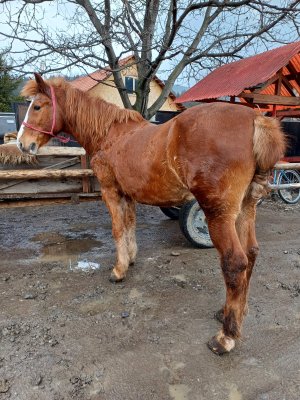
Asymmetrical croup

ThatMare

Member
Joined
13 January 2021
Messages
11
Visit site
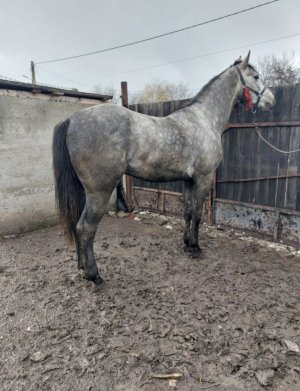
Looking at a horse auction in Romania for my mother, none of them look good to be completely honest . I have found one however , in her description it says she has an asymmetric croup which can also be seen in the picture. I’ve seen horses being ridden with this before, how serious is it?

( cannot attach the picture , file too large. So I’ll attach a link )


https://drive.google.com/file/d/1nhbFd8VgZurUGJWmKEhDbu9N-VLjkV_K/view?pli=1
 
Read this OP.

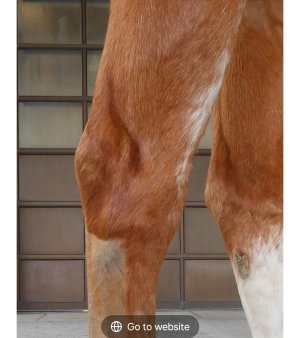
Look at the hock angles.
This can predispose a horse to PSD as well as other hind limb issues.

If the horse us asymmetrical as you say then this could be an indication of a stifle issue or si.

Attached is a photo of a horse I went to view that was very asymmetrical! We suspected asymetrical pelvis. Possible sacral illiac issues too, which was imho evident when he was ridden. Like my Lari was, he wouldn't move forward; lacked impulsion, needed a whip.

The next photo shows the hind limb structure.

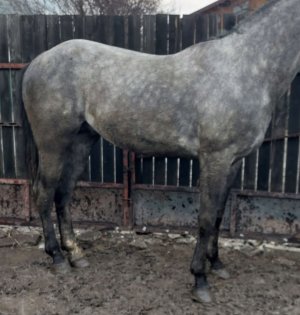
The final photo showing the upright post legged conformation which is typical of hind limb lameness and a precursor for PSD.

I wouldn't touch it.
 

Attachments

  • Screenshot_20250121_175130_Gallery.jpg
    Screenshot_20250121_175130_Gallery.jpg
    217.3 KB · Views: 50
  • Screenshot_20250305_065142_Google.jpg
    Screenshot_20250305_065142_Google.jpg
    382.2 KB · Views: 37
  • Screenshot_20250305_065342_Gallery.jpg
    Screenshot_20250305_065342_Gallery.jpg
    669.8 KB · Views: 50
Read this OP.


Look at the hock angles.
This can predispose a horse to PSD as well as other hind limb issues.

If the horse us asymmetrical as you say then this could be an indication of a stifle issue or si.

Attached is a photo of a horse I went to view that was very asymmetrical! We suspected asymetrical pelvis, I took two photos one outside the stable one inside, both showed this unlevelness. Possible sacral illiac issues too, which was imho evident when he was ridden. Like my Lari was, he wouldn't move forward; lacked impulsion, needed a whip.

The next photo shows the hind limb structure.

The final photo showing the upright post legged conformation which is typical of hind limb lameness and a precursor for PSD.

I wouldn't touch it.
 
Welcome to the forum.


Potentially very serious. I don't mean to be rude but nobody in their right mind would pay good money unseen or at auction for a horse declared with an asymmetric pelvis.

I've just looked at the photo and agree the whole back end is wrong.
.
 
Read this OP.

Look at the hock angles.
This can predispose a horse to PSD as well as other hind limb issues.

If the horse us asymmetrical as you say then this could be an indication of a stifle issue or si.

Attached is a photo of a horse I went to view that was very asymmetrical! We suspected asymetrical pelvis. Possible sacral illiac issues too, which was imho evident when he was ridden. Like my Lari was, he wouldn't move forward; lacked impulsion, needed a whip.

The next photo shows the hind limb structure.

The final photo showing the upright post legged conformation which is typical of hind limb lameness and a precursor for PSD.

I wouldn't touch it.
Thanks birker, I do see what you mean now and completely agree.
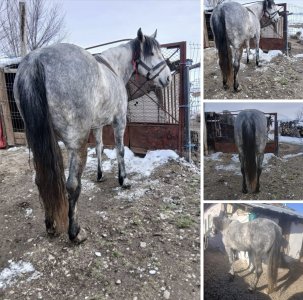
Could you give me insight on these ?
 

Attachments

  • IMG_1813.jpg
    IMG_1813.jpg
    572.1 KB · Views: 51
  • IMG_1811.jpg
    IMG_1811.jpg
    758.9 KB · Views: 49
  • IMG_1810.jpg
    IMG_1810.jpg
    682.7 KB · Views: 47
  • IMG_1812.jpg
    IMG_1812.jpg
    137.6 KB · Views: 51
They are very unusual sales pictures, can you point us to the advert?
I’m seeing your concern, no these aren’t my horses , yes they look like they’re in horrible conditions which is because they are living in a backyard. In Romania this is very common , my last horse was rescued from this situation and it was very rewarding however I didn’t realize a conformation issue and it ended up giving us problems a few years down the line which is why I’m looking for help before I put myself in a similar situation and get a young retired horse.
It’s on Facebook, not a website, it’s in one of the “ căi de vânzare “ group chats , it’ll take me forever to find the ad again as I just took down the number.
 
The chestnut has the most beautiful face but from there backwards its not good.

Can you get videos of any of them moving if your buying unseen? Thats usually much better for assessing something than a static photo
 
The chestnut has the most beautiful face but from there backwards its not good.

Can you get videos of any of them moving if your buying unseen? Thats usually much better for assessing something than a static photo
Owners at work so this is the only clip of the stallion actually moving, I’ll chase him again tomorrow for the video of him walking and trotting up and down.
I appreciate any help!https://share.icloud.com/photos/00dM9bZOMLxIFkTZgnVG5LhIA
 
Several years ago I knew someone who would take a large horsebox and travel to Russia to bring back a full load of horses. Mostly they weren't great conformation-wise, very ordinary looking and not consistent. I asked the dealer if it was worth doing, going all that way, the ferry journey,etc. "Oh yes" they said, which meant that they must have bought the horses for very low prices and it occurred to me that maybe they had been bred for meat rather than riding horses. Although they had been handled and I guess that most of them had been broken in, as I didn't see much in the way of breaking and schooling.

Some of these later turned out to have warble flies (which has been eradicated in the UK).

I was talking to someone at a show and somehow we got onto the subject of importing horses from Russia, etc. He said that they couldn't be insured. They had been brought over to the UK, had been improved and got fit for competition - and then had dropped dead, which turned out to be worm damage as youngsters. So then the insurance companies refused to insure.

You can have a horse vetted, but you can't know how it was brought up and looked after when young.
 
Several years ago I knew someone who would take a large horsebox and travel to Russia to bring back a full load of horses. Mostly they weren't great conformation-wise, very ordinary looking and not consistent. I asked the dealer if it was worth doing, going all that way, the ferry journey,etc. "Oh yes" they said, which meant that they must have bought the horses for very low prices and it occurred to me that maybe they had been bred for meat rather than riding horses. Although they had been handled and I guess that most of them had been broken in, as I didn't see much in the way of breaking and schooling.

Some of these later turned out to have warble flies (which has been eradicated in the UK).

I was talking to someone at a show and somehow we got onto the subject of importing horses from Russia, etc. He said that they couldn't be insured. They had been brought over to the UK, had been improved and got fit for competition - and then had dropped dead, which turned out to be worm damage as youngsters. So then the insurance companies refused to insure.

You can have a horse vetted, but you can't know how it was brought up and looked after when young.
Fascinating.
 
I was talking to someone at a show and somehow we got onto the subject of importing horses from Russia, etc. He said that they couldn't be insured. They had been brought over to the UK, had been improved and got fit for competition - and then had dropped dead, which turned out to be worm damage as youngsters. So then the insurance companies refused to insure.


I'm really sorry but this doesn't make any sense to me.

If this dealer was telling the truth about not being able to insure Russian horses (as opposed to the more likely situation that he personally had lost so many horses that they declined to insure him as a person) then all he had to do to insure them was repassport them. He'd likely have needed to do that anyway if a horse came in on a Russian passport with a name written in Ciryllic script. Also dealers who own multiple horses that I know of either have no insurance, (as it makes no economic sense long term once you have 3 or more horses), or they have herd insurance which doesn't identify individual horses.

I've never seen or heard the idea that horses imported from Russia can't be insured before and I can't find any reference it to it online. There are plenty of cheap young horses in this country that haven't seen a wormer in their lives. One batch of breeders are particularly notorious, and a few forumites have lost youngsters to worm damage. Insurers don't refuse to insure all small generic-passport black and white cobs.

I'd want to see his evidence before I could accept that Russian bred horses can't be insured, sorry to contradict you but I think he was probably spreading urban myth there :(
.
 
You can have a horse vetted, but you can't know how it was brought up and looked after when young.
But in fairness to the OP, if her mum lives in Romania then she is most likely going to be buying something Romanian bred (unless she can afford to import). OP can only work with what they have available.

OP could you afford a younger horse direct from a breeder? Or is that not an option? There must be reputable breeders of riding horses in Romania. Just thinking about how you might avoid buying a problem of someone else's creation.
 
But in fairness to the OP, if her mum lives in Romania then she is most likely going to be buying something Romanian bred (unless she can afford to import). OP can only work with what they have available.

OP could you afford a younger horse direct from a breeder? Or is that not an option? There must be reputable breeders of riding horses in Romania. Just thinking about how you might avoid buying a problem of someone else's creation.
I’m really thankful you actually understand, because it’s so rare for a breeder to actually breed decent horses in Romania, a good unbroken sound horse there can cost the same as a schoolmaster master in the uk which I just can’t spend on something that’s never seen a saddle before and been raised tied by a rope to a small area in the field. It’s just not something we can afford to do, the cart horses here would be raised in back gardens, most of the time by people who cannot afford a car and need a mode of transport or something to bring firewood home, some of them take decent care of their horses but the biggest risk I see is overloading the trailer and making them pull weights too big for them too often, this is what had happened to the last horse and she got retired with suspensory desmitis at 9 however you could easily see this would happen by looking at her legs, we just didn’t know near anything about conformation all those years ago.
 
That's a fairly rotten situation to be buying a horse in, isn't it. But at least now you are much more clued up on how to look for potential problems. If I were you, I would be asking around to find people who do take decent care of their horses (even if they are kept in sub-par conditions), and then trying to buy from one of them. At least that way you're minimizing your risk. Buying at auction is always going to involve a higher risk because you just don't know the horse's background.

Another option might be to contact Romanian horse rescues (there do seem to be a few) and try to re-home something? At least a rescue should have a better idea of the soundness and suitability for a job of the horses they've taken in.
 
That's a fairly rotten situation to be buying a horse in, isn't it. But at least now you are much more clued up on how to look for potential problems. If I were you, I would be asking around to find people who do take decent care of their horses (even if they are kept in sub-par conditions), and then trying to buy from one of them. At least that way you're minimizing your risk. Buying at auction is always going to involve a higher risk because you just don't know the horse's background.

Another option might be to contact Romanian horse rescues (there do seem to be a few) and try to re-home something? At least a rescue should have a better idea of the soundness and suitability for a job of the horses they've taken in.
Yeah , it’s not good at all. We’ve been on the lookout out and found some people that look like they care for their horses however there’s always a small problem with each of them. Take this chestnut for example, he’s young and hasn’t pulled much, he’s bum high but I’m sure he’ll grow into it however his front right looks a bit off to me.

https://share.icloud.com/photos/01a-NH9YUZ8Pt8tUtAYZ8MIoQ
As for the rescues , none of the horses there are rideable or something I’d feel comfortable with mum riding as they’ve been found in ditches or dumped in random spots because they can’t pull weight anymore , so I wouldn’t want them carrying any.
 

Attachments

  • c569afe8-2c08-4926-9bd3-d2a3699ff7c7.jpeg
    c569afe8-2c08-4926-9bd3-d2a3699ff7c7.jpeg
    435 KB · Views: 22
I'm really sorry but this doesn't make any sense to me.

If this dealer was telling the truth about not being able to insure Russian horses (as opposed to the more likely situation that he personally had lost so many horses that they declined to insure him as a person) then all he had to do to insure them was repassport them. He'd likely have needed to do that anyway if a horse came in on a Russian passport with a name written in Ciryllic script. Also dealers who own multiple horses that I know of either have no insurance, (as it makes no economic sense long term once you have 3 or more horses), or they have herd insurance which doesn't identify individual horses.

I've never seen or heard the idea that horses imported from Russia can't be insured before and I can't find any reference it to it online. There are plenty of cheap young horses in this country that haven't seen a wormer in their lives. One batch of breeders are particularly notorious, and a few forumites have lost youngsters to worm damage. Insurers don't refuse to insure all small generic-passport black and white cobs.

I'd want to see his evidence before I could accept that Russian bred horses can't be insured, sorry to contradict you but I think he was probably spreading urban myth there :(
.
You got completely the wrong story here.

It wasn't the dealer who said they couldn't be insured.

In fact, casting my mind back, it was at a stand selling wormers at the Royal Show. The person on the stand started to tell me about the horses from Russia, I didn't introduce the subject. I had asked if worm damage in a young horse from not being wormed was always going to be present, he said it was and went on to say that insurance companies wouldn't insure horses bred in Russia due to them dropping dead when subjected to the stress of competitions, i.e. eventing, etc.
 
You got completely the wrong story here.

It wasn't the dealer who said they couldn't be insured.

In fact, casting my mind back, it was at a stand selling wormers at the Royal Show. The person on the stand started to tell me about the horses from Russia, I didn't introduce the subject. I had asked if worm damage in a young horse from not being wormed was always going to be present, he said it was and went on to say that insurance companies wouldn't insure horses bred in Russia due to them dropping dead when subjected to the stress of competitions, i.e. eventing, etc.


I can't think why a worming company would be keen for people to think that horses which weren't wormed couldn't be insured .......

That information isn't right either, I don't think. Horses have a natural immunity to worms and some have a greater immunity than others. I don't think it's true that all horses which haven't been wormed will be carrying worm damage.

They are currently working on breeding sheep which have a far lower requirement for chemical worming. And of course in horses (and in sheep) it will depend heavily on how clean their grazing is.
.
 
OK, I know all this, not all young horses with be damaged by not worming, but some are. And careful management of grazing for horses and farm animals can minimise worm burdens. And yes, it was a person selling worming medicines who told me the story. And there was an Oaks winner that died from worm damage which led researchers and vets realise that there is a resistance problem with wormers. So now we tend to test for worms, rather than just routine buy and dose.

I am merely repeating MY story, my experiences.

Its like the Romanian rescue dogs, that come to England that can carry horrible diseases that we have mostly forgotten about.

After all, one horse that was sold to the Police turned out to have warble fly, so they had a problem, and I don't know if any more were carrying them as well.
So not the best cared for animals, no wonder they were cheap.
 
In my experience, horses with a dodgy or undesirable background just get a new passport. I've also never heard of horses from Russia being uninsurable but when buying a horse I came across quite a few on newly acquired passports for whom there was no history whatsoever, I don't know how any insurance company would know the birth place.
 
The awful shoeing job on the romanian horses will also be making so many lame.
It appears an even bigger minefield than buying here.
Honestly a younger unstarted horse might be still be a better bet.
 
Top