Barefoot again and again, sorry! Inspired by thatmygirl :)

dressagelove

Well-Known Member
Joined
28 February 2010
Messages
1,903
Location
North West
Visit site
After reading thatmygirls thread this morning, I was re-inspired to think about sending my tb barefoot. I had some nice pm's off a couple off people, thank you so much :) with some good information and links
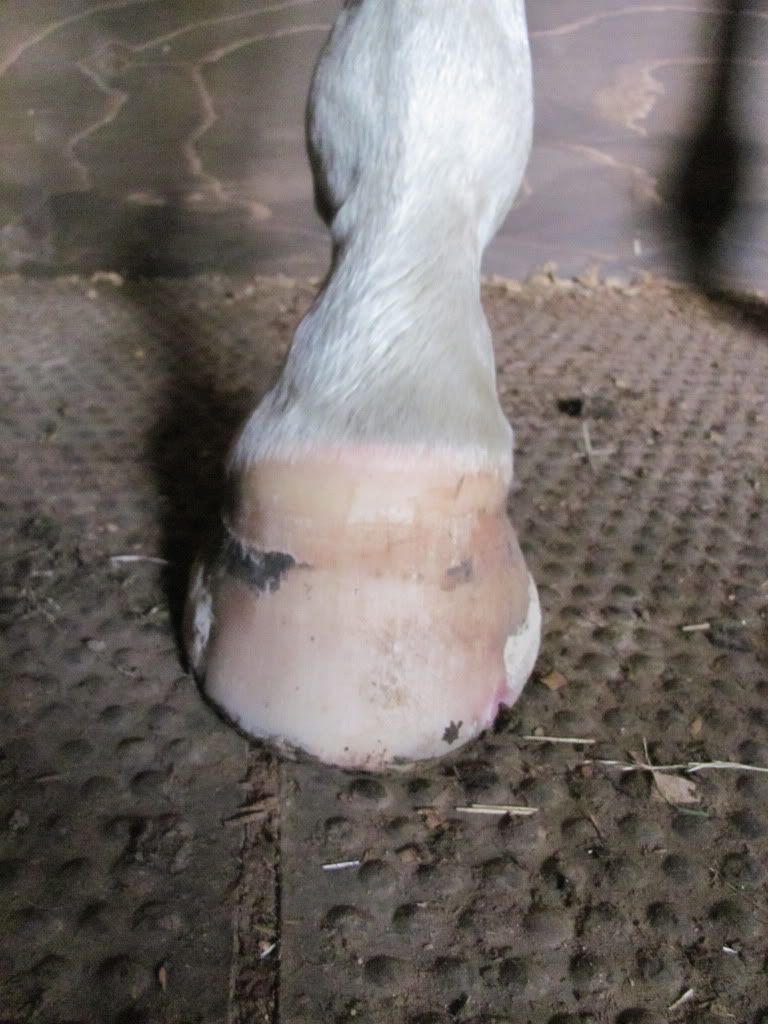
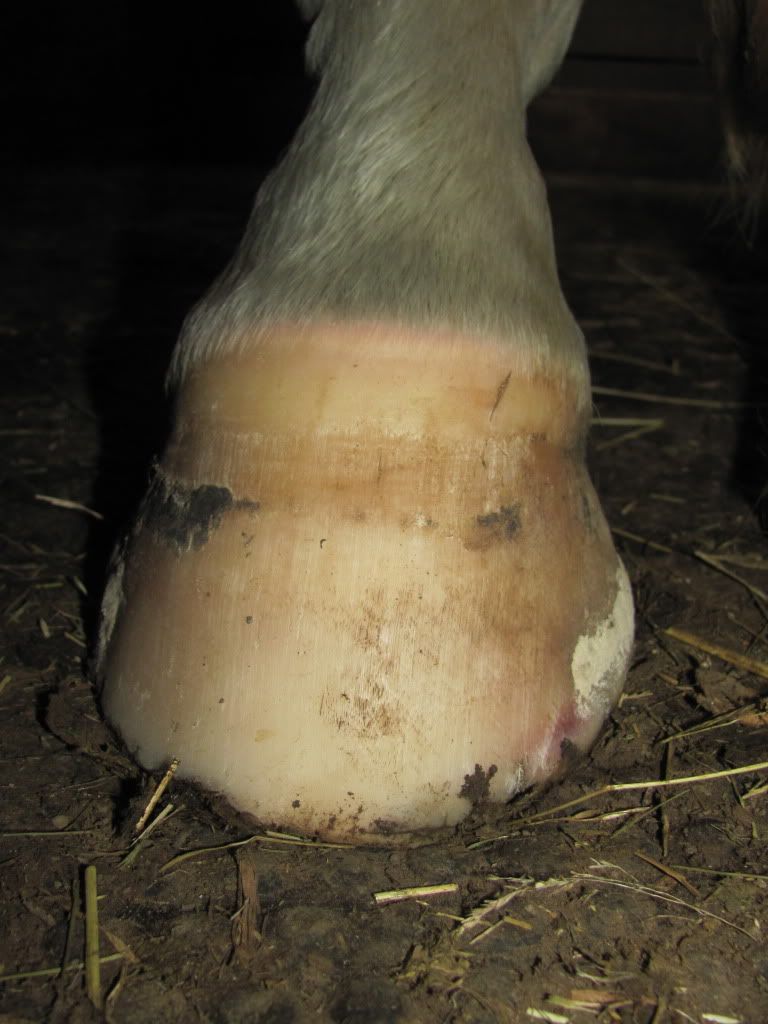
I have done some research online, but require slightly more specific advice on my boy as he has a dreadful crack in his foot at the moment. He recently finished a course of anti biotics for some infected scabs on his fetlock, and this year, more than ever, he is getting really bad mud fever :( He is not in work at the moment, been off for about a month or more now, mainly as my farrier recommended not to ride with this crack. He is kept in 24/7 at the moment to keep him out of the mud until I can get a game plan. His mud fever has cleared up incidentally, although he does tend to get very scabby fetlocks, on top as well.

Re. the crack, I am working with my farrier to deal with it, and the vet saw it and said it looked like we were doing well with it. Farrier is coming again on wednesday, so I am wondering whether to talk to him seriously about going barefoot. Online it suggested just taking the back shoes off first to see how you go, but this crack is on the back foot, so would it be better to keep shoes on this for now?? Farrier suggested round shoes, which is what we were going to do next, to give foot with crack more support.

If I did take his shoes off, is it best to keep him in first, or turn him straight out and let nature take its course; we have very hilly / muddy / stony fields...

All he is fed is ad lib hay, formula for feet and carrots at the moment... He is 16hh Irish TB and 9 years old. Oh and he is completely sound at the moment, but that is not always the case!

Here's pics of the monkey and his feet. Specific input on his feet would be appreciated.

Looking Fat:
IMG00133-20111203-1321.jpg


Front foot
IMG00136-20111203-1321.jpg


The dreaded crack:
IMG00137-20111203-1322.jpg


IMG00138-20111203-1322.jpg


More potential cracks! (sand cracks?)
IMG00139-20111203-1323.jpg
 
Forgot to add my last question... There are lots of success stories on HHO and online with barefoot, but are there many cases where is hasn't worked??

Loads. Most failures are due, in this order, to:

- incorrect diet, most usually too much sugar in food or in grass or mineral imbalances in grass and hay
- not enough movement and conditioning work
- metabolic disease (EMS, EPSM, Cushings, IR)

Regarding incorrect diet, your horse looks like a prime example. Before taking off the shoes you should strip all sugar out of his diet, feed magnesium oxide and yeast and get a forage analysis done because with feet cracking like those photos show, then he has something out of balance. My bet would be on copper and zinc, because of the mud fever, which frequently disappears on well fed barefoot horses.

Cracks can heal, I will post a photo of one in a minute in the same place as yours. But yours is VERY severe and you need to find out if the diet will help it before you remove the shoe, I think.
 
Last edited:

Thanks v much for your reply Santa Paws. So in terms of heading for barefootedness, should I aim to sort his diet out first and let it take effect for a few weeks or would it not matter?

Like many horse owners as well, I'm shocking with feeding. How would I eliminate sugars (no more carrots?) and feed magnesium oxide and yeast in what form; brewers yeast? And I don't want to be feeding copper and zinc? OR I do? sorry, didn't quite understand that bit... Forage analysis on our hay? How would you get this done?

Thanks so much, pm if you prefer x
 
In my opinion, the feet are in poor condition, that is to say, the heels are contracted it looks as though the horse has been shod regularly, but poorly, or fed, or exercised poorly. That is to say management has to be altered.
There has been no support to the feet.
If it were me, I would get another farrier.
I think that most feet can be helped to grow [this is a difficult time of the year], by feeding a high fibre low sugar and giving regular exercise 20 to 35 mins on tarmac every day.
Off the top of my head, I would feed, per day:
120gm micronised linseed meal
500gm to 1kg non molasses lo alfa, , Hi Fi Dengie chaff.
Equimins minerals
Equimins Biotin [ask Equimins for advice on amounts and on whether Biotin or boitin enriched.
ad lib hay.
This regime can be started this week, wait for two weeks, then remove shoes, DO NOT ALLOW FARRIER TO PARE THE FEET!!!!
a light rasping is all you need. I think you should find the BEST farrier available, and pay for his advice, you must have the feet trimmed sympathetically.
I find it is easier to manage the horse if it is not out on grass more than a few hours per day. The bed must be clean and dry.
I think you will need to manage your horse to suit its feet until the feet have stabilised, and you are confident that you are sufficiently "educated"/ ie confident, to know what to do. In the meantime make sure he gets 20 mins per day on smooth tarmac barefoot.
Ther will be "setbacks" while the feet adjust, this may take days, weeks or months.
 
Last edited:
Thanks v much for your reply Santa Paws. So in terms of heading for barefootedness, should I aim to sort his diet out first and let it take effect for a few weeks or would it not matter?

Like many horse owners as well, I'm shocking with feeding. How would I eliminate sugars (no more carrots?) and feed magnesium oxide and yeast in what form; brewers yeast? And I don't want to be feeding copper and zinc? OR I do? sorry, didn't quite understand that bit... Forage analysis on our hay? How would you get this done?

Thanks so much, pm if you prefer x

Definitely no carrots, they are shockers for delivering bad sugar! I have a friend whose horse even comes out in hives if she is given them. Check your bag labels for "molasses" "corn syrup" or and other "syrup" and stop feeding anything with those in. If you are on hay, consider soaking it for 12 hours in fresh water before feeding it (ie don't re-use the water).

Mag ox is sold on eBay. You can also by Calmag from a Farm Supplies shop for £10 for 25 kilos. It doesn't go off, it's crushed rock! Feed at 25g a day.

Forageplus will do you an analysis and recommend what feed and supplements. If you can't afford it (it's not horribly expensive) then I would supplement copper at 100mg a day which is a safe rate without testing. Forageplus sell Copper Bioplex at about £30 a kilo and you feed ONE GRAM - a tiny amount, you need to weigh it first to see how little it is - a day. Or you could feed Copper Trition as your all round vit and min supplement.

In addition to copper and mag ox I feed Naf haylage balancer which has the all round vits and mins and a prebiotic to help digestion and yeast. If you feed a vit and min supplement without yeast then I highly recommend feeding yeast, since my horses went footie this summer when I ran out of stuff they would eat. Either Brewers yeast 50g a day or Yea-sacc 15 g a day. It has a double anti-inflammatory effect on the gut.

The copper works on insulin regulation and they cope with carbohydrates better if they have enough, and grow stronger feet because of it. I have suggested it because it seems to be coming out in analyses as the overwhelmingly highest deficiency. It is caused by lack of copper but also by excess of iron, manganese and molybdenum, all of which are common excesses.

With the cracks you have, I would shoe for one more cycle after you have the diet right, then take them off. Your horse's feet are abominably underrun at the heels and his whole body will feel better once his heels regrow and he can stand on them properly. It will happen quicker than you think possible.


ps you may get advice from nutrition experts that by adding MgO and Copper to a general balancer you are unbalancing it. I understand the point but my own 3 and my friends' 8 feet and coats have never looked so good as in the year and more that we have been doing it. They may also say that you cannot feed copper without zinc, but my research suggested that most horse feeds have plenty of zinc and again I have never had a problem supplementing copper without additional zinc.
 
Last edited:
I would echo MrsD123 re your farrier. The hinds are seriously under-run - unless it's a poor angle on the photo.

Taking his shoes off will improve blood flow and you can massage the coronary bands daily which will also help stimulate horn growth. However, the sand crack is problematic but the coronary band is still unaffected so there is every reason to suppose that it will come right eventually.

Are you able to find a natural hoofcare/barefoot farrier near you who could give you his opinion? We wouldn't hesitate to take all four shoes off but we have the facilities here to manage his feet. Advice from an experienced trimmer about what you are able to do where you are would be the next step if I were you.
 
UKNHCP trimmers are good because they can provide a good trim and give advice about nutrition and care. Here is the a list of certified practitioners:
http://uknhcp.org.uk/uknhcpqualifiedpractitioners.html
You'll probably need boots to start with, but I believe the trimmer will be able to tell you what size/make will suit your boy.
Good luck, that's a big journey but once everything will have been sorted out, you won't want to go back to shoes.
 
Thanks chick :)
you have been given some really good advise so far and there are some really experienced people on here who have helped me get this far, Oberon and mrsD123 being 2 that pops into my head.
I don't know enough to be able to advise but I started their diet a few weeks before I took their backs off ( backs were off 3 months before I started the fronts) iv had no problem with the backs on any off my 6 horses but bare in mind the weight load being 60% at the front and 40% at the back so the back feet should be easier really.
One thing iv learnt is what your farrier does is very important and the frogs and soles should not be pared, honestly I won't be going back. Hoof boots on the front and bare behind, no more shoes for me.
I researched for around 7 months before I changed my views on shoeing and learnt so much within that time that I felt I was able to take the step and go for it, a lot off it is misunderstanding and not knowing enough. And what people say on here " every horse can go bare foot it's the owners that can't" is so true.
It's a case off getting everything right and don't be afraid to ask questions, people on here are great.
One thing iv learnt though is look at ingrediants on supplements very carefully, most are not what they seem
good luck
 
Thanks so much everyone, and thanks thatsmygirl, thats encouraging info :) I have been reading up all afternoon, and must admit am excited to get started. Everything I have read so far makes it seem totally do-able, and successful if you do it right.

I have found a lady called Abigail Hogg in the NW (barefoot trimmer) and have sent her an email, has anyone heard of her?
I have been reading up on feeding as well, thanks to MrsD123 :) going to go to the feed merchant in the morning and get some micronised linseed, brewers yeast, and hi fi chaff to get us started. No more carrots for him, and soak his hay. Is there anything else people would suggest?
 
Speedi beet is a good base feed to mix it all in with, get some mag ox as well if u can. I use magnitude which is a expensive way off feeding it really but they all eat it so will carry on.
 
Getting the diet sorted is numero uno priority.. this will improve the horn quality and the immune system / resistance to bugs like mud fever.. linseed will also help ... of course... ;)

Just to add I have a horse who has the most abominable sweet tooth... so have found adding seeds like fennel and aniseed really helpful.. also liquorice is very good as well.. and all are good for the GI tract too..

I a good diet and time can work wonders.. obviously the hoof capsule with the crack will have to grow down / out so some patience needs to be added into the mix.

Otherwise agree with what others have said above.
 
Good luck. I can't offer any advice as I've never had to deal with anything like that fortunately. I use speedibeet though as a base for my food when I'm actually feeding. It's so mild here mine aren't getting bucket feeds at the moment. Basically most of their dinner is speedibeet. I'll mix in a bit of unmollassed hifi or a bit of readigrass but that's about all they eat apart from lots of forage!
 
i took the decision to go bare with my tb a year ago and will not be going back! he was lame with navicular and bone spavins. He was the 'typical tb' on 3 legs when loosing a shoe! Farrier was skeptical but ovbiously couldnt go against my wishes. I looked into rockley farm but i have everything rockley has tracks, tarmac, soft and hard ground and pea gravel turnout pens so i did the transition at home! He gets trimmed every six weeks. He was originally in easyboots on all fours and now only wears them infront. He is currently on calm and condition but once this bag is finished he will be back on speedibeet and hoofkind chaff. That was all he was on last year and he held his weight great! i used to get my magnesiumoxide from ebay. I have some pictures i will pop up.
the crack as it grows down will break off, mine had a large chunk come off and now as abit of foot missing on that side but its slowly coming back!
What they used to look like- this photo was taken when he was due to be shod.
Photo-0174.jpg

how damaged the foot got with remedial shoeing
ad62bb6c.jpg

most recent
60f42280.jpg
 
I usually try to be as encouraging as possible when someone posts pics of hooves and pick out the positives as where improvements can be made....but

YIKES to those feet
faint2.gif


You are 100% right to think about a new approach with them:)

The heels are growing under the hoof
There is stress to the walls from excessive loading to them (the cracks)
The solar view shows;
Contracted heels with a deep sulcus (likely harbouring some infection)
Wimpy, underdeveloped digital cushion (and therefore lateral cartilages)
Possibly thin soles (hard to see with the mud).
Shoe off balance.

On the PLUS side he appears to have a good wall connection and the hoof walls actually look reasonably healthy (other than the cracks) - which is indicates the diet isn't too bad to start with and he isn't likely to be IR.

He'll need more minerals - but then show me a horse that doesn't nowadays;)
All I would do for now is change the Fomula for a more specialist mineral balancer and knock off the carrots (he can have the occasional one in the future). See if that works.

Yes there are failures with barefoot and there are horses out there who need shoes to be comfortable.

But in cases where the owner has had good advice and made efforts to follow it,
and the horse is healthy and managed with appropriate hoof care - the failures are rare.

I would get advice from a specialist before taking the shoes off. I'm not pooh-poohing farriers by saying this - but due to the cracks, I feel he'll need to be trimmed with a mustang roll and farriers aren't usually trained in this.
I feel the cracks will grow out when the wall is relieved.
Hooves were designed to be weight bearing on the heels, frog, toe sole and walls in a 'pressure and release' way. Right now, in shoes, the wall are are taking all the weight of the horse in a constant pressure.

I don't know Abi Hogg or any of her clients, but she's been around for years and I've never heard any negative reports - that would suggest she knows what she's doing.

One of the things you will need to factor into the costs is boots - you need to be prepared to buy them for transitioning with - especially given your horse's current state.
A trimmer will be able to advise you on fit.

Here are pics on hoof loading
hoofshodsnow.jpg

baresnow.jpg


See the difference? Which do you think supports the hoof more - shoes? or the ground?
 
Thanks so much everyone, you are all terribly helpful :)

Thanks Oberon, that was a brill post. Yes, defo feeling its time for new approach, this crack has really opened my eyes to bad his feet are!
I have also contacted Julie Bailey, her website is quite impressive and hopefully she could fit me in. Defo going to consult barefoot professional, sorry I may end up offending my farrier! Ah well!

No one has commented on how I should keep him once the shoes do come off, sources online recommend them staying out 24/7 which is fine as we have plenty of grazing, as long as the weather holds.. Should I do this, as long as the mud fever doesnt come back too bad?

Thanks again everyone, I am feeling more positive about it all, if still a little scared! ;)
 
I've recently taken the shoes off both of my lads, including one TB.

I've had success so far with keeping out as much as poss, although they are both in at night atm with no ill effects so far :)

Start with road work and work in the school; I did about 30-40 mins on the road or in the school to start with, and build it up. Now my TB (Who's had shoes off a few months now) can happily trot down even the rockiest, most uneven horrid surfaces :D Keep him moving around as much as possible :)
Watch out for the frost - the sugar in the grass might make him footy.

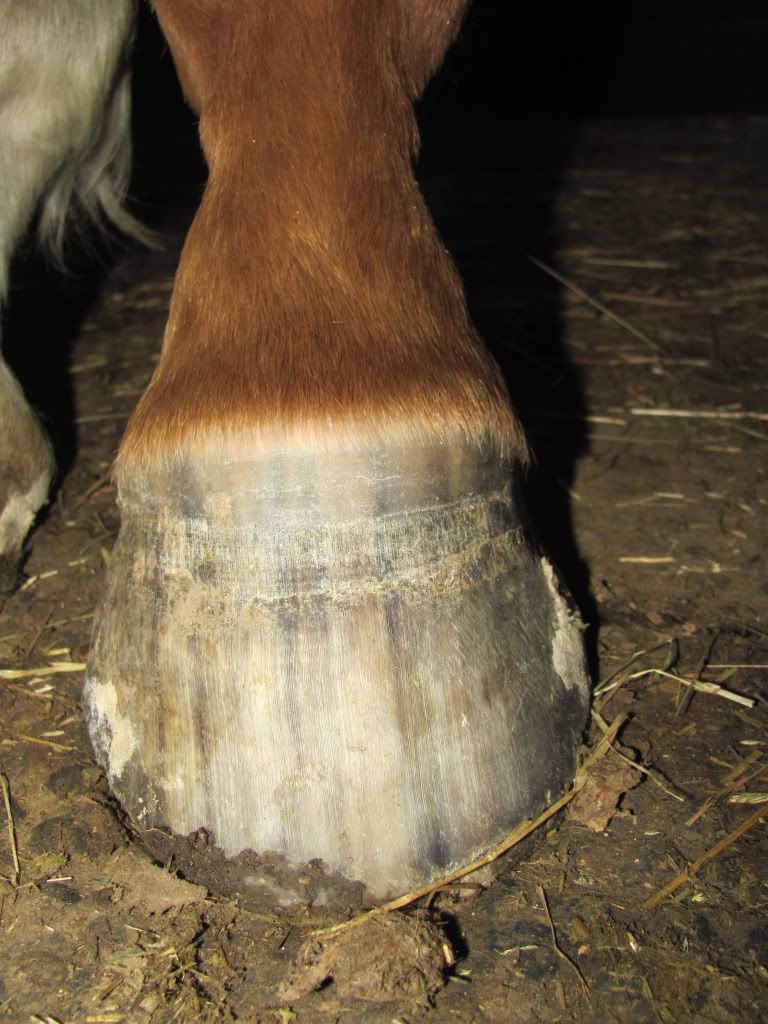
Just to share pics of Ozz's feet about 8 weeks after taking shoes off. The change in angle of the first 3/4 of an inch shows when his shoes were taken off, and how much better his horn growth is since :D

IMG_1235.jpg

IMG_1230.jpg

IMG_1231.jpg

IMG_1229.jpg


He's fed linseed, brewer's yeast and mag in A&P Fast Fibre and Healthy hooves (He won't eat one or the other on its own :rolleyes:) Plus hay at night, and pretty logn, fibrous grass in the day :)

J&C
 
China those feet are great now, how long has he been bare? Do u use a farrier or trimmer?

he has been bare just over a year now. Its been a long process for him as his feet were badly damaged.
i was lucky that i have pea gravel turnout paddocks so that did alot of the toughening (sp) up for me as he wasnt in work, turnout and movement is better, but if you only have grass i would bring in for a few hours to allow his feet time to dry as this time of year its abt damp and their feet get soft and they get abit footy on the stones.
I use a farrier, purley because he has done research himself into bare and was supposed to be doing some work with nic at rockley so provided i was happy with what he did (which i am) then he can carry on. I do not know of a barefoot trimmer in my area so was not happy to swap. nor was i happy to pay 60 odd for a trim with a posh name ;-) i pay 20 for my trims 5-6 weekly.
judging by the shoeing so far on yours, i would considering shopping around for another farrier who is happy to support you or a recomended trimmer. My farrier is one of the best in the southwest so i didnt want to move to another and loose that contact if you know what i mean.
 
Iv got another farrier coming out early jan who seems a lot more clued up after speaking to him and the fact he said to me that the frog and sole should not be really touched I booked him for the next lot off trims just to see if I'm happy with his trims. I'm not happy with my farrier at the mo due to the amount he takes off so I am working on that as I relise I'm not going to get where I want to with their feet useing my current farrier. Iv used him for so many years it's not going to be easy telling him but it's gona have to be done. But to be fair to him he's only just shod the horse once so done the best he could, iv always been happy with his shoeing ESP after the equine vets I use asked a few times ( different vets) what farrier I use cause it's the best shoeing they have seen in a long time but trim wise for bare foot I think he's not perpaired to learn or even try to be honest
 
Iv got another farrier coming out early jan who seems a lot more clued up after speaking to him and the fact he said to me that the frog and sole should not be really touched I booked him for the next lot off trims just to see if I'm happy with his trims. I'm not happy with my farrier at the mo due to the amount he takes off so I am working on that as I relise I'm not going to get where I want to with their feet useing my current farrier. Iv used him for so many years it's not going to be easy telling him but it's gona have to be done. But to be fair to him he's only just shod the horse once so done the best he could, iv always been happy with his shoeing ESP after the equine vets I use asked a few times ( different vets) what farrier I use cause it's the best shoeing they have seen in a long time but trim wise for bare foot I think he's not perpaired to learn or even try to be honest

Sounds just like me farrier thatsmygirl! hehe, are we twins? :P
 
I'm sorry OP but i can't believe that farrier. The feet would probably be in much better condition if the horse was shod propperly. I'm no hoof expert but i know a badly shod horse when i see one and those feet made me go 'bleedin' 'el'

Just wanted to say good luck with whatever you do, but i would be sacking that farrier asap, unless he has not been doing those feet for long? No wonder he goes lame :/

I would maybe look into the foot putty that i have seen used to fill cracks with great results. Not sure about with unshod horses and personally although i am usually on the side of barefoot i think i would want shoes on until the crack grows out a bit, to try and hold it together. Perhaps glue ons or something as the nails do look to be causing further damage. But i would look into the filler either way, i hear it stops bacteria getting in and i have seen good results on large cracks.
 
Just a word of warning .... when my cob was retired and his shoes were taken off, I went over to the field that evening and to my horror he was standing in the most traditional laminitic pose ever, refusing to move.

In a panic I called the vet who came over and ........ picked his feet out as the mud had clogged up underneath them and the poor horse was confused as he was suddently walking on muddy stilts.

Just thought I would mention that as you said your fields were muddy. Apart from that lots of good advice on here. I got my forage analysed by www.forageplus.com who are completely amazing, however it is a reasonably tricky, quite expensive and time consuming process to go through, but completely 100% worth it.
 
It's chromium in conjunction with Mag ox which helps with insulin regulation.

I don't think this is the full story. According to my research the following is the case:

Magnesium is currently in trials for the treatment of human type II diabetes, no chromium.

And copper ALSO regulates insulin, irrespective of magnesium.

If you have better information can you point me to it, I'd like to read it. But please bear in mind that no-one really knows exactly how horses use these minerals. They have tested them by overloading horses until they die or get sick, so that they know the top level. They have reduced them until they die or get sick so that they know the lowest level. But between that there is a huge range where all they can do is guess what is happening and all mineral balancing advice at the moment is based on this very inaccurate guesswork, because we cannot actually get inside a horse and see what is happening.
 
he has been bare just over a year now. Its been a long process for him as his feet were badly damaged.
i was lucky that i have pea gravel turnout paddocks so that did alot of the toughening (sp) up for me as he wasnt in work, turnout and movement is better, but if you only have grass i would bring in for a few hours to allow his feet time to dry as this time of year its abt damp and their feet get soft and they get abit footy on the stones.
I use a farrier, purley because he has done research himself into bare and was supposed to be doing some work with nic at rockley so provided i was happy with what he did (which i am) then he can carry on. I do not know of a barefoot trimmer in my area so was not happy to swap. nor was i happy to pay 60 odd for a trim with a posh name ;-) i pay 20 for my trims 5-6 weekly.
judging by the shoeing so far on yours, i would considering shopping around for another farrier who is happy to support you or a recomended trimmer. My farrier is one of the best in the southwest so i didnt want to move to another and loose that contact if you know what i mean.

Is it wrong of me to find your horse's hooves sexy now?
eh.gif


They are like looking at a beautiful piece of artwork.
2thumbs.gif


You and your farrier have done an amazing job
clap.gif
 
Well I tell you what, I am well and truly fascinated by all this, its very interesting. Correct me if Im wrong, but would the best way to do things is have a grass and hay analysis done, see where our forage is lacking, and then feed what it is lacking in? Rather than just giving them a bit of everything?

Im beginning to suspect people trust their farriers too much! Cos they are qualified and experienced etc, we just take their word for it (Im talking about the anti barefoot ones)
But it looks like with a little education and finding things out, we can be more responsible horse owner?! Obviously a farrier would want to promote shoeing as well to make more money out of you...?
 
Sounds like a good plan to me :)

Re. farriers. Mine never suggested shoes off per se, but then we hadn't had any problems. When I suggested it he was totally supportive and pleased with the idea. We worked out that doing trims actually pays better for him per hour than shoeing. It takes such a short amount of time that it's probably more worth while financially for him if he can fill the spare time with another client, which I'm sure he'll have no problem with.

But yes, I think it's very easy to fall into the trap of blindly trusting a professional without doing our homework. I trust my farrier/vets etc. but the more I learn the more I want to be fully aware of the decisions I'm making, and not just going with what's suggested 'because'. :)

I'm finding it fascinating too!

J&C
 
Top