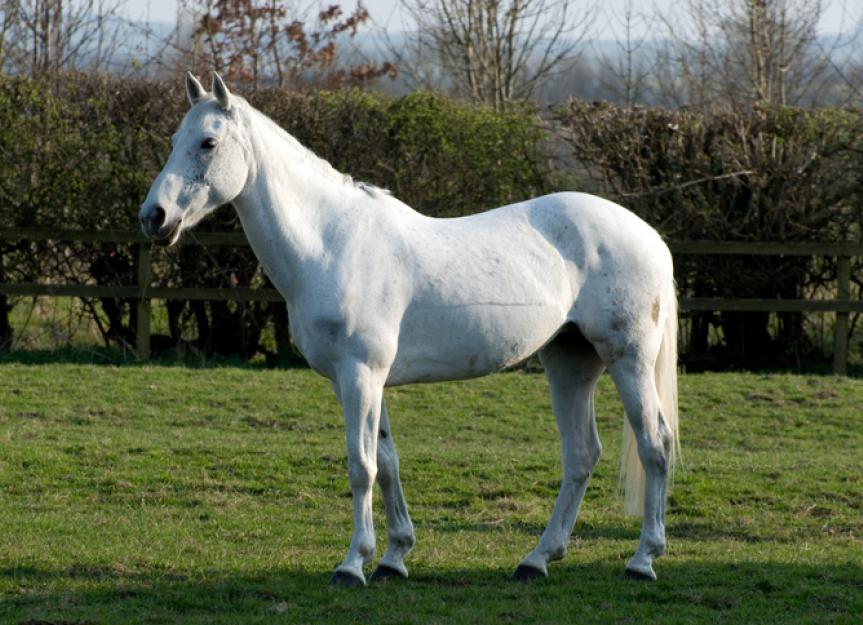
BBP mark 2 - more weird horses

One thing we have noted with him, which is classic in horses with some sort of back dysfunction or nerve issue, is that his tail is relatively static. He doesn’t have a lot of lift or wiggle to it when he moves and it tends to draw between his hind legs when he moves.

I've noticed this in a few horses now, to include some that I've owned, that had no other "symptom" other than this and led perfectly fine performance careers. I'm not sure if it's just a conformation and thicker hair related issue in some cases.

It can be indicative of something, but I owned a horse that did who was vetted upon vetted when I purchased him and competed up to Advanced Medium (but trained further) with nary an issue.
 
Whenever I have a horse with weird issues that can't be quite pinpointed I test for Lyme and EPM (which is debatable for accuracy, I know). However, I am in the USA now and those are far more prevalent here. PSSM might be worth considering too.

From a nutritional standpoint, 4000iu isn't enough for my horse and he still shows some deficiency signs at that dosage. So you could play with that. What's his magnesium intake like?

I can't remember, but did you dive down the ulcer rabbit hole? Or do anything for his hindgut?

How's his lymphatic system? Does he ever get stocked up or swollen?
I can definitely ramp up the vitamin E. And probably should anyway for his liver.

I’ll certainly ask about Lyme testing, but based on my own experience experience with doctors I’m not hopeful that my vets will be on board.

We did the ulcer and his gut rabbit hole last year as he was kicking when picking up hind feet, and camping under behind a lot. Plus he has this real distension behind the last rib that is all squidgy like a waterbed rather than like fat, that no vet has been able to explain. At that time he had mild gastric ulcers, treatment of which solved the kicking issue. They did note a fair amount of fluid in his colon and caecum but couldn’t tell me the significance of it in the absence of diarrhoea, and not at all gassy seeming. His scans showed normal intestinal wall thickness etc and no sign of IBD, just some sort of idiopathic hind gut dysfunction. He has been on various supplements including succeed and the KPU protocol but right now I have stripped out everything except vitamin E, mycosorb and milk thistle. Definitely heavy looking in his gut.

He doesn’t stock up or swell in his limbs but does get filled in front of his sheath. He was on the trinity consultants L94 supplement from Feb to June and I saw amazing improvements in him in that period, from being disconnected and having little interest in me to trotting around me at liberty and following me around. But then we got stuck at that point and then his enzymes and bile shot up.
 
  • Like
Reactions: SEL
I've noticed this in a few horses now, to include some that I've owned, that had no other "symptom" other than this and led perfectly fine performance careers. I'm not sure if it's just a conformation and thicker hair related issue in some cases.

It can be indicative of something, but I owned a horse that did who was vetted upon vetted when I purchased him and competed up to Advanced Medium (but trained further) with nary an issue.
Ah fair enough. In all the ones I have known, the ‘dead’ tail has come back to life following rehab. BBP never lifted his and carried it up, but when healthy it would still swing nicely through its length as he moved. My sisters horse is a great example. She didn’t have much movement in hers, xrayed showed very mild kissing spine and after a vast amount of careful work, she now has the most beautiful tail wiggle in the trot.

So perhaps best used as a useful indicator but not definitive of an issue 🙂
 
It's very nice to see you back. Your posts have been so helpful in the past.

I am a little hesitant to post as my knowledge is a LOT smaller than many people who have already posted. But the video and your description are very similar to a horse I know who had a nasty tail/end of spine injury through a fall in the field and is now hypersensitive, with reduced movement in the tail.

I do hope you can get to the bottom of it, he's a stunning horse.
Always me coming back with my weird and not so wonderful issues! I haven’t even started to bore you with the palomino pony’s problem!🙈 I reckon I should get charity status.

Really useful to know that you have seen one with similar issues. I’ve gone for ages thinking it must just be my weakness as a trainer not being able to work through it, but even someone pretty useless should be able to get a horse comfortable with being patted on the bum, and a normal healthy horse shouldn’t have an issue with its own tail. I’ll see what osteopath says and am due another chat with my vet this week as well.
 
ECVM was just a random thought for completeness, tbh I don’t think he really screams that but one of the reasons I looked into it with mine was some really odd tension patterns the physio was picking up on combined with his deteriorating front limb movement (and some weird head carriages but that’s something I noticed later) and my understanding is it can show up in weird ways. Mine doesn’t have the malformation but does have an abnormality in the same area you’d look for one. (I’m having him PTS in a few weeks and would LOVE to get a dissection done to see what the weirdness is but sadly couldn’t find anyone to do it)

The version I tried specifically is Equine Hanna Somatics. Definitely something that might be interesting to try with him - probably not a silver bullet (I don’t think they exist, especially not for the extremely puzzling ones) but may help in small ways perhaps?
 
Sorry to hear about your pony, Boulty. I know you have gone above and beyond for him.

BBP, definitely not your weakness as a trainer. I am sure you'd get Hermosa all singing, all dancing much better than I have done, because I am pure rubbish. She's just a nice girl (EMS aside :rolleyes: ). And for what it's worth, she doesn't often carry her tail but that seems common with Iberians.

The flinching at your touching his back end with straw or a flag or whatever is very strange. Low level chronic pain of some sort that he feels more when something touches it?

There's a Doctor Who episode where Matt Smith's 11th Doctor jumps on a horse, says something about it, and the owner's like, "What?" And he says, "I speak horse." Every time I watch it, I think, "Ooooooh, dude, have I got a job for you...."

Dare I ask what's happening with your lovely mare?
 
Sorry to hear about your pony, Boulty. I know you have gone above and beyond for him.

BBP, definitely not your weakness as a trainer. I am sure you'd get Hermosa all singing, all dancing much better than I have done, because I am pure rubbish. She's just a nice girl (EMS aside :rolleyes: ). And for what it's worth, she doesn't often carry her tail but that seems common with Iberians.

The flinching at your touching his back end with straw or a flag or whatever is very strange. Low level chronic pain of some sort that he feels more when something touches it?

There's a Doctor Who episode where Matt Smith's 11th Doctor jumps on a horse, says something about it, and the owner's like, "What?" And he says, "I speak horse." Every time I watch it, I think, "Ooooooh, dude, have I got a job for you...."

Dare I ask what's happening with your lovely mare?
Ah gawd, she’d be a whole thread of her own! Basically really struggled with change of homes, the group of horses I have weren’t really comforting to her when she arrived, she wouldn’t eat and developed severe ulcers and associated behavioural issues. Turned very defensive aggressive. (I’ve never had an aggressive horse before so that’s been a bit of a shock). Would run through fences to get back to the yard where she felt safest. Healed the ulcers, got her more integrated with the other horses and the behaviours were reducing but still really unpleasant to be around, ear pinning and snapping if you touched her or got in her space, but also constantly wanting to get into your space and then trying to savage you for being too close to her. Generally miserable. I finally recognised that she was sleep deprived so went through two months where I have done nothing with her but encourage her to sleep (taken her into the arena and done sort of meditation sessions to keep her present and not thinking about other things and she would lie down and fall asleep with me each time). Behaviour got better and better.

Two weeks ago, for the first time, I got back the horse I thought I had bought. Sweet, gentle, curious, cuddly, friendly. Took her out for her first 3 in hand hacks out and she was perfect, brave, polite, calm. Gave me a lot of confidence that I hadn’t effed up completely and our relationship was salvageable and she could be the perfect horse.

This week she is back to hating me and everything I do. Refuses to ‘go down for her nap’ with me but looks like she really needs sleep. So I’ve built her a sandpit and a wood chip pit to sleep in in the field, but I think the main issue is she doesn’t feel secure enough with her field mates to really relax. They just walk off and leave her and she was self harming in her rush to get up. I’m also constantly worrying about how the club foot affects her, her neck is rock hard and jammed in and she is just a ball of tension, but too aggressive for a body worker to work on. I did have her on a no bute type product for a month which ran out last week, so it could be that it was doing more than I thought for her comfort in lying down?

I know it’s just a matter of time and patience and making what changes and adjustments I can to make her feel safe and encourage her to rest and sleep. But it’s tricky when you can’t change the horses you have to work with. I’d love to rehome the standardbred we bought last year, as she doesn’t help create zen energy, but she’s 20, has so much trauma from her past lives and I’m really fond of her and she deserves a safe retirement home rather than being passed around.

Between the traumatised standardbred who needs mental health therapy, my Arab mare who hates me and my weird Connemara it’s been a draining year rather than a healing one. Still, I’m trying to remain pragmatic, she never asked for this and she is only giving me a hard time because she is having a hard time. Luckily the Shetlands are an oasis of joy and the only life choices I haven’t questioned so far 😂. Mine has his own issues, but hopefully resolvable, and is the most adorable little person I have ever met (feisty tho!).
 
Complicated ponies find their way to you, don't they? And I think mine is driving me nuts..... A guy I play Irish music with told me today that I should get a new whistle, and I said, "Yeah, cool, if you help me pay off some vet bills, I will totally buy a new whistle." (a good one is anywhere between £100 and £300, so not the most expensive instrument in the world, but not that cheap, either).

I guess go back to the no bute stuff. Is that the one with turmeric? Supplements get a lot of stick from vets and sciencey people, but my horses are on many. So many. Sometimes, when I run out of one, I see what happens if I don't give it to them. I think Hermosa feels generally better all 'round on the L94 (not a cheap habit, that one...recommended for EMS horses, though), so I dutifully shut my eyes at the price and buy it. Fin has been out of his Ashwaganda powder for like a week, and so far so good. Jury is out. We'll see.

Hermosa off Oestress throws herself at every black and white cob (just piebald cobs!) like a bloody sex-crazed harlot, but she's okay when on it, so I diligently buy that stuff like it's crack.
 
Complicated ponies find their way to you, don't they?
I did say to my sister that I never thought I would see the day when I thought BBP was the more straightforward of my horses 😂🙈

Of course some might make the argument that I find perfectly nice horses and make them complicated! Like everyone else, I have to make some compromises with how I keep them, and it doesn’t suit all of them. So I keep them on track systems with big shelters which seems to provide the right balance of movement, browsing etc, and am lucky enough to be able to do one track for the Shetlands and then two parallel tracks for the big ones, so they can move as a herd but the sensitive ones don’t have to put up with the Connemara pony rugby tackling them. And it works great generally. But the standardbred hates the proximity to others. I think she would be much happier in a big open field where she can create her own personal space, and not have horses pushing past her or making her feel under pressure. So it’s causing her stress which changes the energy abit. You want it to be perfect for everyone but it’s not that easy.
 
I agree with the symptom rather than cause, but I’m definitely open to banging it short once the fly season is over, to see if that changes anything (for example, I don’t know whether if he does have a back injury/nerve compression somewhere, if having a thick, full, long tail might be causing a little much traction? Might be me throwing out weird thoughts now)
One of our local vets has a bee in her bonnet about long thick tails, more so with cobs as they have been bred to have "artificially" heavy ones, but she has apparently had a lot of success with cutting out the underside of it and seeing almost immediate improvement biomechanically. So you keep the "top" length for flies and appearances but can reduce the weight of the tail by nearly half. Would be at least one easy thing to try with no downside!
 
Just a thought, but I'm sure you are in his area, I'd get Pierre out. Pierre is the reason I can walk now, I went from looking at wheelchairs to now doing 50 miles a week with my dogs, and when Leo came back from loan broken and lame he was the one who fixed him. I hate woo woo stuff, but I dunno, Pierre has fixed things I'm sure he shouldnt have been able to, and hes told me things about my mare that he couldnt possibly have known. He made a huge red scar right down my forehead go away and I still dont know how he did that. He also treated my dog after the vets pretty much washed their hands of him and no one could work out what was going on. He knew as soon as he looked at him and worked with him to get him right.

 
One of our local vets has a bee in her bonnet about long thick tails, more so with cobs as they have been bred to have "artificially" heavy ones, but she has apparently had a lot of success with cutting out the underside of it and seeing almost immediate improvement biomechanically. So you keep the "top" length for flies and appearances but can reduce the weight of the tail by nearly half. Would be at least one easy thing to try with no downside!
Might be worth a shot, it’s not like he’s going out showing or anything! His tail isn’t anything like a massive cob tail, but it is pretty thick and certainly long right now.
 
Just a thought, but I'm sure you are in his area, I'd get Pierre out. Pierre is the reason I can walk now, I went from looking at wheelchairs to now doing 50 miles a week with my dogs, and when Leo came back from loan broken and lame he was the one who fixed him. I hate woo woo stuff, but I dunno, Pierre has fixed things I'm sure he shouldnt have been able to, and hes told me things about my mare that he couldnt possibly have known. He made a huge red scar right down my forehead go away and I still dont know how he did that. He also treated my dog after the vets pretty much washed their hands of him and no one could work out what was going on. He knew as soon as he looked at him and worked with him to get him right.

Thanks for the recommendation, he isn’t someone I have heard of.
 
I tried to make a little video of his muscle contraction when touched with the piece of grass vs two of the mares, who didn’t react at all.

Not sure if it’s clear, but you can see the muscle contraction almost half a second before I touch him, and it goes from that muscle contracting to a pelvic tuck and scoot forwards to avoid it.
Slow motion:


And with the two girls.

https://www.flickr.com/gp/197825428@N06/h66520r66N (his fat backside, then the two girls and then him again)
 
I tried to make a little video of his muscle contraction when touched with the piece of grass vs two of the mares, who didn’t react at all.

Not sure if it’s clear, but you can see the muscle contraction almost half a second before I touch him, and it goes from that muscle contracting to a pelvic tuck and scoot forwards to avoid it.
Slow motion:


And with the two girls.

https://www.flickr.com/gp/197825428@N06/h66520r66N (his fat backside, then the two girls and then him again)

A weird one indeed. He seems abnormally sensitive to touch. I would not expect any horse to flinch like that when you brush it with a piece of straw.
 
What are you using to treat the liver issue. Bert's has been on Hepalyte prescribed by the vet. A natural product and it has got his liver enzymes from 147 to almost back to normal within 6 weeks. His behaviour is transformed I think when they have a liver problem it can make them feel quite unwell.

Someone I know had a liver problem and said they had headaches and quite a bit of pain and it took them 6 weeks of treatment to start to feel better so I imagine horses too might feel quite poorly..
 
I tried to make a little video of his muscle contraction when touched with the piece of grass vs two of the mares, who didn’t react at all.

Not sure if it’s clear, but you can see the muscle contraction almost half a second before I touch him, and it goes from that muscle contracting to a pelvic tuck and scoot forwards to avoid it.
Slow motion:


And with the two girls.

https://www.flickr.com/gp/197825428@N06/h66520r66N (his fat backside, then the two girls and then him again)
That’s really interesting how sensitive he is.

One idea that struck me, especially as you’ve said he’s got liver issues, (cause undiagnosed yet) - is that he might be suffering from secondary UV photosensitivity, which can have touch sensitivity as a symptom.
Mine had this years ago and it took ages to connect the dots of symptoms cause and effect.

Liver illness means they cannot efficiently detox the photosensitive compounds that exist in some feeds, antibiotics, supplements - so they remain circulating in the blood at higher than normal levels, and when exposed to UV during daylight hours (even cloudy days) - their skin can feel more tender the longer the exposure to UV.
We see it most pronounced on white noses that are ‘sun-burnt’ - but that sore skin/ tingly/ itchy feeling sensitivity can exist all over their body, just below the skin, where blood flows, depending on severity of the liver condition and ingestion of photosensitive compounds, and the resultant inflammation it causes.

It is easy to see how these sensitivity issues can look like PSSM, the symptoms mimic both conditions.

Here’s a brief overview of P.S in horses (the website doesn’t go greatly in depth about the condition, and we can be left thinking from certain sites that this condition affects only light skin/hair horses, when it absolutely doesn’t. Liver disease and the resulting downstream issues that creates isn’t worse for one colour horse to another. It’s just impossible to visually see PS in darker horses.

Causes of Photosensitization in Horse​

In a normal horse, the skin and fur act as a protective barrier against the elements. In cases of photosensitization, whether the cause is primary or secondary to liver damage, UV light reacts with factors in the horse’s bloodstream when they reach the skin that cause inflammation and damage. Ingestion or exposure to toxic plants, side effects from certain medications (sulfa drugs and tetracyclines), and liver damage are some of the causes of photosensitization in horses.

Causative Toxic Plants​

Primary photosensitization due to toxic plants may include:

  1. Perennial ryegrass
  2. St. John’s Wort
  3. Buckwheat
Secondary photosensitization due to toxic plants may include:

  1. Clover
  2. Alfalfa
  3. Blue green algae
  4. Pyrrolizidine alkaloid containing plants such as ragwort
  5. Moldy bermudagrass
In most of these cases, the toxic plant must be ingested. In some instances, as with certain clovers, contact with the plan during grazing is all that is needed for photosensitization to occur.


(To clarify, it’s saying ‘toxic plants’ in the above list, but ryegrass, clover and alfalfa are not toxic per se for healthy horses (within reasonable dosages), but for a liver compromised horse, can be toxic due to the PS compounds)


Ryegrass is the common cause of ingestion as it’s included in most hay mixes. In a liver sensitive horse ryegrass needs to be cut out to prevent secondary PS symptoms relating to liver issues.
Once the liver is healed, ryegrass can be eaten again as the liver can flush out the PS compounds that grass contains.
If your paddock has clover and ryegrass in it, that’s a trickier issue to prevent them from having turnout.

You obviously have your turnout arrangements and keeping him in during daylight hours and out at night doesn’t sound possible within your freedom-based management system, understandably.
Another way to prevent UV exposure to test whether UV is a factor for his skin sensitivity, is if you can get a very lightweight UV blocking fly rug on him?

Do you find him more sensitive/ reactive at the end of the day, after 10+hours of UV exposure, compared to say, very first thing in the morning? If so, it could suggest minor PS.
Although if not, and he’s sensitive 24/7 - it may well be the PS compounds never detox to a sufficiently low level in his blood, to reduce skin sensitivity at any time.
Does he prefer to graze in the shade? Stay by tree shade grazing? Prefers staying in the shelters on very bright sunny days?

When mine went through this they both hated touch. Flinching and moving away. More so their main body areas. Head not so much. It went on for quite a while and I never linked it at the time to PS, until much much later when I had been through the whole liver health aspect of their health. Turning the corner to cutting out all possible moulds (haylage instead of hay) and their liver healed and were much more willing to be touched/groomed etc.

My gelding was far worse than the mare behaviourally and was weirdly explosive, bunny hopping, bukarooing, random running bursts, - no obvious triggers. Your video reminds me of him back in those liver ‘don’t touch me’ days. I now wonder with hindsight if the skin feeling inflamed and icky my boy liked running to get cool air running over him, cooling him.
If you have a massive fan in a shelter, it would be interesting if yours decides to visit it often for cooling.

If you can cut out ryegrass, clover, alfalfa feeds - chamomile too BTW is photosensitising and also aloe Vera - and try to reduce exposure to UV light with a rug - it would be interesting if after 2 weeks he’s still as sensitive.
Many folk would likely try a ‘calmer’ supplement on a reactive PS horse, only for it to contain chamomile and make them worse. So check supplements you’re giving for alfalfa chaff carrier powder, and chamomile.

Hopefully the PS angle is worth exploring, and eliminating that as a culprit as much as possible, as it’s easily induced without knowing with foods/supplements in a liver poorly horse.

Getting the liver healthy is the first port of call, and ultimately heals secondary PS automatically.
 
@PurBee post is interesting. My Appy with PSSM had liver issues at a yard (possibly field flooding with contaminated water) & I was convinced it was her PSSM causing issues until bloods showed liver.
 
That’s really interesting how sensitive he is.

One idea that struck me, especially as you’ve said he’s got liver issues, (cause undiagnosed yet) - is that he might be suffering from secondary UV photosensitivity, which can have touch sensitivity as a symptom.
Mine had this years ago and it took ages to connect the dots of symptoms cause and effect.

Liver illness means they cannot efficiently detox the photosensitive compounds that exist in some feeds, antibiotics, supplements - so they remain circulating in the blood at higher than normal levels, and when exposed to UV during daylight hours (even cloudy days) - their skin can feel more tender the longer the exposure to UV.
We see it most pronounced on white noses that are ‘sun-burnt’ - but that sore skin/ tingly/ itchy feeling sensitivity can exist all over their body, just below the skin, where blood flows, depending on severity of the liver condition and ingestion of photosensitive compounds, and the resultant inflammation it causes.

It is easy to see how these sensitivity issues can look like PSSM, the symptoms mimic both conditions.

Here’s a brief overview of P.S in horses (the website doesn’t go greatly in depth about the condition, and we can be left thinking from certain sites that this condition affects only light skin/hair horses, when it absolutely doesn’t. Liver disease and the resulting downstream issues that creates isn’t worse for one colour horse to another. It’s just impossible to visually see PS in darker horses.

Causes of Photosensitization in Horse​

In a normal horse, the skin and fur act as a protective barrier against the elements. In cases of photosensitization, whether the cause is primary or secondary to liver damage, UV light reacts with factors in the horse’s bloodstream when they reach the skin that cause inflammation and damage. Ingestion or exposure to toxic plants, side effects from certain medications (sulfa drugs and tetracyclines), and liver damage are some of the causes of photosensitization in horses.

Causative Toxic Plants​

Primary photosensitization due to toxic plants may include:

  1. Perennial ryegrass
  2. St. John’s Wort
  3. Buckwheat
Secondary photosensitization due to toxic plants may include:

  1. Clover
  2. Alfalfa
  3. Blue green algae
  4. Pyrrolizidine alkaloid containing plants such as ragwort
  5. Moldy bermudagrass
In most of these cases, the toxic plant must be ingested. In some instances, as with certain clovers, contact with the plan during grazing is all that is needed for photosensitization to occur.


(To clarify, it’s saying ‘toxic plants’ in the above list, but ryegrass, clover and alfalfa are not toxic per se for healthy horses (within reasonable dosages), but for a liver compromised horse, can be toxic due to the PS compounds)


Ryegrass is the common cause of ingestion as it’s included in most hay mixes. In a liver sensitive horse ryegrass needs to be cut out to prevent secondary PS symptoms relating to liver issues.
Once the liver is healed, ryegrass can be eaten again as the liver can flush out the PS compounds that grass contains.
If your paddock has clover and ryegrass in it, that’s a trickier issue to prevent them from having turnout.

You obviously have your turnout arrangements and keeping him in during daylight hours and out at night doesn’t sound possible within your freedom-based management system, understandably.
Another way to prevent UV exposure to test whether UV is a factor for his skin sensitivity, is if you can get a very lightweight UV blocking fly rug on him?

Do you find him more sensitive/ reactive at the end of the day, after 10+hours of UV exposure, compared to say, very first thing in the morning? If so, it could suggest minor PS.
Although if not, and he’s sensitive 24/7 - it may well be the PS compounds never detox to a sufficiently low level in his blood, to reduce skin sensitivity at any time.
Does he prefer to graze in the shade? Stay by tree shade grazing? Prefers staying in the shelters on very bright sunny days?

When mine went through this they both hated touch. Flinching and moving away. More so their main body areas. Head not so much. It went on for quite a while and I never linked it at the time to PS, until much much later when I had been through the whole liver health aspect of their health. Turning the corner to cutting out all possible moulds (haylage instead of hay) and their liver healed and were much more willing to be touched/groomed etc.

My gelding was far worse than the mare behaviourally and was weirdly explosive, bunny hopping, bukarooing, random running bursts, - no obvious triggers. Your video reminds me of him back in those liver ‘don’t touch me’ days. I now wonder with hindsight if the skin feeling inflamed and icky my boy liked running to get cool air running over him, cooling him.
If you have a massive fan in a shelter, it would be interesting if yours decides to visit it often for cooling.

If you can cut out ryegrass, clover, alfalfa feeds - chamomile too BTW is photosensitising and also aloe Vera - and try to reduce exposure to UV light with a rug - it would be interesting if after 2 weeks he’s still as sensitive.
Many folk would likely try a ‘calmer’ supplement on a reactive PS horse, only for it to contain chamomile and make them worse. So check supplements you’re giving for alfalfa chaff carrier powder, and chamomile.

Hopefully the PS angle is worth exploring, and eliminating that as a culprit as much as possible, as it’s easily induced without knowing with foods/supplements in a liver poorly horse.

Getting the liver healthy is the first port of call, and ultimately heals secondary PS automatically.
Really thoughtful post, thank you for taking the time. I had also thought about photosensitivity as it’s easy to dismiss when they are dark.

He already has no rye and never has in his time with me, so I can cross that part off. We are careful to keep our hay rye free so would be minimal contamination if any. He was on Suregrow balancer but I stripped that out a few months ago and now he only gets a powdered one. We do have a little much clover and buttercup in our grazing, mostly white and purple clover, no alsike but farmer has just put in crimson clover in adjacent field so we may get more transferring over the next year.

He shows no sign of preference to shade, certainly not compared to the others, they all love a snooze in their shelters when it’s hot but generally equally happy out in the sun. No different at 5am to 6pm, tho as you say if he was highly sensitised that wouldn’t mean much.

Biopsy showed no link to ragwort or iron toxicity.

Best guess is mycotoxins but then you get in the endless cycle of which batch of hay/grass/soil do you test and how often/what times of year. His two highest spikes have been now and this time last summer (no bloods taken prior to that). So I have completely taken him off the grass, and off the hay from the same field we used both years.

Supplement wise for the liver he has been on hepalyte and then L94 (where I saw the biggest improvement in him overall but not the bloods in the end), plus milk thistle, mycosorb and vitamin E. He has also done the KPU protocol which is meant to link to liver, and is not a quick fix. He is now on a 4-6 week course of some drug whose name escapes me, so we should be retesting in another week or so. I think at that stage I may also ask for bloods for Lyme and vitamin E.

My little shettie is now also very lame, so vet may be coming out sooner 😢
 
Really thoughtful post, thank you for taking the time. I had also thought about photosensitivity as it’s easy to dismiss when they are dark.

He already has no rye and never has in his time with me, so I can cross that part off. We are careful to keep our hay rye free so would be minimal contamination if any. He was on Suregrow balancer but I stripped that out a few months ago and now he only gets a powdered one. We do have a little much clover and buttercup in our grazing, mostly white and purple clover, no alsike but farmer has just put in crimson clover in adjacent field so we may get more transferring over the next year.

He shows no sign of preference to shade, certainly not compared to the others, they all love a snooze in their shelters when it’s hot but generally equally happy out in the sun. No different at 5am to 6pm, tho as you say if he was highly sensitised that wouldn’t mean much.

Biopsy showed no link to ragwort or iron toxicity.

Best guess is mycotoxins but then you get in the endless cycle of which batch of hay/grass/soil do you test and how often/what times of year. His two highest spikes have been now and this time last summer (no bloods taken prior to that). So I have completely taken him off the grass, and off the hay from the same field we used both years.

Supplement wise for the liver he has been on hepalyte and then L94 (where I saw the biggest improvement in him overall but not the bloods in the end), plus milk thistle, mycosorb and vitamin E. He has also done the KPU protocol which is meant to link to liver, and is not a quick fix. He is now on a 4-6 week course of some drug whose name escapes me, so we should be retesting in another week or so. I think at that stage I may also ask for bloods for Lyme and vitamin E.

My little shettie is now also very lame, so vet may be coming out sooner 😢
Oh no - not the shettie as well! That sounds a lot to deal with. Mystery illnesses in horses are the worst. Just thought I would post as my horses have mystery raised liver enzymes from time to time. Never got to the bottom of it. I have 3 horses: the oldest (15) is not affected by it; the next one down (9) raised enzymes 70s and the youngster (2) much higher 192. So whatever it is affects them more the younger they are. This has happened before and we've never got to the bottom of it. I had the youngster blood tested because she had hives for weeks. Having had raised GGT before, I am less panicky. There is no evidence of any liver damage, just raised enzymes. We have treated the 9 and 2 year old with milk thistle and liver tonic and they were pretty much back to normal within 3 weeks. I have had my grass tested to see if there is anything funny going on there and discussed it with an analyst (negative), and soil tested for heavy metals (negative). Searching for mycotoxins is a difficult game and seems unlikely to be definitive. So I am feeding them milk thistle as a permanent thing and will have 3 monthly tests on the youngster. I have discovered that you can have just GGT tested rather than a full blood panel and this is cheaper. Hope you get to the bottom of it. It's such a worry.
 
Oh no - not the shettie as well! That sounds a lot to deal with. Mystery illnesses in horses are the worst. Just thought I would post as my horses have mystery raised liver enzymes from time to time. Never got to the bottom of it. I have 3 horses: the oldest (15) is not affected by it; the next one down (9) raised enzymes 70s and the youngster (2) much higher 192. So whatever it is affects them more the younger they are. This has happened before and we've never got to the bottom of it. I had the youngster blood tested because she had hives for weeks. Having had raised GGT before, I am less panicky. There is no evidence of any liver damage, just raised enzymes. We have treated the 9 and 2 year old with milk thistle and liver tonic and they were pretty much back to normal within 3 weeks. I have had my grass tested to see if there is anything funny going on there and discussed it with an analyst (negative), and soil tested for heavy metals (negative). Searching for mycotoxins is a difficult game and seems unlikely to be definitive. So I am feeding them milk thistle as a permanent thing and will have 3 monthly tests on the youngster. I have discovered that you can have just GGT tested rather than a full blood panel and this is cheaper. Hope you get to the bottom of it. It's such a worry.
Thank you. I’m a little pragmatic having had liver issues with my now passed horse BBP at my previous yard. I did have his bloods done right before he died in May of last year and his GGT was normal. So it’s useful to have that marker of a normal blood reading at my current field not so long ago. But I’ve been giving him all the right stuff to support the liver for a year now and it’s still spiking.

I had two of the mares tested for just GGT in January and they showed very mild elevation (around 70 and 90 I think). Wasn’t too worried as the big lads had dropped to 125 from 560 around then too. But when his spiked to around 750 a month ago I did get concerned and had a biopsy done as his bile had also increased well out of normal range for the first time. His biopsy showed a score of 2/14 which could be far worse but does show mild fibrosis.

I then got the mares retested in early July and they have gone up a lot too. My little Arab mare has GGT of 460 now I think. So I have taken them all off the one batch of hay from a particular field. She is still on the grass track, the gelding is grass free and the little ponies are on a different field to the bigs and have never had the hay that I have just removed from the others. So I’m hoping if I test them all for GGT now, I can start to see whether removing that hay has made a difference. I would love it if it was that because it’s then an easy fix not to buy from that field again (although I get it at £2 a bale as it’s from a friend, vs the stuff they are now on which is £6 a bale!).

Although pragmatic I am still wary of liver issues. My first encounter with a liver problem was my friends little pony who had itchy front legs for a couple of days, friend went away on holiday and left someone else looking after it, I get a call from them to say pony isn’t acting right, so I go over and the pony has a massive fit, galloping on her side on the stable floor. Vet came out and diagnosed liver failure and she was PTS but it was an awful way to go. Another friend brought her horse over here to compete at Badminton, horse had an unusual run out and so she withdrew him as felt he wasn’t quite right. They found elevated liver markers and he was dead about a year later.
 
What are you using to treat the liver issue. Bert's has been on Hepalyte prescribed by the vet. A natural product and it has got his liver enzymes from 147 to almost back to normal within 6 weeks. His behaviour is transformed I think when they have a liver problem it can make them feel quite unwell.

Someone I know had a liver problem and said they had headaches and quite a bit of pain and it took them 6 weeks of treatment to start to feel better so I imagine horses too might feel quite poorly..
He was on hepaltye for a few months which basically gives good levels of milk thistle, b vitamins and vitamin E. Then I switched to milk thistle, vitamin E and mycosorb through winter and then added L94 in about early Feb I think. Which he stayed on for months. And added B vitamins. And still got a big spike in June to 750.

My vet agreed that in her experience some horses cope with elevated liver levels well and some seem to feel awful. Osteopathic vet said the pull downward from inflamed visceral organs creates a fascial pull to head and tail and can give what he believes to be chronic headaches, which sounds plausible given I always thought BBP had a constant headache.
 
Thank you. I’m a little pragmatic having had liver issues with my now passed horse BBP at my previous yard. I did have his bloods done right before he died in May of last year and his GGT was normal. So it’s useful to have that marker of a normal blood reading at my current field not so long ago. But I’ve been giving him all the right stuff to support the liver for a year now and it’s still spiking.

I had two of the mares tested for just GGT in January and they showed very mild elevation (around 70 and 90 I think). Wasn’t too worried as the big lads had dropped to 125 from 560 around then too. But when his spiked to around 750 a month ago I did get concerned and had a biopsy done as his bile had also increased well out of normal range for the first time. His biopsy showed a score of 2/14 which could be far worse but does show mild fibrosis.

I then got the mares retested in early July and they have gone up a lot too. My little Arab mare has GGT of 460 now I think. So I have taken them all off the one batch of hay from a particular field. She is still on the grass track, the gelding is grass free and the little ponies are on a different field to the bigs and have never had the hay that I have just removed from the others. So I’m hoping if I test them all for GGT now, I can start to see whether removing that hay has made a difference. I would love it if it was that because it’s then an easy fix not to buy from that field again (although I get it at £2 a bale as it’s from a friend, vs the stuff they are now on which is £6 a bale!).

Although pragmatic I am still wary of liver issues. My first encounter with a liver problem was my friends little pony who had itchy front legs for a couple of days, friend went away on holiday and left someone else looking after it, I get a call from them to say pony isn’t acting right, so I go over and the pony has a massive fit, galloping on her side on the stable floor. Vet came out and diagnosed liver failure and she was PTS but it was an awful way to go. Another friend brought her horse over here to compete at Badminton, horse had an unusual run out and so she withdrew him as felt he wasn’t quite right. They found elevated liver markers and he was dead about a year later.
Those readings you've given are quite high and a worry, aren't they. The only thing I could think of that was causing mine was that my field has field bindweed in it. Perhaps my older ones don't eat so much and the younger one does? Bindweed isn't listed as liver toxic but does cause gastrointestinal upset so I guess it could also affect the liver but no one has tested this? Hope changing your hay solves the problem. Have you tested your soil for heavy metals?
 
Those readings you've given are quite high and a worry, aren't they. The only thing I could think of that was causing mine was that my field has field bindweed in it. Perhaps my older ones don't eat so much and the younger one does? Bindweed isn't listed as liver toxic but does cause gastrointestinal upset so I guess it could also affect the liver but no one has tested this? Hope changing your hay solves the problem. Have you tested your soil for heavy metals?
Not yet, trying to change one thing at a time. The drinking water is also on my list as it is roof water and after doing some research this morning, if the one he drinks from is an asbestos roof there is some evidence that asbestos fibres can cause liver issues is ingested. But the Arab mare drinks mainly from trough fed by runoff from water that is definitely not asbestos. The little ponies usually have tap water so that’s another ‘control’ of the small ponies vs the bigs (although…asbestos cement pipe work anyone?!)

Parts of my field are certainly overrun with bindweed, but not the track that he has been on from March til now.
 
Really thoughtful post, thank you for taking the time. I had also thought about photosensitivity as it’s easy to dismiss when they are dark.

He already has no rye and never has in his time with me, so I can cross that part off. We are careful to keep our hay rye free so would be minimal contamination if any. He was on Suregrow balancer but I stripped that out a few months ago and now he only gets a powdered one. We do have a little much clover and buttercup in our grazing, mostly white and purple clover, no alsike but farmer has just put in crimson clover in adjacent field so we may get more transferring over the next year.

He shows no sign of preference to shade, certainly not compared to the others, they all love a snooze in their shelters when it’s hot but generally equally happy out in the sun. No different at 5am to 6pm, tho as you say if he was highly sensitised that wouldn’t mean much.

Biopsy showed no link to ragwort or iron toxicity.

Best guess is mycotoxins but then you get in the endless cycle of which batch of hay/grass/soil do you test and how often/what times of year. His two highest spikes have been now and this time last summer (no bloods taken prior to that). So I have completely taken him off the grass, and off the hay from the same field we used both years.

Supplement wise for the liver he has been on hepalyte and then L94 (where I saw the biggest improvement in him overall but not the bloods in the end), plus milk thistle, mycosorb and vitamin E. He has also done the KPU protocol which is meant to link to liver, and is not a quick fix. He is now on a 4-6 week course of some drug whose name escapes me, so we should be retesting in another week or so. I think at that stage I may also ask for bloods for Lyme and vitamin E.

My little shettie is now also very lame, so vet may be coming out sooner 😢
Fingers crossed your little one has just tweaked something and will return to being sound quickly.

It’s so difficult pinpointing liver struggling cause. It’s a minefield as so much can cause raised enzymes. Even just daily stress causing overt inflammation and reactive oxygen species can kick off liver enzymes. Yet your environment managmenet for them sounds like it’s a very relaxed freedom based space for horses.

It’s interesting the spikes tested of blood are the same time of year. That’s a useful clue. From a feed perspective, we have peak flowering and maturity of all field plants and although generally horse grazing tends to be low grazed and doesn’t flower, the outer borders off fencing and long stuff growing might have something toxic they’re grabbing.
My gelding from 0-10yrs old was much less discriminatory about eating almost everything, compared to the 10yr+ old mare who exhibited a much more cautious grazing approach. He gave me palpitations once when I saw him in the middle of a patch of silver birch trees where fly agaric mushrooms had popped up and he was mouthing at them breaking them up. I was trying to fit the bits of mushrooms back together again like jigsaw pieces to check if he’d actually eaten any or just played with them! 😳

When I switched to haylage from hay is when mine made progress. Better coats, footiness gone, abscessing stopped, even body weight distribution, less hive reactivity to biting insects, and behaviourally much more chilled-out, which for arab blood was very noticeable. Mycotoxins are silent havoc producers imo.
I could not find within a 3 hour driving window any hay that didn’t have a mould count. It’s the nature of the forage to easily soak up environmental moisture from the air during winter months and create germination of mould spores on the surface 3 inches. I threw more hay away that I fed. My climate is damp at the best months of the year so it was a losing battle keeping hay fresh stored here, even if I could find it.
Even fresh made hay often was baled at 25%, when it’s preferred to be 15% and under for the vast reduction of mould spore formation. I bought a moisture meter and travelled the country looking for hay with it coming back empty handed. Haylage was my only choice.
But for UK folk you have much drier regions to source hay from, and should be able to find 15% and less moisture readings.

Mycotoxins from grazing is usually from older longer leys that have long gone to seed, and used as foggage type feed - there’s possibility for the growth of mycotoxins to become quite high, under certain weather conditions. Whereas grasses like tall fescue are known to harbour a mycotoxins at maturity despite environment, unless the endophyte-free strain is sown.
Clover can harbour small round black or brown dots discolouring on the leaves that for horses can cause a myco liver flare. If it’s fresh clover that’s usually clean, but older rested clover could have the fungus.

Fingers crossed you will see better results when retesting from the 6 week medication trial. It sounds like you’re going through all possible causes investigating thoroughly and will eventually nail the issue and be able to join the dots.

It’s likely we could grab wild horses and test blood for liver function and find at least some % with raised enzymes. It’s the nature of a grazing animal to be exposed to certain funguses and toxins, and the liver is doing its job detoxing the issue. To hope for perfect bloods (not saying you are just making the point the liver is always changing status) is likely unrealistic with our domesticated horses, as they also have exposure to varying toxins, like we do too.

If we could test once a week for 2 years we might find correlations from 1 year to the next, like you are, and without any other overt serious symptoms, that could be ‘their’ normal liver function, up, down, up and down. Spiking here and there temporarily.
Mine had niggly symptoms downstream from perpetual liver distress, and when I managed to cut out mould from daily hay feeds, and switching to good quality haylage, is when we turned the corner to better health all round.
Fingers crossed your investigations soon yield answers. They are such a lucky band of horses to have you!
Please keep us updated when you get the chance as it’s always interesting what these issues reveal.
 
I know you are already on the case, but just to add that I remember a few years ago Jason Webb had a young horse in for starting that was extremely sensitive to any touch, and that one turned out to have liver issues, so this could possibly be the cause of your boy's sensitivity. Years ago my four youngsters on one field all had liver issues, and I tried hepalyte, but in the end the only thing that cured them was moving to a different yard, so never got to the bottom of it.
 
I know you are already on the case, but just to add that I remember a few years ago Jason Webb had a young horse in for starting that was extremely sensitive to any touch, and that one turned out to have liver issues, so this could possibly be the cause of your boy's sensitivity. Years ago my four youngsters on one field all had liver issues, and I tried hepalyte, but in the end the only thing that cured them was moving to a different yard, so never got to the bottom of it.
It’s a real challenge isn’t it. I moved from one yard with liver issues and now have them at the next one, so even a yard move isn’t guaranteed. And I can’t see that I could move them anywhere that would give them the quality of life they have now. Useful to know about the touch sensitivity on that horse, thank you.
 
I am posting this anecdote in reaction to "mystery issues" as it is interesting. Somebody local to us had a horse and pony who grazed together and continually suffered from unexplained minor issues, related to general health rather than lameness. Vet had no idea. It was a farmer who suggested checking for lead poisoning as local farmers knew that animals didn't thrive on that field, and it turned out to be so! I am not suggesting that this is the cause of the problems being discussed here.
 
It’s a real challenge isn’t it. I moved from one yard with liver issues and now have them at the next one, so even a yard move isn’t guaranteed. And I can’t see that I could move them anywhere that would give them the quality of life they have now. Useful to know about the touch sensitivity on that horse, thank you.
Different feed suppliers too?
 
Top