Bitey gelding

MissusMare

Well-Known Member
Joined
30 August 2019
Messages
515
Visit site
The gelding I am loaning is a bit of a nibbler, I say this because there doesn't seem to be any malice in it at all but it's constant.

Having spoken to his previous loaner, she said that yes, he's always been nibbly. I'm currently sporting a lovely bruise on my arm which is from the other day, this is the only time he's properly bitten me - but, again, it didn't feel malicious. He just chomped on my arm and stayed there? Ears forward, perfectly relaxed, just chilling with my arm in his mouth. Obviously I made it clear immediately that this was not acceptable but my arm was between his teeth long enough for me to sense he was relaxed at the time.

He's a little headshy and can be a pain to headcollar and bridle, but on these occasions he'll bite the collar and not me. He bites his paddock mate something chronic if she gets close to him and, whenever I am near him or giving him fuss, he's trying to nibble my collar, the zip of my top, my sleeves, etc etc.

So, nibbly! What could this be and is there any point trying to correct this in a horse that's early 20s or would it be teaching an old dog new tricks type of thing?
 
My gelding when young was very very mouthy. Like you describe, no malice, just loved putting anything in his mouth to feel the texture, taste it etc.
When he decided i was fair game nibbling sport i told him no vocally, which worked up to a point, but then it became a game of if he can get in a quick nibble, which meant it progressed to a nip. I flicked his mouth/nose immediately with my fingers when he did that, and he stopped quite quickly as he learnt im not to be nibbled and always said no either vocally or with flicky fingers.

The only time now he mouths me is when i am trimming his hooves bent over. He’ll pretend to be scratching my back by nuzzling my clothes, then he’ll clamp my clothes in his mouth and nuzzle, because he knows im busy bent under him. If he clamped my skin that would be different and id be forced to tell him off, but he knows/learnt there’s a limit.

Your guy in his 20’s has just continued behaviour that never got communicated a firm no. Easy not to say no firmly when theyre just mouthy and not all the time nippy/bitey, as there’s no overt aggression. Though mouthy can lead to jesting nips and bites, and it may be worth saying no, or immediately flicking with fingers his mouth when he does nip. They can be taught any age with certain things, i think this is one of them.
You might find he learns he cant nibble you and will continue to nibble owner if she doesnt say no, which shows their intelligence and learning, at any age!
 
Does he get a lot of treats? If so try cutting them out altogether or only in a bucket...ours apparently used to get bitey if he had lots of treats so the previous owners cut them out altogether or only in a feed bucket and he stopped. If we get too generous with them now he does start to get nippy and checks pockets, tugs at zips etc
 
My gelding when young was very very mouthy. Like you describe, no malice, just loved putting anything in his mouth to feel the texture, taste it etc.
When he decided i was fair game nibbling sport i told him no vocally, which worked up to a point, but then it became a game of if he can get in a quick nibble, which meant it progressed to a nip. I flicked his mouth/nose immediately with my fingers when he did that, and he stopped quite quickly as he learnt im not to be nibbled and always said no either vocally or with flicky fingers.

The only time now he mouths me is when i am trimming his hooves bent over. He’ll pretend to be scratching my back by nuzzling my clothes, then he’ll clamp my clothes in his mouth and nuzzle, because he knows im busy bent under him. If he clamped my skin that would be different and id be forced to tell him off, but he knows/learnt there’s a limit.

Your guy in his 20’s has just continued behaviour that never got communicated a firm no. Easy not to say no firmly when theyre just mouthy and not all the time nippy/bitey, as there’s no overt aggression. Though mouthy can lead to jesting nips and bites, and it may be worth saying no, or immediately flicking with fingers his mouth when he does nip. They can be taught any age with certain things, i think this is one of them.
You might find he learns he cant nibble you and will continue to nibble owner if she doesnt say no, which shows their intelligence and learning, at any age!

Ah good shout, I'll try a flick on the nose every time he does it and hope that gets the point across! I've never felt comfortable hitting an animal and yet I've been told "give them a smack" so many times over the years, whenever a horse does anything 'wrong', so am grateful for the flick on the nose advice. Thanks!
 
My cousins white creature is bitey. He sometimes does nip too and a flick on the nose just meant he would nip and throw his head away from you before you get him. He’s 25 now and still behaves like a baby pony. He does a lot of licking and wants to get his head in around everything. I know they can’t think like this but it’s like he looks at me and thinks ‘it’s time to go and annoy her.’
 
Does he get a lot of treats? If so try cutting them out altogether or only in a bucket...ours apparently used to get bitey if he had lots of treats so the previous owners cut them out altogether or only in a feed bucket and he stopped. If we get too generous with them now he does start to get nippy and checks pockets, tugs at zips etc

Hmmm not really, tbh I've recently started feeding a treat when I go to see him but he's been like this for as long as I've known him (before any treats). That said, I don't know if he gets lots from other people so that could be a possibility!
 
My cousins white creature is bitey. He sometimes does nip too and a flick on the nose just meant he would nip and throw his head away from you before you get him. He’s 25 now and still behaves like a baby pony. He does a lot of licking and wants to get his head in around everything. I know they can’t think like this but it’s like he looks at me and thinks ‘it’s time to go and annoy her.’

Haha yes, baby pony is an apt description of this lad, too! He's really lovely and is a very chilled boy, but the nibbling is starting to get annoying now because I can't even give him any fuss without having to dodge a mouth coming at me ?
 
My young gelding was both treat-driven and mouthy when he arrived. I cut out all treats which stopped him mugging but he still wanted to nibble everything he could get his gnashers on. It didn’t take long to stop him grabbing bits of me (my sleeves, hood, zips, hats ?‍♀️) just by pushing his head away gently, repeatedly and consistently whenever he was looking like he was going to start investigating me with his nose. He did get bored and stop trying pretty quick but it means you have to have one eye on them always until they stop, and be ready to remind them before they’ve actually done anything.
No malice in mine either and he has stopped being nippy now but I still push him to one side if he’s coming at me nose first just in case ?
 
My young gelding was both treat-driven and mouthy when he arrived. I cut out all treats which stopped him mugging but he still wanted to nibble everything he could get his gnashers on. It didn’t take long to stop him grabbing bits of me (my sleeves, hood, zips, hats ?‍♀️) just by pushing his head away gently, repeatedly and consistently whenever he was looking like he was going to start investigating me with his nose. He did get bored and stop trying pretty quick but it means you have to have one eye on them always until they stop, and be ready to remind them before they’ve actually done anything.
No malice in mine either and he has stopped being nippy now but I still push him to one side if he’s coming at me nose first just in case ?

That's reassuring to know that the behaviour can be adjusted then with consistent redirection. I was a bit worried that as he's not a youngster anymore he may be set in his nibbly ways!
 
That's reassuring to know that the behaviour can be adjusted then with consistent redirection. I was a bit worried that as he's not a youngster anymore he may be set in his nibbly ways!

I don’t think it’s too late! I employ this tactic (without really thinking) on all horses before they get a bit too “nosey” even if they’re not mine & they quickly realise there’s no point because they don’t get what they’re looking for with that behaviour off me.

Probably doesn’t work if they’re lunging at you teeth first like a shark but that doesn’t sound like your boy & luckily I’ve never been in contact with a horse that unhappy!
 
Ah good shout, I'll try a flick on the nose every time he does it and hope that gets the point across! I've never felt comfortable hitting an animal and yet I've been told "give them a smack" so many times over the years, whenever a horse does anything 'wrong', so am grateful for the flick on the nose advice. Thanks!

Im the same, didnt feel a nip warranted a smack. The flick of fingers against lips is like for like, its a pinch sensation - they find it annoying than painful. (the flick is just like you were flicking a pea fast across a table)
Timing is everything, do it as soon as theyve nipped, with vocal firm ‘no’.
As i said, the flick came because an immediate raised finger in the air and saying ‘no!’ didnt’ work. Sometimes vocals can work on their own.

It depends on the behaviour and intent behind the behaviour. Ive read of people who say 1 smack immediately after a hurt-intentioned bite was the only thing that stopped their horse aggressively biting.
It depends on the individual case. The older ways were always throw a smack at a mis-behaving animal, but we now use a more ‘tiered’ response to unwanted behaviour, rather than just slapping for every slight, especially head-area.

My boy was never headshy, quite the opposite, loves a head fuss, totally ok with headcollar and never had regular daily treats. Treats are always sporadic from my hand and very irregular, sometimes nothing for months. They get carrots etc regularly in their feed bowls rather than from my hand.

Just to add, talk with the owner before using a well-timed flick to stop him nipping. If she’s totally against any physical contact response to her horse for his misbehaviour, you should respect that. Equally if his nipping behaviour is intolerable for you and you’re getting bruised by his nips, she needs to respect your wariness to handle him.
Basically im saying talk it through with the owner how the nipping should be approached. I dont think its too late to learn for this issue. Considering they have a strong jaw clamp force, even when ’playful nipping’ it can be painful for us humans, and i personally would work on that no matter the age of horse.
 
I don’t think it’s too late! I employ this tactic (without really thinking) on all horses before they get a bit too “nosey” even if they’re not mine & they quickly realise there’s no point because they don’t get what they’re looking for with that behaviour off me.

Probably doesn’t work if they’re lunging at you teeth first like a shark but that doesn’t sound like your boy & luckily I’ve never been in contact with a horse that unhappy!

No, thankfully it's not that at all, phew! I'm reassured to hear that so many other people have horses that are similar, I was starting to feel a little disheartened and wondering why he always wants to bite me haha.
 
Im the same, didnt feel a nip warranted a smack. The flick of fingers against lips is like for like, its a pinch sensation - they find it annoying than painful. (the flick is just like you were flicking a pea fast across a table)
Timing is everything, do it as soon as theyve nipped, with vocal firm ‘no’.
As i said, the flick came because an immediate raised finger in the air and saying ‘no!’ didnt’ work. Sometimes vocals can work on their own.

It depends on the behaviour and intent behind the behaviour. Ive read of people who say 1 smack immediately after a hurt-intentioned bite was the only thing that stopped their horse aggressively biting.
It depends on the individual case. The older ways were always throw a smack at a mis-behaving animal, but we now use a more ‘tiered’ response to unwanted behaviour, rather than just slapping for every slight, especially head-area.

My boy was never headshy, quite the opposite, loves a head fuss, totally ok with headcollar and never had regular daily treats. Treats are always sporadic from my hand and very irregular, sometimes nothing for months. They get carrots etc regularly in their feed bowls rather than from my hand.

Just to add, talk with the owner before using a well-timed flick to stop him nipping. If she’s totally against any physical contact response to her horse for his misbehaviour, you should respect that. Equally if his nipping behaviour is intolerable for you and you’re getting bruised by his nips, she needs to respect your wariness to handle him.
Basically im saying talk it through with the owner how the nipping should be approached. I dont think its too late to learn for this issue. Considering they have a strong jaw clamp force, even when ’playful nipping’ it can be painful for us humans, and i personally would work on that no matter the age of horse.

I did give a very half-hearted attempt at a smack on the neck after the arm-in-mouth incident the other day, but it was such a light open-palm (not enough force to even consider it a smack) that I realised there's no point, I'll never feel right smacking a horse and so it's always going to be such a light contact I might as well not bother, so am glad to now have another approach in my arsenal to try.

His owner is very much from the school of 'give em a bloody great wallop' so I don't think she'll have any aversion to a light flick. Her advice when one of the horses plays up is "give them a smack" so I'm confident that she's quite happy with a, er, hands-on approach!
 
ive got 2 stallions and both can be mouthy-one tends to do the sly nip and the other just bumps his teeth on you but is way more persistent with it!

what works with both is: if they swing round muzzle in my space for a nip i then grab their face and scrub, pull, poke, rub, wiggle etc really making a nuisance of myself in THEIR space (and i'm not careful about poking them with my acrylic nails and maybe tweaking a whisker etc) and they quickly learn that you approach a bit nicer otherwise they get irritated TO DEATH.

i dont mind them wiggling noses on me (eg when trimming feet) or if i scratch them and they groom me back, but they learn to be polite with their teeth.

would not work with an aggressive biter but with cheeky boys it settles it in a nonconfrontational wy.
 
The gelding I am loaning is a bit of a nibbler, I say this because there doesn't seem to be any malice in it at all but it's constant.

Having spoken to his previous loaner, she said that yes, he's always been nibbly. I'm currently sporting a lovely bruise on my arm which is from the other day, this is the only time he's properly bitten me - but, again, it didn't feel malicious. He just chomped on my arm and stayed there? Ears forward, perfectly relaxed, just chilling with my arm in his mouth. Obviously I made it clear immediately that this was not acceptable but my arm was between his teeth long enough for me to sense he was relaxed at the time.

He's a little headshy and can be a pain to headcollar and bridle, but on these occasions he'll bite the collar and not me. He bites his paddock mate something chronic if she gets close to him and, whenever I am near him or giving him fuss, he's trying to nibble my collar, the zip of my top, my sleeves, etc etc.

So, nibbly! What could this be and is there any point trying to correct this in a horse that's early 20s or would it be teaching an old dog new tricks type of thing?
Had exactly the same thing with my current horse who I had to spend the first four months of ownership doing groundwork as he was seriously broken. As he was an ex comp horse he was very bored doing groundwork so to 'encourage him' and because he loves his tummy, I gave him treats to do carrot stretches and walking over raised poles, etc. He became very obliging but also very nippy. He would constantly try to grab either the lead rope or the lunge line in his teeth and would try and cart you around with it between his teeth! It used to frustrate me hugely.

He used to tug on my coat pockets and I used to smack him (tap on nose only) and use a stern voice with him as my coats were damaged, zips broken, and I had bruises up and down my arms due to him biting me. I also had to think of the other people handling him like farrier, vets, staff.

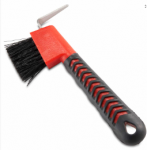
In the end the only thing that worked was a bristled hoof pick. It was the suggestion of my physio and it worked a treat. At first I put the bristly end face up and pushed it into his muzzle when he went to bite or nip me. After two or three times he stopped trying to bite.

He does still bite but it is very infrequently and I only need to show him the hoof pick now and he stops in his tracks. It was the only thing that worked.
1674208640116.png
 
I followed the Warwick Schiller method and it works a treat.
Thank you for the links LEC. Really interesting watch and very relevant to one of my young horses at the moment. He’s always been mouthy - as a weanling I put it down to being curious of his surroundings, then as he grew I put it down to teething, but now he’s 5, I think he’s developed mouthiness as a sign of anxiety/ excitement and seems to need to have something in his mouth in the same way as a child has a comfort blanket. He‘s never intentionally gone to nip me, but has caught me a few times when I’ve been in the way of whatever it is he’s trying to grab (mostly reins/ lead rope/ headcollar). Think I’m going to try Warwicks method everytime he puts something in his mouth.
 
Thank you for the links LEC. Really interesting watch and very relevant to one of my young horses at the moment. He’s always been mouthy - as a weanling I put it down to being curious of his surroundings, then as he grew I put it down to teething, but now he’s 5, I think he’s developed mouthiness as a sign of anxiety/ excitement and seems to need to have something in his mouth in the same way as a child has a comfort blanket. He‘s never intentionally gone to nip me, but has caught me a few times when I’ve been in the way of whatever it is he’s trying to grab (mostly reins/ lead rope/ headcollar). Think I’m going to try Warwicks method everytime he puts something in his mouth.
My friend suggested the WS method but it made no difference to mine.
 
My last two horses were both very "mouthy", with the second of those being a proper biter when I got him, ripping my clothes and bruising me through several layers.

I have always used the "nose accidentally meets elbow" method. You need to be tuned into the horse's body language all the time and if the teeth start to appear, then "whoops, did you run into my elbow?" with no face-to-face confrontation or eye contact. It worked very quickly with the first and therefore I tried it on the second and it probably took less than three months before he stopped biting. He remained "mouthy" for the rest of his life, headcollars always ended up in his mouth rather than on his nose and anything that wasn't tied down got grabbed.

He developed a habit of licking my arm or coat when I was leading him but, as he wasn't biting, I ignore it as it obviously acted like a comfort blanket to him. After the first six months of ownership, he never bit me, or anyone else again, although you always had to watch your fingers if hand feeding.

I can't be sure if it was the elbow method that worked or whether it was just him learning my boundaries and becoming a much happier horse over time. He was affectionate but still used to snake neck like a colt in the field and could look very scary but was never aggressive after the first few months.

In answer to your question, he was ten when I got him so older horses can definitely still learn!
 
Similar to above really - be firm that nibbling in that way is not on.

I’d say do be careful tho - initially when we started laying the boundary she started chewing on wood. She doesn’t crib but she just sort of eats it and then spits it out? She also started licking me instead of biting me. It’s up to you how you feel about that one.
 
My last two horses were both very "mouthy", with the second of those being a proper biter when I got him, ripping my clothes and bruising me through several layers.

I have always used the "nose accidentally meets elbow" method. You need to be tuned into the horse's body language all the time and if the teeth start to appear, then "whoops, did you run into my elbow?" with no face-to-face confrontation or eye contact. It worked very quickly with the first and therefore I tried it on the second and it probably took less than three months before he stopped biting. He remained "mouthy" for the rest of his life, headcollars always ended up in his mouth rather than on his nose and anything that wasn't tied down got grabbed.

He developed a habit of licking my arm or coat when I was leading him but, as he wasn't biting, I ignore it as it obviously acted like a comfort blanket to him. After the first six months of ownership, he never bit me, or anyone else again, although you always had to watch your fingers if hand feeding.

I can't be sure if it was the elbow method that worked or whether it was just him learning my boundaries and becoming a much happier horse over time. He was affectionate but still used to snake neck like a colt in the field and could look very scary but was never aggressive after the first few months.

In answer to your question, he was ten when I got him so older horses can definitely still learn!

Omg he's exactly like this! Anything in his space gets nibbled or bitten. Reassuring to hear you've had some success with an older horse though.
 
Top