Bringing horses home - top tips?

hmm

Member
Joined
23 July 2014
Messages
10
Visit site
After many years on livery (and after my last post, debating pros & cons of alternative yards) we have decided to take a slightly different route and instead we are (all being well!) moving house & bringing the horses home.
We are very fortunate to have found a property that already has a great horsy setup with stables, hardstanding and decent amount of grazing.

What I wanted to ask was: for those of you who have made the transition from livery yard to keeping horses at home, what are your top tips? No tip too big or small, for example at the moment we are debating what kind of wheelbarrows to get haha.

The main things I have in mind at the moment are...
- Worm count providers - could go via Westgate or use a local person who offers similar services
- Hay / haylage delivery - will have no issues in getting at least 2 or 3 big round bales to start us off, but will definitely need further supply as will be moving in winter. Haylage is easily obtained but as we only have 2 horses at the moment, and I prefer to feed hay, I'd keep this as a back up option
- Companion / spare horse or pony, as we currently have 2, one of whom can be an anxious chap if on his own
- Spare electric fencing & energiser - the fencing is good already, but may need to section off paddocks etc
- Feed bins - best options to be as vermin-proof as possible. Do I need to get a yard cat?? Good excuse for another (sort of!) pet!
 
As above. My priority would be to make good contacts with local farmers asap. The source of all local knowledge/help with work such as hedging, ditches etc - as well as local suppliers. Might also want to think about a freelance groom to help out, say one day a week, to establish a good working relationship - or to bring own horse to join yours to provide 3rd companion??
 
Don't worry, it will all work out. My best advice is to make no permanent arrangements for at least the first year, see how the set up/land works for you before doing anything that can't be changed easily. We have been here for 30 yrs and are still making changes to the way we do things.
As for the companion, if you don't want another ridden horse I would ask one of the charities to loan you a companion.
 
Insurance if a public footpath runs through your land. Where legally to site the muck heap and disposal of it. Secure fencing and strong sturdy gates. Someone to check look after your horses when you are on holiday. Remember to let the vet and farrier know your new address.
Thank you! Public footpaths are less of a thing over where I am so we are clear on that front!
Muck heap has a walled, concrete area and there's a local contractor who specialises in removal. Not cheap but reliable and legit!
Current owner has done a lot of work in securing boundaries so there are good, sturdy gates but will definitely review everything before we turn out. Some good local freelancers too for horse sitting!
Relieved that current farrier covers the area!

A huge issue can be managing a much heap or muck heap removal.
Good incentive to keep horse numbers down!! Thanks AE :)

As above. My priority would be to make good contacts with local farmers asap. The source of all local knowledge/help with work such as hedging, ditches etc - as well as local suppliers. Might also want to think about a freelance groom to help out, say one day a week, to establish a good working relationship - or to bring own horse to join yours to provide 3rd companion??
Definitely want to make friends with the farmers, 100% will need assistance ref hedge cutting etc. Current owner does have a good relationship with neighbouring farms so will aim to maintain that. There are at least 2 good freelancers locally as well, one of whom has worked with the current owner so again hopefully we can maintain that relationship.

Don't worry, it will all work out. My best advice is to make no permanent arrangements for at least the first year, see how the set up/land works for you before doing anything that can't be changed easily. We have been here for 30 yrs and are still making changes to the way we do things.
As for the companion, if you don't want another ridden horse I would ask one of the charities to loan you a companion.
Thank you! So easy to overthink it. Just want to be sure we don't miss anything really obvious! Our lads are generally easy to do though so as long as fed, watered and with somewhere to have a buck and a roll, they'll be happy.


Thanks everyone for those tips, always good to get the benefit of others' experiences.
It's really exciting, it really will be a dream come true! No doubt there'll be hard work ahead, but well worth it.
 
Muck heap location management. Yard cats essential (recommend at least 2 and sooner rather than later so they can prevent a problem). Managing winter/summer grazing. The regular repairs of 'stuff'. But I wouldn't go back to livery, everything is manageble
 
  • Like
Reactions: hmm
We moved from livery to own place with land and stables 40 years ago.
All of the above plus we always keep a bundle of fence posts in case one gets broken and needs replacement plus a post driver ( simple hand one is ok for doing a few posts .
Mains energiser ( much more effective than battery ones) A bundle of electric fence posts (around 20 )plus a roll of electric tape or rope for fencing things off in an emergency
We also bought a quad ( not new) a ballast roller a harrow and a topper and tipping trailer.
Major work is done by our adjoining farmer with his big machinery but the quad set up keeps things neat and tidy .
and is aso useful for moving things around taking hay out and fence posts to where they are needed water containers if we get a big freeze and troughs freeze up.
We have had the quad since 1982 regularly serviced it is still going strong though obviously is low mileage could sell it now for more than we paid for it!!!
We always have 3 feral cats which we got from a rescue they are truly wild born in the wild so wary of people but excellent hunters ( fed twice a day).
We keep spares of everything (gate hangers and other metal work.
We also have removable grills for the tops of the stable doors which you can put up if one is to be left in .If you start by leaving them for 15 minutes you quickly can leave them to go for a ride plenty of haylege put the grill up they soon get used to it. Worm count regularly using Poopost recommended by someone on here excellent and very prompt
Good luck I wouldn't go back to livery.
 
Last edited:
I switched to horses at home instead of livery when we decided to move to a house with land during covid. It's the best thing we ever did but be prepared to waste a lot of time dithering about their management, which field should they be in, do they need to be in their stables, how is the land going to hold up etc.etc. I've been doing it 4 years now and I've realised how deskilling a livery yard is when really you know more than you think about looking after horses. Don't try and do everything in the first few months, take your time, as long as they are safe it doesn't matter if the horses are in or out. Don't over think things. The land management facebook group is great for tips on managing your fields.

We got a companion because we had 3 horses and both of us ride. The 4th was supposed to be an easy live out 24/7 companion but he was actually an escape artist and led the others astray. He's gone back to his owner! Since having my own land, I have started collecting horses. My original 3 is now 6 and I'm sure we have space for more.

I have emergency spare green tape and posts in the feed room at the ready incase i need them and they have come in very handy.
I use westgate for worm counts. I did use my local vet for this originally but realised they were excruciatingly expensive compared to westgate.
We have 4 cats who are great mousers.
We have become friends with our next door farmer who has been able to help us out when our tractor was away for a couple of months for repair. We use it for harrowing, although the 4x4 is great for this. It is also used for topping and moving things around.
 
Relax and enjoy it!!

I would say definitely spare fence posts and rails (and a husband who is good at mending fences); chat to local people about where they buy stuff from (hay, straw, feed, muck heap removal etc); I have old freezers from the tip for my feed storage; something to hang rugs on. Most things you can get delivered within 24 hours these days. I didn’t mean to get a third but acquired an Exmoor 13 years ago who is tiny and rules the roost!!!

Hope it all works out for you. I love having mine at home, have been known to go out in my nightie to feed them and then go back to bed!!! I also like doing things my way and the peace and quiet of riding on my own.

I would also source people who will house sit if you want to go away.
 
We also made the move 4 years ago now, and very much still feel like we’re learning, this year feels like the first year we’ve finally hit our groove, but there’s been a lot of trial and error along the way!

As @myheartinahoofbeat said, it’s easy to become deskilled at livery and doubt yourself once you have them home, so do trust your gut that you know your horses best, though if you have horsey neighbours it’s good to befriend them early doors so you have folks to bounce ideas off of.

The biggest learnings we’ve had is be prepared that maintaining the land will take all your time and then some! Especially if you’re working full time and beholden to the weather in order to flail, spray, seed. We spent our first year paralysed by indecision and missed almost all possible windows for keeping on top of things as we were dithering 🙈

Also horses will wreck fencing at the worst possible moment so always have a stock of spare posts and rails and temp fencing in case you need to fix in the middle of a stormy night (very much speaking from experience!)

If you only have 2 horses definitely think through how you’d handle if one needed box rest. We have 3 but life descended into chaos when our youngster needed months of box rest as he couldn’t be left in alone, but nobody was happy turned out alone either so it was crazy stressful.

In terms of feed bins we have lovely galvanised ones from SMF fabrications. They have an internal shelf for supplements which is just super practical.

The other thing that might be location specific (we’re East Anglia) but we found finding a good farrier that was happy to come out to just do our little herd was really tough. We went through two who were incredibly flakey before finding our current guy who is an absolute superstar.

One final thing, it’s worth thinking about storage and road access. We bulk buy feed, hay and bedding, but had to rejig things in order to accommodate the bigger truck the bedding was coming on. If we hadn’t been able to do this the price would have jumped a fair bit due to the smaller truck size and quantity.
 
  • Like
Reactions: hmm
Unexpected things was loneliness and lack of motivation to ride when it was a bit cold / bit rainy / bit windy etc.
When there is a list of 1,000 maintenance jobs to do - it's easy to say I'll just mend this fence or do this poo picking - rather than ride.

Make friends with local people and get hacking out with them or join the local riding club.

A small older tractor with a PTO will be invaluable - go on a couple of day course to learn how to use it safely - less nickable than a quad and safer when used properly.

Have a big white board with all contact details / feed details / key info etc. on it so if you aren't around unexpectedly a quick stand in freelancer has a good chance of working out what's what

Rehoming from a charity for a companion is really rewarding - I think you are saving 2. One the actual one at your house and the second being in the space that you free up in the rescue center by taking one home.
Win win.
 
Field and yard maintenance will take a lot more time that you originally think. Having your own equipment to do some of the jobs will be very beneficial. My local friendly farmer will do stuff for me but obviously he needs to do his own work first so we often end up missing the window of opportunity and the weather ends up turning before he gets to me.

Have a local freelancer and look after him/her. Going away becomes so much harder if you do not have good back up cover.

I have galvanised metal feedbins. 24 years in and they have withstood rats, etc who will happily chomp through plastic.

Identify where you stopcock is and ensure all pipes and taps are lagged.

Good quality padlocks for field gates, etc.

I have a local supplier who will deliver 2 large round hay/straw whenever I need. I try to give them at least a week notice as they are working farmers.
 
Metal feed bins. Tallish ones rodents can’t climb metal. Wheelbarrow. Two wheel ones are easier to move. Get a hay net holder to fill nets and do a dozen at a time. Insulate your water supply Or have a kettle handy. It will freeze. I insulated all the pipes with super thick lagging with electric ties round it. And an old rug over the outlet if cold outside. Then my hubby built me a box round the tap with insulation inside it. Game changer. Keep lids on everything to deter rodents. Get a few semi feral cats to live in the barn. No mice or rats then. They don’t need much just water and food
Source a freelance groom in case you need the services.
Decent yard brooms.
And good luck
 
  • Like
Reactions: hmm
Re. your wheelbarrow - get one with a solid tyre i.e. no inner tube. You will never have to repair punctures!

I personally find my two-wheel barrow not that easy to push to the top of my much hill - so tend to use it for moving hay around only and use the single-wheel one for muck.
 
Re. your wheelbarrow - get one with a solid tyre i.e. no inner tube. You will never have to repair punctures!

I personally find my two-wheel barrow not that easy to push to the top of my much hill - so tend to use it for moving hay around only and use the single-wheel one for muck.
I agree, single wheeler is easier for scaling poo mountain than my 2 wheeler!
 
Find a good freelance groom that will do holidays … this usually takes a while to source!

Metal bins are the most vermin proof but I also rate short wheelie bins as easy to move to clean behind (these are generally vermin proof but definitely not squirrel proof - we are not fans of the fluffy tailed rats round here)

Get a good solar powered energiser - they have got me out of a lot of sticky situations

But a pair of cheap bolt cutters for emergency fence disassembly if someone gets stuck… this was my dad’s advice (farmer) I’ve used them twice in my life but both times I was seriously glad to have them in the feed room!

Two wheeled barrows can be wheeled with one hand . Don’t have pneumatic tyres..
 
  • Like
Reactions: hmm
Have you got automatic troughs?

Local horsey FB group is normally fab for hay deliveries/muck heap removal, they’re always advertising on mine. Same for freelance grooms.

Re cameras, motion activated wildlife ones might be good, consider location, don’t be too obvious.
 
  • Like
Reactions: hmm
I have moved from home to livery back to home again, I’ve learned a lot!

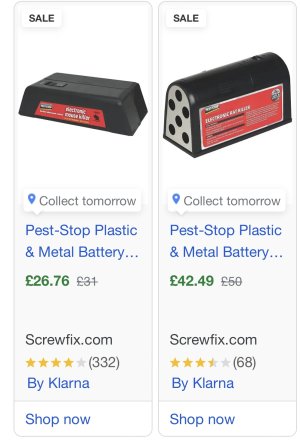
Electric bait boxes if you can. If it’s not a big place (like 20 sprawling stables etc) it’s easier than leaving feed out + wormers for the cats and poison isn’t good for anything other than what you’re trying to kill.

Metal feed bins. Mine is Peter Strong but don’t think they’re available any more? Try to have forage + bedding behind some kind of closed door. I use the unibed lavender which works out an ok price on 1 tidy and 1 revolting horse (the tidy horse gets half a bale every other week!).

If you can get your fencing on mains 100% do that.

Get a pallet of rock salt. I open a bag into a big trug. Invaluable in winter. You just need a plastic feed scoop to distribute onto the slippy / exposed areas.

I love my haemmerlin wheelbarrows. I have the big 230 and small 90 capacity. Both twin wheel, I can’t stand single wheel they are so wobbly!
 
  • Like
Reactions: hmm
I have moved from home to livery back to home again, I’ve learned a lot!

Electric bait boxes if you can. If it’s not a big place (like 20 sprawling stables etc) it’s easier than leaving feed out + wormers for the cats and poison isn’t good for anything other than what you’re trying to kill.

Metal feed bins. Mine is Peter Strong but don’t think they’re available any more? Try to have forage + bedding behind some kind of closed door. I use the unibed lavender which works out an ok price on 1 tidy and 1 revolting horse (the tidy horse gets half a bale every other week!).

If you can get your fencing on mains 100% do that.

Get a pallet of rock salt. I open a bag into a big trug. Invaluable in winter. You just need a plastic feed scoop to distribute onto the slippy / exposed areas.

I love my haemmerlin wheelbarrows. I have the big 230 and small 90 capacity. Both twin wheel, I can’t stand single wheel they are so wobbly!
@nikkimariet do you recommend any particular bait boxes? We’ve been on the waitlist for a couple of feral cats for the best part of the year but none of the ones that have come in have been deemed feral enough and we now have a pointer puppy so thinking probably not the best idea to add some new fluffies into the mix.
 
  • Like
Reactions: hmm
@nikkimariet do you recommend any particular bait boxes? We’ve been on the waitlist for a couple of feral cats for the best part of the year but none of the ones that have come in have been deemed feral enough and we now have a pointer puppy so thinking probably not the best idea to add some new fluffies into the mix.

Both of these are good! I put the smaller ones on shelves and in between boxes where mice would go then the bigger ones in stacks of bedding, behind the feed bin etc where rats would go!

IMG_5292.jpeg

My friends dog managed to push a bin out the way and eat a full tray of poison, I’d never have it again (I’ve lost too many cats to the road to want yard cats either).
 
Some great points on this thread. I keep hammer, wire cutters, knife on the quad all the time
Fencing.....my OH thought once we had set it all up it would not need doing for another 10 years 😂 put mains electric on if you can from the start, we should have done this.
We have quad/muck trailer / topper /spray/ round bale trailer /harrow. Tractor are cheaper but I didn't like ours so went to quad bike
Hardstanding, or mud control mats, don't underestimate how wet it can get if you have horses out more
 
Some great points on this thread. I keep hammer, wire cutters, knife on the quad all the time
Fencing.....my OH thought once we had set it all up it would not need doing for another 10 years 😂 put mains electric on if you can from the start, we should have done this.
We have quad/muck trailer / topper /spray/ round bale trailer /harrow. Tractor are cheaper but I didn't like ours so went to quad bike
Hardstanding, or mud control mats, don't underestimate how wet it can get if you have horses out more
I second the mud control mats. They mean that our horses can live out with a field shelter. Without the mats the field would be trashed even if the horses came in overnight.
 
I haven't got automatic troughs, 2 of my neighbours do and they're always a bit green but need more cleaning than a nice big water tub.

Definitely insulate around the taps as romany said, check the pressure levels are normal at the stop cock too. I've had issues where hoses freeze if they have water left in them.

Do you have space to store enough hay and bedding for the winter? Cheaper to get it all at once, in bulk, than as individual bales. Also with round bales, they are a pain to move without a pair of forks on a tractor. I also have a link box attachment which is brilliant for field clearing. Think about the type of tractor, its very hilly here so we went for a mini alpine that will safely drive on 60 degree angle, low centre of gravity so will slide before tipping (thank goodness, we have some scary slopes).

I send off poo samples to efecs, highly recommend. Also check dentist and vet still covers your area.

If there's areas that get boggy, it's almost certainly cheaper to sort some drainage pipes and move them to another field for a while, than let them play in the mud and present you with hoof issues 😁
 
  • Like
Reactions: hmm
For feed bins, a decommissioned freezer is a good bet; otherwise, bins with proper lids (not swing ones). During the years I had my own place, I had two most excellent mousers (one is still with us, having a lovely retirement as a Court Cat-strato in Austria).

For round bales, best either to have storage (as mentioned; I had a caravan port), or an arrangement with a local farmer to deliver on a regular basis. One can transport several 3' round bales in a trailer or 3.5-tonne horsebox, and one of those will last 3 smallish horses a couple of days, but the normal-sized round bales would mean fetching one every week or so, and then getting the (wo)manpower in to roll it into the field. Much better to have a farmer with a proper loader do it.

For a companion, I found this quite easy to sort. A Facebook ad for a pony mare led to over 10 responses in 24h, some of which of course were thoroughbred geldings and totally unsuitable, but the first mare I went to see ended up coming to stay, on loan-with-view-to-buy (I still have her, though she's still in Scotland with a friend).

My regular vet sorted the poo samples and worming schedule, same as for any yard.
 
  • Like
Reactions: hmm
Wow thanks so much folks - loads of really useful, practical & sensible advice!
Adding bolt cutters, fencing suppliers & post driver to the must-have list, along with a feline friend (or 2). Will also check out some decent feed bins - I know mice etc are inevitable but will try and keep it all as rodent proof as possible...
Great point about pipes & lagging, will double check that and sort if necessary! The main field does have an automatic drinker although the one closest to the house does not, so we are halfway there! There's a great sort of hybrid hardstanding area too - about 50% gravel with a grassy section too, in a nice sheltered spot. I think that will be our saviour in the wet months!
 
Top