Cheapest Way of feeding....

feeding is getting crazy expensive! I just feed basic now and I think it probably does workout cheaper! I use thunderbrooks, meadow nuts and haycobs, with some dengie meadow light chaff. my warmblood who needs more also gets linseed! the linseed from Mole costs £29 but lasts her 6 weeks! the meadow nuts cost about £19 a last 2 weeks. the haycobs cost about £22 and last about 5 weeks. then I just add in the supplements that they need individually!
 
feeding is getting crazy expensive! I just feed basic now and I think it probably does workout cheaper! I use thunderbrooks, meadow nuts and haycobs, with some dengie meadow light chaff. my warmblood who needs more also gets linseed! the linseed from Mole costs £29 but lasts her 6 weeks! the meadow nuts cost about £19 a last 2 weeks. the haycobs cost about £22 and last about 5 weeks. then I just add in the supplements that they need individually!
Basic is best I think.
Interestingly thigh thunderbrooks is one of the expensive brands you can buy, is there a reason you get it?

I think when feed prices double we will all end up looking to how they did things 60 or so years ago.
 
Basic is best I think.
Interestingly thigh thunderbrooks is one of the expensive brands you can buy, is there a reason you get it?

I think when feed prices double we will all end up looking to how they did things 60 or so years ago.
yes I feed TB as there is no rubbish in them! lots of other feeds have other things added to them. I was feeding grass nuts for a while, but i could see that it was affecting the quality of my mares feet, as they're so much higher in sugar and mine are barefoot. I did also use simple systems haycare for a while but the price wasn't that different to TB. Also we have an new naylors shop 2 mins from my house and they're ordering in for me and giving me 10% discount, so it works out best to stick with them.
 
thunderbrooks healthy herbal chaff for me as well plus Simple Systems Timothy chop. Then sugar beet and mole valley hi fibre nuts and a supplement. Most expensive part for me is vit E. That is so expensive but can't see much choice.

so much on here takes me back years. Boiling linseed (and having to clean the aga top afterwards when I let it boil over) milk powder although I used to feed actual milk and rice pudding. Micronised maize and micronised peas.
I remember the large machines you could buy for sprouting grain for horses. I think it was called hydrophonic grass possibly. Very expensive machine but the mats of "grass" were lovely.

I'm not sure that "cheap feed" and "horse" go together :D:D
 
Going back a few years. The riding school where I kept my ponies on livery fed straw chaff, the owners made from their own machine, which was ancient and pretty dangerous I’d think by today’s standards! Fed with sugar beet and barley. That was all, no supplements. Also fed hay. The horses and ponies all seemed to do well on this, although none of them were in fast work. They were all natives, or native crosses. The riding school ponies only did 3-4 lessons per week and they lived out 247. They all looked good on it.
 
I keep raving about it but I've had huge success with Omega rice and it's so good it's saved me a fortune. I've got tb's who need feed for condition, after trying a huge number of the mixes etc with minimal success and huge cost I went to grass nuts, sugarbeet, grass chop and micronised linseed. Then I gave omega rice a go and it's so much more effective I've been able to drop micronised linseed and grass nuts. For one horse a bag of omega rice costs £32 and lasts about a month in winter for condition and two when the grass is through in summer, sugarbeet lasts months and is cheap because it bulks out when you soak it and I've found D&H just grass fluffs up hugely from how it was in the bag so also lasts me months. I reckon I'm paying about £40 a month to feed a TB who's working hard and in show condition.

I do also feed supplements such as a joint supplement which I haven't included in the £40.
 
I’m a big fan of grass nuts, so feed simple system (red currently as my grass is a bit rubbish but will switch to the Lucie nuts soon), with mole valley chaff. Adjust quantity depending on which horse I’m feeding. Some of them get linseed too. I over complicated feeding a few years ago and not only did it make it very expensive, but it made me so stressed 🤣
 
1777084524178.png

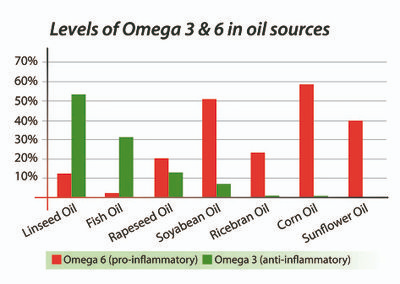
Ricebran appears to be relatively low on the inflammatory Omega 6 compared to soya, but I think I'd rather just add more linseed, or even rapeseed oil for a cheaper, UK grown calorie source.

ETA graphic is from Baileys Horse Feeds site
 
  • Like
Reactions: tda
Ric
View attachment 175333

Ricebran appears to be relatively low on the inflammatory Omega 6 compared to soya, but I think I'd rather just add more linseed, or even rapeseed oil for a cheaper, UK grown calorie source.

ETA graphic is from Baileys Horse Feeds site
Rice bran is very calorie dense, I have fed it to my ex racer in the past though the omega ratio is off. You then need to balance that.
Suppose every feed has its pros and cons.

I am still on the fence about what to feed. I buy in Stamm 30, chaff, releave mix and high fibre cubes. Then supplement wise everyone gets oil and salt, the older ones get glucosamine, and the thoroughbreds get a hoof supplement and the ones in work get pre/ probiotics. So the fat broodmare who is not in foal just gets balancer and chaff. The exracehorses get releave and some chaff. The rest get high fibre cubes and as they are not on a lot they get stamm 30 balancer.

When I did my own „feeds“ though I thought they looked better though I would spend hours in the feed room 😂 (though I do enjoy it- part of me faffing and complicating things is for me, not the horses tbh). With work and having to soak this and that etc it would just take too much time.

I am telling a lie though… at the moment I am off work from having a nasty accident and so are the horses ( I know just as the nice weather hits as well!) so they are all out in a big field with a bale and getting fed once a day of chaff, conditioning cubes and balancer. They all seem to be ok while I sit around researching how to complicate things 😂
 
Don't shoot me....
I think the way 'things' are going the price of horse feed will sky rocket (already did after the Ukraine war).

I feed mine all Saracen's feed though its starting to get more and more expensive.

I have 6 horses total... all warmblood, ISH, or Ex-racers.

When I had a livery yard I used to feed straights, I always had such a variety of horses I used to have:
Alfalfa cubes, grass pellets, chaff, sugar beet, linseed, rice bran, oats, bran and then supplements.

Do you think straights are cheaper? By the time I had added all my supplements and made this and that it was. It was also very complicated. I liked it a could make little tweaks, but at the same time, now for instance, the ex racer in work has a scoop of releave and a handful of chaff. The time it used to take me to make feeds... :eek:

p.s I am not getting in an argument of whether you should/ shouldn't have horses etc. I can afford to feed my horses whatever but the cost of living in skyrocketing. I have a good job now but less time but my feed bill is *a lot*.
Luckily we make our own haylage now so its just the cost of red diesel/ wrap etc to contend with.

If I had natives I think you could get away with feeding very cheaply, just good haylage and then a top of some vitamins and minerals, unfortunately poor doers like my elderly ex racehorse wouldn't winter well like that!

I gave up hard feed 5 years ago now. I give Dallas Keith Hoof and Hide field licks, and ad-lib good forage. There is no difference in how the horses look and I seriously doubt whether your average horse needs any feed now.
 
Mine both get a small amount of grass nuts / speedi beet then one gets Spillers daily balancer, the other gets Pro Earth hoof balancer and some joint supps.
I’m considering switching both to the spillers balancer over summer (I’ll keep an eye on the geldings feet as that’s my worry…that his feet will get worse off the pro hoof)
Sadly I can’t feed them both the Pro Hoof as Madame won’t eat it.
Luckily both are good doers and I just adjust the quantity of grass nuts / speedi beet if they need a bit more / less.
I was expecting to need to add some linseed over winter but my gelding didn’t need any help this year.
 
Ric

Rice bran is very calorie dense, I have fed it to my ex racer in the past though the omega ratio is off. You then need to balance that.
Suppose every feed has its pros and cons.

I am still on the fence about what to feed. I buy in Stamm 30, chaff, releave mix and high fibre cubes. Then supplement wise everyone gets oil and salt, the older ones get glucosamine, and the thoroughbreds get a hoof supplement and the ones in work get pre/ probiotics. So the fat broodmare who is not in foal just gets balancer and chaff. The exracehorses get releave and some chaff. The rest get high fibre cubes and as they are not on a lot they get stamm 30 balancer.

When I did my own „feeds“ though I thought they looked better though I would spend hours in the feed room 😂 (though I do enjoy it- part of me faffing and complicating things is for me, not the horses tbh). With work and having to soak this and that etc it would just take too much time.

I am telling a lie though… at the moment I am off work from having a nasty accident and so are the horses ( I know just as the nice weather hits as well!) so they are all out in a big field with a bale and getting fed once a day of chaff, conditioning cubes and balancer. They all seem to be ok while I sit around researching how to complicate things 😂
Sorry to hear about the accident - hope you're not off fun and games (or work ; ) ) for too long.

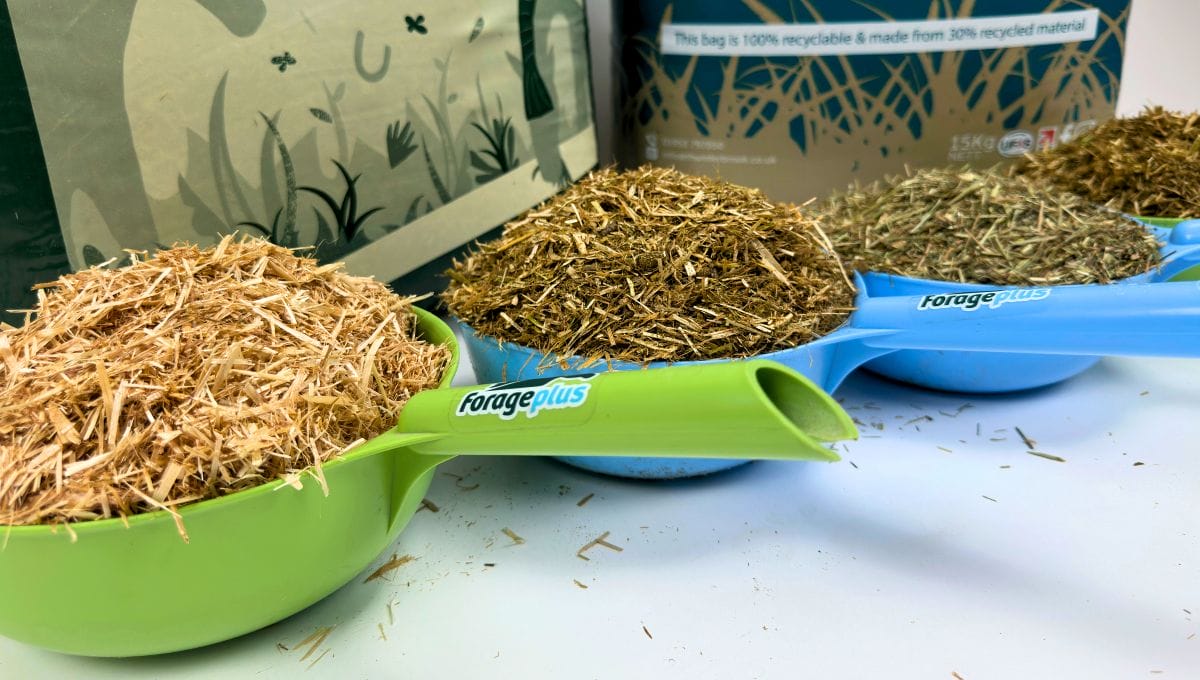
Could I ask why you feed the chaff? Your thread made me look it up as chaff as a feed has always confused me. This article (by forageplus, who have some interest in feed but at least do not manufacture chaff themselves) seemed quite good, and goes into detail about the various benefits and disadvantages.


A couple of extracts:
***
In essence, chaff was a cost-effective way to bulk out diets, manage digestion under heavy workloads, and maintain the health and performance of working horses in eras before mechanisation. Today, while horses are no longer powering society, the use of chaff continues, though its original purpose has largely been forgotten.
What does chaff do for horses?
This horse feed is marketed for its ability to:
  • Slow feed intake
  • Encourage chewing
  • Act as a partial forage replacer
  • Increase saliva production
  • Buffer stomach acid
  • Add bulk to feeds
While these benefits can be useful in certain management scenarios, they are often more effectively achieved by long-stem forage such as hay or haylage. These options naturally promote extended chewing, support gut health, and buffer acid through saliva stimulation, but more safely and economically than chaff.
***
and:
***

Is chaff better than hay for horses?​

Throughout this article, you’ll notice a consistent theme: long-stem forage is superior to chaff in almost every context. Here’s why:
  • Chewing hay promotes saliva production and digestion more effectively.
  • Long-stem forage supports gut motility and dental health better than chopped fibre.
  • A haynet slows eating and reduces acid splash without the need for added bulkers.
  • Chops are more expensive than hay and often wrapped in plastic packaging.
  • For horses with dental issues, soaked fibre mashes (e.g. grass or hay pellets) are safer, more digestible, with higher nutrient availability than chops.
In most cases, chaff is a management aid, not a nutritional benefit, and it certainly isn’t a magic solution for digestive health.
***

Generally their view seems to be that chaff is expensive forage & it would normally be cheaper to use other means to achieve the desired effect.
Interested to hear what you (& others) think.
 
Sorry to hear about the accident - hope you're not off fun and games (or work ; ) ) for too long.

Could I ask why you feed the chaff? Your thread made me look it up as chaff as a feed has always confused me. This article (by forageplus, who have some interest in feed but at least do not manufacture chaff themselves) seemed quite good, and goes into detail about the various benefits and disadvantages.


A couple of extracts:
***
In essence, chaff was a cost-effective way to bulk out diets, manage digestion under heavy workloads, and maintain the health and performance of working horses in eras before mechanisation. Today, while horses are no longer powering society, the use of chaff continues, though its original purpose has largely been forgotten.
What does chaff do for horses?
This horse feed is marketed for its ability to:
  • Slow feed intake
  • Encourage chewing
  • Act as a partial forage replacer
  • Increase saliva production
  • Buffer stomach acid
  • Add bulk to feeds
While these benefits can be useful in certain management scenarios, they are often more effectively achieved by long-stem forage such as hay or haylage. These options naturally promote extended chewing, support gut health, and buffer acid through saliva stimulation, but more safely and economically than chaff.
***
and:
***

Is chaff better than hay for horses?​

Throughout this article, you’ll notice a consistent theme: long-stem forage is superior to chaff in almost every context. Here’s why:
  • Chewing hay promotes saliva production and digestion more effectively.
  • Long-stem forage supports gut motility and dental health better than chopped fibre.
  • A haynet slows eating and reduces acid splash without the need for added bulkers.
  • Chops are more expensive than hay and often wrapped in plastic packaging.
  • For horses with dental issues, soaked fibre mashes (e.g. grass or hay pellets) are safer, more digestible, with higher nutrient availability than chops.
In most cases, chaff is a management aid, not a nutritional benefit, and it certainly isn’t a magic solution for digestive health.
***

Generally their view seems to be that chaff is expensive forage & it would normally be cheaper to use other means to achieve the desired effect.
Interested to hear what you (& others) think.

I completely agree with chaff being management rather than cost effective nutrition.

It has its place but if feeding a poorer/normal doer it’s generally a waste of bucket space (and £). Unless they are prone to choke (and I’ve never had one of those!) then I just feed the concentrate tbh. They get their fibre from 24/7 access to grass/hay.

That said for some working horses that may at times be picky with fibre when fit then feeding some sort of chaff prior to exercise is really good practice.

Fatty laminitic types on restriction grass/forage may benefit from low calorie chaff as bulk/carrier - but it’s still management rather than cost effective nutrition
 
So I feed an alfalfa based chaff normally, so it has a nutritional value. I think for us it’s easy to dismiss chaff as just filler, however it does have a digestive value for a horse.

I ask went through a weird phase last year, never having any horses having choke to 4 horses have choke on 2 separate days. I have no idea why! Also I use it for the greedy ones to slow them down, so the hard fees isn’t gulped down in 30 seconds. Horses can digest cereals etc, though them gulping down a large amount in one go in seconds causes digestive upset.

Patterdale- unfortunately not all of mine are good doers, I have an exracehorse in work (normally) and an elderly ex racehorse who is not a good doer. The ISH is a good doer and so is the Warmblood broodmare.
 
Sorry to hear about the accident - hope you're not off fun and games (or work ; ) ) for too long.

Could I ask why you feed the chaff? Your thread made me look it up as chaff as a feed has always confused me. This article (by forageplus, who have some interest in feed but at least do not manufacture chaff themselves) seemed quite good, and goes into detail about the various benefits and disadvantages.


A couple of extracts:
***
In essence, chaff was a cost-effective way to bulk out diets, manage digestion under heavy workloads, and maintain the health and performance of working horses in eras before mechanisation. Today, while horses are no longer powering society, the use of chaff continues, though its original purpose has largely been forgotten.
What does chaff do for horses?
This horse feed is marketed for its ability to:
  • Slow feed intake
  • Encourage chewing
  • Act as a partial forage replacer
  • Increase saliva production
  • Buffer stomach acid
  • Add bulk to feeds
While these benefits can be useful in certain management scenarios, they are often more effectively achieved by long-stem forage such as hay or haylage. These options naturally promote extended chewing, support gut health, and buffer acid through saliva stimulation, but more safely and economically than chaff.
***
and:
***

Is chaff better than hay for horses?​

Throughout this article, you’ll notice a consistent theme: long-stem forage is superior to chaff in almost every context. Here’s why:
  • Chewing hay promotes saliva production and digestion more effectively.
  • Long-stem forage supports gut motility and dental health better than chopped fibre.
  • A haynet slows eating and reduces acid splash without the need for added bulkers.
  • Chops are more expensive than hay and often wrapped in plastic packaging.
  • For horses with dental issues, soaked fibre mashes (e.g. grass or hay pellets) are safer, more digestible, with higher nutrient availability than chops.
In most cases, chaff is a management aid, not a nutritional benefit, and it certainly isn’t a magic solution for digestive health.
***

Generally their view seems to be that chaff is expensive forage & it would normally be cheaper to use other means to achieve the desired effect.
Interested to hear what you (& others) think.
Thank you that’s really interesting!
Contrary to what I just said, it does make a useful filler to me as well.
It is ridiculously expensive for what it is though.

Luckily I make my own haylage so they have good forage 24/7.

I have made a decision, definitely going back to feeding sugar beet.
Does anyone feed peas?
 
Last edited:
Sorry to hear about the accident - hope you're not off fun and games (or work ; ) ) for too long.

Could I ask why you feed the chaff? Your thread made me look it up as chaff as a feed has always confused me. This article (by forageplus, who have some interest in feed but at least do not manufacture chaff themselves) seemed quite good, and goes into detail about the various benefits and disadvantages.


A couple of extracts:
***
In essence, chaff was a cost-effective way to bulk out diets, manage digestion under heavy workloads, and maintain the health and performance of working horses in eras before mechanisation. Today, while horses are no longer powering society, the use of chaff continues, though its original purpose has largely been forgotten.
What does chaff do for horses?
This horse feed is marketed for its ability to:
  • Slow feed intake
  • Encourage chewing
  • Act as a partial forage replacer
  • Increase saliva production
  • Buffer stomach acid
  • Add bulk to feeds
While these benefits can be useful in certain management scenarios, they are often more effectively achieved by long-stem forage such as hay or haylage. These options naturally promote extended chewing, support gut health, and buffer acid through saliva stimulation, but more safely and economically than chaff.
***
and:
***

Is chaff better than hay for horses?​

Throughout this article, you’ll notice a consistent theme: long-stem forage is superior to chaff in almost every context. Here’s why:
  • Chewing hay promotes saliva production and digestion more effectively.
  • Long-stem forage supports gut motility and dental health better than chopped fibre.
  • A haynet slows eating and reduces acid splash without the need for added bulkers.
  • Chops are more expensive than hay and often wrapped in plastic packaging.
  • For horses with dental issues, soaked fibre mashes (e.g. grass or hay pellets) are safer, more digestible, with higher nutrient availability than chops.
In most cases, chaff is a management aid, not a nutritional benefit, and it certainly isn’t a magic solution for digestive health.
***

Generally their view seems to be that chaff is expensive forage & it would normally be cheaper to use other means to achieve the desired effect.
Interested to hear what you (& others) think.

As they say, it used to be cheap but it's now very expensive for what it is - basically a sack of chopped straw and/or hay - but as it has soared in popularity for various reasons, the price has rocketed - supply & demand.
 
What is the purpose of bucket feeds for your horses? Do they need medication or specific supplements which are best fed in a bucket feed? Are they in particularly hard work? Is it to keep them happy because they're on a livery yard and every other horse is getting bucket feeds? Are they elderly or got dental or joint issues?

My two are leisure horses (tb x cob and a 3/4 cob x 1/4 tb) who live out 24/7 and do around 4-6 hours work per week in total, mainly hacking. They are both good doers. Their diet is grass and hay all year round, and they get a few fruit/vegetables each day too (carrots, apples, oranges, swedes, bananas). I do give them a small bucket feed each morning (non-molassed chaff to pad out balancer to ensure they are correctly vitamin/mineralled) in their stables and they have salt licks.
 
thunderbrooks healthy herbal chaff for me as well plus Simple Systems Timothy chop. Then sugar beet and mole valley hi fibre nuts and a supplement. Most expensive part for me is vit E. That is so expensive but can't see much choice.

so much on here takes me back years. Boiling linseed (and having to clean the aga top afterwards when I let it boil over) milk powder although I used to feed actual milk and rice pudding. Micronised maize and micronised peas.
I remember the large machines you could buy for sprouting grain for horses. I think it was called hydrophonic grass possibly. Very expensive machine but the mats of "grass" were lovely.

I'm not sure that "cheap feed" and "horse" go together :D:D
Hydroponic grass, very tasty for horses, but users were ‘tied in’ to buying the most appropriate grains/ seeds from the same company, and the whole thing not cheap at all.
It was nice for working horses which have little /no grazing, I think that mounted police units and some Army mews used them, and seem to remember the adverts reflected this. Certainly not for average leisure animal! Nor for today’s EMS, Cushingoid, fat native types, either. The only user I knew had a riding school and livery yard of c.40 horses, with a lot of focus on showjumping and horses on the road to shows all summer.
 
I keep raving about it but I've had huge success with Omega rice and it's so good it's saved me a fortune. I've got tb's who need feed for condition, after trying a huge number of the mixes etc with minimal success and huge cost I went to grass nuts, sugarbeet, grass chop and micronised linseed. Then I gave omega rice a go and it's so much more effective I've been able to drop micronised linseed and grass nuts. For one horse a bag of omega rice costs £32 and lasts about a month in winter for condition and two when the grass is through in summer, sug vb bearbeet lasts months and is cheap because it bulks out when you soak it and I've found D&H just grass fluffs up hugely from how it was in the bag so also lasts me months. I reckon I'm paying about £40 a month to feed a TB who's working hard and in show condition.

I do also feed supplements such as a joint supplement which I haven't included in the £40.
Omega rice is rice bran + micronised linseed; it would be cheaper to buy RB oil and continue feeding linseed.
 
Thank you that’s really interesting!
Contrary to what I just said, it does make a useful filler to me as well.
It is ridiculously expensive for what it is though.

Luckily I make my own haylage so they have good forage 24/7.

I have made a decision, definitely going back to feeding sugar beet.
Does anyone feed peas?


I decided I wanted to feed peas at the start of this winter to one of mine, but the closest I could get was micronised mixed flakes, which is a mix of flaked maize, barley and peas. He actually did really well on it, and it was pretty cost effective at around £14/25kg. He doesn't need it at the moment, but it definitely helped supply some amino acids and calories, as well as being tasty.
 
Top