
Chris Adderson Movement Language

Ambers Echo

Still wittering on
Joined
13 October 2017
Messages
11,884
Visit site

Ok I know I am a sucker for rhis kind of thing. BUT I saw a FB post about horses reading our 'embodied intentions' which resonated with some experiences I've had with various different horses, particularly when I was self-teaching using Mark Rashid's ideas: The sense that horses really are telepathic (or as good as) because if your intention (thoughts) are clear enough they become embodied communication with no effort or aids. As Mark says 'use their legs as your legs'. And you move together.

When Myka first cantered I just thought 'I'd love to canter up this hill' and felt her offer, and said ok then and she did. The same thing happened the first time I ever cantered a horse I backed a few years ago. I can't explain it any differently to a 2-way conversation we both understood. For trot transitions I think of a 1,2,1,2 rhythm as when Myka is attuned she responds to that. We all know horses who start thinking canter as we approach the corner where we intend to ask for canter before we actually cue.

At the moment we are working on canter transitions. Reflecting on it, we have cantered a few times before I decided to teach her a cued canter. And it always felt pretty easy. But now I am asking for canter it is all getting a bit noisy! I raise my energy, sit,move my outside leg back, cue with the inside leg, kiss and sometimes also unintentionally flap my reins at her. (For some unknown and bizarre reason!) And we may get canter but it's not smooth or balanced. But occasionally I have tried just quietening everything down a bit. Asking more clearly not more loudly. Our nicest transitions have been from that. It's not reliable though and I have not being specifically thinking about embodied intention - just about riding with a bit more clarity and finesse. But this afternoon I am going to ditch the cues and just try this. I will feedback!

In the meantime has anyone head of this programme or book?

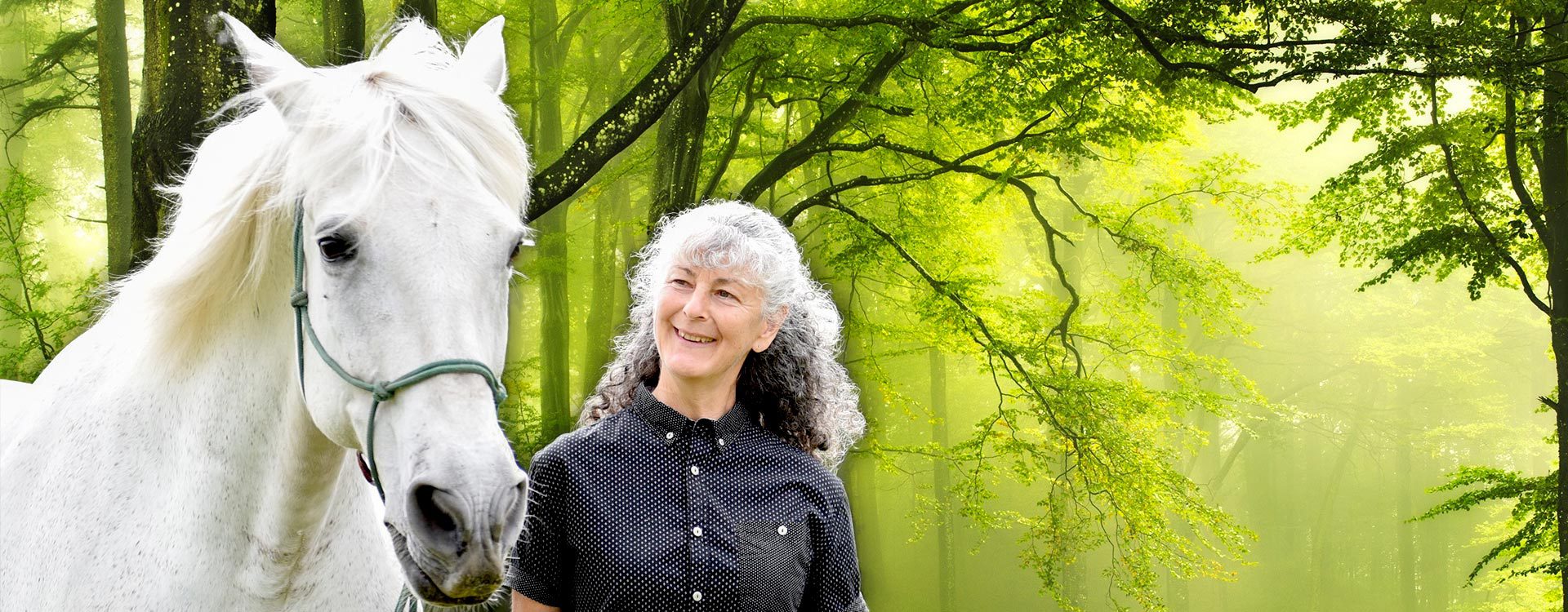
I am potentially interested in them as I assume the above experiences are what Chris is getting at when she says:

Horses live in the world of rhythm, flow, and relational energy.

That’s why I developed this approach. It draws from my background as both a dancer and a lifelong horsewoman. I’ve seen how movement creates resonance between two beings — and now, I’ve brought those insights to equestrianism.

When you stop telling and start moving with, something magical happens.

When you communicate with Movement Language, you and your horse are equally engaged, attuned, and responsive.


Sounds good! But I know the horse world is full of Unique New Programmes (TM) none of which are truly new or unique. Not to mention cranks and charlatans. And as everthing is paywalled I can't get any sense of what this would add to what I already understand about this from Rashid and others - if anything.

Anyone have any knowledge or experience of this - good or bad?
 
Just to add here is a link that is free.

It's put me off a bit because it's obviously AI written. And not just the m-dashes but the infuriating sentence constructions! A lot of it fits with the focus on softness via intention and rhythm of Mark Rashid. But then again, I could just stick with Mark!

Plus I think she is too 'woo' for me. Not really the approach which Mark is fully aligned with but the mystical airy fairy language. And the approach of re-branding something well understoood by many already. I'll stick to Cowboys I think.


Last edited:
Woo Word salad.

I don't disagree that you can communicate with incredible subtlety, of course you can, but it's not magic and doesn't need to have magic words attached. They are just very subtle animals. Hypervigilant, not telepathic. Prey animals, social animals who communicate with a muzzle twitch and a weight shift. Humans are still just screaming monkeys in comparison.

I'm in very much the same place with baby canter transitions tho and relate very strongly to the clear intention vs planned "correct" cue you're talking about. I'm just an overthinker by nature so if I'm not just like "hey, would be nice to have a canter here" and pony says "sure, okay" it turns into pony feeling me going "okay ask there, not yet, plan what you're doing, not yet, should I wait? Where is your leg? Where is my leg? Not yet, okay now! ask now, oh why was that such a mess". Brutal!

But that has a simple solution that doesn't need a paid subscription model! Just chill the f out 😂
 
There is no programme but it can happen on a horse that one knows and rides regularly. My RI called it "thought transitiions" and her lesson horse did it for me. She said that if one owned a horse it was not unusual but she had not known it happen before with a bog standard lesson horse ridden by masses of students.
My view was that it was not a genuine thought cue but some mini invisible communication through ones seat, plus the preparation and the allowing of forward movement. You get a variant of this with RS ponies who will respond to the voice for trot and canter. My current share likes to be told out hacking whether I am planning an active trot or intending to go up from that trot into canter. So I usually tell her.
Horses know very well what one enjoys and try to please one.
But it isnt always helpful. When asked if I wanted to canter out hacking, I would reply OKay and the mare I rode in those days wrongly assumed that when I said Okay, it meant that I wanted her to canter.
 
Last edited:
I think so much of the noise and miscommunication comes from unwanted rider tension and I suspect really talented riders have managed to construct their seat without introducing it (sidenote: saddles are going to be an issue here for many normal human anatomies, as the cause of much unwanted tension). The best rider I ever was was after a series of lessons where the trainer pointed out every place in my body that was a little bit tense for no good reason, and telling me to relax it. To begin with there was just internal panic. How could I give aids with floppy legs? Now my shoulders aren't holding me together I can't use my arms. Argh. And then suddenly I was able to communicate in a way I never had before and everything was suddenly seamless. Unfortunately I needed that trainer to shout at me in that way for 20mins before any of that happened and he moved away, so my progress stalled. But I remember what it felt like.
 
I think there is definitely a lot of value in exploring how to communicate without obvious cues and it seems to be a whole area of skill/experience largely iognored by most instructors - at least at lower levels of rider. But you really do not need riding skill to communicate intent. Watching Mark's demos made that clear. Poeple were able to get that kind of connection with relatively little riding skill.

I remember him talking about getting leg yield by imagining the outside hind stepping across to under the right boot in the stirrup. Feeling the legs and as that leg lifted thinking across across in rhythm with the movement.

I could not feeel the hind but I could look down and work out when it was lifting then start thinking now, now, now. As I came down the centre line I was intent on now, now and on imagingin the feel of the horse floating across to the track. But I was also thinking 'right foot' and unintenionally cueing with the right leg with every 'now'. Which meand the wrong leg! My horse ignored the incorrect cue but went with the feel and intent- ie did what I wanted not what I was asking for. It was totally bizarre.

Also Amber never refused apart from when I could not see a line on this weird zig-zag fence. It was tiny - she could have jumped it off any approach and she was fine to come to a jump on an angle. But unless I had a line in mind she would not jump, as I discovered when I just thought. I don't know where this is meant to be jumped from so I'll let her figure it out. But she wouldn't jump 'alone'. I was not scared so the canter was positive. And I genuinlely thought she was jumping. But she would not.
 
Not this person (I'm not very woo woo!) but a friend has got herself in a flap over whether her horse is in pain and one of the horse trainers [won't say who but he's a good guy] basically told her to stop thinking so negatively in the horse's vicinity. He - rightly IMO - said that her horse will be picking up the vibes and not wanting to express himself joyfully around her. When both her geldings are together & she's not around they play very robustly but then sort of shut down as she turns up.

There's a sort of PTSD at play from her previous 2 horses but I think if we're feeling positive, happy and full of fun then so will the horse. If we're negative nellies (or doubting our jumping skills) then they will pick up on that.
 
I think this is really simple, if too frequently overlooked. Its not complicated, and its not telepathy (sorry), horses are supreme masters of body language, humans tend to be verbal, and rank, clumsy amateurs with body language. When you have a clear intention/thought of what you want you are subconsciously altering you body language to signal your intent, and you are usually unaware you are doing it, but your horse is reading it easily.

When I work with horses I always start with the intent and then move to the physical cue, it doesnt take long to be able to minimise the physical cue and then just the intent will do.
 
is what you are describing riding with focus? ie is it you think something, focus on it and the horse does it. If that is what you/she are describing then yes focus is overwhelmingly powerful as I found out by chance. I don't think it is telepathy but the human giving an aid that just happens to be a mental one,
In the 80's I had a Peruvian Paso ex stallion. Like some of his breed he was totally over the top with Brio, not nasty, not dangerous just not often under control but very safe. He was totally in charge. He was also in charge of whichever route we took out riding and whatever pace (gaiting) we went at. He as totally over the top but in a lovely way, That was great and exciting but sometimes I just wanted to at least choose the route.

Whilst I was trying to work out a way of controlling anything about the most fabulous horse ever I went to a horse fair and saw a book. It was "horse follow closely" by Pony Boy. I bought it because it had pretty pictures.This was the late 90's and I have no idea if the book is still in print even. I was still reading it by the following morning and I had the answer, the next day I had, much to the horse's surprise control.

PB's wrote that focal messages are those that are communicated by merely focussing your attention or energy in a particular direction. He also wrote that stuck with me "if what you want to do is not important enough to focus on your horse may feel it is not important enough to do"

Saddled up and off we went into the forest.. Normally I manually thought turn left here, move legs, seat reins etc but no it didn't work we went straight on. This time as we got closer to the turn I just focussed very strongly. No aid, they hadn't worked in the past very well just focus. Closer to the turn more focus, reached the turn and the horse really reacted with WTF is going on here. However straight on we went. We continued, more turns more focus and I chose the route.

The opening quote to this post says to use energy and intention to physically unite. Focus did that. I didn't move a leg back,, put my legs on, move a rein one way or another. There was no actual movement as such as you would normally expect to do however slight and refined. It was very noticable that focus locked my body. It didn't move any of my body to encourage the horse to go in the direction I wanted. It sort of locked it and it resisted physically the horse's movement in his chosen direction. I didn't make that mental choice, focus did.

Life changed a lot for that horse from that day onwards. We became so locked in to each other.
I tried it on some of the other horses and same result.

Since then I haven't considered it crank or charlatan and I thought everyone else and most definitely the best riders automatically did it and I was the only one yet to work it out.

If you are into Woo word salad then you will hate "horse follow closely" and it's ideas.
If you are more open minded then you may enjoy it.
 
We're often told 'look in the direction of travel' but less often told (as my last trainer did) to look in the direction of intended travel. On a couple of horses at that yard you might get a canter piri if you decided to look over your shoulder, eg to talk to someone, while cantering along.
 
I think this is really simple, if too frequently overlooked. Its not complicated, and its not telepathy (sorry), horses are supreme masters of body language, humans tend to be verbal, and rank, clumsy amateurs with body language. When you have a clear intention/thought of what you want you are subconsciously altering you body language to signal your intent, and you are usually unaware you are doing it, but your horse is reading it easily.

When I work with horses I always start with the intent and then move to the physical cue, it doesnt take long to be able to minimise the physical cue and then just the intent will do.
Humans are clumsy in the mind as well as the body. They often ask physically (usually when trying to please or be brave) for things they don't want with their minds, and they bring other thoughts onto the horse and can't focus on what they are doing in the moment.
 
Humans are clumsy in the mind as well as the body. They often ask physically (usually when trying to please or be brave) for things they don't want with their minds, and they bring other thoughts onto the horse and can't focus on what they are doing in the moment.
Absolutely, its very common to see a rider physically asking the horse to do something, when the riders body is making it very clear they dont actually want the horse to do what they are asking.
 
Absolutely, its very common to see a rider physically asking the horse to do something, when the riders body is making it very clear they dont actually want the horse to do what they are asking.
Along with competition nerves (familar rider suddenly becoming a stranger) and plain old riding nerves when people are encouraged to press on or solve them by 'doing', all must be deeply unsettling to horses and they are saints to put up with it all!
 
We're often told 'look in the direction of travel' but less often told (as my last trainer did) to look in the direction of intended travel. On a couple of horses at that yard you might get a canter piri if you decided to look over your shoulder, eg to talk to someone, while cantering along.
This reminded me of a funny thing, I was riding at home, and my dog suddenly started barking, I swung my head to see what the dog was barking at, and suddenly I was on the opposite side of the arena, the horse had followed my weight change and had neatly done a very steep leg yield to put us on the other side of the school!
 
When I was a kid we were given the mantra "what's in the brain goes down the reins". This is basically that very fundamental concept, expanded. Plus gilded a bit by extravagant words & phrases.

As a dance teacher I am naturally very interested in this whole enlarged concept of "thinking it" and "it" will happen. Following this thread with interest.
 
Very interesting posts. Thanks! I don't mean literally telepathy but equally I think it's more subtle than using your body deliberately. If you have enough focus or clarity of intention, the body can't help but communicate that. So it feels like telepathy! Myka cantered better today when I experimented with not cueing her. When I focused on the feeling the feel of canter in my own body I could feel her organise herself to canter, then I just needed to add energy at the right moment with the intent/focus. It was not 100% but there were a couple of nice transitons today and I can see how this will end up being a pretty reliable way of getting canter eventually.
 
I mean, yes.

Hermosa only canters when you think it, and you feel really enthusiastic about the whole idea of canter. If you cue it, but you're thinking, what if x, y and z happens or, I need to pay that phone bill, or is that other rider going to cut me off, or did I forget to pick up dinner, or whatever, it's messy. If you think, "I would really like to canter, and the most fun thing we can do in this entire universe is canter," and that's the only thought in your head, the transitions are pretty slick.
 
  • Like
Reactions: SEL
Top