Cold backed horses

HashRouge

Well-Known Member
Joined
16 February 2009
Messages
9,249
Location
Manchester
Visit site
Hi all, hoping for some advice/ experiences. I have enquired about a horse for sale and am trying to decide whether it's worth the drive to go and view her (2 hours either way). She is 8 and currently out of work. The owner told me that she is cold backed - if you get on and sit quietly, she will walk it off after 5 minutes, and if you push her on, she might try and give a little buck but, again, will be fine after 5 minutes. The question I have, really, is does this sort of behaviour usually indicate an underlying condition? It seems odd to me that a horse would behave this way and not have a good reason (i.e. pain) for doing so, but I have never dealt with a cold backed horse before so I'm not sure. As far as I can tell, this mare has never been in prolonged, heavy work for any length of time, so another concern I have is that heavy work might exacerbate whatever the issue is. Actually, now I've written this down, I'm 99% certain I won't go and view her as it just seems like too much of a risk. But I would still appreciate your thoughts/ experiences.
 
My gelding ( now PTS) was 'backy' . He had back/legs xrayed all clear. He would really flick his back end when jumping ( hyperflex) so had to have a physio every few months until he got to 8 then his back seemed to strengthen up. BUT, friends of mine have had backy horses that have turned out to be kissing spines. Personally in your shoes, id keep on looking. ( especially as she hasnt been in consistent work)

My boy was PTS at 9 due to neck arthritis, maybe that was another reason … maybe he was compensating
 
You're wise to swerve this one. She's not been in proper work and it sounds very fishy. However, for balance, the late chestnut git was cold backed and he was sound to the end of his days. I owned him for 24 of his 25 years.

I just had to sit very quietly for the first 5 minutes, then he would be fine except to bronc me off once a year, but that was just him. I did used to get his back checked out anyway, and the chiropractor told me he that was the soundest horse he'd seen in a year! He was properly quirky though.
 
My share Horse is slightly cold backed. He does have mild arthritis in his spine though. He only does it during winter, but when you get on he will just walk out very quickly or sometimes jog. For about one lap of the school and then he is super.
 
I had a mare who was cold-backed as a 4 yr old, eventually, after loads of other problems, we found out that she had a LOT of food intolerances/allergies and extremely sensitive skin was one of her symptoms. She developed arthritis in her early 20s. I would walk away from the one in your OP.
 
It’s not unusual for horses young horses to show cold backed symptoms, but if they don’t grow out of it quickly then I’d suspect an underlying reason. That reason could be anything from pretty minor and manageable/solveable to serious underlying physical problem.

I wouldn’t be in a rush to be handing over money for an 8yo where this is an unresolved issue.
 
IMO its a symptom of something else. I rode a lovely ex-eventer in my 20s who needed a light weight rider and would still throw in a buck if you mounted too heavily - he'd had a rotational and retired from jumping, so I suspect there was more damage than we knew.

My PSSM mare is cold backed in that she needs to walk off straight away, often with her head snaking down. Probably 'just' the muscles but she also has arthritis so could be a combination of things.

I think if the mare you were looking at was really ok after 5 mins then she'd be in work. I suspect there's a lot more of a back story there.
 
I have decided not to go and view and have let the vendor know. Writing it all down really helped me as it made me see that if I'd read my own post on this forum, I would have been advising the person to walk away too. Realistically, I was not particularly looking to buy and I would be wanting something with the potential to go on and one day event, whereas I'm just not sure with this mare if she would stand up to the work.
 
I’m going to disagree with all of these posts. My mare is ‘cold backed’ - when you first get on, her back is as tight as a board and she feels a little like a camel. It wears off within a couple of minutes although if she hasn’t been ridden for a while it can take a bit longer. She used to be very tight when she first went into canter and years ago used to buck in canter.

I’ve had her 5.5 years and when we had the bucking she had a full workup - bone scans, x-rays, mris ect. Nothing wrong with her, she’s just super sensitive. My physio used to struggle to treat her as when she starts working on her muscles she tenses against you.

I mean I would venture with caution but I disagree that there is always something underlying.
 
You're wise to swerve this one. She's not been in proper work and it sounds very fishy. However, for balance, the late chestnut git was cold backed and he was sound to the end of his days. I owned him for 24 of his 25 years.

I just had to sit very quietly for the first 5 minutes, then he would be fine except to bronc me off once a year, but that was just him. I did used to get his back checked out anyway, and the chiropractor told me he that was the soundest horse he'd seen in a year! He was properly quirky though.


Was this before they had x rays strong enough to diagnose kissing spines? My horse with kissing spines was fine for a year if I warmed him up under poultry lights before I rode. It strikes me that sitting on the horse for five minutes does the same thing?


My first cold backed horse had kidney failure. My second had kissing spines. There won't be a third if I can help it, I think it almost always suggests a problem somewhere.
 
For me it would depend on the situation. My friend brought a new green as grass just backed horse. The second time she sat on it it started humping, did this the next few times she got on but would be fine after a couple of mins. She was stressing that it was 'cold backed' and had issues. I went to see her ride it and spotted the issue before she even got on. The horse was rather round with little wither and she was putting the saddle way to far forwards onto his shoulders. Saddle put on correctly, no longer 'cold backed' there can be lots of reason for a reaction when you first get on, some more easy to fix than others. However for an 8 year old out of work I think you have made exactly the right decision as my gut would say there is probably going to end up being a physical reason for it
 
When I was skint I paid £800 for a cold backed one, the owner said that as long as you allowed her to walk round as you girthed up then left her to stand a while before getting on she was fine.

That was true, and over the next year she needed to walk round less and less, until in the end you could tie her up for saddling, and then leave her saddles while you did whatever, and she was then good for mounting.

Until...

One day she slipped while loading on a wet ramp and came down. She initially flailed around on the floor, got up and ran off, but was apparently uninjured when caught. She was off to a new yard, and as she was cautious to go in the trailer, and it was not far, we rode her there, no issues in the riding, although she was not good to saddle.

After that the saddling issues were back with a vengeance. Back to needing to walk round for saddling. Tense and rigid. Needed to walk round some before mounting. She was still great to ride, swinging and confident. She had a small skin-based sarcoid, that did not look sore, but was near the girth, removed by he vet in case it was causing the issue. After a rest throug summer, and skin looking fine, the issue was still there.

Sadly this progressed over the winter to the point that she would zone out when saddled, and one day she fell to the floor, rigid. The vet examined her again and said that when girthed she was sensitive to a nerve that runs near to the girth and, when pressed, this was making her blind and rigid. He likened when she was rigid and when she fell to the floor as a kind of nerve induced fit. He said he knew of a few like it, and recommended not riding her under saddle again.

I did ride that summer, but bareback, where she was still absolutely fine. We scrambled over the moors, jumped sheep walls, waded through rivers... all A1OK. Her dressage in the arena (bareback) was FAB. But, if ever even a roller was done up around her middle, she would go rigid.

I have since heard of 2 other horses the same, rigid once girthed, tense to mount but walked off then fine to ride. One of those eventually collapsed onto the owner, causing severe injuries to the rider.

I do wonder how many that are "cold backed" are actually sensitive to this nerve? The vet said it is on one side, near the girth. With my mare I think the seemingly innocuous slip on the ramp caused it to become inflammed. Even after some months off after the sarcoid removal (I don't think the sarcoid was involved as it was a tiny skin blip that was free and not sore to manipulate) it was still too sore to cope with direct pressure.

In any case, I would not buy a cold backed horse after that experience.
 
It is possible that the LCG had an undiagnosed issue, but whatever it was, it didn't deteriorate over time.

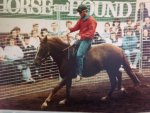
I thought that him being cold backed may have been connected to him being a Monty Roberts demo horse as a 3yo. Started in 30 minutes and all that. He was a goody goody on the day, but maybe it was all too much.

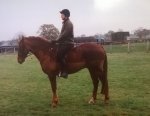
He was croup high with a very curvy profile. The chiropractor said his conformation was 'unusual' but that he had a very strong back. His whole character was that of a mischievous rather than an anxious horse.

image.jpeg


image.jpeg
Excuse the excess post baby blubber that I'm carrying in the pic, I am normally slimmer than that. He was just the same with other riders (he had two pros off).
 
When I was skint I paid £800 for a cold backed one, the owner said that as long as you allowed her to walk round as you girthed up then left her to stand a while before getting on she was fine.

That was true, and over the next year she needed to walk round less and less, until in the end you could tie her up for saddling, and then leave her saddles while you did whatever, and she was then good for mounting.

Until...

One day she slipped while loading on a wet ramp and came down. She initially flailed around on the floor, got up and ran off, but was apparently uninjured when caught. She was off to a new yard, and as she was cautious to go in the trailer, and it was not far, we rode her there, no issues in the riding, although she was not good to saddle.

After that the saddling issues were back with a vengeance. Back to needing to walk round for saddling. Tense and rigid. Needed to walk round some before mounting. She was still great to ride, swinging and confident. She had a small skin-based sarcoid, that did not look sore, but was near the girth, removed by he vet in case it was causing the issue. After a rest throug summer, and skin looking fine, the issue was still there.

Sadly this progressed over the winter to the point that she would zone out when saddled, and one day she fell to the floor, rigid. The vet examined her again and said that when girthed she was sensitive to a nerve that runs near to the girth and, when pressed, this was making her blind and rigid. He likened when she was rigid and when she fell to the floor as a kind of nerve induced fit. He said he knew of a few like it, and recommended not riding her under saddle again.

I did ride that summer, but bareback, where she was still absolutely fine. We scrambled over the moors, jumped sheep walls, waded through rivers... all A1OK. Her dressage in the arena (bareback) was FAB. But, if ever even a roller was done up around her middle, she would go rigid.

I have since heard of 2 other horses the same, rigid once girthed, tense to mount but walked off then fine to ride. One of those eventually collapsed onto the owner, causing severe injuries to the rider.

I do wonder how many that are "cold backed" are actually sensitive to this nerve? The vet said it is on one side, near the girth. With my mare I think the seemingly innocuous slip on the ramp caused it to become inflammed. Even after some months off after the sarcoid removal (I don't think the sarcoid was involved as it was a tiny skin blip that was free and not sore to manipulate) it was still too sore to cope with direct pressure.

In any case, I would not buy a cold backed horse after that experience.
I knew a polo pony who had to be girthed up in the arena very, very slowly to stop him falling to the ground. TB ex-racer who had all the signs of a nasty fall at some point in his life. Vet said it was probably nerve related. Very sad.
 
When I bought Tobi I was told that he was cold backed and couldn’t be mounted from the ground. Turned out he had mild kissing spines.

I am always amazed how many people put saddles on and just pull the girth up tightly straight away, they usually then end up shouting at the horse as it turns and pulls a face at them.

I have always done girth’s up gradually. I’ve acquired a few girthy types in the past, who actually turn out to be fine if the girth is done up sensitively and gradually.
 
It did not need to be tight to set mine off, a loose elastic sircingle would be enough to set it off. Keeping walking whilst it was done up seemed to help, and I always did it hole by hole with a rest in between, but in the end I would not buy one like that again, especially after the severe accident that happened to my friend with her horse. She was always VERY careful to do it up slowly, but one day it simply was not enough, and as she mounted the pull on the saddle/girth (and she was a lightweight rider using a mounting block) was enough that the horse locked up and fell right on her leg.
 
He was croup high with a very curvy profile. The chiropractor said his conformation was 'unusual' but that he had a very strong back. His whole character was that of a mischievous rather than an anxious horse.

View attachment 28155

Might have quite a lot to do with the terrible fitting saddle they started him in too. Some horses can tolerate that, others really can't. And the former usually end up with major issues with at least the shoulder blades. So glad you had a much better one on him!
 
  • Like
Reactions: DD
My now-retired competition horse came to me as a very green 5yo as cold backed. He would feel very humpy for about 30 seconds when first getting on. Early on, if he spooked or I put my leg on too much or something then he would explode and bronc until I came off. I fell off about 5 times in the first 6 months due to this. I found lungeing him in his saddle helped take the edge off him enough that he didnt explode anymore, letting him walk as soon as I got on and then faffing tightening the girth etc. after 5 mins and he'd relaxed, using a wool saddlecloth (warmer?) and a Stubben string girth (again, warmer than a leather one). I had his back checked, changed saddles etc. during this time to no avail. At events, I'd tack him up then take him for a quick trot about in hand before getting on (as lungeing wasnt usually possible).

Weirdly though, after owning him for 2 years I put him on NAF Superflex (just to maintain him) and gave him 3 months off over the winter, he came back much better and not nearly as cold backed as before. Not sure what changed during that time. He turned into the best horse I'll ever have. It would have to have a really nice, willing nature and temperament for me to consider another cold backed horse but I wouldnt say no straight away purely based on it. I would however, want to see the horse ridden to see what it does before buying... I would be very wary about buying a cold backed horse from the field.
 
Might have quite a lot to do with the terrible fitting saddle they started him in too. Some horses can tolerate that, others really can't. And the former usually end up with major issues with at least the shoulder blades. So glad you had a much better one on him!
Putting the saddle on well forward seemed to be a Monty thing, maybe to try and lessen the risk of the horse bucking. It was an awful fit, wasn't it (it was their saddle). The rider, Sean, was very sympathetic but it didn't stop him getting thrown and injured in a later session. They had to ask for volunteer riders from the audience in order to get through the last two days of the demo!
 
Top