Colour thread - just for fun

Black in her mane (an entire section and a black stripe through most of it ) and a darker line around her ears with back guard hairs

OK, that sounds like she would be bay underneath the flecks/white markings. The way the flecks/roaning is arranged makes me think that it's probably caused by the true roan gene. I think this because the roaning is more even, than is typical for sabino and rabicano (compare with the clydie's roaning), plus the head and knees have fewer flecks, however she could be varnish roan. I would expect the head to be more affected if she was VR (ie more roaning on the head). Have you had her long? Was she born roan, or did it develop? I can't really see the spots in the photos, so can't comment on them. LP isn't the only thing that causes spots, but it's certainly possible (50% chance) for her as she has an appy Sire.

The way the white markings go over the top of the withers, indicates tobiano.

So she's a 'bay roan tobiano' or a 'Bay varnish roan tobiano' if she does have LP. I would lean towards the first based on what i can see in those photos. I guess it's possible to have both LP and Roan.
 
What companies would people recommend for getting colour testing? I want to know exactly what my girl is as her mane and tail are every colour under the sun; and though she's chestnut she's got a lot of white hairs through her coat and they seem to be multiplying!

Can you post a good photo or photos?

They can't test for everything yet, for example, sabino has many forms and you can only test for sabino1 as they haven't worked out other tests for the other versions at the moment.

http://animalgenetics.eu/Equine/Coat-Color-Testing/equine-coat-colour-index.html

This one also just tests for agouti, rather than lets you know which form of agouti your horse has (bay, brown or wild bay). Luckily they are easy to tell apart once you get your eye in. It's also easier to tell the difference between bay and brown (often called seal brown) when the horse is in it's winter coat, so you learn to ask for a winter photo if the summer ones aren't obvious. It does do a lot of the tests available though. :)
 
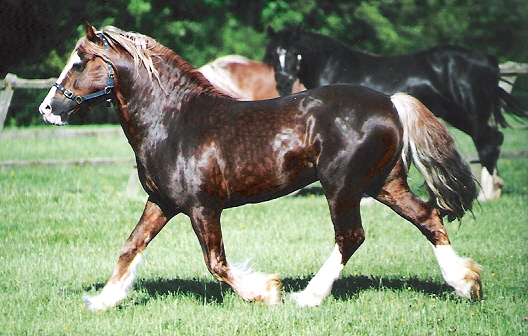
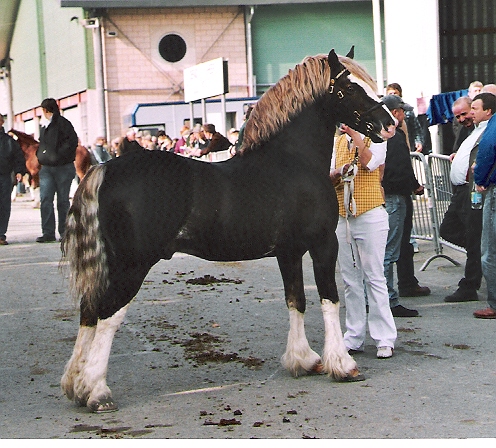
Frank is almost somewhere as a true inbetween his sire was a proper flaxen liver chestnut

Welsh-Cob-Hengst_Ebbw_Amber_Flash__Foto_Holin.jpg


A son
ebbdan01.jpg


A grandson (through the above)
ebbbry02.jpg

http://www.rainhillwelshcobs.com/profile.php?name=Ebbw Brynmor

Frank varies from

this in spring/autumn
26102_10150176006520438_1791828_n.jpg


to this in summer

10553753_670570123022837_3644941798991396860_o.jpg


and just plain old chestnut in winter
13083_10152596836855438_2008453891_n.jpg


so although down as liver he doesn't always look it!
 
I'd love a colour forum/ Faracatforum.
I know it's so silly but I love these threads; they're always cheery. And with pictures!
 
I'd love a colour forum/ Faracatforum.
I know it's so silly but I love these threads; they're always cheery. And with pictures!

I'm glad that you enjoy them. :) I do worry that people get a bit bored or fed up, especially when buckskin V dun is being discussed again. LOL :p

Ester - my gelding has a more flaxeny mane compared to his tail too. I don't know why, but it doesn't seem to be uncommon.
 
Can you post a good photo or photos?

Erm, I'll try! I don't have any good photos of the weird colours of her mane and tail but they've both got flaxen, ginger, black, and white hairs all the way through. It looks flaxen from a distance apart from the top of her tail which is really really light, almost white. She's also got a belly splash that goes up one side, and has a white stripe underneath from just behind her front legs to between her back legs (can't see that unless she rolls though). Please ignore my riding in these pictures (lower leg is awful) - I'm working on it. She's a Sec D with Maesymynach breeding (looks more like a DxTB to a lot of people) though there's a fair bit of Nebo 3 generations ago, which is where the belly splash comes from I think?

Mane colours:
ARctGBu.jpg

HcohKYJ.jpg


Full body:
CoNyD52.jpg

btcbvJS.jpg


You can see her tail well in this one:
8dezkgt.png


Belly splash:
lJVUco0.png

d1LwUG2.jpg


Awkward stage (I don't remember her being this ugly!!!):
uh0qRxV.jpg


Speckles of white hairs going up her side:
efae41x.jpg

This is from December and she has a lot more white now.

All through her breeding (she's Maesnewydd Modlen, if you google it her breeding will come up) they've put a chestnut with a black and the result has been chestnut - which means she must carry some black somewhere? Or have I got that very wrong?
 
Chestnut is recessive so if a horse has one black gene and one chestnut gene, they will look black (or be a black based colour if other genes are present that alter the black base). To be chestnut (or a chestnut based colour), a horse has to have two chestnut genes. However sooty will add black pigment to chestnuts and some liver chestnuts are so dark that they look black, even though the pigment in the hairs is actually chestnut.

Anyhoo, the photos are really helpful and your horse looks like a Flaxen chestnut sabino. :)
 
Chestnut is recessive so if a horse has one black gene and one chestnut gene, they will look black (or be a black based colour if other genes are present that alter the black base). To be chestnut (or a chestnut based colour), a horse has to have two chestnut genes. However sooty will add black pigment to chestnuts and some liver chestnuts are so dark that they look black, even though the pigment in the hairs is actually chestnut.

Anyhoo, the photos are really helpful and your horse looks like a Flaxen chestnut sabino. :)

That's really interesting, thanks :). If they'd taught us genetics like this in A-Level Biology I would've passed!

Is she going to stay chestnut or get more white?
 
OK, that sounds like she would be bay underneath the flecks/white markings. The way the flecks/roaning is arranged makes me think that it's probably caused by the true roan gene. I think this because the roaning is more even, than is typical for sabino and rabicano (compare with the clydie's roaning), plus the head and knees have fewer flecks, however she could be varnish roan. I would expect the head to be more affected if she was VR (ie more roaning on the head). Have you had her long? Was she born roan, or did it develop? I can't really see the spots in the photos, so can't comment on them. LP isn't the only thing that causes spots, but it's certainly possible (50% chance) for her as she has an appy Sire.

The way the white markings go over the top of the withers, indicates tobiano.

So she's a 'bay roan tobiano' or a 'Bay varnish roan tobiano' if she does have LP. I would lean towards the first based on what i can see in those photos. I guess it's possible to have both LP and Roan.


I've been calling her a varnish roan , she was chestnut and white as a foal , her roan is coming out more as she ages she's 4 now I've had her since a yearling . Her roan is increasing in her head will find another head shot thanks , ow did I miss this reply ? Lol
 
LL - Don't worry. :)

The dark ear tips indicate that she was bright bay, rather than chestnut. Chestnuts should have fully chestnut ears (if something else isn't obscuring the base colour), but you can see her in real life and can remember how she was. Looking for evidence that the black pigment is being restricted to the points or not is hard when the horse has other genes that cause white to cover so much of the base colour. With her white legs, you would never be able to see if she has black on her legs and the tobiano has made most of her tail white, although you did mention that there was black in her mane. It's a challenge. :D

The roaning developing over time points towards varnish roan (so LP rather than the Roan gene).

I have to say, if she was mine, I would DNA for base colour, LP and Roan just so i knew the answer! ;) The tobiano is obvious, so i wouldn't personally test for that.
 
LL - Don't worry. :)

The dark ear tips indicate that she was bright bay, rather than chestnut. Chestnuts should have fully chestnut ears (if something else isn't obscuring the base colour), but you can see her in real life and can remember how she was. Looking for evidence that the black pigment is being restricted to the points or not is hard when the horse has other genes that cause white to cover so much of the base colour. With her white legs, you would never be able to see if she has black on her legs and the tobiano has made most of her tail white, although you did mention that there was black in her mane. It's a challenge. :D

The roaning developing over time points towards varnish roan (so LP rather than the Roan gene).

I have to say, if she was mine, I would DNA for base colour, LP and Roan just so i knew the answer! ;) The tobiano is obvious, so i wouldn't personally test for that.
Wow yo guys are amazing !! How much is a DNA for base colour test ? Roughly ? And what do. Have to do
 
Quick question how subtle can Sabino be?

Wondered if it could be what causes the white hairs in my bay tb's coat, mainly round the flanks. They don't really show up in photos, he just looks bay unless you get close. He has one white foot and white sock but it is jagged and on his face he has a small star, a snip and a white mark on his top lip.
His points also look a bit faded compared to my other one who has a very clean contrast between black and bay.
 
Have a guess at my filly's full brother. Obviously he is shedding his foal coat and will be a lot darker. I really want this colt!!! No, mustn't buy him...

ernie.jpg
 
Faracat, do we know what causes the many different chestnut colours? I'm guessing liver isn't chestnut + sooty!

sooty buckskin tobiano is my guess wagtail ;)
 
Faracat, do we know what causes the many different chestnut colours? I'm guessing liver isn't chestnut + sooty!

sooty buckskin tobiano is my guess wagtail ;)

He's certainly buckskin tobiano. The question is, will he be like my girl and be seal brown buckskin (smoky brown), or sooty buckskin? He's not been tested to my knowledge.
 
Quick question how subtle can Sabino be?

A tiny star made from a handful of hairs or a teeny white heel or a few white flecks in the coat. It can be really minimal, to so much white that the horse is white (maximum sabino).

A horse with no modifying genes and no pinto genes is pure black or pure chestnut (no white markings at all).

I'd love to see a photo of your boy. The way you describe the white markings (eg the jagged edges) does point to sabino.
 
He's certainly buckskin tobiano. The question is, will he be like my girl and be seal brown buckskin (smoky brown), or sooty buckskin? He's not been tested to my knowledge.

As the mare is seal brown, there is a strong chance that this foal will also be brown based (well 50% chance of each foal inheriting one copy of brown from the dam if she is heterozygous and 100% chance of the foal inheriting brown if she is homozygous for brown). Do you know what base colour the sire is?

Faracat, do we know what causes the many different chestnut colours? I'm guessing liver isn't chestnut + sooty!

You are right, sooty doesn't cause liver chestnut.

This is interesting as it talks about e and ea (imagine the a is small 'a' ;)) the two versions of chestnut. http://equinetapestry.com/2014/02/color-and-pattern-variations/

It looks like i need to read up about the KIT gene mutations as the term sabino seems to have become old hat. Just when it was all making sense too. Over 30 white patterns discovered so far. That's a lot to learn. ;)
 
This shows his face markings

WP_20140725_15_19_27_Pro_zps2ee8f155.jpg
[/URL]

And his sock. The evening light doesn't really let you see how the black on his leg is a bit faded.

WP_20140726_09_07_26_Pro_zps28a535ff.jpg
[/URL]

Haven't got a photo that shows the white hairs mainly around his flank and rump, you have to look closely, from a distance he just looks like a bay tb. But it was these white hairs that got me thinking about what else was going on.

The other one also does minimal He's got sooty but only really shows when he summer coat comes in. He's a rich red bay in winter, then he starts moulting, goes completely sooty for about 3 weeks then he comes through bright bay.


They probably look just like 2 bay tbs to most people but I look at them and see there are different things going on.

Eta just looking at that top picture makes me realise his ears are are sharply black as the other one.
 
As the mare is seal brown, there is a strong chance that this foal will also be brown based (well 50% chance of each foal inheriting one copy of brown from the dam if she is heterozygous and 100% chance of the foal inheriting brown if she is homozygous for brown). Do you know what base colour the sire is?

The sire is a buckskin tobiano. He's lighter in colour than my girl but still quite dark. The dam and sire also had another colt, a chestnut, which I guess was quite low probability (about 12.5%? - actually lower than that as he is solid colour too, so 6.25%). Interesting pairing as they could also have palomino and palomino tobiano. :)
 
Last edited:
Reading this thread is like walking into an advance algebra class....in French. Hats off you guys that understand it all as its all way over my head!
 
Reading this thread is like walking into an advance algebra class....in French. Hats off you guys that understand it all as its all way over my head!

I know, I grew up in the 70's where all horses were either bay, grey, brown, black, chestnut, palomino, dun, skewbald or piebald!
 
I've been wanting to ask the colour gurus about my old boy for a while. He was advertised and passported as dark bay ... am I right in thinking he was actually seal brown? Summer and winter photos below. He was pretty dappled in the summer too.

Image0179.jpg


P1010007.jpg
 
Yes, a really lovely example of a seal brown. :) In the winter photo (where he isn't hiding his nose) you can see the telltale brown muzzle, the brown by his eye and also the brown around his sheath (which often can be seen on the area where the stifle meets the belly).
 
Top