Difference between bay and brown colouring

AthenesOwl

Well-Known Member
Joined
10 January 2024
Messages
237
Visit site
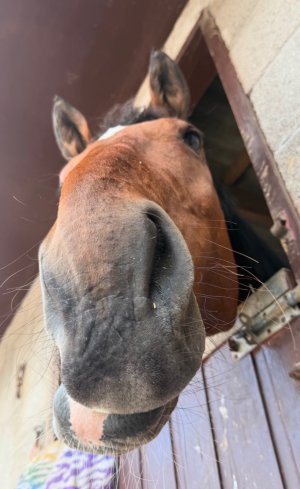
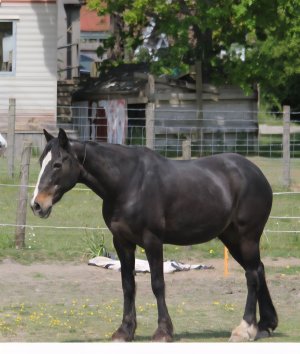
Inspired by reading the thread about dun Welsh ponies, I wanted to ask about the difference between bay and brown colouring, and specifically why my horse, who looks bay to me, is brown according to his passport? There’s a picture of him as a two year old in his passport and he looks exactly the same in his colouring.

To my eyes, he’s a classic bay, with chestnut body, black mane, tail, and points. He gets lighter highlights in his mane and tail in the summer, and his legs get a bit more more gingery/pale biscuit coloured when his winter coat comes in.

Here are a couple of recent pictures so you can see what I mean. What am I missing that makes him brown?
 

Attachments

  • IMG_0280.jpeg
    IMG_0280.jpeg
    227.6 KB · Views: 73
  • IMG_0282.jpeg
    IMG_0282.jpeg
    363.9 KB · Views: 73
Looks bay to me as well. Brown is, what is thought to be at least, a different mutation on the agouti gene that makes the horse not black. A few months old foals tend to look quite weird, and that's usually when they get their passports, so really don't trust the colour in the passport unless it's grey and you want to know the base colour. Definitely not all vets/passport makers know colours too well either. I have had two horses with the wrong colour in the passport, one black written as bay and one dark buckskin (with the brown kind of agouti) written as bay. Look at the horse instead, they tell you more than some papers.
 
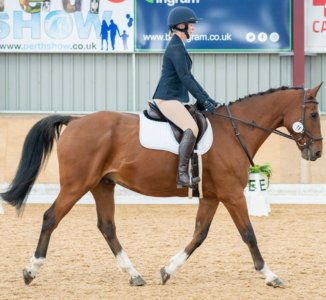
Theres quite a range from the lightest shades of bay and darkest. My last horse was passported dark bay (in France) but was as light as the horse in the original post. He did go dark in spring at coat change but I think more likely it was how he looked as a foal when passported.

I've seen some theories that the Agouti status and whether hetero or homozygous for black can influence shade with Aa EE being the darkest and AA Ee the lightest and other gene combinations inbetween.
 
Some vets can be remarkably clueless over colours. I’ve seen a horse that was a wishy washy chestnut, chestnut legs and no dark colour on ear tips, and because the mane and tail were really dark the vet insisted it was bay!
Probably had ND1 as it had a dorsal stripe?
 
I have the opposite with my mare, she is passported as bay but to me is brown as she has no black points and is sometimes mistaken for black.
Seal bay. Also know as seal brown, but not actually brown. Truly brown horses are quite rare. Our old mare looks dark bay when she's sun bleached, but very black back when she still had sweet itch and wore a rug all summer.
 
I've seen some theories that the Agouti status and whether hetero or homozygous for black can influence shade with Aa EE being the darkest and AA Ee the lightest and other gene combinations inbetween.
This is an interesting theory to me. My mare is Ee and I believe she is homozygous agouti, though she's not tested. She is very light bay, not much black on the legs (she also has socks on all four legs, so you can't see where those are) and a very bright, red brown colour. The gelding I had were EEAa (tested) and very dark, seal brown. However two horses are not enough to be sure, but it's interesting to think about.
 
Seal bay. Also know as seal brown, but not actually brown. Truly brown horses are quite rare. Our old mare looks dark bay when she's sun bleached, but very black back when she still had sweet itch and wore a rug all summer.
What is a "truly brown horse"? Genetically and phenotypically, if you can be sure to call them true? As far as I'm aware, there is not scientifically defined exactly what brown is, but just some theories.
 
Seal bay. Also know as seal brown, but not actually brown. Truly brown horses are quite rare. Our old mare looks dark bay when she's sun bleached, but very black back when she still had sweet itch and wore a rug all summer.
I usually tell people she is seal brown as when I researched it she fits the description perfectly even having the lighter/ginger muzzle, elbows and stifle. I have to admit I've never heard of it being called seal bay before.
 
Yonks ago black horses were classed as unlucky. If they could find half a dozen brown hairs on them, then they were called brown. This was of course before genetics were invented.
 
Yonks ago black horses were classed as unlucky. If they could find half a dozen brown hairs on them, then they were called brown. This was of course before genetics were invented.
I have, in recent times, had a conversation with a friend who argued that a horse that has white signs (blaze, socks, anything) could not be black but had to be bay. That because her riding teacher said that. People are quite creative, I have no idea where the teacher got that from.
 
Thanks, everyone. Coat colours were apparently so simple before we knew about the genetics involved, and yet that makes them all the more interesting.

Unfortunately, I don't have any pictures of him as a foal, but I''ll go with the theory that he was either passported by a vet who didn't know their colours, or when he was a foal and his adult colour wasn't clear yet. He's bay to me, and absolutely adorable to boot, and that's all that really counts.
 
Looks bay to me as well. Brown is, what is thought to be at least, a different mutation on the agouti gene that makes the horse not black. A few months old foals tend to look quite weird, and that's usually when they get their passports, so really don't trust the colour in the passport unless it's grey and you want to know the base colour. Definitely not all vets/passport makers know colours too well either. I have had two horses with the wrong colour in the passport, one black written as bay and one dark buckskin (with the brown kind of agouti) written as bay. Look at the horse instead, they tell you more than some papers.
The paper that suggested there was a different type of agouti for brown horses has since been discredited and was not reproducible.
 
The paper that suggested there was a different type of agouti for brown horses has since been discredited and was not reproducible.
Yeah, I've heard vaguely about that. While that study might not have found the gene/reason, there has to be one and a slightly different version of agouti would explain it. EEAa doesn't seem to always result in brown, although there might be some correlation/causation. But yes, as far as science is now, a brown horse will be tested the same as a bay one.
 
Yeah, I've heard vaguely about that. While that study might not have found the gene/reason, there has to be one and a slightly different version of agouti would explain it. EEAa doesn't seem to always result in brown, although there might be some correlation/causation. But yes, as far as science is now, a brown horse will be tested the same as a bay one.
It doesn't have to be that simple though there's all sorts of multifactorial/ polygenic stuff going on.
 
It doesn't have to be that simple though there's all sorts of multifactorial/ polygenic stuff going on.
Could definitely be. Something(s) is causing it, even though we don't know what yet. And honestly, that's a very fun part about science and genetics, there's still so much to discover.
 
Top