Discuss trimming approaches with me...

soloequestrian

Well-Known Member
Joined
14 January 2009
Messages
3,153
Visit site
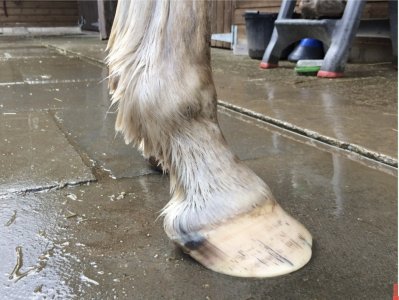
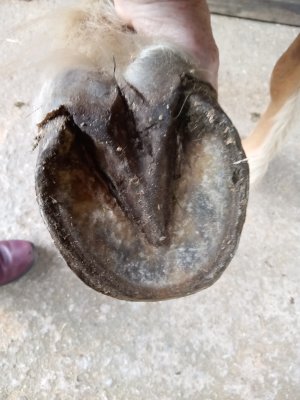
I've trimmed my own for around 20 years now, at the start with input from a farrier and a trimmer. My current horse has never been shod. She is warmblood and has tough feet but a fairly rubbish white line. When I got her at 6 months old she had one very upright foot which righted itself over time (I think it was movement - she has always lived out with me). She has upright feet with fairly high heels but a good hoof/pastern axis. She has a heel-first landing, her frogs are big and healthy and she has a great digital cushion. However she suffers from abscesses regularly, I think because of the white line issue which I've never quite got under control. She is 12 now.
Today, for the first time ever, I let someone else trim her feet a little. The trimmer has trained with an organisation who seem to be getting a reputation for being nuts. The trimmer herself is very nice, did very little to my horse and discussed it all before she did anything. She took a tiny bit off one side of each heel and trimmed back the bars on all feet. I felt like this couldn't do any harm. I asked what she would do if given free rein and she said she would want the heels lowered, by quite a lot (not all in one go). She also mentioned 'compacted sole' which I've never heard of - I think she would have been keen to remove some sole and that gives me the heebie jeebies. She commented on a toe callous which I think is a good thing and I'm not sure she did.
We had a discussion about hoof balance. My view has always been that the horse will grow the hoof that it want in terms of balance - if the hoof is bare and unbalanced then the part that hits the ground first will wear quicker and bring the hoof back into balance, even when the horse is on relatively soft surfaces (as long as they are moving). She didn't fully agree with this, mainly the soft ground part I think - she said that there were indicators that my mare's feet are not balanced e.g. she's always had a very shallow (surface level) crack on the inner side of one of her fronts and some flare on that side too. She thinks the abscessing is from having an unbalanced foot.
At the moment I'm thinking I might stay with her for a few months and see what the heel 'balancing' (if that's what it was) does to the crack and flare. I'm not keen on taking her heels down though.
Would love to hear thoughts!
 
My thoughts are that you've trimmed her yourself for 11 1/2 years. I'm presuming that she is currently sound and has been pretty much sound (abscesses excepted?) for those 11 1/2 years? If so then I would say if it ain't broke don't try to fix it!

Regarding white line/abscess issues to me that suggests metabolic rather than trim issue. Have you had a stim test for Cushing's? The only time I've found a correlation between trim and white line issue was my mate seems to develop white line disease in autumn if I don't take her quarters down to some level. All my others seem to prefer a millimetre or so of wall above the sole in their quarters but this year I tried keeping her fractionally shorter and no wld. Possibly a coincidence but I'll be doing the same next autumn
 
Thanks, that's kind of what I am thinking. She's had abscesses all her life, perhaps one or two a year most years. This year has been bad with three so far, hence my thinking about changing something. I don't think it's age related though. She has this weird thing where she grows a sort of cover over the white line so her foot looks great when you just pick it out but when you trim a little off the actual white line is exposed and often it has bits that are obviously not doing well. I wonder if she's had a grumbling fungal type infection for a long time that I haven't just quite got on top of - I'm trying to treat for that at the moment. However one of the feet she abscessed in at the start of the year was a hind that had a really tight healthy looking white line. Aargh.
 
I would change the diet soinds like the hoof is not tight enough, strong enough

I always balance the hooves remove flare
 
If you have a weak white line which gets embedded gravel that can cause issues. Mine had problems with gravel in the white line but no abscesses. I've been using hoof armour for a few years and that has solved the problem and the weak bits with a little white line disease have grown out.
I tend to get a farrier trim a couple of times in winter when I do less road work but in summer the roadwork keeps in balance with the growth.
 
I've trimmed my own for around 20 years now, at the start with input from a farrier and a trimmer. My current horse has never been shod. She is warmblood and has tough feet but a fairly rubbish white line. When I got her at 6 months old she had one very upright foot which righted itself over time (I think it was movement - she has always lived out with me). She has upright feet with fairly high heels but a good hoof/pastern axis. She has a heel-first landing, her frogs are big and healthy and she has a great digital cushion. However she suffers from abscesses regularly, I think because of the white line issue which I've never quite got under control. She is 12 now.
Today, for the first time ever, I let someone else trim her feet a little. The trimmer has trained with an organisation who seem to be getting a reputation for being nuts. The trimmer herself is very nice, did very little to my horse and discussed it all before she did anything. She took a tiny bit off one side of each heel and trimmed back the bars on all feet. I felt like this couldn't do any harm. I asked what she would do if given free rein and she said she would want the heels lowered, by quite a lot (not all in one go). She also mentioned 'compacted sole' which I've never heard of - I think she would have been keen to remove some sole and that gives me the heebie jeebies. She commented on a toe callous which I think is a good thing and I'm not sure she did.
We had a discussion about hoof balance. My view has always been that the horse will grow the hoof that it want in terms of balance - if the hoof is bare and unbalanced then the part that hits the ground first will wear quicker and bring the hoof back into balance, even when the horse is on relatively soft surfaces (as long as they are moving). She didn't fully agree with this, mainly the soft ground part I think - she said that there were indicators that my mare's feet are not balanced e.g. she's always had a very shallow (surface level) crack on the inner side of one of her fronts and some flare on that side too. She thinks the abscessing is from having an unbalanced foot.
At the moment I'm thinking I might stay with her for a few months and see what the heel 'balancing' (if that's what it was) does to the crack and flare. I'm not keen on taking her heels down though.
Would love to hear thoughts!
Errr, why would you choose someone trained by a fruit-and-nuts outfit to mess with your precious horse?
Why not find a decent farrier, if no longer happy to do it yourself? At least they would be trained to a generally-recognised standard of welfare.
 
How often do you put the Hoof Armor on? I used it last year and she didn't abscess, dropped the ball through the winter though.
It depends how much I'm riding. If I'm not doing a lot then about every 3 - 4 weeks . If I'm doing more then I keep a close eye on his hooves and if they start looking like they are wearing shorter than I like I pop another coat on. I put it on the front hooves about twice as often as the hind ones.
I went on a 2 hour hack yesterday including a lot of stony tracks and he wasn't bothering about any of the rocky going. There was a bit of a chip on one hind hoof when I checked him today so I rasped that bit and popped a bit of Hoof Armour where I'd tidied it.
I do get a bit paranoid sometime wondering if I should boot him if we are doing a longer route but he seems to be doing fine without at the moment. He is 11 and never been shod but I have used boots in the past.
I do find it a bit harder to use in winter when everything is so wet but I stand him in on shavings till his feet dry out. Certainly the more work he does the better his feet look.
 
Last edited:
Nothing has changed, I wouldn't say that the abscessing has changed all that much either - she's had several this winter but had a clear year before that.
I live in a place where there isn't good access to any kind of professionals - the farriers I have seen work on bare hooves just do exactly the same as they would to prep for a shoe, i.e. move most of the useful bits of the hoof. It gives me the heebie jeebies. At least this lady is prepared to listen to me and not do anything unless I specifically say yes.
I'm interested to know about this idea of 'compacted sole' - it sounds like either rubbish or something that happens when feet are compromised. I am wondering if the HM hypotheses are built only on experience of compromised feet rather than including fully functional feet too.
 
I've never heard the term "compacted sole" either...I would probably have assumed that she meant retained sole.

As for changing the balance of your mare's hooves, well that's always a bit of game of roulette in a middle-aged horse with no pre-existing lameness issues. One of mine has front hooves that are not 'balanced' by any standard, textbook definition, but they are a match for each other, and at 11 years old with many miles under her belt she has never known a day of lameness, moves nicely, has a great physique, hacks over varied terrain and surfaces without a missed step, and appears to love her work. She dishes slightly so grows flare on the outside of her feet. I just rasp it back fairly regularly to stop it growing too long and chipping, but I stopped trying to alter the shape when she was about 5.
 
I had the grazing analysed quite a few years ago and they all get a balancer that's matched to forage content as per the NRC guidelines. She gets extra magnesium as a calmer too.
I am wondering more and more if the ideas about high heels and 'compacted' soles are from looking at lots of horses with chronic laminitis. The trimmer's view is that the abscessing is being caused by the way she loads her feet but I'm not on board with that idea....
I'm not going to let her take the heels down, it's good to discuss though!
 
I do not understand why so many so called barefoot trimmers attack heels and let toes run forwards even when dealing with animals that are sound and have functional feet for them.

There is no textbook template foot for all horses, their feet are as individual as they are and I'd encourage an approach of "if it ain't broke don't fix it".
Recurrent abscesses/foot issues would have me wanting to pull bloods though and strip diet back to see if she is reacting to anything that could be causing it
 
I will try to take some pics.
I'm going to try to keep keep on top of the white line as much as I can - I'm waiting for more Hoof Armor so at the moment she's getting Red Horse stuff into the white line area every day or two and I'm going to use White Lightning gel regularly too. Happy for any other suggestions in that area.
My feeling is that it's not diet related but I will look at that if this doesn't work. We did have an utterly horrendous start to the year weather-wise and I suspect that played a part - where I live achieved the longest time recorded without the sun showing since records began or some such.... it rained heavily for over a month. They do have a non-muddy area to stand and feed but every time they moved off it it was into mud, it was just horrible. The stables have dirt floors and even they ended up getting muddy for the first time ever.
 
My experience of a bare foot trimmer was for them to overly lower the heels and then let the toes run forward into the classic ‘long toe, low heels’ ghastly foot balance beloved by barefoot trimmers and rightly much criticised by vets.
That is a sweeping generalization, unless you are talking about Those Who Should Not Be Named.
 
That is a sweeping generalization, unless you are talking about Those Who Should Not Be Named.
Nope, this was a fully qualified and still practising EPA full member, so ‘allegedly’ the modern gold standard qualification for barefoot trimmers.

A reminder of their handiwork before I sacked them. They dissed my vet’s suggestion that the toes were too long (I have that on record). They rejected my suggestion to get fresh x rays of the feet, saying that no matter what the x rays showed they would not trim these feet any differently.

Avoid, avoid.

IMG_3593.jpeg
 
Last edited:
I think the heels get taken down so the frog and caudel structures can develop more. A steeper angle will grow in but will take a full growth of Hoof to fully develop. I took the heels down on one had many years ago and he was a lot better eventually once the new shape grew in.
 
My gelding had recurring front feet abscesses for 2-3yrs, about 2 per year. The mare, same diet and ground conditions - with ‘worse’ feet than him, abscess-free. So I do think these things are a constitutional thing and solutions /causes won’t necessarily be the case for every horse.
However, changing forage to absolutely clean bagged haylage resolved his abscesses - and her feet are stronger. I was struggling for years to get super clean gorgeous hay, and was soaking, washing etc….i’d researched mycotoxicosis and it fitted with their minor symptoms, and his major symptom of abscesses. The clean forage change did absolute wonders for them both.

I was on a wild goose chase with his feet for a while, as also they both had white line issues pop up here and there. And the hardcore turnout was bitty gritty stuff that could easily get in a weak white line. I was cleaning, spraying, packing, de-gritting those white lines all the time, with no difference. It was so frustrating. I thought the foot issues could be due to the grit - but change in forage then proved to be the solution than having perfect white lines. Once forage changed, the white lines are better, but still sometimes can be weak but they present no problems. They have a lot of mud to deal with 8 months of the year so again, the mud fever and all that jazz, didn’t show up. Their guts being well seemed to be the cornerstone of health for their feet no matter the terrible footing or foot care used.

His front feet have always been amazingly good quality since a foal - thick tough walls, thick tough soles, bars that grow straight - never ever foot sensitive on any terrain at all…we have really rough hardcore here which he canters along happily at liberty. His soles are really fabulous - constitutionally. The mares fronts were much worse ..thinner soles mainly and at one time her white lines were just horrific. Yet he got abscesses and she didn’t at all!

I always just work on gut and liver health if issues pop up now. For everything they’ve presented giving gut and liver support has always helped resolve it.

Another trim change I’ve done more recent 5 years is not to trim walls to exact sole plane as Ramey etc suggest as a basic trim. One article I read from another BF trimmer …fab learning site…can’t recall name right now - but she mentioned that in her experience most horses she trims do better with the wall kept a fraction higher than the sole plane…literally just a smidge, 2mm.
My mare immediately did better with more compromised soles with this approach, and so did the gelding.
The most striking aspect I noticed about this slight but profound change in trim wall approach was that both of them had much tougher walls, and more robust white lines. Much tougher on the rasp!
Makes sense when we have kilo’s of pressure on that 2mm wall ridge, that then compresses a bit more to then land the sole/frog for full hoof support. The laminae are not rigid and have flex, so can cope with this particular hoof-land method. The hoof wall itself gets tougher with this approach, because every stride creates a compression of hoof wall…just a bit.
And to be reasonable, what horse ever out in the wild has walls down to the sole plane? All pics I researched showed a significant wall ridge, some 1cm. Even bog ponies with their splayed flared walls, still underneath showed the walls ride higher.
As a previous ‘walls to sole plane’ trimmer, I trialled this approach to leave a slight 2mm height to the walls above the sole plane, and it worked for 2 sets of completely different hooves to make the walls much stronger. The foot sore-prone mare was more foot-sure.
They are both on significantly rough hardcore surface and tracks for at least 12hr day - and their hoof walls to do not ever wear down to sole plane. They mostly self-trim now with such footing, and start of spring is when growth spurt can occur and I get the tools out for a quick going over.
 
My experience of a bare foot trimmer was for them to overly lower the heels and then let the toes run forward into the classic ‘long toe, low heels’ ghastly foot balance beloved by barefoot trimmers and rightly much criticised by vets.
Only SOME barefoot trimmers. The one I use is horrified by that approach, as is the person who trained her.
 
I do think broadly most Farriers turn a hoof into a flat pre shoe ready thing and for some reason a lot of bf trimmers won't touch toes whilst attacking the heels.
Not ALL. but generally those are the styles the different schools seem to lean towards.

But a lot more Farriers are open to barefoot now anyway and (the good ones anyway) will be willing to listen to you on what you want to work towards and liaise with vet if needed to plus are so much more regulated than EPs or trimmers that they are by far the safer option. I tidy up myself between trims with a rasp though and farrier and the (numerous) vets who've seen my horses are on board with this.
 
My vet can tell before she even asks the question if a client uses a (any) barefoot trimmer due to the characteristic long toe/low heel foot balance of the horse in front of her if trimmed by a barefoot trimmer 🙄.
Crikey, that would explain why my vet was trying to wheedle out of me who trimmed mine when I was being coy about it as it was me. I like mine neat and tidy and find they are stronger that way.
 
I had three horses, one shod, two barefoot, all done by my FRC farrier for many years. I was very interested in barefoot and barefoot trimming, went on a weekend course, made loads of notes, discussed the teachings with my FRC farrier afterwards and we had an interesting chat. This let to me picking out and keeping the bits of info from that course which I felt were interesting and worth keeping.

While my FRC farrier did my horses, I'd run the rasp round in-between my farrier's visits to keep on top of any cracks or flares.

In last eight months of my shod horse's life, I really noticed and liked the change in my friend's barefoot horse after she switched from one barefoot trimmer to another. His feet under her new trimmer were much less flared, much better overall and compacter foot shape than before, and he no longer tripped.

I was sufficiently impressed that when my shod horse died, I had a chat with my FRC farrier who is very busy with lots of shod horses, and I decided to switch to using my friend's newish barefoot trimmer. Definitely haven't regretted it. Loving my barefoot horses' feet.

My barefoot trimmer was trained originally by one organisation but is now with another organisation and also enjoys time spent with an FRC farrier. Her outlook and mine are similar - look around, look at the different styles and views, see what works, what doesn't, pick what bits suit you and your horse.
 
My gelding had recurring front feet abscesses for 2-3yrs, about 2 per year. The mare, same diet and ground conditions - with ‘worse’ feet than him, abscess-free. So I do think these things are a constitutional thing and solutions /causes won’t necessarily be the case for every horse.
However, changing forage to absolutely clean bagged haylage resolved his abscesses - and her feet are stronger. I was struggling for years to get super clean gorgeous hay, and was soaking, washing etc….i’d researched mycotoxicosis and it fitted with their minor symptoms, and his major symptom of abscesses. The clean forage change did absolute wonders for them both.

I was on a wild goose chase with his feet for a while, as also they both had white line issues pop up here and there. And the hardcore turnout was bitty gritty stuff that could easily get in a weak white line. I was cleaning, spraying, packing, de-gritting those white lines all the time, with no difference. It was so frustrating. I thought the foot issues could be due to the grit - but change in forage then proved to be the solution than having perfect white lines. Once forage changed, the white lines are better, but still sometimes can be weak but they present no problems. They have a lot of mud to deal with 8 months of the year so again, the mud fever and all that jazz, didn’t show up. Their guts being well seemed to be the cornerstone of health for their feet no matter the terrible footing or foot care used.

His front feet have always been amazingly good quality since a foal - thick tough walls, thick tough soles, bars that grow straight - never ever foot sensitive on any terrain at all…we have really rough hardcore here which he canters along happily at liberty. His soles are really fabulous - constitutionally. The mares fronts were much worse ..thinner soles mainly and at one time her white lines were just horrific. Yet he got abscesses and she didn’t at all!

I always just work on gut and liver health if issues pop up now. For everything they’ve presented giving gut and liver support has always helped resolve it.

Another trim change I’ve done more recent 5 years is not to trim walls to exact sole plane as Ramey etc suggest as a basic trim. One article I read from another BF trimmer …fab learning site…can’t recall name right now - but she mentioned that in her experience most horses she trims do better with the wall kept a fraction higher than the sole plane…literally just a smidge, 2mm.
My mare immediately did better with more compromised soles with this approach, and so did the gelding.
The most striking aspect I noticed about this slight but profound change in trim wall approach was that both of them had much tougher walls, and more robust white lines. Much tougher on the rasp!
Makes sense when we have kilo’s of pressure on that 2mm wall ridge, that then compresses a bit more to then land the sole/frog for full hoof support. The laminae are not rigid and have flex, so can cope with this particular hoof-land method. The hoof wall itself gets tougher with this approach, because every stride creates a compression of hoof wall…just a bit.
And to be reasonable, what horse ever out in the wild has walls down to the sole plane? All pics I researched showed a significant wall ridge, some 1cm. Even bog ponies with their splayed flared walls, still underneath showed the walls ride higher.
As a previous ‘walls to sole plane’ trimmer, I trialled this approach to leave a slight 2mm height to the walls above the sole plane, and it worked for 2 sets of completely different hooves to make the walls much stronger. The foot sore-prone mare was more foot-sure.
They are both on significantly rough hardcore surface and tracks for at least 12hr day - and their hoof walls to do not ever wear down to sole plane. They mostly self-trim now with such footing, and start of spring is when growth spurt can occur and I get the tools out for a quick going over.
Horses in the wild or on turnout may keep hoof wall above sole but if they are regularly ridden on tarmac the wall wears away pretty quickly in my experience and they then travel on a mixture of the wall and outer part of the sole.
A. Successful bare hoof for roadwork is a different hoof to a successful bare hoof for off road living.
 
Horses in the wild or on turnout may keep hoof wall above sole but if they are regularly ridden on tarmac the wall wears away pretty quickly in my experience and they then travel on a mixture of the wall and outer part of the sole.
A. Successful bare hoof for roadwork is a different hoof to a successful bare hoof for off road living.
Yes, I can imagine that tarmac is like abrasive sandpaper, despite being smooth for car tyres, when zoomed-in and felt it’s not smooth to touch. Whereas natural hardcore areas have varying textures, some sandy, some knobbly stone, gritty etc.
 
Yes, I can imagine that tarmac is like abrasive sandpaper, despite being smooth for car tyres, when zoomed-in and felt it’s not smooth to touch. Whereas natural hardcore areas have varying textures, some sandy, some knobbly stone, gritty etc.
On a conditioned barefoot on tarmac growth keeps up with wear. After 2 rides over the weekend BF about 50 plus miles in total then by Tuesday there was plenty of growth to the wall to below the sole.

Glow sorry can’t open yr pic my BT line went up in flames a week ago and I am struggling badly.

My gelding had recurring front feet abscesses for 2-3yrs, about 2 per year. The mare, same diet and ground conditions - with ‘worse’ feet than him, abscess-free. So I do think these things are a constitutional thing and solutions /causes won’t necessarily be the case for every horse.
However, changing forage to absolutely clean bagged haylage resolved his abscesses - and her feet are stronger. I was struggling for years to get super clean gorgeous hay, and was soaking, washing etc….i’d researched mycotoxicosis and it fitted with their minor symptoms, and his major symptom of abscesses. The clean forage change did absolute wonders for them both.

I was on a wild goose chase with his feet for a while, as also they both had white line issues pop up here and there. And the hardcore turnout was bitty gritty stuff that could easily get in a weak white line. I was cleaning, spraying, packing, de-gritting those white lines all the time, with no difference. It was so frustrating. I thought the foot issues could be due to the grit - but change in forage then proved to be the solution than having perfect white lines. Once forage changed, the white lines are better, but still sometimes can be weak but they present no problems. They have a lot of mud to deal with 8 months of the year so again, the mud fever and all that jazz, didn’t show up. Their guts being well seemed to be the cornerstone of health for their feet no matter the terrible footing or foot care used.

His front feet have always been amazingly good quality since a foal - thick tough walls, thick tough soles, bars that grow straight - never ever foot sensitive on any terrain at all…we have really rough hardcore here which he canters along happily at liberty. His soles are really fabulous - constitutionally. The mares fronts were much worse ..thinner soles mainly and at one time her white lines were just horrific. Yet he got abscesses and she didn’t at all!

I always just work on gut and liver health if issues pop up now. For everything they’ve presented giving gut and liver support has always helped resolve it.

Another trim change I’ve done more recent 5 years is not to trim walls to exact sole plane as Ramey etc suggest as a basic trim. One article I read from another BF trimmer …fab learning site…can’t recall name right now - but she mentioned that in her experience most horses she trims do better with the wall kept a fraction higher than the sole plane…literally just a smidge, 2mm.
My mare immediately did better with more compromised soles with this approach, and so did the gelding.
The most striking aspect I noticed about this slight but profound change in trim wall approach was that both of them had much tougher walls, and more robust white lines. Much tougher on the rasp!
Makes sense when we have kilo’s of pressure on that 2mm wall ridge, that then compresses a bit more to then land the sole/frog for full hoof support. The laminae are not rigid and have flex, so can cope with this particular hoof-land method. The hoof wall itself gets tougher with this approach, because every stride creates a compression of hoof wall…just a bit.
And to be reasonable, what horse ever out in the wild has walls down to the sole plane? All pics I researched showed a significant wall ridge, some 1cm. Even bog ponies with their splayed flared walls, still underneath showed the walls ride higher.
As a previous ‘walls to sole plane’ trimmer, I trialled this approach to leave a slight 2mm height to the walls above the sole plane, and it worked for 2 sets of completely different hooves to make the walls much stronger. The foot sore-prone mare was more foot-sure.
They are both on significantly rough hardcore surface and tracks for at least 12hr day - and their hoof walls to do not ever wear down to sole plane. They mostly self-trim now with such footing, and start of spring is when growth spurt can occur and I get the tools out for a quick going over.
Very interesting comments in the latter part of your post. Wish I had internet to discuss.

This very low heel trimming seems to be a modern idea. Going back 20 plus years we had few trimmers leaving aside strasser ones bu quite a few worldwide BF people who had just all their lives done what worked.That includedheels. I remember one lady I admired who trimmed around from 9 to3 but then left the sole to slope upwards to the heels.
 
Top