
skinnydipper
Well-Known Member
This caught my eye on FB.
screen shots of the post as not everyone is on Facebook.
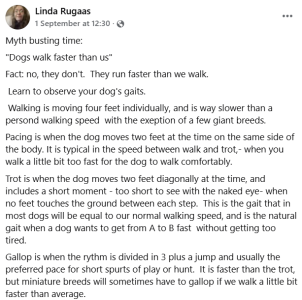
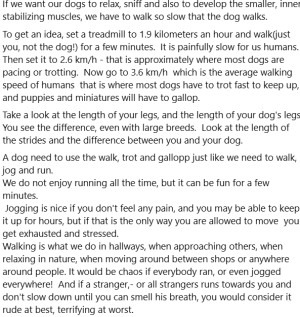
screen shots of the post as not everyone is on Facebook.
Last edited:


Define natural. It's generally ill-advised (https://canineconditioningcoach.com...n-dogs-a-sign-of-compensation-not-efficiency/) and you don't really want to let a dog get in the habit of pacing.Although, I always understood pacing to be a sign of pain or extreme fatigue. I didn't realise it was a natural gait between walk and trot.

I'm not surprised people don't notice dogs changing leads - most dog owners doesn't even seem to recognise if their dog is head-bobbing lame in trot, let alone that the dog's avoiding using its hock as it walks, that its back is quite restricted, that it doesn't move straight (still waiting for the day I see a Frenchie move correctly behind...)I suppose horsey people are more inclined to notice these things but it boggles my mind how many people don't, even in a gaiting breed community.
I told someone their dog was changing their lead in an exercise today, and wondered if he was quite right, blank stares ahoy.
Interesting - how so? I've always assumed, following the horsey mindset, that the trot is easiest to see issues in.Also, walk is the easiest gait to see lameness, IME.
I'm not surprised people don't notice dogs changing leads - most dog owners doesn't even seem to recognise if their dog is head-bobbing lame in trot, let alone that the dog's avoiding using its hock as it walks, that its back is quite restricted, that it doesn't move straight (still waiting for the day I see a Frenchie move correctly behind...)
The equestrian world has its (many) issues but at least most riders will recognise lameness when it gets to head-bobbing.
Interesting - how so? I've always assumed, following the horsey mindset, that the trot is easiest to see issues in.


That's a really interesting read, thank you.Define natural. It's generally ill-advised (https://canineconditioningcoach.com...n-dogs-a-sign-of-compensation-not-efficiency/) and you don't really want to let a dog get in the habit of pacing.

