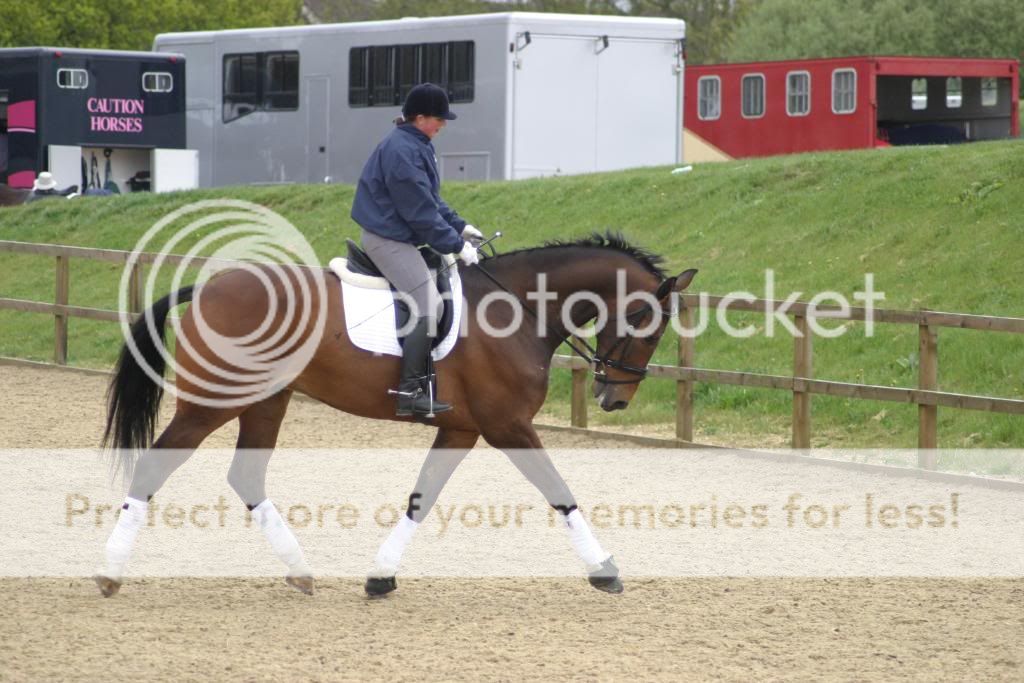
Dressage people-draw reins &help please sorting out this horse!

seabsicuit2

Well-Known Member
Joined
24 August 2010
Messages
1,030
Visit site
Just wondering if anyone else feels the same about horses that have been badly/incorrectly and have been completly overdone in draw reins- its just the feeling that they are always wanting to tip behind the vertical, never really ever want to work properly over the back, and stretch over the back and neck into a seeking contact.Therefore true trot rhythm is very difficult to establish, as well as true straightness as they are constantly wanting to dive behind the vertical so that they can tip a shoulder or quarter out. Canter is also therefore difficult.

Have no idea wether this is a 'symptom' of horses that have been overdone in draw-reins but have noticed this in a number of horses now that I know for a fact that have been solely produced by riders that love using draw reins, and those riders dont know how to use DR correctly.

Have other people found the same sort of issues and problems in horses that have had bad draw rein overuse or is it just me?:rolleyes:

Wether it is or not, any ideas on how to sort out the above issues in a horse going as described as above?

I have taken this horse right back to basics, gradually introducing serpentines and transitions& lateral work on a loose rein, gradually shortening the reins a little until the horse started to seek a contact rather than be expected to be hauled in and held in. It is now much happier and softer in the mouth,and actually seeks a contact now, but still just can not work over the back in a soft swinging trot rhythm.
If you start asking for more engagement and push, the horse blocks against you and again tries to dive behind the vertical and get tense and blocks the back even more. It can do all transitions/basic lateral work fine but again, if you ask for more precise positioning and correction it starts to block.
We seem to have hit a wall with progressing beyond this point! Any ideas welcome.
It probably does need a number of months to get stronger but in the meantime would be good to have some tips.
 
can you encourage him to warm up long and low, gradually eeking out the rein as he gains confidence in really stretching.then whenever he gets tight/tense/behind the contact, you can take him L&L to re-establish relaxation and swing.

what always get CS to swing is to slow my rising, as i slow him, until he almost walks, then push hands forward a good few inches, and close leg, sending him forward in to medium for only 3/4 strides, then back to working trot, rinse and repeat.initially they DO throw their head up and go a bit hollow, but its like a huge half halt,sit sit sit, engage, and GO and its totally transformed his trot,really got him to release his back and keep his neck out :)

i absolutely know what you are feeling because i had a horse for a summer couple of years back who i know was more or less ridden every day in draw reins, you couldnt ride him forward to any sort of contact as he just ducked tight behind it, and thrashed his (already very extravagant) front legs even harder. i did loads of long and low (but to a contact) loads of transistions that happened over a series of strides, so nothing too sudden or sharp to make him lose confidence and duck, and lots of almost transitions as above.

i do like to warm mine up quite deep, but its always to a contact, i never encourage that floating nothingness feeling, but where draws have been used i always go a true long and low, even encouraging the nose really out, and never deep until a connection is established, after which i actually finding working a bit rounder can HELP the connection, but they have to learn it first if that makes sense???
 
Echo princesssparkle 100%, my Arab had spent 6 months in draw reins before I got him. We worked long and low for a long time, felt weird with his head so low especially in canter but has been very beneficial long term.
 
I think some riders can/want to produce that feeling without draw reins, too, just as some people can stand horses on their heads with or without. It's that old feel conundrum again - if you know exactly what you're looking for, you can probably get away with using gadgets (although one might argue, why would you need to?) but a rider that's looking for a "picture" or an incorrect feel (even with the best of intentions) is going to end up there no matter what the method.

PS's advice, obviously, but I also find with horses like this (and ones that just don't seek contact for all sorts of reasons) it's incredibly important they I don't block anywhere along my "arm" - as in from the middle of my back at my shoulder blades to the palms of my hands - but keep that flowing, "forward" feeling with my contact. I find a good reminder for me is the "reins as sticks" metaphor. I find this particularly difficult to maintain as the horse seeks the contact more, as it's so tempting to contain the horse with a still hand but many of these horses block right up again with even that much pressure.

I did a couple of clinics with a very good young horse trainer who was very much of the "nose up and out" school. It really helped the horse I rode at the time, who had an incredibly long, somewhat low set (by dressage standards) neck and was very inclined to curl up and pull his tongue when he got stressed. He worked a lot on a steady, forward rhythm, into the hand consistently, then asking for a bit more push so the horse came "over the top" and only then letting him take the rein down a bit. I've used the same method successfully since then on other horses, although, of course, the best method is the one that works for the individual. :)
 
i am in a similar situation - bringing a horse back into work that has a tendancy to drop behind the contact, lose rhythm and lock up...
recently i did the "i don't care what the head does just go forward" - once going forwards i put a slight contact on, asked for submission and really pushed into it.. some success but not entirely - running through the contact or ducking, neither are good! i also find the bend just doesn't happen, neck bend or haunches in but no bend elsewhere so took to being really firm with my aids and over exaggerating the difference between asking for more impulsion and wanting bend, had her going far to forwards but then she couldn't just run on when i asked for bend as she was infront of the leg she started to take the contact forward and swing through her back. horse has canter issues too (disunite or haunches in) and she offered canter when i was asking for bend, so i rode it forwards (so as not to lock her up) and it was far more free through her back and willing to go forwards. because she'd gone forwards and told to get on with going forwards when she went back to trot she was better over her back.. a long way to go but these things can't be rushed..
 
I did a couple of clinics with a very good young horse trainer who was very much of the "nose up and out" school. It really helped the horse I rode at the time, who had an incredibly long, somewhat low set (by dressage standards) neck and was very inclined to curl up and pull his tongue when he got stressed. He worked a lot on a steady, forward rhythm, into the hand consistently, then asking for a bit more push so the horse came "over the top" and only then letting him take the rein down a bit. I've used the same method successfully since then on other horses, although, of course, the best method is the one that works for the individual. :)

I find this method the most satisfactory. It is much harder for the horse to drop the contact with the head up. Once into a contact then you can ride the horse forward and down to improve the suppleness and swing through the back as you will then be in a position to put the horse out in front of you in a good balance. Of course there are factors that you have to take into account - conformation, balance, natural power, etc. as these will influence the way you tackle the problem.
 
Slightly going off the original post and Im sorry to hijack this post, but why do ppl do it?

My Dr instructors always uses draw reins on her other students ( I refused them on day 1), is this as it is such a good quick fix? 1 person is on the Welsh team and winning at championship level and her horse doesn't go anywhere without draw reins. She evented this so it is definately not a behaviour issue. She has sold a horse she has broken in and the new owners immediately said they would have to 'undo' the outline. Can anyone enlighten me?
 
I have a horse that loves to go exactly as the OP suggested and I can guarantee that he's never been near a set of draw reins.

I've been using the 'nose out' principle and a sudden upwards lift of both hands (not a jerk in the mouth) gets his head up and out so that he finds his own balance. The 'lifts' have got smaller and smaller over time so he only needs a tiny reminder now. That and making sure that the horse is honestly, truly 100% in front of the leg of course!
 
when I bought my horse he had been basically backed and ridden every day of his life in draw reins. The result being a very BTV horse with no contact. This is him when I got him:
paulmeeka001.jpg

lovely!

I have worked him for around a year like this:
IMG_6471.jpg

IMG_6611.jpg

And have gradully asked him to come up more in front. When I work him round or low he must be to the contact and not just drifting about and some times I do have to have him a little shorter in the neck that ideal to ensure he is to the contact otherwise he would be like fluff on the end of the rein.

This is the same horse now:
meekadressage002.jpg

bdcamplastlesson044.jpg

IMG_6519.jpg


However, he will still resort to dropping behind the contact and becoming tight in the neck if I get tense or he is tense. It will always be there, I have to be careful not to create it.
This is him tense:
meekadressage001-1.jpg

Yuck! I buy the bad ones to compare with the better ones and to keep me on the right road!
 
I have a horse that loves to go exactly as the OP suggested and I can guarantee that he's never been near a set of draw reins.

I've been using the 'nose out' principle and a sudden upwards lift of both hands (not a jerk in the mouth) gets his head up and out so that he finds his own balance. The 'lifts' have got smaller and smaller over time so he only needs a tiny reminder now. That and making sure that the horse is honestly, truly 100% in front of the leg of course!

This 100%
 
Slightly going off the original post and Im sorry to hijack this post, but why do ppl do it?

I think some of it is because people have an ingrained, subconscious (almost pathological) idea that "dressage" is defined by the "shape/frame/whatever construction" of the horse and having the nose poked out is not only the worst of the two evils but also, somehow, conveys the idea that the rider is ignorant/unskilled and doesn't *know* that the nose is supposed to be "in". I know people intellectually know better but it gets drummed into lots of us at such a low level, I think it becomes almost reactive eventually, even as knowledge increases. So even as people go up the ranks they still have this little voice inside them saying it's the worst sin in the world.

Not helped by the fact many judges clearly share this view and will forgive behind before they'll forgive in front. So someone goes out, gets a few comments about the horse being "inverted" (which is not the same as "up and out" but heigh ho) and figures the way to do better is to pull the nose in. Then they DO get better marks (even though they might actually now be heading down a dead end for later work) and the cycle is set.

To be fair, a horse above the aids cannot be working correctly over its back (although it can be well on its way and certainly working correctly from leg to hand) but that doesn't prove that a horse with its nose on/behind the vertical IS working correctly. Of course, a horse working correctly will beat any horse not doing so, but it does seem behind beat above in most people's books.

And horses working well can come behind now and again, even for productive purposes. Which confuses everyone further. They see such and such a star working with the poll not the highest point and they extrapolate from that it must be desirable or at least preferable without context. The easiest way to approximate that shape quickly and easily is with draw reins.

Also, draw reins make life easy. They cut down on wear and tear on the rider, they contain spookiness/tension/excitability, they "modify" the big moving horses many people buy even for basic levels now. They just make everything *seem* so much better.

I had it stunningly brought home to me when I rode a very nice little horse at a big multi-ring dressage show (the norm for shows like that is 5 or 6 tests over three days). For various reasons she was a bit "up and out", partially because she was a bit thick in the jowl and I have a mania about not closing horses throats up, as I find it increases tension and resistance (not to mention that it must be uncomfortable). She was just doing the first level but even so, was slammed for it by the various national level judges we rode in front of. The last day we rode in front of a FEI judge imported for the GPs but somehow press ganged into doing some pathetic baby class.:D He loved the horse, was fine with the way she was going for her stage, and actually spoke to me at the end, saying how we were on the right track, it was great to see her making her mistakes going forward blah blah blah. I'm not saying it's right vs wrong but I though it interesting someone very experienced in making and looking at top horses didn't seem to think it was the kiss of death because her nose came up now and again. Some of it was clearly that he was confident enough in his own reputation that he didn't, even subconsciously, have to worry that someone would think he didn't know what he was doing if he placed a pokey nosed horse. ;)

So, short answer ;), I think there is a tiny kernel of "truth" in people working horses forever in draw reins - they have their place and good people can do good work with them - but mostly its expediency and cultural pressure.
 
It is worth saying that *most* dressage judges will HAMMER a horse who is very tight in the neck and back, and quite rightly so. But it is frustrating when you have a horse going correctly reaching for the bit, and the judge says "needs to be rounder". Example, a picture of my horse in medium trot from an Elementary test a few years ago:
n659466692_1635263_1853809.jpg


Just in front of the vertical, reaching for the bit, articulated joints and stepping well under the body, with matching diagonal pairs. Score: 6 - "needs to be rounder". ARRGGHH!!!!

Anyway, rant over.

To get the horse to let go, remember that you can't just throw the reins at it and expect it to stretch, it has to learn to trust the rein and come to the bit. I find flexions help with this a lot. You flex, you give, and the horse follows the give down and out.
 
I had it stunningly brought home to me when I rode a very nice little horse at a big multi-ring dressage show (the norm for shows like that is 5 or 6 tests over three days). For various reasons she was a bit "up and out", partially because she was a bit thick in the jowl and I have a mania about not closing horses throats up, as I find it increases tension and resistance (not to mention that it must be uncomfortable). She was just doing the first level but even so, was slammed for it by the various national level judges we rode in front of. The last day we rode in front of a FEI judge imported for the GPs but somehow press ganged into doing some pathetic baby class.:D He loved the horse, was fine with the way she was going for her stage, and actually spoke to me at the end, saying how we were on the right track, it was great to see her making her mistakes going forward blah blah blah. I'm not saying it's right vs wrong but I though it interesting someone very experienced in making and looking at top horses didn't seem to think it was the kiss of death because her nose came up now and again. Some of it was clearly that he was confident enough in his own reputation that he didn't, even subconsciously, have to worry that someone would think he didn't know what he was doing if he placed a pokey nosed horse. ;)

So interesting. What nationality was this judge?

I had a similar experience. I have / used to have a similar problem with Rauti -- despite having never seen draw reins in his life, he had a tendency to drop btv. Quite heavily. When I was competing him in Italy, he had incredible success -- the judges loved him. The year we left to come to Germany he won every single class he entered (at Elem/Medium), including some big national shows, except for one class where he came 3rd. We got to Germany and both trainers I had worked so so much on keeping him *up* and with the nose in front of the vertical *at all times* and the change was amazing. Even the change in his topline! The muscles he developed were so correct.

I started competing him in Germany and.....horrid results. The judges here really do penalise a horse being even only very marginally btv. I would say it's the thing they penalise the most! (and I mean, I was never going round with Rauti's chin on his chest...he was only a tiny bit btv, hardly noticeable, and such an improvement compared to our pre-German days). And because of the marking system here, if your horse is btv during a test, even if the test itself is perfect, your mark will be in the low 50s because "the horse's nose has to be on or slightly in front of the vertical at all times and if it isn't, the horse is not ready for competitions"!!

Sorry for the digression but to me it is so fascinating how the most important country, in dressage terms, can be so different to the rest of Europe.
 
HS, there is absolutely no doubt that that medium trot would have scored you an 8 here! It's textbook -- perfect.

You should move here......I hear Muenster University Library is not too bad ;)
 
I am not a keen draw rein fan but i do understand that when they are used correctly they can be a very good training aid, BUT of the hundreds of people i have seen using them i can think of only one that has been able to, IMO, use them correctly.

As for the OPs post, i find that after horses have been ridden consistently in draw reins they have a hard time working out their natural balance, i lunge my horses in either just a headcollar, bridle or cavesson depending on the horse and i encourage them to drop the nose completely to the ground. As well as them really rounding through the back and encouraging muscles to really stretch it also helps for them to find their own balance.
 
this is really interesting my mare has only seen dr twice and then I nearly killed the trainer and banned her from being anywhere near my horse (caused a few probs as she was my YO). But this thread makes me realise how good my instructor is as he says exactley the same but I have a really thing about her being round. (slap my Wrists)

fb and hs that is how my mare does medium and I also get must be rounder too!

I have been working on lifting my hands slightly and the difference is amazing, but we always warm up long and low to a contact and use flexion if she resists.
 
when I bought my horse he had been basically backed and ridden every day of his life in draw reins. The result being a very BTV horse with no contact. This is him when I got him:
paulmeeka001.jpg

lovely!
However, he will still resort to dropping behind the contact and becoming tight in the neck if I get tense or he is tense. It will always be there, I have to be careful not to create it.
This is him tense:
meekadressage001-1.jpg

Yuck! I buy the bad ones to compare with the better ones and to keep me on the right road!

This whole thread is really interesting for me as I'm only learning about correct riding.

I spotted a difference in the two pictures I have quoted ( I choose these as the horse's neck are in a similar elevation - comparing like for like in that case).
In your before there seems to be a lack of 'mass' just infront of the withers, neck looks a bit stuck on.
In the after, even though you point out the horse is tense I notice that there is something (muscle?) infront of the withers and the neck looks like part of the horse rather than a projection from the chest (as in the before).

Is this lack of mass (as in the before) shot typical of horse whom, for whatever reason, have not been encouraged to work properly?
 
When I bought my horse he had massive muscles at the top of his neck, fairly near his ears. I didn't realise at the time he had been ridden in dreaw reins alot. If you rode him in dreaw reins he would do all the movements confidently, leg yield, shoulder in etc. I jumped him to start with so him going the way he did wasn't really a problem. Then we took up dressage and OMG, he had no self carriage, would buck at the slightest block from me, had a really jumpers rocking horse canter, would not take the contact, would not allow himself to work over his back, his stride was short and choppy. Luckily with a lot of work and no gadgets he has gained alot of confidence and is now producing some nice tests. He still never really lets go which is a shame. I agree with most other posters. Long and low is the best way to start. Good luck.
 
My horse has not seen a pair of draw reins in his life. He picked up the habit of dropping behind the vertical from his previous owners. It is such a hard habbit to break. It is far better for the horse's head to be up in the air then it is for him to be behind the verticle (my instructor's words). You need to make sure that the horse is 100% off your leg. Mine wasn't completely listening to my leg so we do a lot of leg yielding on a circle, bring him in take him out ect. Many transitions are also needed! Once he is going truely from my leg we tackle the behind the verticle buisness.

Firstly in the walk she simply asked me to slow it right down thus got my horse to work through his shoulders far better. She then asked me to open my inside hand so that it was wide. To begin with T just came further and further back towards me, I was told to just bare with it. When he had finally realised that I wasn't going anyway and my hand was staying wide he began to seek the contact and slowly his nose came further away from his chest. You do the same exercise in trot and canter. Staying on a circle just take your inside hand (or both, whichever you rather) out wide and put your leg on.

I found that after our hour session it was much improved. The excerise above also benefited our transitions!

Sorry if this is no help at all. I may not have explained it very well (don't take any notice of it). It helped in my situation so thought I would share. If I have totally missed the point please just ignore me! :D
 
Thanks! He was sj'ed to foxhunter level at 4/5yr old and it totally blew his mind hence having to restart. He is a fab little ( ha ha- he measures just under 18hh!) but can be a bit odd at times!
 
Top