
stangs
Well-Known Member
My weekend's going to be spent working as I’ve had a horsey ‘mid-week’ instead.
First took a friend’s horse out for a hack, which technically means I’ve ticked off my new year’s resolution of hacking somewhere new. Friend’s horse very kindly reminded me that I’m still capable of sitting spins and skids to a halt, though had I known I was going to be getting tested on my stickability to the degree that I was, I probably would have stayed in the arena. But I was pleased with how unaffected my confidence was by said antics, and it was nice getting to ride some faster canters.
Then had a lesson trying to improve my canter seat, which sorely needed the work.
Plan for tomorrow is taking my boy out for his walk. Most of our little hacking path has flooded so my current idea is to treat it as a free water treadmill and combine water resistance with lateral work as a strengthening exercise.
What's everyone else up to?
First took a friend’s horse out for a hack, which technically means I’ve ticked off my new year’s resolution of hacking somewhere new. Friend’s horse very kindly reminded me that I’m still capable of sitting spins and skids to a halt, though had I known I was going to be getting tested on my stickability to the degree that I was, I probably would have stayed in the arena. But I was pleased with how unaffected my confidence was by said antics, and it was nice getting to ride some faster canters.
Then had a lesson trying to improve my canter seat, which sorely needed the work.
My issue is that I’ve gotten in the habit of tipping forward, especially in the trot to canter transition. On the horses I usually ride, I can get away with this, but the horse I had for this lesson has a tendency to tip onto the forehand and also has a very active hindleg and big canter, so me not balancing myself correctly meant the canter felt horrifically downhill. Many transitions later, particularly working on reinback into canter and then building up to trot to canter transitions, plus a fair chunk of no-stirrup work, and we were finally getting a nice uphill and adjustable canter.
My instructor also made a really interesting observation. Particularly when I’m riding less schooled horses, once I get the canter, I become a bit obsessive about maintaining it so I can really get them bending and softening. However, I get so focused on trying to improve the canter that I often end up keeping horses cantering until they fall out of it because they’ve lost balance/gotten tired. I.e., me not thinking about what comes next means I often set the horse up to 'fail' the downwards transition, because falling out of canter means the horse runs through the downwards transition or comes onto the forehand again, which a) makes my position messy, and b) means I lose the quality of the trot that I was working with prior to the canter, and so means I have to spend time organising it again.
It’s funny because, when it comes to animal training generally, I’m very aware of not setting an animal up to fail, but it turns out I’ve been doing it this whole time when I school! I think I’m going to need to critically re-assess how I school and then figure out how I can remind myself of these lessons when I’m riding unschooled ponies - especially regarding reminding myself to sit up in the canter, because it’s much easier to remember to sit up when you’ve got an active hind leg behind you, and much harder when you’ve got a smooth cob canter instead.
My instructor also made a really interesting observation. Particularly when I’m riding less schooled horses, once I get the canter, I become a bit obsessive about maintaining it so I can really get them bending and softening. However, I get so focused on trying to improve the canter that I often end up keeping horses cantering until they fall out of it because they’ve lost balance/gotten tired. I.e., me not thinking about what comes next means I often set the horse up to 'fail' the downwards transition, because falling out of canter means the horse runs through the downwards transition or comes onto the forehand again, which a) makes my position messy, and b) means I lose the quality of the trot that I was working with prior to the canter, and so means I have to spend time organising it again.
It’s funny because, when it comes to animal training generally, I’m very aware of not setting an animal up to fail, but it turns out I’ve been doing it this whole time when I school! I think I’m going to need to critically re-assess how I school and then figure out how I can remind myself of these lessons when I’m riding unschooled ponies - especially regarding reminding myself to sit up in the canter, because it’s much easier to remember to sit up when you’ve got an active hind leg behind you, and much harder when you’ve got a smooth cob canter instead.
Plan for tomorrow is taking my boy out for his walk. Most of our little hacking path has flooded so my current idea is to treat it as a free water treadmill and combine water resistance with lateral work as a strengthening exercise.
What's everyone else up to?


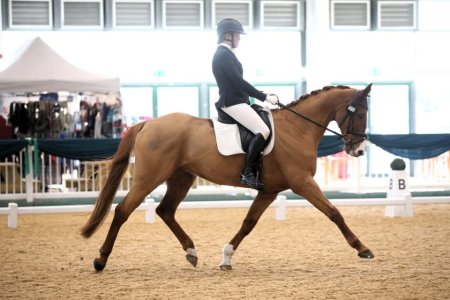
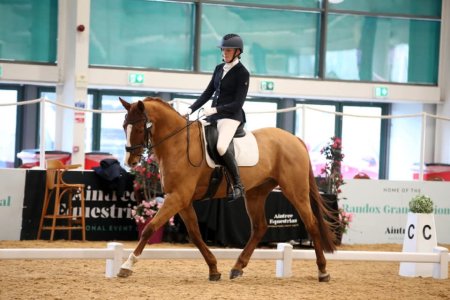
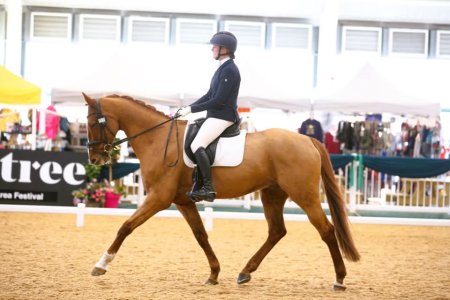
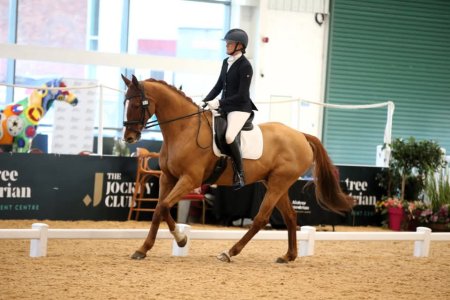


 After all I need a companion for him anyway so… might as well be a rideable one.
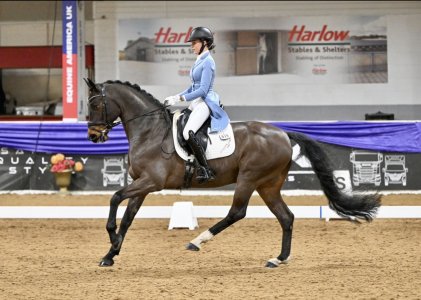


 . Lots of extracurricular movements, but fab doing the actual exercises, never touched a thing and was star of the group.
