
Extreme high head carriage when cantering - outside the box ideas needed!

RachelFerd

Well-Known Member
Joined
24 April 2005
Messages
3,728
Location
NW
www.facebook.com
Slightly unusual query here - I work at a racing yard and have the 'pleasure' of riding a rather tricky gelding at the moment. He is a 6yo gelding, has been running over 2 miles on the flat, is bred to go jumping and will, in time, go jumping - but not until he is better under control, as at the moment he is only going to scare himself.

I don't normally ride him, but have ridden him on the odd occasion for the past two years - he is exceptionally strong and has been known on occasions to run away completely off the end of the gallops, although he has not done this with me on board.

It is not so much that he is brutally strong, but that he insists on holding his head right in your face as he canters - he only lowers it into a normal position when he has reached top speed (which isn't terribly fast as a 2 miler to be fair!!)

I have done plenty of schooling with him on the flat in the arena and he works very well in a beautiful consistent outline in walk and trot. The canter is not bad in the arena - a little flat and sometimes 4 beat, but certainly not out of control or head high. He is also quite manageable (greatly improved) on the small 4 furlong gallop we have on site.

However when he gets to the gallops out on the downs he instantly returns to his old way of going, which is just not pleasant at all! He has been ridden recently in an elastic bungee which works fine in the arena or on the home gallop, but he manages to invert and fight it continually when he is on the 'real' gallops. He usually wears a cross noseband and has had various snaffles, continental gags, ring (chifney) bits, mylers applied over the last year, but nothing has seemed to make a significant difference.

He gets regular chiro treatment and has teeth done every 6 months - there is no known medical reason for this, it seems to be a learned behaviour (he expects to be grabbed up and have his back teeth dragged out of him up the gallops) but we can't find any way to get through to him that he doesn't have to go like that!!

Deep down he is a very sweet and intrinsically lazy horse, so his fighting and running away seem to be at odds with the rest of his character. Not only would him going better probably win him some races (he is often 2nd or 3rd, but has wasted energy by pulling too hard) but it is of special interest to me, as he is an exceptionally stylish and bold jumping horse and if/when he retires I would be interested in taking him on as an eventer.

Any ideas people? Doesn't matter how weird... we are willing to try most things once to get through to this rather confused horse!!
 
Have you tried draw reins? Sometimes very useful for this kind of thing?
 
His usual rider has tried draw reins and said he managed to invert out of them and fought them all the way. I haven't used draw reins on him yet though, it is definitely a possibility - he can't go any worse in them then what he does in the bungee!!
 
He doesn't make a noise and has always run well enough not to consider scoping him. He did however have extensive tooth infection problems as a 3yo (i was not working on the yard at the time) and I think these caused sinus problems at the time - so this could all be part of the initial cause of his poor way of cantering.
 
It sounds fear based? He carries his head as high as possible in anattempt to evade bit pressure (both real and expected)?

I think I'd teach him an entirely different way of stopping, that doesn't involve pulling on his mouth. Probably with a rope round his neck and a headcollar and reins. You could have a bridle and bit with extra reins on too 'just in case'. I'd got for the kindest bit for him you can find (a Neuhe Shule or similar).

Teach him to stop using those aids until he's perfect at it. He won't associate it with pain and should keep his head down.
 
Not all horses that have a wind problem make a noise so that is a possibility although normally the head goes up as the horse needs more air.
Do they just "work" on the real gallop or is there the opportunity to do a steady canter? If so, I would school him up the gallop by trotting away and not going into canter until he's dropped his head and then hack away and increase a little as long as he's taking the contact forward and down. If the trainer will let you do this a bit then he may build the muscles in the right way and start to find it easier - I suspect that he finds it easier and more comfortable to do it wrong at the moment. A vulcanite pelham or kimblewick helps with some or a universal but the walking on, trotting away helps most as then you are taking them forward rather than them getting first run on you.
 
And this sounds completely off the wall and I'm positive on a racing yard you will have already thought of this but has anyone tried a simple sheepskin noseband? Sorry if that makes you roll your eyes as it's probs the first thing you did, but worth a thought out loud just incase it's one of those "oh flipping heck why didn't we think of that" things.
 
I trainer I know (with a "riding" background) galloped a horse she had like this in draw reins. I got him working better at home in the school without too much trouble but out in the great wide open he reverted to form. It took a bit of time (and a light touch, of course) but once he made the change he seemed to accept it and also became more competitive on the track.

For a similar one (although perhaps even worse as he would invert and bog off randomly across Newmarket Heath fairly regularly, I'd heard :eek:) we tried a kineton, which worked fairly well, and an elastic standing martingale, which worked very well. I also sent him back with a particular Myler, which I've used very successfully for jumping horses that invert in front of a fence - I usually find it's only needed for a limited time but it seems to "show" the horses the right way without making them feel restricted. Started both in the school, obviously, then cantering and worked up to galloping. (I think the trainer started out just piling everything on his head, so maybe gravity worked as much as anything ;) )

He also turned out to have some fairly significant - but treatable - physical problems, though, even though he looked sound enough. It took awhile for everyone to accept there was more going on than just him being an *** but he won over 100k for them when they did get him sorted.

If you want more info, drop me a PM. I don't think I'm that far from you so could lend you the bit if you want to try it. It's very "specific" in its effect, so might very well not help you at all, but it works when it works.
 
A completely off the wall and out the window suggestion:D
I once watched Monty Roberts schooling a horse with racing blinkers on and he blanked off the top part of the eye cover - just so the horse could see in front, behind and below but not above. He also recommends this for a rearer as the horse thinks there is something above their head so won't go up.
Hope you find the kind answer to this:)
 
I'd be inclined to work him in a Market Harborough which will at least help to keep his head down in a safe place.

It may be some time before his arena schooling has an effect on his track work.

Does he wear a different saddle for track work than his schooling in an arena - if so maybe the work saddle is uncomfortable when he canters.
 
Lift you hands higher that the bit so he can't brace and poke his head up against your hand. Usually people like to anchor highheaded horse down by dropping the hands and pulling back which only makes them brace up harder. If he's learned this his muscles will be trained to brace up and get about stargazing which will make learning to go with his head at normal carriage harder for him to start with. If you widen you hands as well as lifting them, it'll make it easier to channel him, which will help him with his balance.

What's he like cantering on loose rein? If his head only comes up with a contact, just keep lifting you hands up so the bit can still work correctly in his mouth, rather than nutcrackering him in the roof and pressing down on his bars. It should always be up against the corners of his mouth, with hands never ever lower than the level of the bit. Then hopefully he'll see that a contact doesn't hurt and he doesn't need to brace himself against it.
 
Last edited:
Sorry if I missed this but have you had his back checked. You said that in the arena he is better but will go four time in the canter. This is often a sign of sacroilac problems as is chucking the head up. We have a horse with similar issues that was diagnoised with si problems caused by a hind supensory injury. Horse was only very. Slightly unlevel but made him v sore in the back and si area
 
I would try it in an Abbot Davies and a nose net. I used to ride a horse very similar to that. On the Cambridge Road Polytrack - it set off with it's head in the air and didn't turn! Straight through the rails we went. Anyway I stuck it in an Abbot Davies and a nose net and within a few weeks he was a completely different horse. If you do not have one, the Market Harborough is the same principle. We had a VERY strong horse and he used to go in a nose net and it made a huge difference. What is he like sitting in behind?
 
I prob would have gone done the draw rein route as well- can be helpful for a horse that likes to go- my horse is a bit like that in that he is very sharp, is doesn't happen often but he will put his head up and almost bolt, most put their head down and go, but some put their head up and go which is sort of worse!- mine hasn't done it for ages, and he does have mild hock spavin, so i do wonder if it was becuase of that at times because for the last few years that he has had his hocks routinely medicated once to twice per year his canter has got better and better (he is not a racehorse)..... has your racehorse had his hocks checked out? that would be my only "out of the box" thought!!- and good luck!- also as Tarrsteps has said, a kineton noseband may be useful and worth a try.
 
http://www.gibson-saddlers.com/ProductDetails.asp?ProductCode=557bd

A citation bridle as above is also worth a try. This bridle has been handmade hence the price. I am sure Zilco make them. When I was track riding in Australia, these bridles were used with success on the "pullers". The other thing to try is eye shields. They can make a huge difference with a particularly difficult horse.
 
Very interesting food for thought people!

This is such a frustrating horse, as he is not a 'nutter' by any means, but he has a very specific problem with something quite crucial to his life.

As much as I would love to only ride him in a bitless bridle, I do value my life - I have ridden him in a hackamore around the home gallops, but judging by the response there, I don't think i'd have great chances of pulling up on the downs. Whilst being a 2 miler means he isn't exceptionally quick, it also means that even if i were to let him go through the 1m1f gallop, he could keep going for much further than that - I could be pulling up in the asda car park much further down the road ;)

I do usually make sure he trots away on the gallop - and in fact he will settle and trot nicely without breaking into canter before he is asked - it's literally just in canter that he becomes awkward to ride.

Princecharming - we have tried a sheepskin noseband - I often ride him in one in a 'what the hell, it can't hurt him' way, but it doesn't make any difference (don't think he is particularly interested in seeing where he is going!!)

Tarrsteps - which myler bit is it? Will pm you about it. I had thought about a kineton, but don't have one myself. Have used an elasticated standing in the past which he has leant upwards against. Not as bad as the filly I had to ride last year that managed to rip her chest in half fighting a standing martingale though - she was a little bit lunatic, poor thing.

Evelyn - I do have a market harborough lying around, although think the continental reins on it may well rip my hands apart :( I am not sure whether this is worth trying over and above draw reins - very similar action surely? That said, I have had good results with a MH with my own mare, and she could invert quite badly (although she would never invert in canter, only in trot)
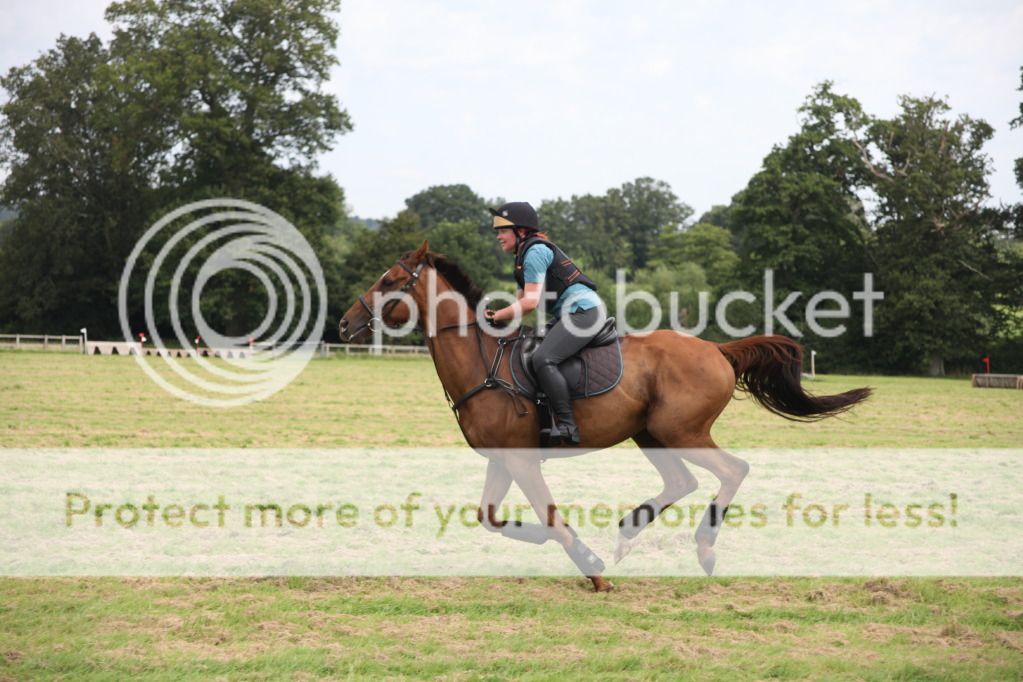
Pheme - cantering on a loose rein in the school he is a little high in his head carriage in dressage terms but not horribly so. Cantering on a loose rein on the gallops = me crashing through a hedge and out onto the main road. If pushed to go quick all the way through the mile he drops his head, but also falls in a heap and gets very heavy on the forehand, so not what we are really aiming for either. He is that high in the head that I wish I could lower my hands and ride him off the neckstrap, but his body position is such that it does lift your hands much too high to be ideal on a galloping racehorse - to put my hands down involves complete contortion and ducking to one side to avoid his head.

Aces High - i definitely don't have an abbot davies sitting around (haven't seen one of them in years!!) how does the nose net affect them? Do you mean a net like one used for headshakers? I have some of these from an old horse of mine... Citation bridle looks like quite a beast - is that not a fairly similar principle to a kineton noseband?

I am quite lucky in that the trainer in question is a horseman and is very concientious that he wants to get this horse going correctly before racing again - however it is a business and the owner will expect the horse to run again at some point, so its a tricky line to tread. He could win so many races if only he thought about what he was doing a little more!
 
It's very cheap to get D's stitched onto rubber reins. I wouldn't be going up there with continental reins! Like I mentioned the AD is very similar to a Market Harborough just minus the pulleys. (I have 2 in my tack room - only used rarely!) If he comes behind the bridle like you've said again that's not really going to help. I'd stick him in behind something - just don't clip heels. I used to ride a little colt that would just stick its head up and run. The AD did really help him. Anyway within racing a nose net has often been used to help with pullers. Yes they are similar/the same as the ones which go on headshakers. The citation is different to the kineton and would be stronger. I must admit, I haven't faired well with kinetons! My one now has bent into rather a peculiar shape! I also have a few stainless steel loose ring snaffles which also have bent rings. The other thing to try is someone different on his back. It's amazing how some horses settle. Another wicked filly I rode a few years ago was a complete WITCH and so strong. I loathed riding her but she adored me and would settle - albeit very hard on the metal. She could out pirouette Darcy Bussel on one hoof! With that filly again sat her in behind and she eventually learnt to settle. It did take a lot of patience and gritted teeth.
 
If he's always ridden a 1/2 tree exercise saddle, I'd try him in a flexible full tree to eliminate the pressure point at the back of the 1/2 tree.

It's something you'd have to stick with for a while though to see a result, as if the 1/2 tree was causing discomfort, it won't go away over night.

The saddle company ones have a flexible full tree and are very comfy to ride in :)

http://www.thesaddlecompany.co.uk/index.php?page=Race_Saddles
 
you would be surprised with brakes on a dr cooks - i went from a pelham with two reins to a dr cooks on fun rides and i had far more brakes in the bitless.
 
Apologies to drag up a very old thread, but op did you ever find the trick to riding this particular horse?
I only ask as I ride one who sounds the spitting image of this (albeit a hurdler) and having been through a variety of bits/bridles/noseband we're running out of ideas..
 
A thread well worth dragging up for all of us who are interested in such problems. Maybe the news is not good news but perhaps you could tell us R.
 
This horse, Indy, was rehomed to me in Dec 2011. He is the most awesome thing ever :)

We went totally back to basics with TarrSteps guidance, I dealt with a couple of physical issues - he's has accupuncture on his neck and is now barefoot among other things - and snaffle mouthed, even out hacking in company. I took it slowly and stayed in controlled situations initially - ie hacked out with my friend who I knew had control of her horse and could go beind/upsides/infront as required - and I worked in the school to teach him a new stop aid which is me patting the left side of his neck and telling him he's a good boy. He will now pull up in company in the open without a fight at all, I barely touch his mouth. Obviously we've done a lot of school work and I don't underestimate how big a difference has been made by him coming out of racing, however he is simply lovely to ride, hacks like a police horse, jumps beautifully and is just a dude.

There was no magical bit/noseband/gadget that fixed him (though he goes well in a Micklem), I just fixed the bits that hurt, taught him to move a bit differently and have got his management and feeding right (that bit took a while!)... I'm aiming to event him one day.

I was very lucky to have TarrSteps to help me every step of the way, it's been an amazing learning experience and I've gained a really lovely horse.

Having a good blast xc schooling!
IMG_2843.jpg


DSC_2743_zps835668e8.jpg

This was him today having a bit of fun in the school.... who needs a bridle at all...? :)
 
I was wondering if you'd seen this! I laughed at the bottom photo. :)

The work and management has brought the biggest change, no doubt. From a purely medical point of view, I'd probably say the acupuncture made the biggest quick improvement, along with bodywork, but Scarlett has worked very hard with this horse and I agree, there really wasn't a magic button. It's been much more about setting new habits, both physical and mental.

He isn't a naturally strong horse at all, quite the opposite. Interestingly, the other two horses I mentioned were also naturally very laid back. I suspect that just makes it easier to see in relief, as with a hot horse people are probably more inclined to put this sort of thing down to temperament.
 
Last edited:
Really interesting to see what happened with this horse - thank you for the update Scarlett!! And well done to you and TS for working through the issues :D
 
just a stab in the dark........but is there any way you and trainer could arrange to take him to the gallops on his own or with just one other quiet companion and walk up the gallops on a loose rein. maybe do a few times over a couple of weeks (or in one week) perhaps with somebody walking beside. this might help him chill out and relax and after a few times perhaps realise that nobodies fighting him..

ok this leads on to the slightly more bonkers idea...but its worked for several horses(all TB) and ponies that i've ridden that were tense and pulled like a train.....when you go up the gallops and he starts pulling rather than to stop him chuck the reins at him ie. gradually slip them through your fingers. it seems absolutely bonkers and scary but it works a0 it makes them think that your are not bothered by it b) they don't feel like they have to fight c)they get bored and d)they relax

try it you never know and good luck whatever you end up doing
 
Top