Feather,a welfare issue?

There's no comparison between a full, cob feather and a part bred, or other native. Cob feathers are absolutely waterproof, but that's because they are so thick. Normal, native feathers don't do an awful lot to protect the skin underneath I don't think. if I had one with mud fever I'd rather be able to see when the skin starts to look a bit inflamed.
That depends which natives you are talking about. However, always best to.let mud dry and brush than hosing it off.
 
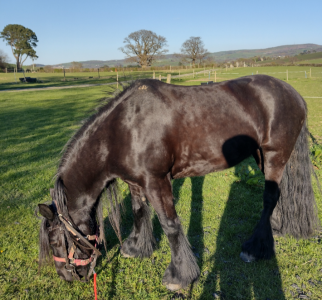
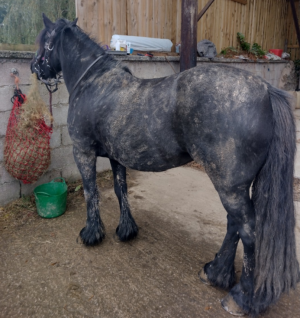
Incredible. I live in probably arguably the wettest muddiest part of the UK and I have 1 gypsy cob and 1 cob x native. My cob x has no feather, quite fine legs and little mane. He’s rugged to the eyeballs as feels the cold now that he’s in his twenties. He tries to avoid the mud but nonetheless it’s impossible and has had a few scabs of mud fever on his back legs this Winter. The other one, the gypsy cob is a youngster and resembles a small yak. I cringe when I see his feather disguised as brown dreadlocks but his hair next to the skin and the skin is perfectly clean dry and healthy. It’s just one of those things. And they do come in to a clean dry stable every night with hay and feed so they’re not by any means not well cared for. And yes I long for the days where the ground has dried up and the nights are lighter where I can run a brush through silky feather, but for the moment this is what I have and I would much rather they managed some time out at grass and be content than be kept in to keep the mud off them.
 
I don't take pride in my horses' day to day appearance. I do take pride in their happiness, mental wellbeing and general manners.

I have one with a ridiculous native mane, one with a long, straggly QH mane, and one in the middle. I trim tails so they don't get stepped on. I keep enough feather to protect the skin, and trim them if I think it's necessary. No mud here though, so that's not an issue.
 
There's no comparison between a full, cob feather and a part bred, or other native. Cob feathers are absolutely waterproof, but that's because they are so thick. Normal, native feathers don't do an awful lot to protect the skin underneath I don't think. if I had one with mud fever I'd rather be able to see when the skin starts to look a bit inflamed.
My Natives have always been finer types (connies and welshies) i've never had a case of mud fever in my natives who were/are feral and muddy, I have however had plenty of mud fever from the finer horses. Same field, same turnout, same grooming routines. at one point I had 2 fine ponies and 2 natives and a traditional (full Feather, mane and tail) and the only ones we had to battle mud fever with were the fine types.
 
Back in olden hunting days they used to say if your horse got mud fever sack the groom.
That’s tongue in cheek btw!
 
Another who would rather see the hair left on if they're going to get muddy- as it offers some protection. I'm not sure when the constant leg washing/bathing became a thing, in my PC days I would have been shot for taking a hose to a horses legs in winter. I was always taught to let mud dry them brush off, as the washing pushes water and bacteria into the skin.
Obviously if they're already seeing skin problems you need to be able to see to treat, but if they're healthy I'd rather leave well alone.
Agree. I don't wash my cobs feather or hose the legs. I do trim them, this shortens them to a stage where they still protect the skin and heels from wet but are not so long and thick that they drag around clumps of mud and never dry out even if in overnight because there's just so much hair. I've spent quite a lot of time this morning grooming and tidying up both my cobs. They are gleaming ( but might roll later 😂),tidy and well cared for, grooming not only creates a bond but it's easy to spot any rubs or such. It really annoys me to see horses rugged up in the autumn and left till spring with the rug only coming off once or twice all winter if the horse is lucky and left standing in deep mud for hours a day. There are several culprits locally.
 
Agree. I don't wash my cobs feather or hose the legs. I do trim them, this shortens them to a stage where they still protect the skin and heels from wet but are not so long and thick that they drag around clumps of mud and never dry out even if in overnight because there's just so much hair. I've spent quite a lot of time this morning grooming and tidying up both my cobs. They are gleaming ( but might roll later 😂),tidy and well cared for, grooming not only creates a bond but it's easy to spot any rubs or such. It really annoys me to see horses rugged up in the autumn and left till spring with the rug only coming off once or twice all winter if the horse is lucky and left standing in deep mud for hours a day. There are several culprits locally.
leaving rugs on for that long isn't a feather or cob issue though - the worst culprit I knew was someone who had polo ponies. They were better off being allowed to grow hairy than have rugs on for weeks on end. Hid all kinds of problems.

Clumps of mud can be cut off with scissors but even if feather is sodden and muddy on the outside it is usually doing a cracking job of protecting the skin.

Clean and tidy doesn't equal well cared for IMO. I see fabulously shiny horses at some livery yards who are stabled for weeks on end at this time of year and would give up their feed buckets to have some time out in my fields getting muddy.
 
Clean and tidy doesn't equal well cared for IMO. I see fabulously shiny horses at some livery yards who are stabled for weeks on end at this time of year and would give up their feed buckets to have some time out in my fields getting muddy.

Exactly this.

At this time of year with working full time, limited daylight, weather, trying to bring him back into full work after a break and some semblance of a life outside of horse's, clean he is not 🙈🤣 I generally have to choose to prioritise having a fit, ridden horse over a clean one. He's still well cared for and happy though 🤷‍♀️

Even being 'smartened up' for my lesson yesterday his socks are still a dubious yellow-browny colour despite using mud protection oil, his tail has a grey-brown mud tint at the bottom which will stay until it is bathed, if you pat his neck (which is not covered by a neck cover) you are likely to get a faint dust covering and his white nose has a mash stain on it ...

Come the Spring, he'll have a bath and scrub up alright again (for a day or so, at least 🤣).
 
At this time of year with working full time, limited daylight, weather, trying to bring him back into full work after a break and some semblance of a life outside of horse's, clean he is not 🙈🤣 I generally have to choose to prioritise having a fit horse. He's still well cared for and happy though 🤷‍♀️

Even being 'smartened up' for my lesson yesterday his socks are still a dubious yellow-browny colour despite using mud protection oil, his tail has a grey-brown mud tint at the bottom which will stay until it is bathed, if you pat his neck (which is not covered by a neck cover) you are likely to get a faint dust covering and his white nose has a mash stain on it ...

Come the Spring, he'll have a bath and scrub up alright again (for a day or so, at least 🤣).
I started my lesson yesterday with an apology for the mud monster! In my defence at 8am his supposedly white feather had just been a bit mucky. When I dived back at 12 to load him he'd obviously been snoozing in the bog by the hedge and his legs were coated. I have appalling water pressure and it wasn't up to the job.

Fortunately muddy legs didn't get in the way of a good lesson and no one had a camera....

He'll be fully clipped out around March - feather off to stop summer itches.
 
I've stopped apologising as they know my level of acceptably clean is lower than other people they teach ;) I did have clean tack though and proudly pointed that out, as it so rarely happens (we'll skim over that most of my tack is biothane or synthetic 🤣)
 
Apart from a weekly plod around the block my Cob x is now retired. For the last 15 years he's been hunter clipped at least 4 times each winter and his mane always kept short and neat. I've always left his feather on to protect his legs in winter but clipped them in the summer. This year is the first year he's not been clipped. I give him a good groom once a week and pig oil his legs. His mane needs a tidy and his tail a good trim. It makes me sad when I think back to when he was a super smart hunter but he's happy and that's all that matters.

ETA: He comes in every night but I never wash legs and he's never had mud fever despite being coloured with white socks.
 
My seriously feathered gypsy cob is as everyone else has said, bone dry and clean within an inch of the skin. Big cob has his clipped off in summer for coolness so they're not full on but still clean and dry at the skin.

My draft is another issue entirely. Bought with medium feather and a million conditions, once I was able to feel inside his feather it was gross, lots of build up of dead skin that was moist and dirty, like putting your fingers into gritty slime! He wasn't clipper or hose friendly at that point so I did what I could with scissors and hot cloths.

I keep him clipped to better treat the cpl but the feather grows fast so he's generally got at least an inch and that's always clean and dry inside now. So I think feather is an excellent protector but once things go wrong under there it makes it much worse.
 
My seriously feathered gypsy cob is as everyone else has said, bone dry and clean within an inch of the skin. Big cob has his clipped off in summer for coolness so they're not full on but still clean and dry at the skin.

My draft is another issue entirely. Bought with medium feather and a million conditions, once I was able to feel inside his feather it was gross, lots of build up of dead skin that was moist and dirty, like putting your fingers into gritty slime! He wasn't clipper or hose friendly at that point so I did what I could with scissors and hot cloths.

I keep him clipped to better treat the cpl but the feather grows fast so he's generally got at least an inch and that's always clean and dry inside now. So I think feather is an excellent protector but once things go wrong under there it makes it much worse.
I used to be near a Shire horse stud and the "grapes" as they called the cpl on the legs of some visiting mares were horrendous.
 
I used to be near a Shire horse stud and the "grapes" as they called the cpl on the legs of some visiting mares were horrendous.
I've only ever seen those on photos. They must be so painful.

There's not enough knowledge about cpl and treatments. I think there's no money in it really, movement and emmolient creams aren't going to make big pharma rich(er).
 
We don’t have a hairy cob (sadly) but I’m another who wonders why people have started worrying about mud so much. I realise it can and does cause issues but as others have said, a clean horse doesn’t mean a cared for horse and a dirty horse doesn’t mean it’s unloved. I’ve had my mare 15 years and she hasn’t had a single bath, not one. And she’s grey!

I think we fiddle too much most of the time, removing their natural protection in a bid to be helpful (or, more often, to suit us rather than them). It’s interesting to read replies from so many of you who do have those lovely feathered steeds saying how the feathers protect the legs, just as they should.

I saw an unhandled, muddy cob listed for sale on FB recently and he looked in great condition, just dirty, and the comments were “poor thing”, “appalling condition” etc. If dirt on a horse is such a welfare issue then I’ll meet some of you in jail soon. 🤣
 
I think that the type of feather makes a huge difference. Silky feather seems ok but the stronger and courser feather seems to allow wet in easier and then traps it against the skin. Last winter my pony mares heels did not dry out, they were too wet to clip and taking most off with scissors gave her a chance. She did not develop any skin issues though despite being wet all the time. Standing and walking about in the lakes did not improve her chances of getting dry naturally.
 
Top