Granulosa tumours of ovary

scribble

Well-Known Member
Joined
13 September 2008
Messages
893
Location
norfolk
Visit site
Has anyone had any experience of this? My mare is very likely to have this or something very similar given her very aggressive stallion behaviour. She is going in next wed for scan, ultrasounds and bloods. If so how long does recovery take following surgery before they can start work again (she doesn’t do well out of work) what did they come back like?
Any advice grateful.
 
Yes, an ID mare I had ages ago had one. She was v aggressive, used to try to mount my other mare, plus guard her & not let anyone near her.

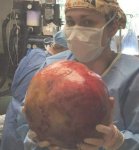
Anyway, they found a tumour She had the surgery & when then got it out, it weighed 15 lbs & was the size of a football. Afterwards, she had to have 6 weeks off work to let it all heal up - they can get a hernia if they do too much too soon. The aggression went, but also the 'good' aggression which I needed for jumping! So as her hormones normalised, she gradually got quieter, & in the end I sold her as a happy hacker.

Not sure if any of that is what you want to hear!
 
It certainly sounds like a granulosa theca cell tumour - I have 'diagnosed' about 5 of them in the past - there is really no other option for mares who start behaving like stallions and get worse. And it's removal or PTS, I'm afraid, because a mare will eventually become dangerous and unrideable. How long recovery takes will depend on size and theskill of the surgeon - but would certainly expect at least 6 weeks. GTCTs can take several years to get big enough to be 'evident' - so if an owner hasn't had it BEFORE the symptoms started, the surgery may end up in the horse being 'different' - or it may just go back to being the horse you knew 4 years ago. This is a HUGE one. I would NOT have liked to try riding that mare when that was under the back of the saddle!!

Granulosa Theca Cell Tumour.jpg
 
It certainly sounds like a granulosa theca cell tumour - I have 'diagnosed' about 5 of them in the past - there is really no other option for mares who start behaving like stallions and get worse. And it's removal or PTS, I'm afraid, because a mare will eventually become dangerous and unrideable. How long recovery takes will depend on size and theskill of the surgeon - but would certainly expect at least 6 weeks. GTCTs can take several years to get big enough to be 'evident' - so if an owner hasn't had it BEFORE the symptoms started, the surgery may end up in the horse being 'different' - or it may just go back to being the horse you knew 4 years ago. This is a HUGE one. I would NOT have liked to try riding that mare when that was under the back of the saddle!!

View attachment 32146
Thanks for that looking back over past 3-4byears she has got worse one year with no seasons showing, then just always been very matey dominant since 4-5 she now 11. Now she won’t let you get on her, bites anyone unpredictably, if another horse or person comes close and annoys her she raises herself up like stallion and hisses and puffs, kicks with back legs esp near side hind. I am going this is what it is as it’s sich a change and we were happily pinging round elementary a month ago and finding it easy going.
 
Thanks for that looking back over past 3-4byears she has got worse one year with no seasons showing, then just always been very matey dominant since 4-5 she now 11. Now she won’t let you get on her, bites anyone unpredictably, if another horse or person comes close and annoys her she raises herself up like stallion and hisses and puffs, kicks with back legs esp near side hind. I am going this is what it is as it’s sich a change and we were happily pinging round elementary a month ago and finding it easy going.

Well that sounds like you'll be lucky. She won't have forgotten what she's learned. One I 'helped' with had been almost unrideable for 2 years and totally dangerous for 6 months. Once she'd had surgery, she was even better than she'd been 5 years earlier! The scans WILL be needed by the surgeon - hope it is him doing them (some vets are USELESS at scanning, believe me!)
 
Can they feel the tumours by manual palpation of the ovaries? (i.e hand up bottom?) Or has to be scan?
I think in some cases you can feel them via rectal exam but generally ultrasound and bloods confirm it. Mine is being heavily sedated for everything. That’s assuming we can get her sedated without either me or the vet being injured.
 
Can they feel the tumours by manual palpation of the ovaries? (i.e hand up bottom?) Or has to be scan?

They'd feel something - but would then have to guess as to whether it was a very big annovulatory follicle - or a GTCT. A large annovulatory follicle can turn a mare into a total cow-bag for a week or two. But she's more likely to kick a stallion's head in - while showing in season - than try to jump him.
 
I think in some cases you can feel them via rectal exam but generally ultrasound and bloods confirm it. Mine is being heavily sedated for everything. That’s assuming we can get her sedated without either me or the vet being injured.
They'd feel something - but would then have to guess as to whether it was a very big annovulatory follicle - or a GTCT. A large annovulatory follicle can turn a mare into a total cow-bag for a week or two. But she's more likely to kick a stallion's head in - while showing in season - than try to jump him.

Interesting - thanks.

Hope it goes ok. It'll be interesting to hear what they find.
 
Had a QH mare who had one when she was 7. Her behaviour changed very quickly, so I guess we caught it early. She kept mounting our other mare, very stallion-like behaviour towards the geldings. About the size of an orange, removed standing by laparoscopy. She recovered really well, back to her normal sweet behaviour very quickly.
 
Top