Grey - Yes or No? Take your pick

Is Kasper grey?


  • Total voters
    0
  • Poll closed .

Paint Me Proud

Well-Known Member
Joined
13 October 2010
Messages
4,166
Visit site
Well I asked for opinions on Kasper's colour, on another forum, to see if they thought he was dun or buckskin and was surprised when the main response was 'He's grey, or at least he will be when he greys out' :eek:

Now I cant get it out my head that he is going to end up grey so I found a company online who will conduct genetic tests on hair for just £20 :D

So tomorrow Kaspers sample will be heading off to the lab.

Take your pick, what do you recon......

Grey or nay?

A few photos from yesterday to highlight his current colour
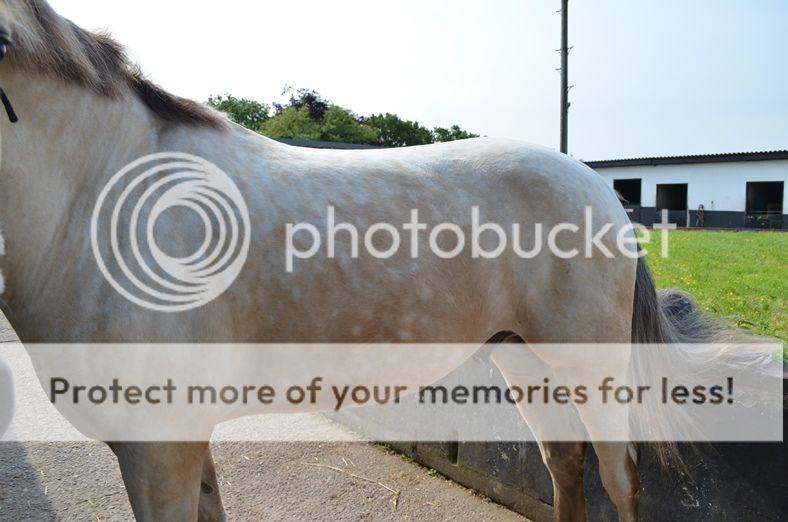


You can make out his blanket markings in this one


His face - what they were all basing the grey idea on, along with his tail colour.


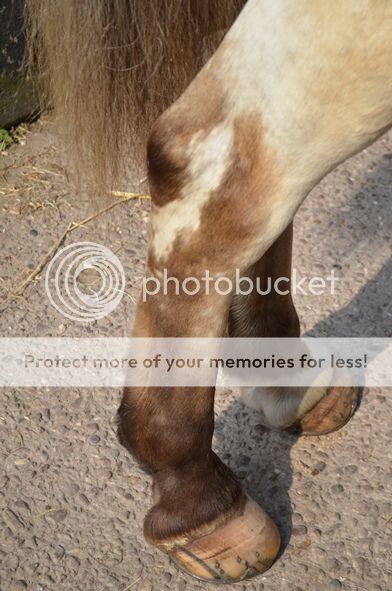
His leg colour, same on both hind legs.
 
He is buckskin (cream and bay) going varnish appy. At the moment he looks snowflake but he may get much lighter over time. Appy will cause the grey/white hairs in the mane and tail too.
When a horse greys out they will become over-pigmented, even a light colour like palomino will go very dark grey or sooty looking before they start to get lighter again, if he was going grey he would be much darker and sooty looking.
You can also see the pink mottling on the skin round his nose that appies get, and the pink sclera.
 
Last edited:
yes he is definitely appaloosa cross, we think ID but no actual recorded breeding.
He has all the appy characteristics, mottled skin, stripped hooves, white scolera etc.

Didnt realise greys always go darker first?
 
Grey for me too
He could have a cream gene which will make him a yellow grey as opposed to a white grey. Cream dun highlands with no grey in them look like grey ponies as they get older but if you look closely you will see the top of the milk look not the clear white look of a grey
 
Bought a liver chestnut yearling not a white hair on its body by the time it was six it looked like a rocking horse and is now white
 
Cant answer your question but my homebred appaloosa had all the appaloosa characteristics, stripey hooves, mottled pink skin, pink skin under white coat on body and sclera and he is still definitely grey.
 
He is buckskin (cream and bay) going varnish appy. At the moment he looks snowflake but he may get much lighter over time. Appy will cause the grey/white hairs in the mane and tail too.
When a horse greys out they will become over-pigmented, even a light colour like palomino will go very dark grey or sooty looking before they start to get lighter again, if he was going grey he would be much darker and sooty looking.
You can also see the pink mottling on the skin round his nose that appies get, and the pink sclera.

Not always.

My lovely grey skipped that and went straight to white (from chestnut) by the age of two and is now growing more and more chestnut fleabites.

Flossgrazing.jpg

Here she is at two years old (please ignore the muddy hocks and the mark on the knee as they are stains not pigment :p).

Back to Kasper (great name BTW - the same as my little mau cat :) ), I think that he's negative for grey (I can't see any sign of his face greying out and around the eyes often goes grey first). He does look like he has LP. It will be intereting to find out if he has one or two copies of LP as that will effect the 'appaloosa patterns' that he can be (because few spots and snowcaps are homozygous for LP, where as Varnish, blanket, leopard and near leopard are heterozygous).

I don't understand the 'he has a grey tail so must be grey' thing. The horse below doesn't have a grey gene (it's caused by sabino and called Gulastra plume) and you could certainly describe his tail as 'grey.'

Seamus.jpg
 
Cant answer your question but my homebred appaloosa had all the appaloosa characteristics, stripey hooves, mottled pink skin, pink skin under white coat on body and sclera and he is still definitely grey.

The one in your avatar? Have his spots greyed out?
 
Sorry, I'm just typing my thoughts as they pop into my head - his legs are very brown (are they brown IRL or is it the photo?) and he is a very pale buckskin. Cream alone on a bay would result in black legs as cream affects red pigment (phaeomelanin). I'm just wondering if he could have two dilution genes? Cream + another dilution gene that dilutes black pigment (eumelanin)?

It's not champagne as he'd have pink skin with black spots rather than black skin with pink spots.

I'm looking forward to his DNA results already - he's a bit of a mystery! :D
 
Sorry, I'm just typing my thoughts as they pop into my head - his legs are very brown (are they brown IRL or is it the photo?) and he is a very pale buckskin. Cream alone on a bay would result in black legs as cream affects red pigment (phaeomelanin). I'm just wondering if he could have two dilution genes? Cream + another dilution gene that dilutes black pigment (eumelanin)?

It's not champagne as he'd have pink skin with black spots rather than black skin with pink spots.

I'm looking forward to his DNA results already - he's a bit of a mystery! :D

Yes they are brown in real life :)

Silver buckskin maybe??
 
Last edited:
Silver is possible. Working out their genotype from their phenotype, is an educated guess until you actually have the DNA results in your hand. ;)
 
are his white spots/patches genuinely white (unpigmented) fur?

I only ask because I once met a coloured mare that had white patches and dusky cream patches because she had a cream dilute gene that had only affected her pigmented fur. She also had a mane and tail that were very much grey.
 
Silver is possible. Working out their genotype from their phenotype, is an educated guess until you actually have the DNA results in your hand. ;)

well I've only had him tested for grey, cant afford to have all the other tests so we will just have to guess. :o
 
are his white spots/patches genuinely white (unpigmented) fur?

I only ask because I once met a coloured mare that had white patches and dusky cream patches because she had a cream dilute gene that had only affected her pigmented fur. She also had a mane and tail that were very much grey.

I would say they are very very pale cream, although having only had him for two days I would need to have another look tomorrow to be sure! ;)
 
are his white spots/patches genuinely white (unpigmented) fur?

I only ask because I once met a coloured mare that had white patches and dusky cream patches because she had a cream dilute gene that had only affected her pigmented fur. She also had a mane and tail that were very much grey.

You need to think of it the other way around. It's not that cream doesn't affect 'pinto/unpigmented/whire' patches, the patches completely take away the pigment (even if it's diluted/modified pigment).

Imagine that the pinto/coloured patches are white paint, so that you can wash it off - what colour would the horse be then?
 
You need to think of it the other way around. It's not that cream doesn't affect 'pinto/unpigmented/whire' patches, the patches completely take away the pigment (even if it's diluted/modified pigment).

Imagine that the pinto/coloured patches are white paint, so that you can wash it off - what colour would the horse be then?

Yes absolutely, I'm aware that that is how the colouring works. However, I think I'm being a bit dense (or it's just late) because I don't quite understand the question...Is there any way you could rephrase it for my tiring brain? (by 'the horse' do you mean Kasper?)
 
My old mare (who is now 18) by Java Tiger (grey tb) & out of my grey connie was bay when she was born, she then turned strawberry roan until she was 3, then grey-roan, then pure grey...she is now flea bitten grey!
 
Oh rats, now I want to do a detailed description of why Roan and Grey are not the same thing... with pictures!

Oh Pipsqueek - you meanie! :p ;)
 
No, I meant any pinto/coloured horse.

Sorry, I didn't mean to imply that you didn't understand.

No, no that's fine, I don't understand much (though am very interested), but I did know that ;)

So you were saying 'you have to consider what the base colour of the coat is'..?

TBH I hadn't noticed the brown points on his legs or considered that the base colour of those points would almost certainly be black (so a single cream dilute wouldn't do it - that makes black smokey doesn't it?). All I was angling at was whether it was possible that his appaloosa parentage had created white spots/patches on Kasper instead of there being grey present or a dilute acting on a colour.
 
Last edited:
Top