
High worm burden

exracehorse

Well-Known Member
Joined
24 December 2011
Messages
2,143
Visit site
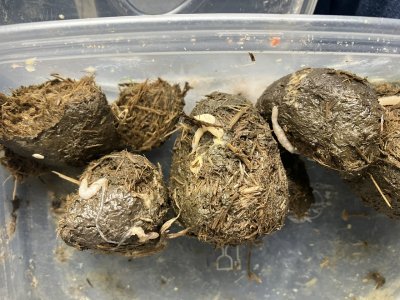
Mare came as a companion in the summer. Saw some roundworm in poop. First time I’ve ever seen worms in any of my horses and she was wormed. All were treated on vet advise incase cross contamination. Others were fine. And counts came back low. No more were seen. Fast forward to this week, they have been in every dropping. Lots of them. I poo pick twice a day. Spoke to vet. Took sample to practice. She has a 800 count. They gave me another wormer. To re test in 14 days. Vet said she could be resistant to treatment. If that’s the case, what do you do? To get rid of them. If this is what I’m seeing in her droppings. Does that mean she has a belly full of them ? Obviously worried about colic too. Anyone else had this ?
 

Attachments

  • IMG_2904.jpeg
    IMG_2904.jpeg
    450.4 KB · Views: 37
Westgate were super helpful with my young foster filly who kept returning high counts. They devised a protocol to help her.

They even posted about her, with my permission, using an assumed name for her as she still belonged to the charity at that time.

She went off to her permanent home after that and her new owner was fully briefed about her worming history and how important it was to keep on top of her worming/worm counts.

 
Speak to a SQP at your nearest feedstore or online, but if she's resistant, it's to that particular drug class, so you need another drug class that treats roundworm. What did you use? More than likely just her affected, as it's often 1 or 2 horses in a herd that carry the burden.
I can’t remember the first wormer. This time they have given me a different one VIRBAC ERAQUELL
 
I had one that had a high fec, 3500, turned out he had Cushings. Apparently it's common for them to have high worm counts with Cushings.

It could be resistance to wormers which is more common than we think, but might be worth bearing in mind.
 
I had one that had a high fec, 3500, turned out he had Cushings. Apparently it's common for them to have high worm counts with Cushings.

It could be resistance to wormers which is more common than we think, but might be worth bearing in mind.
She’s only young. I’ve had two golden oldies with Cushings. But thanks for info and I didn’t realise that it was common for the two to go hand in hand. She was still with her boy who was about two years old, I think. When I picked her up.
 
I remember the lady at Westgate telling me it's not uncommon for youngsters to have a high worm count and as long as I kept on top of it, it should taper off as he got older. This turned out to be true and after the first year or two he rarely had a count over 50.
 
When I got Reggie he was FULL of worms. It took several rounds of worm treatment to get him clear (or as clear as possible) Westgate gave me some really good advise about times of repeat worming to break the production cycles. I can't remember now the exact details and would want to give miss information, but I definitely recommend giving them a call.
 
She’s only young. I’ve had two golden oldies with Cushings. But thanks for info and I didn’t realise that it was common for the two to go hand in hand. She was still with her boy who was about two years old, I think. When I picked her up.
It's common for youngsters to have a high count, so that's probably your answer, or resistance to the wormer used.

I'd never rule out Cushings, only because I know of two who were 5 and 7 when diagnosed. It's not common but does happen.
 
I am sure you will be able to sort out this problem. 800 epg is only a medium count and entirely normal. The worms in your picture look like pin worms anyway which are not at all related to the worm count which is for redworm. If you wormed with ivermectin then that’s not very good at treating pinworm. Get some informed advice and don’t worry.
 
Young horses have little of their defenses against worms so if they are grazed on land with infections, they will pick up everything. Their bellies are full of roundworm, which don't show up on worm counts usually but of course you tend to see them like spaghetti. Relatively harmless and easy to clear. I always worry more about red and tape worms which might try to get a bit too cosy at this time of year as the temps drop. 800epg does not worry me in a warm wet autumn.

Def call Westgate and get a protocol to help your horse.

And of course in future, part of your new horse isolation protocol needs to include a tapeworm count + and fe count (+ I always worm new horses before herd intro, irrespective of the count as it won't pick up everything, it just warns me if they are in the 5-6,000 range as we do steroid-supported worming for such high counts now after a nasty colic incidence). These days we do strangles blood test pref before yard arrival, then 14 days min medium-biosecure isolation. (although the last horse decided to jump out over two 6 ft fences - took them like a bounce - to join the herd on day 13, little b*gger!)
 
This may not be practical for you - but I had a horse with consistently high counts, but cross grazing with sheep has really helped,
I have a few sheep of my own I rotate, but often sheep owners are happy to help.
 
I am sure you will be able to sort out this problem. 800 epg is only a medium count and entirely normal. The worms in your picture look like pin worms anyway which are not at all related to the worm count which is for redworm. If you wormed with ivermectin then that’s not very good at treating pinworm. Get some informed advice and don’t worry.
Vet said round worm. Normal count was 0-200. 500 being high. So 800 was very high. Hopefully the re test will help. Was bit worried after the call. As they talked about resistance and she could be a candidate x
 
I’m not normally one to override a vet’s advice, but please listen to people like Westgate who deal with this day in/day out as part of their work.


Low worm count = 0-175 epg
Medium worm count = 200-1175 epg
High worm count = 1200+ epg

That cheerful face pictured in the link above is Kristy from Westgate, who was so helpful in devising and monitoring the worming program for my rescue foster filly with the persistent worm burden.
 
Top