Historical question about saddles: French and English. And a qn about a "horse"

Keith_Beef

Novice equestrian, accomplished equichetrian
Joined
8 December 2017
Messages
13,038
Location
Seine et Oise, France
Visit site
Hoping that somebody on here has some knowledge about saddles going back to the 19th century...

I'm reading "Principes de dressage et d'équitation" by James Fillis, published in 1890 (download for free here). On page 25 he states:

Je crois avoir employé, le premier, la selle plate pour dresser et faire de la haute école.
Je commence toujours à faire monter mes élèves en selle française, de préférence à la selle anglaise couverte.
Avec la selle française, on est, pour ainsi dire, comme emboîté; il n'y a, par conséquent, ni gêne ni crainte à avoir.

My quick and dirty translation would be:
I think I am the first to have used the flat saddle for schooling and for "haute école".
I always start my pupils in a flat French saddle, rather than a covered English saddle.
With the French saddle one is, as it were, locked in: as a result there is neither discomfort nor anything to fear.

I tried googling for comparisons of English and French saddles, but that found me far too much stuff about contemporary English and French saddle manufacturers; googling for 19th century saddles generally found me antique dealers.

So first question is: what was the difference between French and English saddles back then?

But I stumbled upon the site of a dealer in second-hand saddles, with nice photos of a variety of saddles, variously described as "plate" (flat), "semi-semi creuse" (half-half deep), "semi creuse" (half deep) and "creuse" (deep)... These are shown on what I suppose might be called a "horse": it looks almost like one of the vaulting horses we used for gymnastics at school.

Second question(s): is this what it's called, and do you know where they can be found?
 
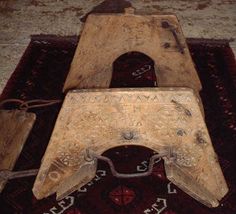
I Googled "18th Centuary European Saddle" and got this...

483ad8c6646c927c5bc6129c8392c465--carved-wood-th-century.jpg


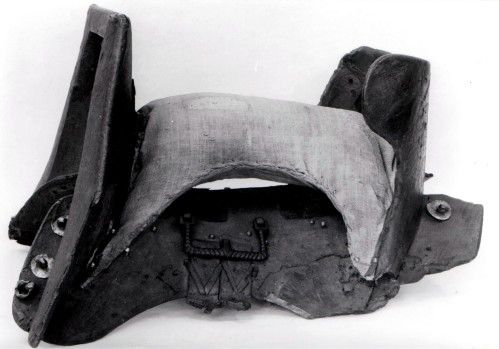
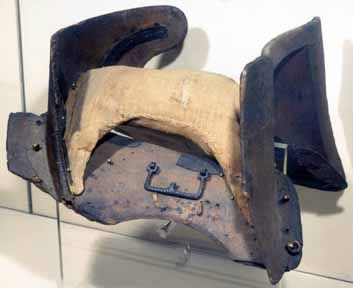
Then I went older in the search and got this...

5185e8f3ebfb0c30c05f8afb931a8f21.jpg


Which had French with it that seems to indicate it was an old military saddle...

L'APPHM est une association d'étudiants et de jeunes professionnels, spécialistes du patrimoine militaire (de l’Antiquité à nos jours), de la culture et de la médiation, réunis dans un seul but : valoriser le patrimoine militaire en participant à...
 
Last edited:
I Googled "18th Centuary European Saddle" and got this...

483ad8c6646c927c5bc6129c8392c465--carved-wood-th-century.jpg


Then I went older in the search and got this...

https://i.pinimg.com/564x/51/85/e8/5185e8f3ebfb0c30c05f8afb931a8f21.jpg

Which had French with it that seems to indicate it was an old military saddle...

L'APPHM est une association d'étudiants et de jeunes professionnels, spécialistes du patrimoine militaire (de l’Antiquité à nos jours), de la culture et de la médiation, réunis dans un seul but : valoriser le patrimoine militaire en participant à...

This is curious...

In your post, I saw your line 'I Googled "18th Centuary European Saddle" and got this...' followed by the picture of the "wooden saddle", then nothing more.

I clicked to reply intending to put "that looks to me like a pack saddle, the carving looks French, typical of eastern regions (Jura, Savoie)"... and in the reply box I see more text from you.
 
This is curious...

In your post, I saw your line 'I Googled "18th Centuary European Saddle" and got this...' followed by the picture of the "wooden saddle", then nothing more.

I clicked to reply intending to put "that looks to me like a pack saddle, the carving looks French, typical of eastern regions (Jura, Savoie)"... and in the reply box I see more text from you.


HaHa, I added more!


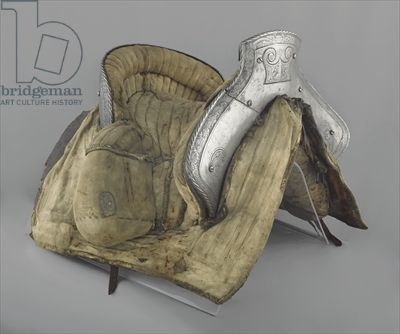
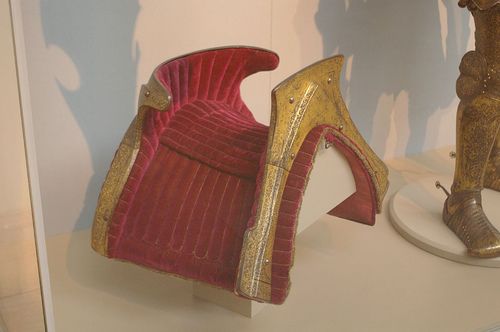
Jan Mullen saved to armour
This complete set of saddle steels is part of an unusually large armor garniture (acc. no. 27.159.1), which contains pieces for use in battle and for the tilt in both the Italian and German fashions. The tilt was a tournament fought on horseback between two opponents armed with lances and separated by a lengthwise barrier
Less
 
Drifting WAY off-topic from my question of 19th century saddles...

Your second picture:

5185e8f3ebfb0c30c05f8afb931a8f21.jpg


Which had French with it that seems to indicate it was an old military saddle...

is the funeral saddle of King Henry V of England, buried in 1422.


So, almost five hundred and seventy years too early...
 
the english were noted for riding in the hunting seat and used saddles with flat seat and often lined with wool or serge, the saddles were well stuffed in the panels, they were very plain looking and accommodated the forward seat, i suppose a lot of foreign saddles were used for riding in a more upright position body wise whilst schooling and also many were influenced by the military and working horse needs
 
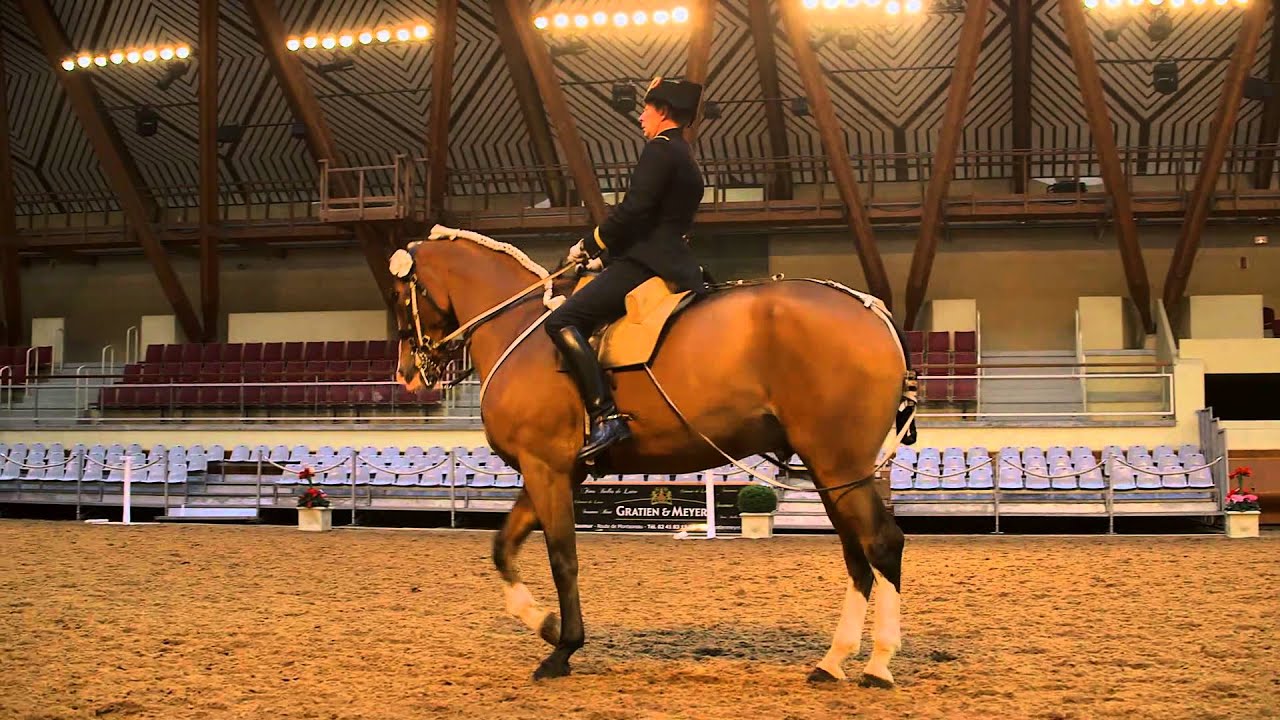
If I remember rightly Fillis was working in what we today would call classical or baroque riding ('French School' after Gueuriniere?) so I would guess that he is talking about riding a horse in a baroque/Iberian style saddle from the start rather than starting it in a old hunting-style english saddle that he would have seen in UK then moving onto the baroque saddle for more advanced work.

The 'horse' in the pic is a style of saddle rack that is used by tack shops so that their customers can try sitting in a saddle before purchase.

PS Elwyn Hartley Edwards's book on bits and bitting has a neat chapter on the history of the various styles of riding that developed all over the world and the illustrations show the different styles of tack that evolved from them.
 
Last edited:
If I remember rightly Fillis was working in what we today would call classical or baroque riding ('French School' after Gueuriniere?) so I would guess that he is talking about riding a horse in a baroque/Iberian style saddle from the start rather than starting it in a old hunting-style english saddle that he would have seen in UK then moving onto the baroque saddle for more advanced work.

The 'horse' in the pic is a style of saddle rack that is used by tack shops so that their customers can try sitting in a saddle before purchase.

PS Elwyn Hartley Edwards's book on bits and bitting has a neat chapter on the history of the various styles of riding that developed all over the world and the illustrations show the different styles of tack that evolved from them.

Thanks, that's very useful.

I found a copy of the 1902 translation of Fillis's book; in that, the passage corresponding to what I posted above is:

I believe I was the first to use a plain flap saddle for high school riding. I always begin with a pupil by putting him on a French saddle in preference to an English one, as he is able to get better into it, and is consequently more at his ease.
 
Thanks, that's very useful.

I found a copy of the 1902 translation of Fillis's book; in that, the passage corresponding to what I posted above is:

I believe I was the first to use a plain flap saddle for high school riding. I always begin with a pupil by putting him on a French saddle in preference to an English one, as he is able to get better into it, and is consequently more at his ease.

Ah!
now I would read that as 2 separate statements - ie Fillis himself rode high-school in an 'english' saddle without the blocks and high cantles etc
and that secondly he used French 'baroque' saddles for his pupils. (Maybe, or maybe not, a modern equivalent of the latter would be starting children in a cub saddle with blocks and balance straps to get their confidence up before refining balance and seat on a more minimalist saddle?)
 
Ah!
now I would read that as 2 separate statements - ie Fillis himself rode high-school in an 'english' saddle without the blocks and high cantles etc
and that secondly he used French 'baroque' saddles for his pupils. (Maybe, or maybe not, a modern equivalent of the latter would be starting children in a cub saddle with blocks and balance straps to get their confidence up before refining balance and seat on a more minimalist saddle?)
That's how I read it. My French isn't great but I thought Keith mistranslated "Je commence toujours à faire monter mes élèves en selle française, de préférence à la selle anglaise couverte" by saying "flat French saddle". The flat saddle referred to in the previous line was, presumably, an English style saddle.
 
That's how I read it. My French isn't great but I thought Keith mistranslated "Je commence toujours à faire monter mes élèves en selle française, de préférence à la selle anglaise couverte" by saying "flat French saddle". The flat saddle referred to in the previous line was, presumably, an English style saddle.

You're absolutely right. My translation was too quick and too dirty! Mea culpa!

So Fillis starts a pupil in a "selle plate", or "flapless saddle"...

My translation of "flat saddle" might work if we imagine the rider's leg being "flat against the horse's flank, with no flap between leg and flank", rather than thinking of "flat" as referring to the seat...
 
Thank you. And previous posters. Excellent thread.
Tho judging by my grandfather and friends in UK Field Artillery, British didnt ride or race cross country in forward seat till aftter WW1? And the muscles of the horse are at the front, to pull them along. The opposite of now.
 
Hellooo! Yes, special area of interest here. The "English" saddle would be the flat saddle (like a very old hunt or steeplechase saddle), and the French would be probably the selle a picquer (sp), not unlike the one used today by the Cadre Noir (and similar to the saddles still used in Portugal). I have an original copy of Fillis' book with illustrations, and that's what they look like to me.

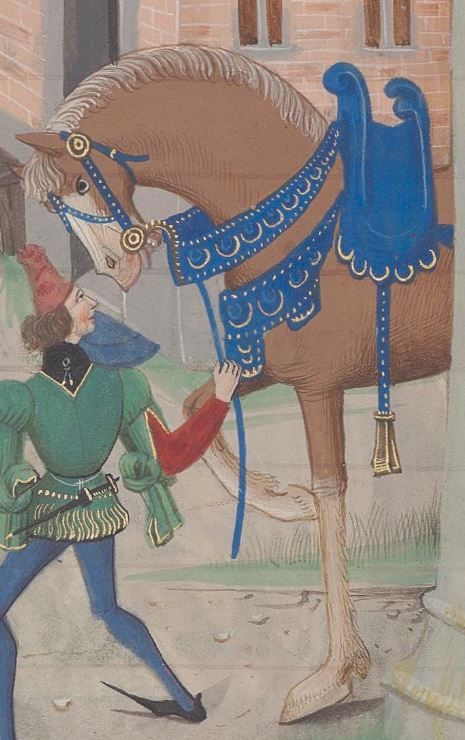
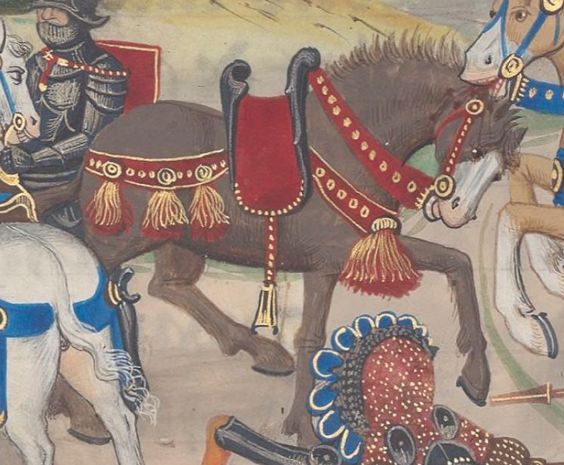
The pictures of war and jousting saddles are medieval and very much too early.
 
that rack the saddles are on is a normal saddle stand for storing your saddle between uses, i have seen them for sale in saddlers, they are used to keep the panels of the saddle in a normal position so as not to distort whilst not being used, quite commonplace
 
Top