Horse swishes tail when asking for canter

Jo8082

New User
Joined
19 March 2025
Messages
5
Visit site
Hi All,

I just want some options, please. I went to view a horse at the weekend, and when looking back at the videos, I saw the horse swish her tail when asking for a canter. This also happened on another video that I've seen of someone else riding.

The horse is ok, and I'm after getting it vetted, but I've lost a lot of money on vetting's of other horses already.

What do you think? Should I walk away?

The horse is an Irish draught and is a 12-year-old schoolmistress.
 
I would consider the following:
- who is selling the horse, have you asked for opinions on one of the dodgy dealer fb pages or is it a private seller
- some dealers use the same saddle for every horse which can cause some discomfort
- is the horse on the original or a copy passport
- if original, google the horse's name and depending on what claims are being made about prior history, look on bd/bs/be are there gaps in the record or a drop in performance
- does the reason for the horse being sold seem genuine
- have you had anybody experienced look at the videos, do you have a trainer who could help you
- how is the musculature of the horse particular the hind quarters, is there any evidence of muscle wastage, is the pelvis level, is there a jumpers bump
- does the horse naturally stand square, not camped under, irl not sales photos
- what does the hoof pastern angle look like

I've lost a lot of money on vetting's of other horses already
Me too, but vetting costs are not nearly as much as buying a horse that needs veterinary investigations and treatment and may finish up being not rideable.

Good luck, I haven't found buying a horse an enjoyable experience recently!
 
I'd exercise caution.

Especially if it's got a swishing tail landing after a jump. That's completely off putting for me as this is an evasion.

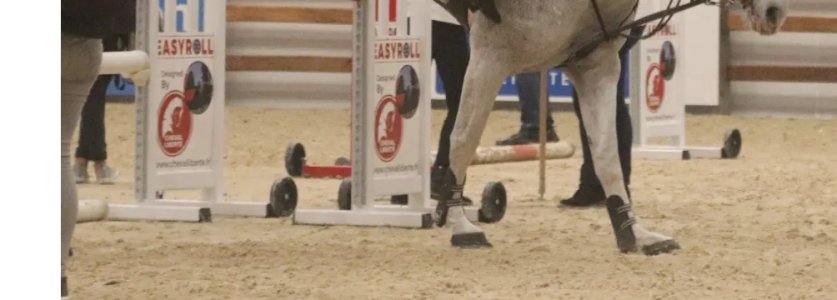
.and if the horse doesn't land with its front legs in a line.
 
Thank you. I've had one person look at it and say it looks like ulcers, as it's only on the canter transition.

They have excellent reviews on the doggie dealer website (it's their horse). I know vetting prices are better than buying something that's unrideable. But it's eating into my horse budget if this one fails too.

Does anyone have a good eye that would be willing to have a look at the video?
 
I have one who finds flatwork really hard. They will swish their tail when you are really focusing on them being sharp off the aids and correct in the contact and straightness. When I experiment and let them just go round how they want then tail doesn’t move, it also doesn’t move hacking, lunging and it doesn’t move jumping so it’s never worried me.
 
I have one who finds flatwork really hard. They will swish their tail when you are really focusing on them being sharp off the aids and correct in the contact and straightness. When I experiment and let them just go round how they want then tail doesn’t move, it also doesn’t move hacking, lunging and it doesn’t move jumping so it’s never worried me.
Ok, thank you for this.
 
Does it tail swish for both canter leads? And is it only when striking off or does it swish constantly throughout or at intervals during the canter, when doing circles or corners etc?

If it's only during the transition it could be it's a bit weak and unbalanced especially if only on one rein.

It may be worth asking for videos of it being lunged and also free schooled to see if it favours a rein/leg when cantering without a riders aids.
 
Does it tail swish for both canter leads? And is it only when striking off or does it swish constantly throughout or at intervals during the canter, when doing circles or corners etc?

If it's only during the transition it could be it's a bit weak and unbalanced especially if only on one rein.

It may be worth asking for videos of it being lunged and also free schooled to see if it favours a rein/leg when cantering without a riders aids.
The tail does swish for both canter leads, but only when striking off, not when in canter. I suppose it could be balance, but I will see if I can get videos of lunging and hacking.
 
My now retired lad used to tail swish going into canter as he found the transition hard - I had lots of tests etc run on him as I was concerned about something sinister afoot, but the vets assured me that it was due to him finding going into canter hard. Once in canter he didn't swish it once :) I would personally put it down to potentially finding the transition hard - however as you are buying and this is a new horse to you, it wouldn't hurt to ask the seller and owner a few questions about it:)
 
I'm happy to look for you. Not sure if you can use the PM system until you've made 10 posts but if you cant pm I've got an email address that I can post here and it doesn't matter in the slightest if its spammed to death etc.

And just so you know tail swishing when landing after a jump is not and will never be an evasion so disregard that :)
 
If they are younger/less balanced I thought they often preferentially swapped onto the lead they find easiest after a jump, which would itself depend on their handedness.
Agreed but I was thinking of something with experience as OP mentions that the horse is a schoolmaster. Also why I wasn't certain on the replies regarding difficulty with the transition to canter if a schoolmaster but I'm not experienced in that field!
 
and if the horse doesn't land with its front legs in a line.


I think you have the wrong end of the horse and the wrong side of the jump? The front feet should always land one at a time and split apart. The horse should take off from both hind feet at the same time an equal distance from the jump if jumping square on.

If it routinely takes off with more pressure from one hind foot, or a fraction later from one hind foot, or the hind feet aren't an equal distance from the jump on take off then I'd probably give it a miss.
.
 
Last edited:
My old mare used to do it fairly often on transition, never had a days lameness or illness with her other than Lymes disease but that obviously totally unconnected. I had her from the age of 10, she had been a hunter up until then so she was thoroughly vetted before I bought her and neither the vet I chose in the seller's area or my own vet when I got her home could find any reason for it and it was never an issue to be honest.

But, I never used her for anything much other than XC hacking, jumping logs etc. in the forestry and little or no schooling other than what we did out and about riding, so probably a much lighter work load than you might want the horse to do. 🤷‍♀️
 
running-home.gif
 
Not sure why everyone is so desperately keen to discredit me all the time, and make fun of me. 🙄

The photo was from an article on the internet suggesting that horses that land in the way the horse in the photo does have a

Because you are wrong, again. No one was rude, no one bullied you, but when you are wrong you are going to get corrected as otherwise you spread misinformation, especially to people who have no idea of past posting history, and the fact you copy and paste from google a significant amount of time.
 
Not sure why everyone is so desperately keen to discredit me all the time, and make fun of me. 🙄

The photo was from an article on the internet suggesting that horses that land in the way the horse in the photo does have a physical issue.

You can suit yourself whether you believe me or not, I don't give a rats ars*. 🤣
I've genuinely never seen a horse land with its forelimbs parallel though. So it has nothing to do with discrediting you per se, just my own observations.

The chestnut horse in your post is clearly landing very badly, for whatever reason.
 
Top