How are you managing?

Last August one of my mini shetlands came down with awful lami first time in 10 years. He's been off the grass ever since with turnout in school (currently over night) and stabled. In hand grazing has been re introduced and I plan on keeping going like this until towards the end of the year when hopefully I can start to introduce time in the field again.
 
The owners choice. Unethical in my opinion, and is still turning out but if you knew the owner you'd just be pleased she was agreeing to have it done at all. Very sad for the poor horse
Poor poor horse. Not much else to say 😡
 
The owners choice. Unethical in my opinion, and is still turning out but if you knew the owner you'd just be pleased she was agreeing to have it done at all. Very sad for the poor horse
Gosh that’s just horrific, poor horse.

I’m debating whether to keep to in during the day 6am - roughly 6pm or swap to the opposite. It’s only slightly quicker for me to just put out in the morning however I’ve read so much saying sugar levels are lower during the night, plus he’s not going to be at risk of sun burn and flies. I hate that he’s in for 12 hours of the day either way but that’s just how it has to be now I’m back at work, only other option is fully out which I don’t want to do obviously.
 
Gosh that’s just horrific, poor horse.

I’m debating whether to keep to in during the day 6am - roughly 6pm or swap to the opposite. It’s only slightly quicker for me to just put out in the morning however I’ve read so much saying sugar levels are lower during the night, plus he’s not going to be at risk of sun burn and flies. I hate that he’s in for 12 hours of the day either way but that’s just how it has to be now I’m back at work, only other option is fully out which I don’t want to do obviously.
Would love to bring mine in during the day but my stables get so hot, and with the temps rising they will be baking soon. I don't want to spoil their current routine. Least there is usually a breeze outside.
 
Would love to bring mine in during the day but my stables get so hot, and with the temps rising they will be baking soon. I don't want to spoil their current routine. Least there is usually a breeze outside.
I’m lucky our stables are lovely and cool and very well ventilated so he’ll probably prefer to be in during the day with the temps going up
 
Loathe to use muzzles I know he'll be furious and hate it - but should I be trying this? Any recommendations?

I've read about the Flexible Filly but realistically I suspect there is a high chance he will have whatever I get him off. Pink and white muzzle, easily gets rubs.
When I was getting weight off my little native, he wore a muzzle when he went out. It rubbed him a lot, so I bought the next size up and padded the inside with foam, then covered it in fleecy fabric. He couldn't get it off as I used to plait the headpiece into a bit of mane, and with the foam he didn't get rubbed. He is 11hh and ended up in a cob sized muzzle!
Another thing I did to get the weight off was mix straw with his hay, while he was kept in during the day. It gave him plenty to chew on but the calories are very low. That regime got a pony who weighed 283kg on the weightape, to 230kg, in 6 months. He now weighs about 200kg so it just shows how fat he was.
 
Where the horses have been out 24/7 since the beginning of April, theres hardly any grass and the ground is dry and cracked. Usually, the two prone to lami are turned out in a grassless turnout pen until the end of spring, and then out during the summer nights. This year they've had much more time out, and I'm having to feed hay to top up as my poor doer and senior are loosing weight.
When the rain comes, I'm sure it'll be a different story.
 
YO sent a message last night to say they’ve closed the back part of the field. We had them grazing in 3 - the winter field and 2 summer ones. The summer ones were opened a few weeks apart so the second half of it had a crazy amount of grass. Thankfully that part is closed now so they are on much less grass but still have lots of space to move. So it’s a bit less worrying but obviously we still need to keep a close eye on them all. Temperatures have cooled here and it feels very “damp” at night and in the morning which is probably why the grass is still green. Ground is solid though but the fields they are in now are rather parched in most parts
 
My two are slim sporty types and I have very limited land so I dont have an issue (I have to supplement my lack of grass year round with hay). If I had fatties Id do a track system to keep them moving and would give hay instead to make up for the grass.
 
My two are slim sporty types and I have very limited land so I dont have an issue (I have to supplement my lack of grass year round with hay). If I had fatties Id do a track system to keep them moving and would give hay instead to make up for the grass.
I'm in the same boat as you.....luckily. One tb and a retired wb, both slim jims. I have to compensate the grass with hay all year. Not feeling too down about it now with all the horror stories of grass.
 
We've got a little 12h section a mare who we've been campaigning in novice LR classes. She was diagnosed with EMS in April following a couple of laminitis bouts. A course of canagliflozin (tad expensive!!! 😬) and touch wood she seems to be on the mend.

I'm now a rather neurotic pony mumma and she's only allowed out for 2hrs max, her hay is now soaked to within an inch if it's life!! I've erected a rather makeshift paddock/track around the outside of her 2 acre paddock, the inside is probably going to be baled as its now a tad long!!

At out last show she was by far the slimmest pony in the LR, others were resembling beached whales!! Thankfully it didn't impact on the result as we came away with 1st!!
 
We've got a little 12h section a mare who we've been campaigning in novice LR classes. She was diagnosed with EMS in April following a couple of laminitis bouts. A course of canagliflozin (tad expensive!!! 😬) and touch wood she seems to be on the mend.

I'm now a rather neurotic pony mumma and she's only allowed out for 2hrs max, her hay is now soaked to within an inch if it's life!! I've erected a rather makeshift paddock/track around the outside of her 2 acre paddock, the inside is probably going to be baled as its now a tad long!!

At out last show she was by far the slimmest pony in the LR, others were resembling beached whales!! Thankfully it didn't impact on the result as we came away with 1st!!
It makes me happy slim ponies are winning classes
 
Earlier this week we had rain forecast for Sunday - now it has disappeared from the forecast. We haven't had rain for three weeks now and none on the horizon. It is making hacking in anything more than a walk impossible and I am trying very hard to get my boy fit and slim. The arena is now deep and dusty. It really is a struggle. The ground is so cracked now.
 
Feeling quite happy as our vet came today to do dentals and was very happy with both boys' weights. Given she can be very rude (and funny) about fat horses, I feel like I've passed a crucial test! No rain in the forecast for us so we should be able to maintain weights ok for the foreseeable.
 
So obviously we are all very aware of the grass and how rich it is this year. A lot of horses coming down with laminitis, even those you wouldn’t “typically” worry about. Vets are seeing 3-5 cases a day in my area some days which is very concerning.

So my question is how are you managing your grazing? especially those with native types. Spoke with a vet yesterday after helping my friend get her mare out of the field (she couldn’t move, took 8 people an hour to get her on a box to get back to the yard) and the vet said the worst thing you can do is give them time off at this point of the year. I try to ride every day especially in summer, to keep him fit and keep his weight down but despite this he is looking porky because of the abundance of grass.

My worry is, bringing him in during the day off the grass will encourage him to stuff his face overnight when he does go out. I don’t want to leave him stood with nothing during the time he’s in because I don’t want him to get ulcers. I’ve also considered muzzling him for the time he’s out grazing too.

I’ve already lost one horse to laminitis (mid winter, EMS was the cause not grass/obesity) and I’m so worried this year. My thinking is bring in around 6am and turn out around 4pm, hun being in will also make it easier to exercise him before he goes back out. I guess my post is just asking how different people are managing successfully 🙈
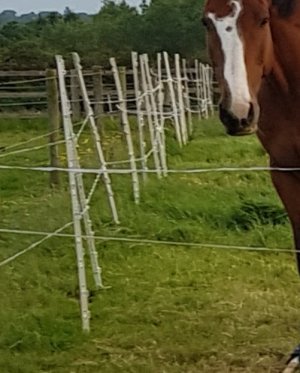
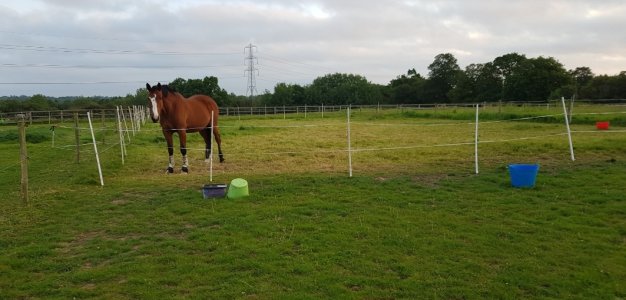
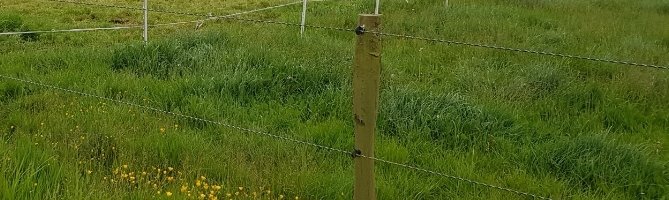
Mines on mainly long grass - I've borrowed the back of a friends paddock where it's not been grazed for a year or two as she has a native who she is watching like a hawk weight wise at the moment. He's doing well on it. I had a scare at the middle of last month when he came in pointing his toe and rocking back but he had an insulin resistance test and cushings and was negative to both and it was deemed to be a sore toe or the tendon that he's injured and the rocking back due to previous box rest and SI/KS seizing up.

Strip grazing is your best friend, as is overnight turnout. I give Lari about 3ft of long new grass a night along 20m. Most of it he doesn't touch as its been used as a 'toilet area' by my friends horse but the area is big enough for him to graze overnight. He has wet but not soaked hay during the day (2 small nets) and two chaff based feeds which are slowly decreasing with size as he nears returning to retirement.

I found with a previous horse that was colic prone that he'd always manage to lose his muzzle and then gorge and colic so unless you know 100% it will stay on I find strip grazing is safer for limiting grass.

Strip grazing was always my preferred method.
 

Attachments

  • Screenshot_20230609-144947_Gallery.jpg
    Screenshot_20230609-144947_Gallery.jpg
    209.9 KB · Views: 10
  • Screenshot_20230609-144917_Gallery.jpg
    Screenshot_20230609-144917_Gallery.jpg
    425.4 KB · Views: 11
  • Screenshot_20230609-150623_Gallery.jpg
    Screenshot_20230609-150623_Gallery.jpg
    126.3 KB · Views: 10
My horse is doing great I don’t know is because my horse is getting older but she is staying the perfect weight this year. She actually able eat more grass this year .
 
Muzzling, daytime turnout, a tiny haylage net and then straw to keep her tummy full seems to be doing the job, Pony looking a lot less bloated and I've even seeing the faintest hints that her ribs, do indeed, still exist!
I might switch the haylage (provided by yard) to hay for a bit, as I have a couple small wrapped hay bales from a couple months ago hanging around. I did use the rest of the open one to do her nets yesterday, it's a lot more economical now I'm using teeny nets for the tasty bit of the ration. She beelines for the tasty stuff and then she's got the straw to eat to keep her tum full and her mind happy.
I've been umming and aahing about keeping her in following the rain, but we didn't have much of it and she's muzzled on a sparse field that other horses graze overnight so I'm just keeping a close eye for now.
 
No rain here either but the horseflies have arrived.

I used to kit my gang out in fly rugs, masks and fly spray when they were out.

But I’m now seeing the flies as a natural eating reducer.

Initially, they move more and eat less to keep away from them. But I’ve noticed in the last week that they’re choosing to come in off the grass to eat trickle netted hay in the shaded areas. Or come right upto the yard and snooze in the stables instead when the flies are at their peak.

I haven’t seen them make such an obvious choice before, and I think it’s because the track naturally brings them round to the sheltered areas, so it offers up the idea to them.

I just need to get the rest of the track grazed down well and then hopefully the muzzled ones will be able to have them off.
 
But I’m now seeing the flies as a natural eating reducer.

Initially, they move more and eat less to keep away from them. But I’ve noticed in the last week that they’re choosing to come in off the grass to eat trickle netted hay in the shaded areas. Or come right upto the yard and snooze in the stables instead when the flies are at their peak.

I haven’t seen them make such an obvious choice before, and I think it’s because the track naturally brings them round to the sheltered areas, so it offers up the idea to them.
2 of mine are staying in out of the flies by choice, but the fat pony is more committed the the cause unfortunately. He doesn't seem to stop - at all.

Im slowly strip grazing in the hopes I can put a temperary track up in my oak tree lined field for the rest of summer (until acorns start to fall as he gorges on those too).
 
No rain here either but the horseflies have arrived.

I used to kit my gang out in fly rugs, masks and fly spray when they were out.

But I’m now seeing the flies as a natural eating reducer.

Initially, they move more and eat less to keep away from them. But I’ve noticed in the last week that they’re choosing to come in off the grass to eat trickle netted hay in the shaded areas. Or come right upto the yard and snooze in the stables instead when the flies are at their peak.

I haven’t seen them make such an obvious choice before, and I think it’s because the track naturally brings them round to the sheltered areas, so it offers up the idea to them.

I just need to get the rest of the track grazed down well and then hopefully the muzzled ones will be able to have them off.
Mine is in during the day as the flies are just horrendous at the minute! The grass is pretty brown too
 
So, been a bad week following the rain 😔 the new flexible filly muzzle seemed to be working well - no chin or muzzle rubs, but after 3 nights the actual head collar rubbed the top of his nose 🙄 anyhoo, the field had scorched off and stopped growing so he was ok for a few nights without a muzzle at all.
Then it rained overnight - he came in with pulses, kept him in for a couple of nights then put him out with his FF on. He came in with a deflated belly, sunk behind the last rib so I knew he hadn’t eaten much quantity wise BUT raised pulses all round again, and headcollar had rubbed. I feel bad for trying him out again as my gut feeling was he needed to just come off that particular field, we‘re at a new yard and it’s our first summer there so a learning process. 2 nights in with hand walking on a soft surface as he was looking slightly footy and last night he went out on a completely bare patch with soaked hay so we’ll see what today brings.
I need to be able to exercise him to help with weight loss/metabolism but obviously can’t whilst footy with pulses!
So frustrating - the situation not being helped after a vet trip to check a mild lameness, brought on by a quite traumatic slip out on a hack, that still wasn’t quite right 6 weeks later. He was sedated for blocks and scans and a shockwave session - having come home quite optimistic as nothing horrendously bad on scans, he coliced and needed emergency vet that night. Probably due to stuffing his face with his travel net (he’d been out overnight with a muzzle on) then the sedation slowing his digestion down. That was a loooong night but he responded well to fluids and pain relief and was back to normal eating by teatime the next day. Supposed to be taking him back for another shockwave next week but obviously very wary of him being sedated again so soon, so a conversation with the vet needed.
I’m getting so downhearted now. If the bare patch\soaked hay works we’ll probably muddle through the summer (I love the new yard) but it’s just getting difficult to be constantly worried about him and his wellbeing/micromanagement!
Sorry - that ended up a bit of a brain dump - so once again not managing very well 😔
 
As with most years we strip graze our horses and manage the grazing all year. We don't have summer & winter paddocks. Each is given a small paddock & when that is eaten off we extend the fencing giving them a couple of feet of fresh grass every day. This goes on throughout the spring/summer then we start moving the top fence down towards the new strip of grazing and as we do this over the months the top of the paddocks really grows well and are replenished. Come autumn and the growing has virtually ended we extend the fencing up a couple of feet into the newly grown grass. By doing this we manage how much the horses are eating & probably towards the end of winter is the only time we may have to top up with hay. Oh yes, horses are stabled, they are turned out into individual paddocks 7.00 am brought in around 1pm, I'd like to see them out a little longer but they stand at their gateway waiting to come in. It seems to work for them.
 
We had a torrential thunderstorm on Saturday night, and then it rained from about 7pm yesterday until about 5.30am. During the day it's still been sunny, warm and humid.


I'm glad the ground isn't so hard now but this is pretty much ideal grass growing conditions which is a worry!
 
We've been promised rain for about a week now nad haven't had more than a sprinkling. We could really do with some. The horses have moved (early) onto one of the hay fields with us at the moment. Normally they don't go down there until after the haylage had been made but they've had too much for the past few years so they've put the horses on one of them rather than taking haylage off it. It hasn't been touched for months so there's plenty of grass but it's not growing any more. Wiggy's coming in for the day as he's the size of a house but Arch is out 24/7 and looking amazing after coming out of winter looking a bit light for the first time ever. The biggest problem I have is getting out of the field without Arch, he's convinced Wiggy's getting something he's not!
 
Last edited:
We have missed all the rain. I have earthquake cracks and trying to find local schools to hire because I can't school in the field - it's concrete.

More grass than I know what to do with though and the PSSM mare is sluggish so she's getting too much even from the strip grazing

@Floofball sorry you're having a rough time. So many people struggling with metabolic horses and a colic in the mix is the last thing you need.
 
@Floofball sorry you're having a rough time. So many people struggling with metabolic horses and a colic in the mix is the last thing you need.

Thanks @SEL he has improved since I took him of the grass, no pulses and definitely more forward and willing, so hopefully we’re starting to manage things better now 🤞🏻 can’t believe you’ve missed the rain - we’ve had flash floods round here past 2 days!!
 
Top