how much can cobs actually carry?

aspemm

New User
Joined
31 May 2025
Messages
7
Visit site
cobs are very good weight carriers and this has been proven time and time again, many large adults ride them and most riding schools use mostly cobs. but in preparation for buying a cob as someone who weighs about 13.5 stone, i want to ask the vital question of how much a cob can actually carry and im not talking about a ten minute walk around the school, im talking about how much a cob can carry while jumping, doing xc, long hacks and things like that. im thinking about a 15hh cob with a bit of bone to it? i'd go up to 15.2 - 16hh if that is what it would take for the cob to be comfortable doing quite extensive exercise with 13+ stone on its back. it would be ridden regularly, few times a week type of thing, a mix of flatwork in the school, polework, jumping and hacking out for upwards of an hour. is it possible to find a cob that wouldnt struggle to do that with me + tack on its back? any help would be appreciated, i want to do this right.
 
A big one can carry more than a small one. A fit one can carry more than a fat one.

13.54 stone is 85kg so at 15% you'd be looking for a fit healthy horse weighing around 567kg
 
Strangely I have found the pure bred Fell ponies I have had have had more stamina carrying the same weight as a coloured cob of a similar size. Only my experience but with several examples.
Make sure the cob isn't already carrying 50+ kg of its own excess weight.
 
Strangely I have found the pure bred Fell ponies I have had have had more stamina carrying the same weight as a coloured cob of a similar size. Only my experience but with several examples.
My littlest cob has Fell in her and she's a tank.

OP it's not just weight because a lot of cobs are short backed so can rarely take more than a 17" saddle and often 16.5"
 
Strangely I have found the pure bred Fell ponies I have had have had more stamina carrying the same weight as a coloured cob of a similar size. Only my experience but with several examples.
oh, really? i havent thought of fell ponies. thank you, i will look into it!
 
You need to add a minimum of 10kg to you weight to account for tack (I have very light tack and it adds 10kg). 13.5 stone is 85kg, plus 10 is 95kg.

It's recommended to stay at or below 15% of horses fit bodyweight. So in good muscled condition but not fat. To do this you need a horse of around 635kg. I would imagine that you would be looking at nearer 16hh to achieve this but as I'm an Arab owner I'm not the best with estimating cob weights! Perhaps cob owners on here will be able to give you a more precise answer.

As an aside sadly you rarely see a cob in fit hard condition. They're a grand sight when you do! There's an excellent riding school near me and all their cobs look fabulous.
 
I love you ask the question.
I think the answer is a fit slightly larger cob, so 15.2+ if you want to feel really comfortable riding.
My 15hh cob is fit so possibly could carry more, but at 147lbs I feel at max weight and if someone larger does sit on her it looks uncomfortable to me.
 
cobs are very good weight carriers and this has been proven time and time again, many large adults ride them and most riding schools use mostly cobs. but in preparation for buying a cob as someone who weighs about 13.5 stone, i want to ask the vital question of how much a cob can actually carry and im not talking about a ten minute walk around the school, im talking about how much a cob can carry while jumping, doing xc, long hacks and things like that. im thinking about a 15hh cob with a bit of bone to it? i'd go up to 15.2 - 16hh if that is what it would take for the cob to be comfortable doing quite extensive exercise with 13+ stone on its back. it would be ridden regularly, few times a week type of thing, a mix of flatwork in the school, polework, jumping and hacking out for upwards of an hour. is it possible to find a cob that wouldnt struggle to do that with me + tack on its back? any help would be appreciated, i want to do this right.
Great you are so empathic, and so committed to getting this right!
You also need to consider the amount of bone the prospective cob has, ie. circumference of cannon bone measured just below the knee joint. Compare with the traditional ‘lightweight’, ‘middleweight’ and ‘heavyweight’ classifications for hunter classes, for clarity.
Bone and density have considerable bearing on what the animal can carry (like the little Fell packponies carrying lead and other deadweight across the Pennines)
Meanwhile, why don’t you look for a dual purpose ride and drive cob - driven, can draw far greater weights - and enjoy whilst dieting?
Good luck
 
My cob, could on paper carry you, but it’s not that easy I’m afraid. They often have very short backs , which would mean a saddle you can’t fit into, which can damage the horse and be hugely uncomfortable for you. You also need to consider adding the extra weight of saddle/hat/boots etc which is probably another 1.5 stone, so 15 stone which is then a lot.

I know it’s easier said than done but could you push yourself to lose a bit?
 
My cob, could on paper carry you, but it’s not that easy I’m afraid. They often have very short backs , which would mean a saddle you can’t fit into, which can damage the horse and be hugely uncomfortable for you. You also need to consider adding the extra weight of saddle/hat/boots etc which is probably another 1.5 stone, so 15 stone which is then a lot.

I know it’s easier said than done but could you push yourself to lose a bit?
i am on a diet and slowly losing weight though want to get into more regular riding to aid in my weight loss, hence wanting to purchase a weight carrier to achieve that. just wanted to post on this forum to get second opinions, though i am determined to not be so heavy forever.
 
i am on a diet and slowly losing weight though want to get into more regular riding to aid in my weight loss, hence wanting to purchase a weight carrier to achieve that. just wanted to post on this forum to get second opinions, though i am determined to not be so heavy forever.
What a good incentive, and exciting.. buying a pony 😀
 
I have a 15hh cob and as I'm fostering her from a rescue they said weight limit was 14 stone.
However she's 15 and possibly has some arthritis although seems happy and sound I wouldn't want her carrying that much.
I'm just over 9 stone but add tack and dependant on work ,she does a mix of everything.
Maybe a bigger, younger horse would be different.
 
It is impossible to give accurate weight guidance for the simple reason of quality of conformation is not known until the animal is seen. The term cob covers anything and everything, from the mini cobs that are so popular and being bred extensively by the traveller community up to the Irish maxi cobs with good doses of ID and draught in them. Many cob types are cut and shunt confo disasters.

The poorly conformed, of dubious parents, that used to fetch a few hundred pounds at auction or on the side of the road now have a big market but they are not put together well and are generally weak, yet will still be marketed as weight carriers when they are incapable of carrying weight regardless of their weight and bone. Historically they were bred to pull a bow top not carry a rider, their movement is choppy and they pound the ground rather that cross it in balance.

A quality cob with excellent confo, fit and hard will carry weight safely and effectively and most importantly give a comfortable ride, crossing the country in a schooled and balanced way whilst staying sound and working into later life.

So the actual answer to the original question is - Impossible to give a sensible and valid answer without seeing the animal.
 
a friend has a big irish cob, touching 17hh but still incredibly slender in his frame and needs more weight on, and he weighs 650kg. however, i think you’d be lucky to get a 17” saddle on him.

rather than a cob, id possibly look at hunter types for weight carrying, id imagine a 15hh hunter can comfortably carry more than a 15hh traditional.

echo the others about losing weight, and i applaud you trying to do so already for the benefit of yourself and the horse!

also think the groundwork would be a fab way of getting your steps in whilst building a new partnership!
 
I think running or walking would be better for weight loss than riding, I’ve definitely lost weight after starting couch to 5k and I’ve only been doing it 5 weeks.

Unless eventing fit or working on a busy yard, general riding won’t help me loose weight and I loose weight quite easily.
 
The one thing I would stress is taller does not always equal stronger. Draft horses are strong but they are bred to pull. Often to get more height on cobs your seeing a lot of Clyde/shire crosses these days. You’re looking for a true h/w, and keeping them fit and working properly. I think you’ll be looking at £££££!
 
A quality cob with excellent confo, fit and hard will carry weight safely and effectively and most importantly give a comfortable ride, crossing the country in a schooled and balanced way whilst staying sound and working into later life.
This is correct - but that sort of mount is at least £10,000 these days, and usually much more.
These types usually have RID in them [ as mine did] , which will give them better limbs and weight carrying potential than say a cob crossed with eg. a Shire or Clyde.
 

Attachments

  • leics2000.jpg
    leics2000.jpg
    308 KB · Views: 46
Not necessary to go taller, around 15.00 is a good size. I forget what the hunter and cob weights are for showing, but they are a good guide - i.e. able to carry xx stone for a day's hunting.

Good conformation and breadth across the back are the weight carrying guidelines, so long as it isn't fat. But a very wide horse isn't always very comfortable to ride, so have to think about that as well.
 
A cob with lots of good bone, strong feet not heavy on the forehand when ridden and with a well conformed back, ie not too long, will carry weight well if it is deep in the heart not too fat, fit and can be schooled to carry itself, because it moves easily

,
should carry more weight than a poorly put together specimen

And I find the whole carrying thing will be easier if they are naturally forward thinking as opposed to struggling to move themselves let alone a rider

A leg at each corner type that cover a lot of ground

For me it always comes back to confo and the right horse for the job!
 

Taking a steer from hunter divisions:

Hunter weight divisions​

Show hunters are divided into three weight sections; lightweight, middleweight and heavyweight.

  • A lightweight should be able to carry up to 12st 7lb, stand around 16-16.2hh and have about eight and a half inches of bone under the knee.
  • A middleweight hunter stands around 16.3hh, can carry between 12st 7lb and 14st and has around nine inches of bone.
  • A heavyweight stands around 17hh, has nine to nine and a half inches of bone and is capable of carrying more than 14st.
 
Not necessary to go taller, around 15.00 is a good size. I forget what the hunter and cob weights are for showing, but they are a good guide - i.e. able to carry xx stone for a day's hunting.

Good conformation and breadth across the back are the weight carrying guidelines, so long as it isn't fat. But a very wide horse isn't always very comfortable to ride, so have to think about that as well.

This. Bone is not really a good guide for weight carrying ability. OP if you look at my posting history I posted a picture of a couple of mine and discussed their weight carrying ability because it wasnt actually what you would think it would be. I've got more photos of other cobs as well, if your interested in seeing them and their weight limits and why I'll dig them out.
 
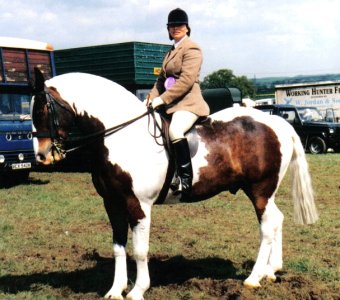
My 142cm well put together bow top pulling hairy cob that’s 435kg fit is comfortable and keen up close to the 20% mark. He’s a very strong work ethic! He takes a 17 inch compact saddle or 16.5 ‘normal’. I think most adults would feel small jumping and XCing him though. A well built 15-16hh should be comfortable, or even a ‘proper’ 14.3-15.1 show cob type.
 
oh, really? i havent thought of fell ponies. thank you, i will look into it!

Not at 13 stones, sorry.

Saddle fit is SO much more complex than just larger riders needing larger saddles - where we load you and how you sit is JUST as important, if not more so. Yes, a heavier rider needs a bit more panel area but if we can get you sat at the base of the wither, in a neutral pelvis and with your leg internally rotated and sitting properly underneath you then a smaller saddle may actually be better. For instance if you have a short, wide pelvis you'll sit better in a shorter saddle, and shorter saddles are nearly always wider for the rider too...

If you can find a saddle fitter who fits using these concepts then you'll have more, and likely better, options.
 
Top