
How steep can sheep climb? Thinking of making a bank instead of fence to keep them out

mudder

Well-Known Member
Joined
1 February 2025
Messages
53
Visit site
First, this is an arable field so no other animals to consider.

Wanting to keep them out rather than in.

I have been reading up on 'devon banks' which are one part of the traditional hedgelaying style of devon and surroundings.

They detail that a large bank is created with a hedge planted and laid on top.

Since the bank looks to be doing most of the work in this case, which is noted for livestock containment as well, I am wondering if I could do away with a fence altogether, if the bank was high enough. Reason being, first a hedge takes years to become stockproof, and second I have limited wood for fencing and don't want to buy anything in. Just wanting to use readily available resources on the land.

Also it is simply a more interesting and aesthetically pleasing feature than the usual boring and ugly wire fencing.

Here is an image to illustrate:
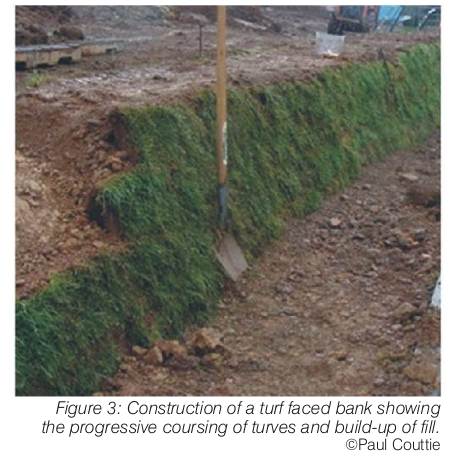

So I am wondering would a bank like that be steep enough that only that would be sufficient to stop sheep from getting up it? I was thinking that the height should be the general 1.2m recommended for sheep fencing.

I am not really familiar with sheep climbing capabilities. For those with more knowledge of their behaviours do you think that will keep them out without a hedge/fence on top? I could not really see them jumping up such a bank, or could they scale it like goats do on near sheer rockfaces?

While the traditional way is to make a bank either side with about 90cm in the middle for the hedge I am thinking more like a ha-ha (https://www.nationaltrust.org.uk/discover/history/gardens-landscapes/what-is-a-ha-ha) design where on my side it will just slope upwards gradually to the drop off of the bank.

Due to limited availability of other materials I thought this could be a great way to do the job with just a load of dirt. I will still be doing wooden fencing on sections where this would not be feasible, for more irregular sections, with lots of trees and roots or uneven but do this for places where there are straight runs of open field.
 
Last edited:
A Devon bank is a wall, carefully constructed with stones. It is an art & expensive if you were to employ someone to build.
Just mud is unlikely to hold together to create the sheer face you would need, it will collapse & just provide a climbing frame for sheep. They are not as agile as goats, but cam jump & climb pretty well.
I have a proper Devon hedge around ny field with a hedge on top. Neighbours sheep have managed to climb in on a few occasions if the ( very old ) wall has a small collapse
 
The traditional way to keep nasty, dirty sheep and deer off the lawn close to your country pile was to have a ha-ha dug out.

I think that a modern version of this would be quick and simple, but not necessarily cheap.

Use a steam shovel mechanical digger to fig out a trench, then line the trench with rock-filled gabions. You can get the cages from a garden centre, have the rocks delivered in bulk, use the mechanical digger to fill each gabion then lift it and lower it into place. It would be at least a two-person job, probably better and safer being three; one to operate the digger and the other two to guide the gabions into place.
 
A Devon bank is a wall, carefully constructed with stones. It is an art & expensive if you were to employ someone to build.
Just mud is unlikely to hold together to create the sheer face you would need, it will collapse & just provide a climbing frame for sheep. They are not as agile as goats, but cam jump & climb pretty well.
I have a proper Devon hedge around ny field with a hedge on top. Neighbours sheep have managed to climb in on a few occasions if the ( very old ) wall has a small collapse
Thanks for the info. Useful to hear real world data points to see whether it is practical.

It isn't only mud though as per the image shown above. It is turf facing to stop the collapsing you mention as well as a slight concavity. It is an established method recommended by the devon hedges website, stone is one option but turf facing is also suggested as well. There is a free pdf detailing the process. See here: https://devonhedges.org/wp-content/uploads/2015/11/8_Hedge-Creation.pdf. They give instructions both for turf and stone facing.
 
The traditional way to keep nasty, dirty sheep and deer off the lawn close to your country pile was to have a ha-ha dug out.

I think that a modern version of this would be quick and simple, but not necessarily cheap.

Use a steam shovel mechanical digger to fig out a trench, then line the trench with rock-filled gabions. You can get the cages from a garden centre, have the rocks delivered in bulk, use the mechanical digger to fill each gabion then lift it and lower it into place. It would be at least a two-person job, probably better and safer being three; one to operate the digger and the other two to guide the gabions into place.
I already mentioned the ha-ha in the op including a link. :)
 
We have some 15 foot near vertical banks/ditches around our land, and what I see from deer is they scale them diagonally, rather than vertically. This enables them to pull down soil with their scampering up, which after a few passes then creates a narrow ridged path for them to use permanently in the future. Theyve been using these paths they’ve created for decades now that even I can use them to scale the large banks.
With much shorter banks of around 8ft and under, they scale them straight no bother. Its incredible what they’re capable of crossing!
Whether sheep use the same technique, or are capable, I don’t know.
 
Thanks for the info. Useful to hear real world data points to see whether it is practical.

It isn't only mud though as per the image shown above. It is turf facing to stop the collapsing you mention as well as a slight concavity. It is an established method recommended by the devon hedges website, stone is one option but turf facing is also suggested as well. There is a free pdf detailing the process. See here: https://devonhedges.org/wp-content/uploads/2015/11/8_Hedge-Creation.pdf. They give instructions both for turf and stone facing.
to my mind those people don't live in the real world. :D:D


Sheep do love Devon banks. They are up and down in an instant be it stone or turf. Problem is, other than escaping, they damage the banks and pull the banks down

Lots of new banks are being built in our area (all subsidised) they are all finished with wire each side to protect them.

A 1.2m climbing frame for sheep won't provide even the slightest challenge for them. Turf will be great, even easier than stone to grip with their little feet. Having kept both sheep and goats they are both just as bad iro banks. Having got on top of the bank the sheep won't always just jump down, they will wander along the top enjoying the nice grass the turf provides and cause even more damage before finally exiting. Flocks of sheep often follow each other so as the first one finds a way up the bank then the rest will follow simply creating a gap.

.
 
to my mind those people don't live in the real world. :D:D


Sheep do love Devon banks. They are up and down in an instant be it stone or turf. Problem is, other than escaping, they damage the banks and pull the banks down

Lots of new banks are being built in our area (all subsidised) they are all finished with wire each side to protect them.

A 1.2m climbing frame for sheep won't provide even the slightest challenge for them. Turf will be great, even easier than stone to grip with their little feet. Having kept both sheep and goats they are both just as bad iro banks. Having got on top of the bank the sheep won't always just jump down, they will wander along the top enjoying the nice grass the turf provides and cause even more damage before finally exiting. Flocks of sheep often follow each other so as the first one finds a way up the bank then the rest will follow simply creating a gap.

.
Not discounting anything you wrote, but weren't they used for hundreds of years as the best means of stockproofing fields before the recent introduction of steel wire fence, so there must be something to it no?

If the banks were useless why would they have kept them over just a hedge?
 
It's always safest with sheep to assume they'll do the exact opposite of what you want them to do (we keep sheep). Therefore, I think they'd see your ha ha and bank and take great pleasure in showing you all the ways they can scale it (most likely also getting stuck amnd damaging the ground and themselves in the process).
 
Not discounting anything you wrote, but weren't they used for hundreds of years as the best means of stockproofing fields before the recent introduction of steel wire fence, so there must be something to it no?

If the banks were useless why would they have kept them over just a hedge?

Where I grew up in Devon it was very hilly so many banks were built into the hillside then the hedge on top so they were also a way of managing charges in level. Without a decent hedge they wouldn't have kept the ponies in never mind sheep and we had some deliberately created bits without hedges to create cross country jumps/drops between fields and used rails when we wanted to keep them out.
 
The traditional way to keep nasty, dirty sheep and deer off the lawn close to your country pile was to have a ha-ha dug out.

I think that a modern version of this would be quick and simple, but not necessarily cheap.

Use a steam shovel mechanical digger to fig out a trench, then line the trench with rock-filled gabions. You can get the cages from a garden centre, have the rocks delivered in bulk, use the mechanical digger to fill each gabion then lift it and lower it into place. It would be at least a two-person job, probably better and safer being three; one to operate the digger and the other two to guide the gabions into place.
The ha ha was so that the view from the house was not spoilt by a fence and the deer in the park could be seen in all their glory.
 
Flocks of sheep often follow each other so as the first one finds a way up the bank then the rest will follow simply creating a gap.
Here in France a traditional way of limiting sheeps' movement is to fit the flock leader with three pieces of wood around it's neck, so that it can't push through a hedge or fence to easily. That frame is called a "tribart". If the sheep wearing it can't get through, then the others can't follow it through.
 
I've seen sheep with electric fence about 18 inches of the ground contained very well

We have banks of soil 10 to 15 ft high which came out from buildi g a large arena, my cobby one got loose and scaled the smaller height ones and disappeared on walk a bout, naughty little thing, straight up no problem

Anything grippy is no no
 
Not discounting anything you wrote, but weren't they used for hundreds of years as the best means of stockproofing fields before the recent introduction of steel wire fence, so there must be something to it no?

If the banks were useless why would they have kept them over just a hedge?
I suppose stock fencing hadn't been produced then, stone was plentiful to build walls and so was labour to keep repairing them. To turn the question around if banks are sufficient why do farmers waste money putting stock fences at the base of them to keep sheep off the banks? Why are so many Devon banks broken down with stones falling out and gaps in them.

I ride daily along roads with Devon Banks. All my roadwork is alongside these banks. There are loose feral sheep on the roads, dozens of them. The horses drive the sheep along (walking) the sheep jump up on the banks out of our way, sometimes is there is no other fencing they jump down in the fields. If the banks contained them there would be no way they could jump up onto them. The only ones they don't do have wire fencing either stock fences or barbed wire sticking out at an angle.

. My friend once bought some Herdwicks.......🤣😂
those are driving my stallion mad ATM. A neighbouring farmer has recently acquired some. White sheep we are OK with, black sheep no problem, even Jacobs only merited a couple of days looking at but Herdwicks are apparently the sheep of the devil :D:D oh and they can jump up and down banks just a easily as the rest. :rolleyes:
 
From my experience sheep like nothing more than waiting until they are sure you are watching then merrily demonstrating how completely useless the recent method of keeping them in/out is. Preferably when you have to be somewhere ugently or it's rush hour on the nearest busy road. And then being completely unable to get back in/out the same way.

My favourite sheep escape was after we spent two weeks rebuilding a dry stone wall, let them in the field and they took only ten minutes to find the weak point and flow over it like a giant sheep tidal wave, destroying everyting in their path whilst escaping onto the council estate next door and in the school playground and wreaking havoc...
 
Last edited:
I've yet to witness sheep be truly contained by anything that isn't tall, completely vertical and nigh on impenetrable, aka a man made fence,
Plus you can guarantee the wee nitwits would make a game of getting stuck in the bottom of anything resembling a ha-ha, sheep love to try and find new and creative ways to off themselves.
 
I suppose stock fencing hadn't been produced then, stone was plentiful to build walls and so was labour to keep repairing them. To turn the question around if banks are sufficient why do farmers waste money putting stock fences at the base of them to keep sheep off the banks? Why are so many Devon banks broken down with stones falling out and gaps in them.

I ride daily along roads with Devon Banks. All my roadwork is alongside these banks. There are loose feral sheep on the roads, dozens of them. The horses drive the sheep along (walking) the sheep jump up on the banks out of our way, sometimes is there is no other fencing they jump down in the fields. If the banks contained them there would be no way they could jump up onto them. The only ones they don't do have wire fencing either stock fences or barbed wire sticking out at an angle.
Useful information, thanks.

From the replies so far it does not sound promising. :)

Are you saying that they jump up even on well kept banks or only the dilapidated ones? If the latter that is not really a fair comparison to wire fencing is it. :P as you could say just the same about wire fences that haven't been maintained, which lose their stock proofing when it sags or there is a gap in the bottom or a hole.

To be fair comparisons we must consider the best kept bank vs the best kept wire fence. As @w1bbler states in the earlier reply the sheep got through on their wall because it had a collapse so otherwise we can presume it works the rest of the time.

In any method you have to keep it maintained to a good standard, including the wire fencing everyone swears by.

As such it seems the area of enquiry should be how much maintenance each respective method demands and whether it is considerably more upkeep for a bank compared to wired fencing.
 
I don't think you are going to find anyone who will tell you that sheep won't climb a steep grassy bank, no matter how well maintained. If you want a barrier that isn't fencing and can't wait for a properly laid hedge then brash contained between stakes works quite well to contain them and it is comparatively quick and easy to do.
 
As such it seems the area of enquiry should be how much maintenance each respective method demands and whether it is considerably more upkeep for a bank compared to wired fencing.
I thought this could be a great way to do the job with just a load of dirt.
I think it would be an excellent area of enquiry for you to demonstrate.

How are you going to move the load of dirt to make your bank? do you have the use of a digger? if not digger and contractor time is expensive. do you have an adequate supply of turfs? You will need to fence off your new bank to keep animals off whilst it settles and the turf grows in. Do you have enough mud? it doesn't go very far when the digger buckets compacts it down.
 
Yes....we have Shetlands and they enjoy a challenge.
I once had a disagreement on direction with a fell pony and ended up on top of a dry stone wall.

Herdwicks are never where they are supposed to be... unless they are supposed to be on the road, garden, school field, pub etc. walls and ditches are no obstacle. My experiences are Cumbrian breed based 🤣 An American tourist once complained that it was a safety issue keeping sheep on the roads.... not sure what they expected their waitress (or any farmer) to do about it.

Sheep are remarkable agile when they want to be considering their shape. I often see them hanging off near cliffs round here.
 
Useful information, thanks.

From the replies so far it does not sound promising. :)

Are you saying that they jump up even on well kept banks or only the dilapidated ones? If the latter that is not really a fair comparison to wire fencing is it. :P as you could say just the same about wire fences that haven't been maintained, which lose their stock proofing when it sags or there is a gap in the bottom or a hole.

To be fair comparisons we must consider the best kept bank vs the best kept wire fence. As @w1bbler states in the earlier reply the sheep got through on their wall because it had a collapse so otherwise we can presume it works the rest of the time.

In any method you have to keep it maintained to a good standard, including the wire fencing everyone swears by.

As such it seems the area of enquiry should be how much maintenance each respective method demands and whether it is considerably more upkeep for a bank compared to wired fencing.
The critical bit on mine is probably the hedge on top, climbing a roughly 5ft sheer wall, to be met by a hawthorn/ Blackthorn hedge means the sheep generally don't even bother trying.
Your mud/ grass bank would need an established thorny hedge onto to become impenetrable. Sadly without rocks in the base I think sheep would soon destroy a grass bank just experimenting.
 
Driving through Wales I watched a sheep walk straight up a large 1m+ stone wall/bank. Push through the wire on the top and hop down the otherside like it was a minor inconvenience.

If they really want to go, not much will hold them other than high tensile wire sheep netting.

2-3 strands of low electric wire can be very effective, but they have to have learnt about it hurting either as lambs or freshly shorn or all that wool is a nice insulator and the fence is a minor inconvenience.

A dense well laid hedge, with or without a bank will hold them but you have to maintain it and plug gaps, and not a quick solution.
 
Top