Infection with CPLD/Chronic Progressive Lymphadema

Kwho1234

Member
Joined
31 October 2025
Messages
12
Visit site
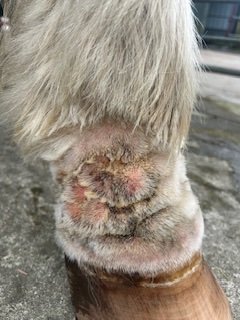
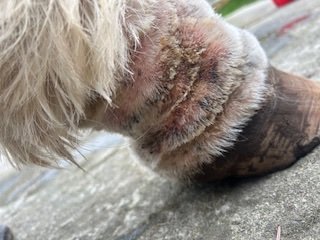
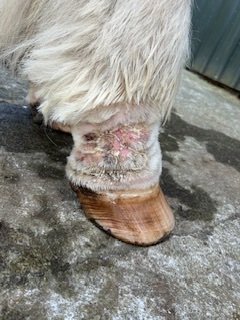
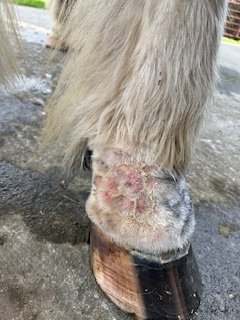
Irish Cob with Long-Term CPLD – Looking for Management Advice


Hi everyone,

I’m looking for advice or shared experiences managing Chronic Progressive Lymphedema (CPLD) in a 21yo Irish Cob.


He has had CPLD for approximately 10 years. Over that time, a wide range of veterinary-prescribed treatments, including:

• Sulphur

• Hydrogen peroxide

• Antiseptic creams

• Silver creams/sprays

• Various lotions and topical treatments


The only product that consistently managed the condition until recently was Forespix. Unfortunately, it now seems he may have developed resistance to it.


Currently, he has:

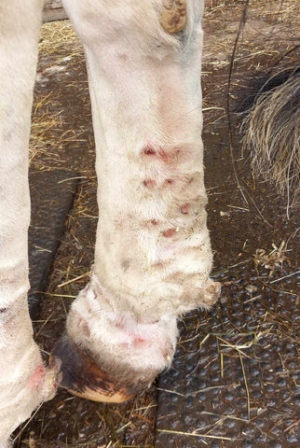
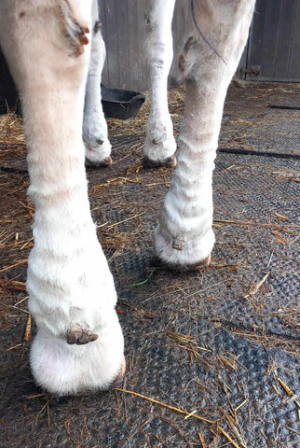
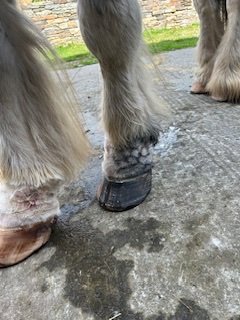
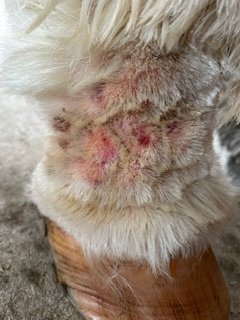
• Raw skin between the nodules and skin folds around the fetlocks and lower legs

• Areas that bleed and excrete a watery discharge

• White pus from the folds (never green)

• A distinct, unpleasant smell, which worsens as the amount of discharge increases

• Frequent leg stomping, which I assume is due to itching or discomfort


We’ve also tried leaving the legs alone for a period to see if they would naturally scab and heal, but this has not been successful.


Has anyone here had the same issue and used blue powder on it?

Any advice, experiences, or alternative management strategies would be greatly appreciated. Thank you in advance :)

(feathers are usually cut back further then this) IMG_9520.jpegIMG_9520.jpeg
IMG_9301.jpegIMG_9445.jpegIMG_9447.jpeg
 

Attachments

  • IMG_9521.jpeg
    IMG_9521.jpeg
    42 KB · Views: 0
  • IMG_9518.jpeg
    IMG_9518.jpeg
    39.6 KB · Views: 0
I don’t have any additional suggestions but following with sympathy to see if others do. The riding school i teach at has had a bad time with this just this last year. Not sure what has changed with the environment but never used to be an issue. There is one large cob who has to be vet sedated every 6 weeks or so to clip his feathers and treat. He won’t let you near his fetlock’s otherwise. They are oozing white gunk from the back of the Pasterns and smell. The vets have tried to isolate what type of bacteria it is and have come up with the conclusion that it’s not responsive to any medication. And have said it will just need to be managed long term. He is not allowed out in the wet so is stable bound. Poor boy
Another had similar and a very bad reaction to antibiotics and ended up in liver failure unfortunately.
They have both been in same field for years and it is only this last year that these infections have started so I feel that the ground bacteria have changed for whatever reason. Very odd. And very difficult to treat.
Good luck. Hope you find a solution. X
 
Thank you for replying ! This fella is at a school I work at aswell and sounds the exact same with the gunk and smell but no issues with handling his legs, he’s great when we are cleaning the legs trimming etc so it seems more itchy then painful.. how did they go about isolating/finding out what type of bacteria it was? He is not turned out in a field in winter but is in a large pen with half of it sheltered so thankfully isn’t exposed to any mud but still stands in the rain so the legs inevitably get wet which makes it worse 🥲 Was there any work done to the field that could have introduced any new bacteria (harrowing,manure spread etc?) sorry for all the questions😂 It was being managed great with the injections up untill recently so besides management it does seem really hard to treat 🙃Thank you 💙
 
Not CPL but my cob had a bad skin reaction to something she was eating. It started with linseed which we gave her but then was exacerbated by passersby feeding her over the field walls.
We have eventually managed to stop anyone getting to feed her but it has taken a loooooooong time to clear her skin up. She has had a variety of vet prescribed and OTC treatments, I recognise many of the things you have used. We think that Marigold & Cleavers was the last piece of the jigsaw.
She now has Agrobs Wiesencobs, Aloe Vera juice, Vit E, milk thistle and M&C once per day.
She had a little nick on her hock earlier this week, we treated it with Sudacrem and it's cleared up. Previously we would have had to dress it daily but her skin is now much less fragile.
 
I’m so sorry about you having to deal with the unwanted feeding that’s very frustrating! Yes we were looking into marigold and cleavers as a lot of people seem to have good responses with it so definitely worth a try, where did you buy them from and how much a day are they given ? Was the sudocreme put onto the raw skin or after it scabbed over as we were thinking of that but saw online it’s better to put over scabs so not really sure whether we should use it or not :( What way did you dress it and did it seem to help a bit? Thank you for replying and sorry for all the questions 💙😂
 
This week the Sudocrem was put onto a small raw patch but while we were struggling it went onto scabs and new patches alike. It protected the raw patches from getting any dirt in and softened the scabs. We found that it worked better than any other cream / spray and we had used many.
I get M&C via Amazon, which is what came up when I googled. We just follow the dosage on the pack, which is a large bucket, compared to other supplements. We also noticed an improvement when we introduced milk thistle, which we did before the M&C. We ran out of Vit E at the beginning of January, because of postal issues and I do wonder if that contributed to the latest problem but fortunately she is back on the Vit E and only needed one application of the cream. It's fine now.
There are lots of problems locally with people walking where they shouldn't and feeding horses, but a FB campaign has shamed quite a lot of them into behaving better and we have spent a fortune on fencing and cameras, so are not so worried about random people giving them stuff they shouldn't have, now.
 
Thank you for replying ! This fella is at a school I work at aswell and sounds the exact same with the gunk and smell but no issues with handling his legs, he’s great when we are cleaning the legs trimming etc so it seems more itchy then painful.. how did they go about isolating/finding out what type of bacteria it was? He is not turned out in a field in winter but is in a large pen with half of it sheltered so thankfully isn’t exposed to any mud but still stands in the rain so the legs inevitably get wet which makes it worse 🥲 Was there any work done to the field that could have introduced any new bacteria (harrowing,manure spread etc?) sorry for all the questions😂 It was being managed great with the injections up untill recently so besides management it does seem really hard to treat 🙃Thank you 💙
The vets have been involved scince early summer and have tried everything in their remit and have come up blank. I think they sent off swabs for testing and it doesn’t clear up with all the different antibiotics available. It is a constant oozing through the skin rather than open wounds. I think they have been down the fungal infection route aswell. It really doesn’t help that he won’t let the area be treated easily and grows thick feathers at a very fast rate.
I would be trying to address with diet more if he was mine at this point. He must be immunologically challenged in some way I would think
 
What's he eating? I lost my Ardennes to arthritis but I also found linseed was a trigger. Is he on a balancer with sufficient copper?
Linseed was definitely a trigger for my cob but I think that anything that is too sweet (for her) causes problems. We don't feed apples or carrots, or anything similar. No mints either.
 
Top