Is it protein or starch that causes energy?

debsflo

Well-Known Member
Joined
1 August 2005
Messages
3,772
Location
lincolnshire
Visit site
I've been advised to try a feed to build top line on my gangly 5yr old ISH. At present on adlib hay and hifi plus all day turnout.
I don't want fizziness but she def needs to build up as very weak in her top line despite regular hacking and short sessions in the school. I've been advised to look at energy equilibrium growth as low in starch and high in protein but someone else disagrees with feeding protein. Please can you advise on a non heating conditioning feed ...thanks
 
The body uses protein to for repair and growth. It can not store excess, anything it doesn't use it excretes in the urine. No point in feeding too much, there is a point in feeding good quality complete protein the body can readily use.
All sugars, fats, and starch are converted into simple sugars that are soluble in the blood and the body can use, to work the body, they are fuel. Any excess is stored as fat.
It depends what you mean by topline, if you mean fatter just feed more calories. If you mean more muscle, only the correct exercise supported by the right type of feed will do this, a balance of the right protein and food fuel.
 
Protein is not stored. Sugars & starches, as above, are fuel & stored as fat. Fat does not make topline, as far as I ever knew. It makes fat. Exercise makes muscle which makes topline. Exercise is supported by protein. So, basically, yes, protein can help, but only if you are working in a way to use it, otherwise it disappears.
 
Basically, what I am trying to say is that to build muscle, you need both, in the right proportions. Energy in the form of sugars from normal forage, but protein to feed the muscle build & maintainance.
 
The first and most important thing to realise is that a 5yo ISH is a baby. He wont fill out properly till 8 or 9. You cant overrule his genetic makeup by feed.Only time will do this.Excess protein or unbalanced protein is a waste and puts a strain on the liver.As said previously , a hay balancer is a great idea. Steer well clear of starchy foods for him. ID s are prone to EPSM and best to avoid too much simple carbs. Ad lib good but not over rich hay is great. Bob the notacob was a weedy ISH up to the age of 9 but is now built like a bull!.He lives on unmolassed sugar beet ,a balancer and Dengie chaff.and of course ad lib hay. If his weight starts to get the better of him ,I dont restrict anything,I just give him some later cut hay. Oh yes ,Bob also has his white powder to calm his nerves, Its Magnesium oxide but he thinks its something else.
 
My apologies, I didn't note his age. At 5, he has a lot of natural filling out to do! Hay, hay & grass & a bit of balancer.

Lol, I guessed that folk had missed that. Its a lot easier when the horse is in front of you to look at or have had one similar.
 
Horses do not need a great deal of protein but they do need sources of high quality protein .
And that where a good balancer can help but be sure to chose carefully .
I don't feed premixed foods I prefer to use a powdered balancer , (forage plus performance balancer ) plus some micronised Linseed and straights .
This whole fat to muscle thing , horse eats starch starch gets stored as fat if not immediately needed , horses use energy to work they can get that energy from stored fat and the result of the work is increased muscle bulk if your doing the training correctly .
They still need enough quality protein in the diet for the building blocks of the muscle
 
Hi she's rising 6 now , backed a year and when I bought her last summer looked very different so I can see she's changing shape and growing up. I also realise she has a big frame to fill and will not be mature for a couple of years. She's on a feedmark vit and min supplement in addition to hay and fibre but needs muscle as hind quarters and neck are weak. I am in no hurry just want to do the right thing. She is still v much on her forehand and mainly hacks.
 
On the basis of what you have posted above I would add 150 Grammies of micronised linseed and 250 Grammies of oats to her diet and see if you see a difference .
 
On the basis of what you have posted above I would add 150 Grammies of micronised linseed and 250 Grammies of oats to her diet and see if you see a difference .

Im a recent convert to linseed. What a difference its made to my lad. Much more stamina, happier in his work and off the leg.

I don't know whether its a coincidence, but hes less spooky too.
 
Old horsemen would tell you that food should lag behind work so up the work followed by upping feed if needed. Protien is converted into energy too but puts more strain on the liver. I use a good quality protein high fibre low carb low sugar diet for mine
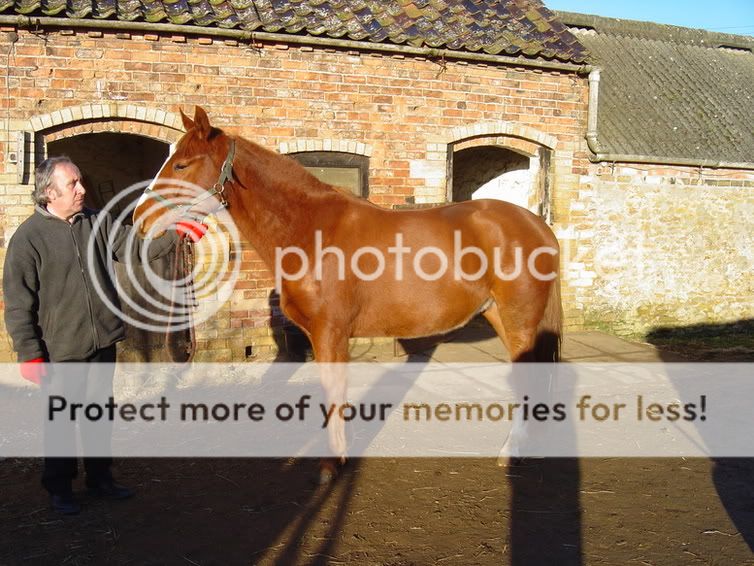
DSC00666.jpg

two year old on hay and balancer
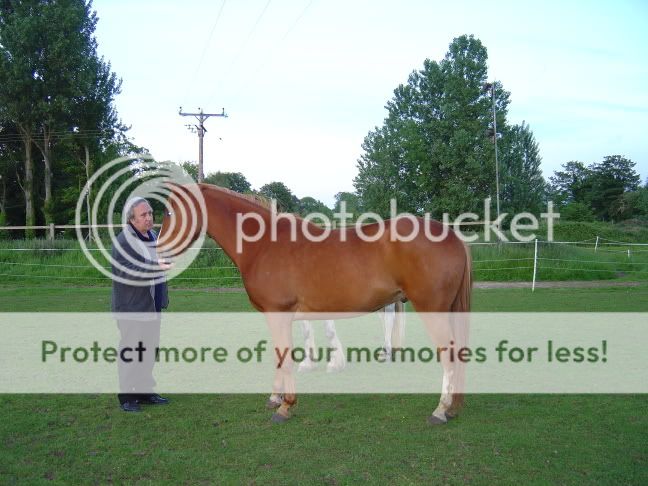
DSC00804.jpg

6 months later on his new diet on little grass
obviously at this age he was not in any work at all
 
Protein seems to be the new "wonder" ingredient. Horses obviously need it, like all creatures, but feeding high levels of protein will not result in magic growths of muscle, only time and work will add that. And as for adding muscle to specific areas ("top line", I presume?), only targeted and correctly executed work results in the desired shape.

I seriously doubt that there are any cared-for horses in the UK that are deficient in protein; horses do not require high levels (10% - 12%) and any decent grass/hay based diet will supply that.
 
Amen, Cortez! It's getting a bit bonkers, there are protein enhanced versions of most of the human food in the supermarkets these days (protein cereal, anyone? Eww)

Anyone looking for sensible reading matter on the subject could do worse than look up Dr David Marlin on FB, some good articles added in recent weeks on feeding/proteins/supplements etc
 
https://forageplus.co.uk/five-reasons-understand-protein-healthy-horse/

this article tells you about protein requirements and the free e book contained in the article tells you a lot more.

I would guess a fair few especially youngsters are lacking in the feeding of protein. I cannot see any mention in your post of the feeding of vit E. There are also articles on the forage plus site regarding the feeding of vit E.

After 3 years of changing my hard feeding regime to copra, alfalfa and micronised linseed plus vitamin E I have seen great improvements. Now looking back I realise that the "grass/hay and possibly a balancer is all a youngster needs" may not be true.
 
After 3 years of changing my hard feeding regime to copra, alfalfa and micronised linseed plus vitamin E I have seen great improvements. Now looking back I realise that the "grass/hay and possibly a balancer is all a youngster needs" may not be true.

Seriously? How many horses displaying the classic signs of protein deficiency are you seeing? Young horses (like young humans) will not be as developed (nor should they be) as mature animals, and will often look scrawny and gangly. The overfed, overtopped "forward" yearlings produced by the TB industry are routinely fed very high levels of protein in preparation for the sales and this is the cause of many of the developmental problems that are the scourge of TB's, WB's and other high-value youngstock (OCD, epithisitis (sp), etc.), and specifically caused by over-high protein levels as well as calcium/phosphorus imbalance.
 
https://forageplus.co.uk/five-reasons-understand-protein-healthy-horse/

this article tells you about protein requirements and the free e book contained in the article tells you a lot more.

I would guess a fair few especially youngsters are lacking in the feeding of protein. I cannot see any mention in your post of the feeding of vit E. There are also articles on the forage plus site regarding the feeding of vit E.

After 3 years of changing my hard feeding regime to copra, alfalfa and micronised linseed plus vitamin E I have seen great improvements. Now looking back I realise that the "grass/hay and possibly a balancer is all a youngster needs" may not be true.

A regular horse will get all the vit E it needs from summer pasture (green grass). In winter vit E levels decrease in grass, and you could add it to the diet then, but in general most horses don't really need extra vit E.
 
A regular horse will get all the vit E it needs from summer pasture (green grass). In winter vit E levels decrease in grass, and you could add it to the diet then, but in general most horses don't really need extra vit E.

While this is true many horses never see good quality grass .
They may be on livery yards with terrible grazing or they have had laminitis or be fat
I made this mistake while I was dieting Fatty .
He's an extremely good doer and had to severely restricted but once I put him onto the forage plus winter balancer ( it was summer ) andadded a few oats and some linseed only very small amounts into his feeding he suddenly worked much better .
Grass is the horses natural source of omega 3 as well but most horses rarely eat really rich pasture 24/7 .
 
A regular horse will get all the vit E it needs from summer pasture (green grass). In winter vit E levels decrease in grass, and you could add it to the diet then, but in general most horses don't really need extra vit E.

usually it will have either been put on a track with seriously reduced grass or have had it's grazing restricted due to laminitis risk. then it won't even get enough in summer. As for winter if it is not specifically added where is it getting it from? Most of the general supplements add little and i suspect it may be of poor quality. Look at the quantity of vit e in FP winter supplements, how many other supplements do you see with similar levels? So for 6 months each year it will not be getting enough.
 
Seriously? How many horses displaying the classic signs of protein deficiency are you seeing? Young horses (like young humans) will not be as developed (nor should they be) as mature animals, and will often look scrawny and gangly. The overfed, overtopped "forward" yearlings produced by the TB industry are routinely fed very high levels of protein in preparation for the sales and this is the cause of many of the developmental problems that are the scourge of TB's, WB's and other high-value youngstock (OCD, epithisitis (sp), etc.), and specifically caused by over-high protein levels as well as calcium/phosphorus imbalance.

yes very seriously. I am not talking about producing overfed forward youngsters. I haven't time to write an essay but most of the points re protein are made in the FP link I posted.
 
usually it will have either been put on a track with seriously reduced grass or have had it's grazing restricted due to laminitis risk. then it won't even get enough in summer. As for winter if it is not specifically added where is it getting it from? Most of the general supplements add little and i suspect it may be of poor quality. Look at the quantity of vit e in FP winter supplements, how many other supplements do you see with similar levels? So for 6 months each year it will not be getting enough.

Most horses are not either on a track or reduced grazing, which is why I specified "a regular horse."
 
I am not talking about over finished youngsters either.
Horses on restricted forage based diets and those on restricted poor grazing can really get noticable benefits from some well targeted supplementation .
 
Top