Manuka Honey

faith123

Well-Known Member
Joined
28 August 2009
Messages
270
Visit site
Hi

Sorry I know this has been done before!

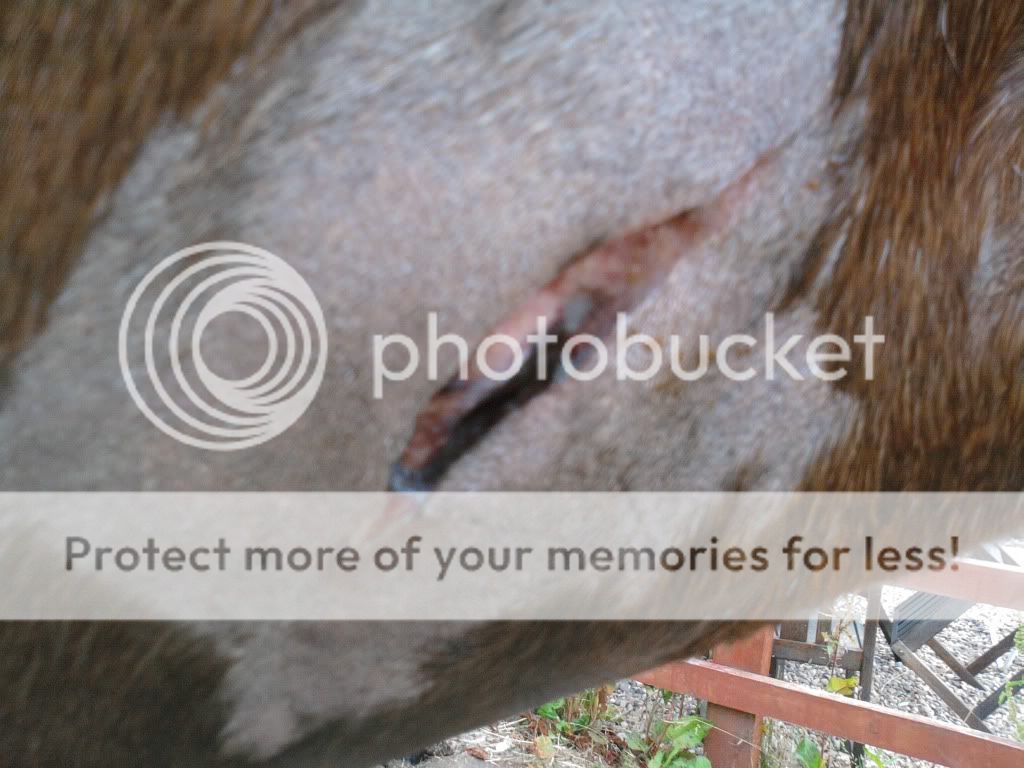
My mare has got an old scar on her back from rainscald (before I got her) - This has ended in a patch on thin black skin - almost feels like a bin bag right under the saddle area.

It hasnt caused her any problems for nearly 2 years but in the last week she has managed to rub/scratch it which has ended it up in being very sore - and the sun and flies are not helping.

I have read up on manuka honey being brilliant for healing and preventing infection - do you think this would do the trick? Need it to heal asap as I cant ride until this is healed (I tried it and its obviously hurting her :( )

Where do you get it from? I have looked on Holland and Barratt and there is so many different ones!

Thanks
 
Manuka Honey is supposed to be amazing, When our dogs had kennel cough we gave them this for their throats - we also use it on their feet if they cut them. But my dad who is a bee keeper, says it is a load of rubbish and no different to any other honey, apart from the price!!! :eek:
It seems to work on the dogs, but i imagine spreading honey on the horses back may attract flies?
 
Manuka Honey is supposed to be amazing, When our dogs had kennel cough we gave them this for their throats - we also use it on their feet if they cut them. But my dad who is a bee keeper, says it is a load of rubbish and no different to any other honey, apart from the price!!! :eek:
It seems to work on the dogs, but i imagine spreading honey on the horses back may attract flies?

The moral of the story...........listen to you Dad. Honey is honey.

What about Sudocrem? it's good fro general skin problems and sores. Bed sores in humans and nappy rash and it's cheap.
 
I did think about it attracting flies.....

I have just read that its really good for quick healing....

I have been using sudocream or dermoline and it hasnt made much difference to be honest
 
HI - am new to the forum but I have used Camrosa ointment before to heal a cut and it worked really well.

Alternatively, and probably best given where it is, is to use aloe vera gel - as pure as you can get - I have used this on myself, kids and horses for all sorts of things - good luck :)
 
HI - am new to the forum but I have used Camrosa ointment before to heal a cut and it worked really well.

Alternatively, and probably best given where it is, is to use aloe vera gel - as pure as you can get - I have used this on myself, kids and horses for all sorts of things - good luck :)

I once used Camrosa on her legs ...... it resulted in her coming up in a massive lump between her back legs - allergic reaction :( shame because its good stuff
 
I used manuka honey on my pony when he managed to get an inch deep by 2 inches long cut in his neck, right beside his juggular last summer. We started off using a cream the vet gave us but after three/four days we started using Manuka honey, it didn't really attract the flies much to be honest. This is what it was like freshly done (excuse the size):
Photo0242.jpg

Photo0240.jpg

And this is all thats left, excuse the start of a clip and bad mane! (you can just make out the slight scar tissue that had formed with the other cream half way down his neck):
Photo0257.jpg

Our vets were very impressed and when it had first been done they told us that there could potentially be a lot of scar tissue but the Activon Manuka Honey stopped that so now I swear by it, we used it on our dog when he cut his side and chest open which you can't even tell he had stitches with now :)
 
Following taken from www.manukahoney.co.uk

"All honey has some level of the antibacterial chemical hydrogen peroxide, which is produced by enzymes in the honey. These enzymes are easily destroyed by exposure to heat and light and also by contact with body fluids. It is now understood that some rare honeys have an antibacterial action that is separate to the peroxide effect, resulting in a much more persistent and stable antibacterial action."

Manuka honey is given a UMF rating (unique manuka factor). It needs to be above 10 to be considered theraputic.

i read up about manuka honey when one of our chickens had a huge open wound on her side. the poultry vet gave us some to apply to and inside the wound in conjunction with oral antibiotics. It did the job to a certain extent but we eventually had to have the wound stitched together as it just wasnt closing up. The vet told us to continue applying manuka over the area till it was fully healed.

Having used up the tube the vet gave us i have now taken to using turmeric mixed to a paste instead. It too has antiseptic & healing properties, it cost me 47p for a jar and to be honest the wound & whole area around it are looking much better after only a couple of days, whereas it hadnt looked any different after 10 days of manuka honey (post-stitching) The only downside of it is that Ada looks half oven-ready, a bald side and 'basted' a lovely golden brown :p
 
Manuka Honey is supposed to be amazing, When our dogs had kennel cough we gave them this for their throats - we also use it on their feet if they cut them. But my dad who is a bee keeper, says it is a load of rubbish and no different to any other honey, apart from the price!!! :eek:
It seems to work on the dogs, but i imagine spreading honey on the horses back may attract flies?

Your Bee Keeper dad is wrong! Active Manuka Honey is brillient stuff for healing - but it must be ACTIVE Manuka honey. The higher the rating the better.

See pics below 1st pic just after colliding with gate, second a few days later skin has broken down and stitches are no longer holding wound together. Third pic is 5 weeks after original injury with horse back in work. After stitches came apart Active Manuka Honey was used on the wound daily, melted to syringe into the deep part and the rest just spread on.
Tracheostomy_003web.jpg
100_0345web.jpg
100_0431web.jpg
 
I used it on a very bad over reach last year and it healed it very well. I couldnt keep anything else on it and couldnt keep the wound dressed either so just needed soemthing that stayed on and healed. The mare was always chewing at the cut and litereally as soon as I started using honey she stopped so it must have made it feel better.

I just drizzled it on twice a day. Have to admit I didnt use Manuka I used one done locally to use called Medibee http://www.medibee.co.uk/ which has very similar properties and found it good. Would certainly recommend it to anyone else.
 
Used on our yard a lot with great success. Must be Active and the higher the number the better but I thought min of 12++. I understand it's used by vets in NZ as a regular thing! Doesn't seem to attract flies too badly!
 
Your Bee Keeper dad is wrong! Active Manuka Honey is brillient stuff for healing - but it must be ACTIVE Manuka honey. The higher the rating the better.

Can you point out the comparative studies, please.

I'm not saying it ISN'T different, just that from what I've read the "studies" have been more about clever promotion than comparing the effect with other types of honey. Other indigenous peoples from other regions of the world also have traditions of using honey for healing with great success.
 
Can you point out the comparative studies, please.

I'm not saying it ISN'T different, just that from what I've read the "studies" have been more about clever promotion than comparing the effect with other types of honey. Other indigenous peoples from other regions of the world also have traditions of using honey for healing with great success.

Here is a link to The University of Waikato research page on Manuka Honey

http://bio.waikato.ac.nz/honey/special.shtml
 
One of the reason's honey works so well is it's very high sugar content. Bacteria are very sensitive to dehydration and the honey draws water out, killing then. It also reducer swelling and inflammation the same way: sometimes the body can be it's own worst enemy as too much swelling (massive water intake) hinders healing.

Sugar paste bandages are still used today as effective antibacterial dressings for the same reason.

Manuka honey has the added benefits of teatree's antiseptic properties too (manuka's another name for teatree)
 
Cool, thanks. :)

Try not to miss the line hidden away that says"None of the results being obtained clinically should be considered evidence that Active Manuka Honey is more effective than other honey - a comparative clinical trial will be needed to establish that."
 
Honey has been used for healing wounds from way back when (medieval times if not earlier I believe).
At work we have always used honey bandages, on some really nasty wounds. One horse nearly ripped its back leg off jumping over a fence and getting stuck (why I dont know, and it was newly professionaly built non-barbed wire fence). Anyways it has very small scar on its hind leg that can be easily covered for showing. This was just local set honey.
I have to say though, I have had amazing results with Manuka honey. One horse tried to jump over a 6 + foot metal partition nearly ripping its foot off. It was horrific! The pony's leg was washed then had manuka honey bandage on it. 3 weeks later it has nearly healed, now there is a scar less than an inch in length and no proud flesh. There was also no infection in the wound.
So in conclusion... honey is amazing stuff, Manuka honey seems to work very well.
(p.s don't let the horse know what is on the dressing, one horse at work would rip through layers of bandages and gamgee to get to the dressing and eat the manuka honey after someone let him sniff the dressing, he loves the stuff!).
 
I did see that, Mike, yes . . . ;)

Don't get me wrong, it's not that I don't believe it, just that I'm curious why, if it's so obviously better, no one has done a head to head trial.
 
my vet used activon manuka honey on a wound dressing for my horse yesterday - i was surprised to see it actually being used by a vet instead of more conventional applications like intrasite gel etc.
 
I used Manuka honey on a torn nose on a show pony (inflicted by another horse) & it did a brilliant job. You couldn't see where the tear was now, it healed fast & clean.
 
We have been using any sort of honey now for over 15 years with brilliant success. My current vets had always wanted to try it but were unable to until I said I wanted to use it on my horses as I always had. They are now converted!! I cannot comment on whether Manuka is better than 'any honey' as I have only used 'any honey'!

With a yard of 25 horses we have given it a fair trial over the years.
 
Well im a convert of manuka honey my youngster lacerated his chest last week, i bought some from tescos, and plastered it on him 3 times a day { i wish it was on a place that i could have bandged as i think it would have worked a lot better} but 7 days later it looks healthy with pink skin growing back, and no vets visits for antibiotics,:D
 
Agree that it must be active Manuka honey itdid wonders for a mare in my yard with a bad cut.
The Dermatologist also recommended it for my fingers as I had contact dermatitis, so the medical profession does recognise the healing properties of the honey.
In the 1970's on my nursing attachment during my training a lovely district nurse was using it on a lady with an infected ulcer on her leg. It worked a treat.
 
My mare had mud rash which resulted in an inch deep wound about 2" long in the bulb of her heel. It was awful and was a horrible wound. Vet gave me a tiny tube of surgical grade manuka honey..and the result was incredible. I have never seen a wound heal like it. It took about 4 weeks to heal and I can not speak highly enough of the stuff.
 
Im a nurse and Manuka honey is now used as a treatment on the NHS. Honeys have to be a certain type to have any antibacterial properties although several honeys are sterile, this site is for human medical grade honey but might explain things better http://www.medicalhoney.com/index.php for the price diffrence get the right stuff as it will last and still cheeper than some of the equine skin preperations!!!
 
For those of you interested this is the study done at Waikato University in New Zealand
http://bio.waikato.ac.nz/pdfs/honeyresearch/bioactives.pdf

In general so long as you use Activated Manuka Honey it will treat your horse safely.

The medical professions have to have the honey sterilised. Manuka Honey generates Hydrogen Peroxide which in itself sterilises the wound.

We use it on everything here in NZ - a friends horse split it's shoulder open, it was treated only with off the shelf Active Manuka Honey.
 
Last edited:
We have been using any sort of honey now for over 15 years with brilliant success. My current vets had always wanted to try it but were unable to until I said I wanted to use it on my horses as I always had. They are now converted!! I cannot comment on whether Manuka is better than 'any honey' as I have only used 'any honey'!

With a yard of 25 horses we have given it a fair trial over the years.

Active Manuka Honey has higher healing properties than normal honey - have a read of the article in the link I put in the above post
 
I've used Manuka Honey for wounds but you need to make sure the manuka honey you use has the right amount of antibacterial activity or else you won't get the full benefits. This is usually indicated by a UMF rating and according to the creator of the UMF designation, Dr. Peter Molan, it needs to be a minimum of 10 (from manukahoneybenefit.com).

However, i found out that UMF ratings can vary due to different testing conditions and there's been some research which has showed that when UMF 10+ manuka honey was retested in laboratory conditions, it was in fact rated at 7 or lower. Due to this, when choosing manuka honey it's always best to choose something that is higher than UMF 10+ to ensure that it will work.
 
Archaeologists in Egypt found 2000 year old jars of Honey in their excavations, it was sill edible!! A testament (pun intended) to it's antibacterial properties!

Also good as a natural antibiotic is extract of grapefruit seed and of course silver, which is now used in plasters and paint and curtain material in hospitals. I have used citricidal and colloidal silver on me the horses and dogs and saved a fortune on antibiotics!
 
Top