
rara007
Well-Known Member
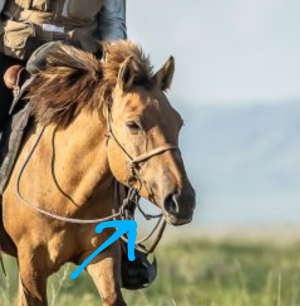
It Seems to be hanging under his mouth…!


I think it's underneath the chinIs there even a bit in this pony’s mouth? Looks happy enough, whatever!
I think it's underneath the chin.Is there even a bit in this pony’s mouth? Looks happy enough, whatever!


Criollos are tough! Seen these in action, very agile and impressive, carrying adult men no problem.I think 450/475 is probably reasonable for a Criollo. Obviously depends on the horse and stage of fitness .
I expect the Mongolian Horses weigh quite a bit less than that. I think they are a fair bit smaller.
Where can I find the poetry plzCriollos are tough! Seen these in action, very agile and impressive, carrying adult men no problem.
And plenty of Section Ds weigh a great deal more than 500kgs, too, without being fat! You must consider the animal’s build, amount of bone, and quality of limbs in this sort of equation.
Ghenghis Khan’s little horses were incredibly enduring, on minimal rations, and apparently some of those lived to really good ages (cf poetry about warriors’ favourites).
- I’m not sure Mongols will appreciate being advised their equestrian culture and practices have been scientifically dissed!

It is, unless the shadow from a lunar eclipse or something, either way, not being viciously applied by anyone at all! And looks suspiciously like a jointed snaffle, rather than instrument of eastern torture. Any bit can be vile if the rider makes it so.It Seems to be hanging under his mouth…!
Will see if I can find you some verses, but there are some really good books (in English) on the ‘golden hordes’, and certainly was fascinating - if hair raising!Where can I find the poetry plz
the mongol empire is FASCINATING
Tbh, I’ve seen Criollos working on ranches in South America, and they don’t suffer fools gladly, either! Or snakes, or dogs....I have a very fit muscled cob who is 14.2 and 450kg. My 13h one is 400kg when she's fit and wouldn't bat an eyelid at 20%.
The Mongolian ponies are as tough and hardy as they come and pretty feral. If they don't feel like taking a rider racing they dump said rider. Swapped out at checkpoints and regular vettings
If I was younger & in better health I'd have a go.
perhaps it hangs there and if they need it they put it in the mouth (unless anyone has any better ideasIt Seems to be hanging under his mouth…!
 )
)perhaps it hangs there and if they need it they put it in the mouth (unless anyone has any better ideas
this is my little chap before he came to me. If you scroll down the link you will also see his dad and his brother in Uruguay..Criollos are tough! Seen these in action, very agile and impressive, carrying adult men no problem.
)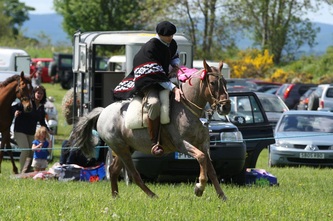

Arrayan Numa ! Gorgeous - lucky youthis is my little chap before he came to me. If you scroll down the link you will also see his dad and his brother in Uruguay..
These horses would make nothing of doing the Gaucho derby. (and the riders would be grinning at the end of it
Arrayan Numa
Papered and Branded Criollo Stallion. Fully Licensed in the UK with Weatherby's Non Thoroughbred Register as "Arrayan Numa VII" 14.2hh, Red Roan, born 2004. Imported from South America in 2007....www.chamfronstud.com
if Mancha and Gato could do 10,000 miles in pretty harsh conditions then I don't think a ride over 500km in Patagonia using 7 horses per rider is going to cause these horses too many problems.


Reading this I see the stallions have to carry 17.5 st. "Arrayan was placed second in "La Marcha" in Uruguay as a three year old. This is a 750Km endurance race, to be completed in 14 days, at a minimum speed of 10Km an hour. Stallions are required to carry 17.5 stone and live of the land, receiving no supplementary feeding for the duration of the race."this is my little chap before he came to me. If you scroll down the link you will also see his dad and his brother in Uruguay..
These horses would make nothing of doing the Gaucho derby. (and the riders would be grinning at the end of it
Arrayan Numa
Papered and Branded Criollo Stallion. Fully Licensed in the UK with Weatherby's Non Thoroughbred Register as "Arrayan Numa VII" 14.2hh, Red Roan, born 2004. Imported from South America in 2007....www.chamfronstud.com
if Mancha and Gato could do 10,000 miles in pretty harsh conditions then I don't think a ride over 500km in Patagonia using 7 horses per rider is going to cause these horses too many problems.
I am.not sure anyone is dissing the Mongolian equestrian culture and practices given the Mongolians themselves tend to be of much smaller stature in general. I also don't think there is anything wrong with 'dissing' practices on horse welfare grounds. Just because a horse doesn't 'appear' to be distressed doesn't mean it is right to make them ensure such heavy weights. I think every culture should be prepared to progress when it comes to animal welfare.Criollos are tough! Seen these in action, very agile and impressive, carrying adult men no problem.
And plenty of Section Ds weigh a great deal more than 500kgs, too, without being fat! You must consider the animal’s build, amount of bone, and quality of limbs in this sort of equation.
Ghenghis Khan’s little horses were incredibly enduring, on minimal rations, and apparently some of those lived to really good ages (cf poetry about warriors’ favourites).
- I’m not sure Mongols will appreciate being advised their equestrian culture and practices have been scientifically dissed!
Having seen Arabs (of the old fashioned stamp) do endurance with a bloke who must have weighed well over 16 stone and show no ill effects [Tunisia not UK] I do think that a very muscled, very fit, very adapted horse can do more than the 15 - 20% we quote in the UKI am.not sure anyone is dissing the Mongolian equestrian culture and practices given the Mongolians themselves tend to be of much smaller stature in general. I also don't think there is anything wrong with 'dissing' practices on horse welfare grounds. Just because a horse doesn't 'appear' to be distressed doesn't mean it is right to make them ensure such heavy weights. I think every culture should be prepared to progress when it comes to animal welfare.


Yes, it is quite expensive. I'm not sure if you are implying this is a bad thing? If you consider the logistics, we're talking around 1,500 horses (or ponies, if you prefer), which the herders need to be compensated for. Along with food and accommodation, which again, the locals are compensated for. Then there are all the vets ans medics that need to be flown in, the specially designed saddles, and the sheer cost of the time and effort the organisers have to put in to setting the course etc.Mongol derby entry fees
ENTRY FEE:
2025: $17,500 (USD)
2026: $18,000 (USD)
2027: $19,000 (USD)
The ponies are 12-14hh, though the organisers get very cross if you refer to these diminutive equines as ponies.


There are horses that are bred for survival of the fittest, like the Mongol and south American work horses.Having seen Arabs (of the old fashioned stamp) do endurance with a bloke who must have weighed well over 16 stone and show no ill effects [Tunisia not UK] I do think that a very muscled, very fit, very adapted horse can do more than the 15 - 20% we quote in the UK
I wouldn't want to see that guidance changed though because very few UK horses meet that criteria.
How fantastic!I have signed up for the 2027 Mongol Derby! Was hoping to bring it forward to 2026, but as someone mentioned previously, it is quite expensive so that's looking quite unlikely unless I manage to get sponsorship!
I personally believe the welfare standards for the horses to be very high, you have to remember these horses live semi wild on vast plains, eating the diet horses were originally designed to eat, unshod etc, so in many ways are already living a better life than a lot of leisure and competition horses in Western society.
They are rigorously vetted prior to the race.
Each horse does one leg of the race (there are usually around 29 legs, so about 35km each) and when a rider returns the horse to the next horse station they are vetted again- the standards are based on FEI endurance stats, but have been made more rigorous for the Mongol derby. If a horse is lame, or if its heart rate doesn't come down to the required level within the allowed time, riders receive time penalties, so they are incentives to look after the horses.
All riders are weighed (with all their kit) prior to the start of the race, and must come in under 85kg, with kit. So despite someone commenting that some of the men "look over 85kg", they definitely aren't!
The horse stations are run by Mongolian families, who are proud to have their horses used for the race, and are well compensated. The traditional nomadic culture is in decline, and anything that helps sustain it for as long as possible is a good thing in my view. The derby vets also treat any of their other animals needing attention, bearing in mind that a lot of these animals would get little, if any medical attention on a day to day basis.
I was amused by the view of a GPS navigated jolly across Mongolia for a lot of rich people, I mean I guess that's not entirely inaccurate but its probably a bit over simplified!
Riders do get GPS navigation devices, which will show you a straight line between horse stations but they do also need to read a map to see where there are mountains, cliffs, rivers etc. So whilst the GPS undoubtedly makes it easier, I'm not sure how well riders would do if they solely relied on that! And whilst I don't doubt the participants are well off (and let's be honest, anyone that owns a horse in the UK/Ireland etc is actually well off whether they feel like it or not!), I for one (ane certainly many other participants) definitely wouldn't be considered "rich" in comparison to actual "rich" equestrian folk!
I do think its an amazing way to experience a sadly declining culture. Experiencing proper "wild" Mongolia, eating traditional food cooked by locals, camping out or asking to stay with random local families between horse stations. Sure, the locals probably find it a bit odd/amusing, but I do feel (hope?) that they embrace it and enjoy sharing their culture!
Sorry, that was quite long, but in summary I think it's pretty great and I cant wait to do it!
You’ll not be speaking local dialect, surely?!Yes, it is quite expensive. I'm not sure if you are implying this is a bad thing? If you consider the logistics, we're talking around 1,500 horses (or ponies, if you prefer), which the herders need to be compensated for. Along with food and accommodation, which again, the locals are compensated for. Then there are all the vets ans medics that need to be flown in, the specially designed saddles, and the sheer cost of the time and effort the organisers have to put in to setting the course etc.
I'm not sure they get "cross" if you call them ponies, but its probably a bit disrespectful to the Mongolians, who consider them horses. In the same way as Arabs, and apparently Falabellas are always called horses, even when they're little
A full report will be requiredI have signed up for the 2027 Mongol Derby! Was hoping to bring it forward to 2026, but as someone mentioned previously, it is quite expensive so that's looking quite unlikely unless I manage to get sponsorship!
I personally believe the welfare standards for the horses to be very high, you have to remember these horses live semi wild on vast plains, eating the diet horses were originally designed to eat, unshod etc, so in many ways are already living a better life than a lot of leisure and competition horses in Western society.
They are rigorously vetted prior to the race.
Each horse does one leg of the race (there are usually around 29 legs, so about 35km each) and when a rider returns the horse to the next horse station they are vetted again- the standards are based on FEI endurance stats, but have been made more rigorous for the Mongol derby. If a horse is lame, or if its heart rate doesn't come down to the required level within the allowed time, riders receive time penalties, so they are incentives to look after the horses.
All riders are weighed (with all their kit) prior to the start of the race, and must come in under 85kg, with kit. So despite someone commenting that some of the men "look over 85kg", they definitely aren't!
The horse stations are run by Mongolian families, who are proud to have their horses used for the race, and are well compensated. The traditional nomadic culture is in decline, and anything that helps sustain it for as long as possible is a good thing in my view. The derby vets also treat any of their other animals needing attention, bearing in mind that a lot of these animals would get little, if any medical attention on a day to day basis.
I was amused by the view of a GPS navigated jolly across Mongolia for a lot of rich people, I mean I guess that's not entirely inaccurate but its probably a bit over simplified!
Riders do get GPS navigation devices, which will show you a straight line between horse stations but they do also need to read a map to see where there are mountains, cliffs, rivers etc. So whilst the GPS undoubtedly makes it easier, I'm not sure how well riders would do if they solely relied on that! And whilst I don't doubt the participants are well off (and let's be honest, anyone that owns a horse in the UK/Ireland etc is actually well off whether they feel like it or not!), I for one (ane certainly many other participants) definitely wouldn't be considered "rich" in comparison to actual "rich" equestrian folk!
I do think its an amazing way to experience a sadly declining culture. Experiencing proper "wild" Mongolia, eating traditional food cooked by locals, camping out or asking to stay with random local families between horse stations. Sure, the locals probably find it a bit odd/amusing, but I do feel (hope?) that they embrace it and enjoy sharing their culture!
Sorry, that was quite long, but in summary I think it's pretty great and I cant wait to do it!
Will be fine! There are various little equines like Prezwalskis, Caspians etc - you could potentially ride all over the world, causing offence…..I don’t think!No I guess not - i downloaded an app to learn a few basics but i haven't got very far! There will be translators at the horse stations but if you end up staying with a family between horse stations (as people often do) i think its a case of a few basic words and a lot of charades!
I think some people bring sort of flash cards with basic useful phrases on them too!
The Horse Boy! It is a fantastic book! I think there is also a movie, but i haven't seen it!Will be fine! There are various little equines like Prezwalskis, Caspians etc - you could potentially ride all over the world, causing offence…..I don’t think!
I cannot just remember the title or author (the father wrote it):
but a couple from America with a severely autistic child, who took the boy on a (very well documented), very lengthy, horseback trek through Mongolia, specifically meeting local shamans and ultimately to a senior priest with the ‘reindeer people’, to be purged of his autism - which totally worked. They now run some sort of centre for ‘special needs’ youngsters (in US), very focused on connecting with natural environment, animals, horses in particular. And apparently successful.
It’s fascinating, the little boy already had some affinity with a neighbour’s horse, but was at the extreme end of the spectrum - and was completely, permanently, transformed. It is well known, and would be of real interest to anyone doing a trip like yours, pretty unputdownable stuff.
It is also out of my budget but I've wanted to do it since I first heard about it years ago and I figured there will never be a good time so I might as well just enter and figure it out! And now I've entered and told everyone I'm going so I have to make it happen!I’m very jealous @Snow-pony, I would love to do it but sadly very much out of my budget anytime soon.
You will have to wait 2 years but I will absolutely do a full report!!!A full report will be required

you are so lucky and that was a really interesting post thank you.I have signed up for the 2027 Mongol Derby! Was hoping to bring it forward to 2026, but as someone mentioned previously, it is quite expensive so that's looking quite unlikely unless I manage to get sponsorship!
I personally believe the welfare standards for the horses to be very high, you have to remember these horses live semi wild on vast plains, eating the diet horses were originally designed to eat, unshod etc, so in many ways are already living a better life than a lot of leisure and competition horses in Western society.
They are rigorously vetted prior to the race.
Each horse does one leg of the race (there are usually around 29 legs, so about 35km each) and when a rider returns the horse to the next horse station they are vetted again- the standards are based on FEI endurance stats, but have been made more rigorous for the Mongol derby. If a horse is lame, or if its heart rate doesn't come down to the required level within the allowed time, riders receive time penalties, so they are incentives to look after the horses.
All riders are weighed (with all their kit) prior to the start of the race, and must come in under 85kg, with kit. So despite someone commenting that some of the men "look over 85kg", they definitely aren't!
The horse stations are run by Mongolian families, who are proud to have their horses used for the race, and are well compensated. The traditional nomadic culture is in decline, and anything that helps sustain it for as long as possible is a good thing in my view. The derby vets also treat any of their other animals needing attention, bearing in mind that a lot of these animals would get little, if any medical attention on a day to day basis.
I was amused by the view of a GPS navigated jolly across Mongolia for a lot of rich people, I mean I guess that's not entirely inaccurate but its probably a bit over simplified!
Riders do get GPS navigation devices, which will show you a straight line between horse stations but they do also need to read a map to see where there are mountains, cliffs, rivers etc. So whilst the GPS undoubtedly makes it easier, I'm not sure how well riders would do if they solely relied on that! And whilst I don't doubt the participants are well off (and let's be honest, anyone that owns a horse in the UK/Ireland etc is actually well off whether they feel like it or not!), I for one (ane certainly many other participants) definitely wouldn't be considered "rich" in comparison to actual "rich" equestrian folk!
I do think its an amazing way to experience a sadly declining culture. Experiencing proper "wild" Mongolia, eating traditional food cooked by locals, camping out or asking to stay with random local families between horse stations. Sure, the locals probably find it a bit odd/amusing, but I do feel (hope?) that they embrace it and enjoy sharing their culture!
Sorry, that was quite long, but in summary I think it's pretty great and I cant wait to do it!