Most expensive item in your horses' feed

Hackback

Well-Known Member
Joined
16 August 2019
Messages
1,079
Visit site
Generally I mean, not including medication or special supplements.

I'm still trying to work it all out, after being on full livery where everything was included. I think it may be the Re-leve - I seem to go through that at an alarming rate. A bag of chaff lasts a while, and speedibeet lasts for ages. I'm not sure about hay - I need to keep a record of when and how much I ordered. The horsehage is also expensive - I can't find a local haylage supplier of small bales - but they only get an armful of that every evening as a goodnight treat (because I was worried the baby's droppings were too dry after the grass gave up).
 
It is not just about how long a bag lasts, but also how many calories in a bag, especially if you are feeding for condition (as opposed to a token handful). If you bought two 20kg bags of horse feed for the same price and one had 8 MJDE/kg and one had 12 MJDE/kg then the 12 MJDE/kg would be better value for money (all other factors being equal). If you were feeding the 8 MJDE/kg one then you would need to feed more of it than the 12 MJDE/kg one. You also need to look at bag sizes as this can vary - the standard size seems to be 20kg but some are 15kg and some even lighter. This isn't always obvious because chaff-type feeds tend to be very 'fluffy' and take up more volume than pelleted feeds) so the bag looks big but might not actually weigh that much.
 
Chaff is a stupid feed, don’t get it at all. It’s cheap for a reason. Ruins their teeth and is pointless as hay is far better. If you feed Saracen releve for ulcers then I have done a spreadsheet as I went through the same query myself about cost effectiveness! Basically I still feed it now. It’s decent protein and low starch 8%<. Finding that combination is tricky.
My requirement is decent protein around 14% and starch <8%. I refuse to buy 15kg bags as done the sums and it doesn’t stack up against 20kg ones.
 
Chaff is a stupid feed, don’t get it at all. It’s cheap for a reason. Ruins their teeth and is pointless as hay is far better. If you feed Saracen releve for ulcers then I have done a spreadsheet as I went through the same query myself about cost effectiveness! Basically I still feed it now. It’s decent protein and low starch 8%<. Finding that combination is tricky.
My requirement is decent protein around 14% and starch <8%. I refuse to buy 15kg bags as done the sums and it doesn’t stack up against 20kg ones.

Don't agree with your comments about chaff, it bulks up the feed and slows it down going through the gut obviously. I feed sugarbeet and oats would just be a mush without the chaff, plus as it is lucerne chaff it gives them some calories. Also how does it ruin the teeth, I have never heard that before. Probably not that cost effective however.
 
Don't agree with your comments about chaff, it bulks up the feed and slows it down going through the gut obviously. I feed sugarbeet and oats would just be a mush without the chaff, plus as it is lucerne chaff it gives them some calories. Also how does it ruin the teeth, I have never heard that before. Probably not that cost effective however.
It’s a major issue in getting caught on gaps in their teeth as they are not really designed to eat something like that. I feed sugarbeet and no mush. It’s a real modern UK thing about feeding chaff now. It’s just not fed in USA etc I just think of it as cob owner pacifier. They want to feed their cob something to make themselves feel better so they feed chaff which has zero benefits as the quantities to get vits/mins/oil and any of that other crap feed companies tell you is ridiculously high.
 
Hay by far from a food point of view £20/week. If you include supplements then its Formula for Feet which has gone up in price and I think that works out about £22/week. If I had a horse with diastema then I wouldn't feed chaff, as its does get stuck in the gaps but chaff itself doesn't ruin the teeth and I do feed it to mix in the F4F and salt and give it some bulk
 
It is not just about how long a bag lasts, but also how many calories in a bag, especially if you are feeding for condition (as opposed to a token handful). If you bought two 20kg bags of horse feed for the same price and one had 8 MJDE/kg and one had 12 MJDE/kg then the 12 MJDE/kg would be better value for money (all other factors being equal). If you were feeding the 8 MJDE/kg one then you would need to feed more of it than the 12 MJDE/kg one. You also need to look at bag sizes as this can vary - the standard size seems to be 20kg but some are 15kg and some even lighter. This isn't always obvious because chaff-type feeds tend to be very 'fluffy' and take up more volume than pelleted feeds) so the bag looks big but might not actually weigh that much.
I'm not sure what the OP actually was asking. If they are asking about how to feed economically for a purpose (not just so they have a bit of something in their feed bowl when the others are fed) I agree with you entirely
 
Is chaff a modern thing? There was a machine that made chaff on the farm when I was a kid. I'm pretty sure I was feeding the molasses stuff when the dinosaurs were around.

Hay is my most expensive fodder. This year with drought then ice especially so. Mine are all good doers so not a lot in the bucket. Balancer I suppose and vitamin E
 
One of mine needs as many calories as possoble in as small a volume as possible, so he doesn't get chaff. The other two get their minerals etc in a bit of soaked UMSB and grass nuts. They all get truly adlib haylage, so I don't feel the need to add chaff.
 
Thank you everyone. Very interesting about the chaff. I feed it because I've kept my older horse's feed as close as possible to what he had on livery, I'd never thought of it as anything other that a useful medium to get more fibre in the gut and slow down their eating. They both have ad lib hay anyway.

Tbh I'm not sure what the point of my post was either, other than I wondered if I was on the same lines as those of you who had been doing this for longer than me. I've had some very useful insights and tips from your replies, thank you.
 
Don't agree with your comments about chaff, it bulks up the feed and slows it down going through the gut obviously. I feed sugarbeet and oats would just be a mush without the chaff, plus as it is lucerne chaff it gives them some calories. Also how does it ruin the teeth, I have never heard that before. Probably not that cost effective however.

Same here, sugarbeet, oats and chaff with a slug of linseed oil (although that's only when he's in work....at the moment he's just getting chaff, poor starved pony). I like chaff, super useful for a good doer.

I'd have to do the maths but the most expensive component will be either the oats or the linseed oil, although oats come from a local farmer and linseed oil I buy in barrels and share with another horse to keep the cost down.
 
Is chaff a modern thing? There was a machine that made chaff on the farm when I was a kid. I'm pretty sure I was feeding the molasses stuff when the dinosaurs were around.

Hay is my most expensive fodder. This year with drought then ice especially so. Mine are all good doers so not a lot in the bucket. Balancer I suppose and vitamin E

I have had a quick look into this and it appears it’s a slightly different product. I am also guessing it’s a slowing mechanism as so many straights but very different quantities to what is fed now!

Food for horses in the 1800s

Youatt describes the use of mangers for feeding chaff (chopped hay and straw) mixed with oats and beans. His recommendation for some of the working horses:
[E]ight pounds of oats and two pounds of beans should be added to every twenty pounds of chaff… Thirty-four or thirty-six pounds of the mixture will be sufficient for any moderate-sized horse, with fair or even hard work. The dray or wagon horse may require forty pounds.​
According to the author, the hay for the chaff is cut, stacked, and kept for at least a year, during which time “a slight degree of fermentation takes place in it.” He recommends that chaff be “composed of equal quantities of clover or meadow hay, and wheaten, oaten or barley straw, cut into pieces of a quarter or half an inch in length; and mingled well together…”
https://blog.biostarus.com/feeding-horses-1800s/
 
Havens slobbermash quickly followed by suppleaze gold. Otherwise linseed oil, oats and readigrass plus limestone flour.

Only reason I feed the readigrass is because he’s not a big haylage eater (so a way of increasing fibre intake) and then I have a bag of something to feed at shows to stop acid splash etc.
 
The haylage i import costs most. I buy 2 varieties and mix it for better balance. The winter cost is the cost of monthly livery just in forage alone, despite having them at home. Its worked well for a few years and far improved health, so effectively saving money+time overall as im not adding lots of other extras, to make up lack from the forage.

As omega 3 is high only in fresh grass and low in all hays, during winter i add ground micro. Linseed. They do very well on it, very shiny winter fluffy coats and hold their weight with 1 piled handful per day.
For a couple of years i did try linseed oil, but weirdly didnt see much benefit, so think the seeds have other beneficial nutrients that compliment the omega 3 in them, rendering much better results.
(the oil oxygenates quickly too and can go rank, oxygenated omega 3 turns it into free radicals, needs to be filtered, stored airless and refrigerated ideally to keep the oil fresh. Im not sure there’s many sources in the equine feed market that follow such protocols, unlike the human food grade linseed oil which you usually find refrigerated)
 
It was Equitop Myoplast which was brilliant for helping my horses muscle development but now he can't be ridden its back to Healthy Hooves and Hay as the most expensive items.

Big round bale of hay is £35 every 17/18 days.
 
Last edited:
I don't agree with the comment that chaff is rubbish - it certainly isn't ruining my horse's teeth. If he had diastema I wouldn't feed it, but he doesn't.

My biggest feed costs without diving down the supplement rabbithole are hay and haylage at £35 a fortnight, whereas my bag of basic chaff lasts about 3-4 months and a bag of feed lasts about 9 months.
 
Chaff is a stupid feed, don’t get it at all. It’s cheap for a reason. Ruins their teeth and is pointless as hay is far better. If you feed Saracen releve for ulcers then I have done a spreadsheet as I went through the same query myself about cost effectiveness! Basically I still feed it now. It’s decent protein and low starch 8%<. Finding that combination is tricky.
My requirement is decent protein around 14% and starch <8%. I refuse to buy 15kg bags as done the sums and it doesn’t stack up against 20kg ones.

I agree in some respects, the person I share the yard with feeds her massive hunter a fair amount of Hi-Fi, total waste of money for a horse like him, he gets ad-lib hay, he just doesn't need it and it's not cheap!

As for being a cob owner pacifier, how about a cob/fattie pacifier? Not nice when your mates are getting a bucketful of grub and all you get is hay! Keeps them quite and not feeling left out, may also be needed to carry supplements, medication and even a healthier alternative to grazing for those with laminitis or EMS.

As for it being bad for their teeth, can't say that's been my experience.


As for the original question, I'm currently feeding mine Dengie Healthy Tummy at £21 a sack ?‍♀️
 
If we exclude hay - 1/2 a bale a day at £5.50 a bale- then the Agrobs Musli.

I did a spreadsheet, how much each thing costs, day I opened the bag, day it was finished so how long it lasts, price per day.

The Musli is the most expensive at 70p a day but it's the thing that keeps a fussy horse that's prone to lose weight eating. He also gets grasstastic to stretch it out and Copra for the calories but he doesn't like sloppy feeds so I need enough chewy stuff in there to keep him eating. Cheapest in the Linseed, not per bag but as he only gets a cupful a day for the EFAs, it lasts.

In our case we need chaff to get keep him eating but I go for more calorific grass based options.
 
Having just come from the feed shop to find Ambers combo of Saracens Competition fit balancer and Equi-jewel now breaks the combined £85+ mark for a bag of each, I was reminded of this post. But a quick google and for the amounts she has, it seems still be my best bet to get her on a high protein and low starch combo. Ouch, though, it's gone up nearly £20 in total this year.
 
Pound for pound, my micronized linseed is most expensive bag in the feed bin.

However, I spend most £/month on Suregrow as have 2 horses solely on that as hard feed.
 
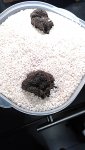
Well I certainly don't feed those. I can honestly say I'm never likely to even taste one in my life.

I'm not a great fan of them; I don't dislike then, but did me the flavour doesn't justify the price on the shops.

But then again, wet don't get them from the shops, but from the daughter of a truffle grower.

OH put two in a tub of arborio rice for making risotto.
 

Attachments

  • IMG_20221217_100044.jpg
    IMG_20221217_100044.jpg
    253.1 KB · Views: 1
Top