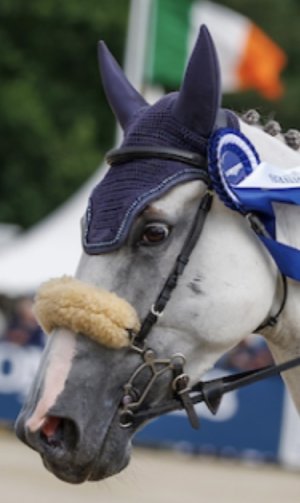
Myler combination bits ban and the internet

Caol Ila

Well-Known Member
Joined
23 January 2012
Messages
8,830
Location
Glasgow
Visit site
I've read that the FEI has banned the Myler combination bit. That has no bearing on my life because I will probably fly a rocketship into space before I compete anything at FEI level (or any level) eventing.

However, I do ride in a Myler combination bit, and I stumbled across an FB post today asserting that it's a horrendous contraption, which contravenes everything else I'd read asserting that it's less harsh than other types of gag bit.

I use it because I tried Fin in many different types of bits. Snaffles of various sorts, Bomber happy tongues, lots of things. With most of them, he'd open his mouth, throw his head around, and you'd have very little steering. However, with the Myler combo, he seemed to understand what was asked of him and would comply calmly and easily. Game changer. I rode exclusively in that for a while, then resumed futzing with milder options, including mechanical hacks (is that milder...?), bosals, more Bomber bits. These days he hacks in a little Fager Maria snaffle, but I usually school him in the Myler because he schools in that better than anything.

So which is it? Is it the harshest gag bit ever, like someone on the internet has said (and apparently the FEI), or at least no worse than Dutch gags, elevators, and all the other weird and wonderful shanked bits that are out there?
 
I tried one on a very strong horse I had, it was no miracle for him, in fact nothing was and I ended up riding him in a loose ring bridoon because nothing else was any more effective.

There are some pretty nasty looking contraptions to be seen on high level competition horses, it does seem odd that these have been singled out.
 
I guessing this is a social licence thing. It has got one hell of a leverage action with the length of the shank combined with the length of the piece above the bit, and the string noseband looks to have a sharp bite too.

A ban is probably better than the confusion over the last few weeks where people have been pulled from competitions for having modified the bit when they haven't.

If Fin likes it, he likes it, no worries there.

I'm more confused about why the Happy Mouth loose ring with eggbutt sleeves on the rings is banned for dressage, that just seems to be a silly hangover from the banning of circular rubber bit guards because they block the judge's view of the mouth. It's a fabulous invention combining the loose ring action with the avoidance of pinching of an eggbutt, both of which are dressage legal.
.
 
I can never find random FB posts again but a bit fitter said when myler first came to the UK they trained people on their bits and it actually spreads the pressure.
 
I can never find random FB posts again but a bit fitter said when myler first came to the UK they trained people on their bits and it actually spreads the pressure.


Well that's true but it creates so much leverage that it needs to restrict how much of that goes through to the poll with the noseband.

People get fixated (and horrified) by the length of the shank on western bits. But there's so little metal above the bit on a western bit that the long shank actually creates very little leverage and makes the bit kinder, not harsher, because it takes a much greater action of the hand to create much contact with the mouth.

The Myler Combination has as much metal above the mouthpiece as it does below it. The force of the leverage is bigger than any other bit I can think of, by a long way. They then prevent that from going straight to the poll by having it tighten a piece of string around the nose. I do think it it's pretty stand-out for its ability to be harsh in the wrong hands. The other side of that being that is better to be light with a harsh bit than harsh with a light one, so it has its uses.

But I can see why the FEI don't want it on horses in competition.
.
 
It’s a bit I hate .
I do have one somewhere we tried it on H as it was one of the things he been in previously he had a scar on his nose for the rest of his life to show for it .
 
I can never find random FB posts again but a bit fitter said when myler first came to the UK they trained people on their bits and it actually spreads the pressure.
It was a post by Bit World shared on either BE or Twittereventing. Made interesting reading. 🤔
 
  • Like
Reactions: SEL
30 years ago (when I was about 11) and about the time mylers were first appearing on the mainstream British market, I couldn't see how people said hanging cheeks gave poll pressure. It has taken most of the last 3 decades for mainstream thinking to draw the same conclusions. However, at no point have I disputed in any way
Myler were pretty revolutionary when they came out, taking in to consideration mouth conformation, moving away from the somewhat one size fits all that we had back then. However the fact they offered "training" about how the bits worked - feels like marketing, and the whole you can't understand as you didn't get the training feels icky to me, I've got a pretty good grasp on engineering type stuff and pressure and levers, if it looks like a duck, walks like a duck, quacks like a duck I don't think training me to think it's a pigeon is appropriate.
So, yeah I think that bit is strong, maybe even potentially harsh. But, I also think, horses for courses if it works and you've attempted other things and they don't work as well and/or the horse isn't happy in them I don't judge an individual with a balanced seat and a light touch using one. It's not ideal but I'm not sure I think riding at all is "ideal" so you've got to do what works
 
I suspect like many things, such as the whip rules in show jumping, it's not that the bit used lightly/correctly is an issue, it's that there is a greater potential for abuse. Most people I know use a normal crop if they're going to carry one, but that option was removed from the sj ring due to consistent abuse, I suspect this is similar- it's easier to ban the bit than regularly have to haul competitors up for misuse.
I've never been a fan of myler bits myself, as the potential to cause pain/injury is greater IMO and as above their marketing felt a bit icky, but if it works for a particular horse and you have light enough hands to carry it off, then I'm not going to condemn anyone that uses one. Just as I won't use spurs, because my lower leg is too unstable, but that doesn't mean I don't think anyone should.
 
I don’t use the myler, but the bomber combination has been absolutely amazing for Pepsi. It’s the only bit for jumping that doesn’t cause him to yank his head to the floor and reopen the scar tissue in his mouth (even with barely any contact, let alone when I had to ask him to come back to me)

I’m not sure how the leverage compares between the two, but as far as I can work out, the higher you have the stopper, the gentler it’s meant to be. I think because it requires more of a pull before the bit part comes into effect. So it’s been really interesting to see the discussions about the myler
 
Interesting there's been comments about bombers. I like their bits generally but similar to myler - with knowledge and understanding of equine mouths, facial nerves etc they also seem to produce bits which are engineered for better comfort etc and also some hecking sharp ones...
 
Milestone Equestrian has posted some interesting thoughts on bits:

“The bit is only as harsh as the rider’s hands.”

This is one of the biggest lies told by horse people, used to justify harsh equipment without honestly looking at the mechanics of it.

The entire purpose of “bitting up” is to select equipment that amplifies the effect of the hand.

Meaning that while the rider might be applying less pressure to the reins than they would in something softer, the mechanics of the bit make it feel sharper to the horse.

A twisted wire bit is rolled to create more pressure points and is abrasive so the horse is less likely to lean on it.

Pressure applied feels more uncomfortable in this type of mouthpiece than it does in a smooth one.

Gag bits are meant to add leverage to the mouth and poll area of the horse, making any pressure applied to the reins more aggressive than it would be with a direct action snaffle bit.

How the rider uses their hands can make the bits less aggressive than they COULD be with rougher hands but bits are as aggressive as their mechanics allow them to be.

No amount of soft hands will cancel out bits that have harsh mechanics.

Riders who truly seek to have soft hands will not want to weaponize them with harsh equipment that can be misused far more easily and that, even with “correct use,” are leveraging discomfort for increased control of the horse.

As riders, it’s our job to take accountability for the equipment we use and not downplay the effect of it.

Claiming the bit is only as harsh as the rider’s hands is a convenient excuse that results in a lot of equine discomfort in order to benefit human desires.

Ultimately, once you opt for harsher mechanics, you’ve made the decision to make your hands feel less soft to the horse.

Yes, you can still cause pain and manhandle horses even in the softest snaffles or bitless.

But, the amount of pressure needed to be applied is more than what it would be for mechanics that amplify the effect of the rider’s hands, meaning the margin for error is not as small.

All of that aside — there are solutions to managing horses who are strong and difficult to control that do not involve use of more aggressive equipment.

Sure, this might not result in the same instant gratification that helps the rider guarantee little to no deviation from their timelines and goals.

But, there is a reason why harsher equipment provides such quick fixes.

And the honest truth is that as soon as you using increasing levels of discomfort for control, the horse has no choice but to respond more quickly or be in more pain.

The bit is as harsh as its mechanics allow it to be.

Rough hands can make anything more harsh but certain equipment will be harsh at rest or with the smallest amount of pressure.

Take accountability for the equipment that you use and don’t use harsh equipment if you don’t want to deal with people noticing how the mechanics work and pointing it out to you.

The most polished of riders with the best results in training can sustain results without relying on harsh equipment for control.

The softest of hands will be accompanied by equally soft equipment because they don’t want to sharpen how the horse experiences rein aids.

Soft hands don’t seek weapons.

That is the simple truth.


They can be a bit extreme. However, they do make some points that are worth considering.

I’m tired of horse people creating false dichotomies to justify use of harsh equipment without honestly considering the impact to the horse.

There are more options than yanking on a horse’s mouth in a soft snaffle or swapping to a twisted wire bit, gag bit or something harsher to use “less hand.”

You aren’t left with only the option of manhandling a horse or using harsher equipment.

You could address why the horse is running through the hand and being so difficult to manage.

Are they stressed?

Are they so unbalanced they can’t regulate pace?

Are they not ready to be jumping at the height they’re doing, or at all?

We have the capacity to make decisions that prioritize horse welfare.

We aren’t forced to only select between two options that put our selfish interests first.

People create these false binaries as a means of justifying the decision they want to make and justifying their choice to continue chasing their goals at any cost, even if it means sacrificing the comfort and wellbeing of their horse.

But, there are other options.

You can make the choice to prioritize your horse’s welfare in such a way that you’re not willing to put on that studded noseband, that gag bit, or whatever aversive equipment you can find as a means for getting into the show ring.

You can prioritize dealing with why horses become unmanageable instead of using increasingly aversive equipment as a bandaid fix.

There are more than two options.

Stop using logical fallacies to justify selfish treatment of horses and evade judgment for it.

No one owes it to you to placate internal guilt and pretend that the impact to the horse is different than it is.

Humans can use less hand with harsh bits because they demand a quicker response.

They’re made to amplify the effect of the hand, so while the human may feel as if their hands are being softer, it won’t necessarily feel that way to the horse if the mechanics of the bit increase the overall threat of the rider’s hands.

There are more than two options.

We can, in fact, delay instant gratification for the benefit of our horses and make the choice to avoid overly harsh equipment even if it would allow us to manhandle horses in a way that skips steps and gets us to our goals quicker.

If you chose not to do this, at least own up to it instead of creating a false binary and presenting yourself as if there were no other options.

It’s simply untrue and it is self-enabling to the detriment of the horse.
 
Milestone Equestrian has posted some interesting thoughts on bits:


They can be a bit extreme. However, they do make some points that are worth considering.
I can see some of their point, but they seem to fall into the same trap that a lot of people who 'bit up' do, that you just choose something stronger, rather than looking at what specific issue you have and choosing something that addresses that.
For instance, the old boy will tend to tank off with his head in the air when he's excited- he's got much better, but I wouldn't have been able break him of the habit in a snaffle, it would have been dangerous. Instead I swapped to a curb, which brought in extra points of control (poll, curb groove), the action of which encouraged him to lower his head to the point where I could bring him back. I still hack in a snaffle + Kineton, as the extra point of control across the nose helps on the odd occasion he doesn't want to steady up on a gallop. Extra points of control aren't necessarily about causing pain or heavier pressure and can help alter head carriage to bring the head back into a position where your aids are effective, or spread pressure over a larger area.
I do agree on her comments about twisted mouthpieces though, that is using pain/discomfort to control the horse.
 
Extra points of control aren't necessarily about causing pain or heavier pressure and can help alter head carriage to bring the head back into a position where your aids are effective, or spread pressure over a larger area.
I do agree on her comments about twisted mouthpieces though, that is using pain/discomfort to control the horse.

At the end of the day, It is about pain/discomfort and heavier pressure though, even if it's spread over a larger area.

Bottom line is that bits do use discomfort to control the horse. Any form of yielding to pressure does, technically. Can a horse learn to be comfortable in a bit? Yes, I think so.
 
At the end of the day, It is about pain/discomfort and heavier pressure though, even if it's spread over a larger area.

Bottom line is that bits do use discomfort to control the horse. Any form of yielding to pressure does, technically. Can a horse learn to be comfortable in a bit? Yes, I think so.
I'm not sure that it does though- why should pressure on the poll/nose/curb groove be more unpleasant to the horse than pressure solely in the mouth? If you are using the same pressure on more areas, you aren't necessarily causing discomfort. If you have to use a heavy hand in a snaffle, because the horse has his head above or below the point of control, you may well end up causing pain and possibly bruising. Obviously if you are using a heavy hand in a snaffle and continue to do so after swapping to a curb/gag, that will add discomfort to those other areas as well, but if the pressure is light to moderate, the extra areas of action will experience pressure rather than pain.
I don't buy that all pressure = discomfort, although plenty of people do train with escalating aids still, which is likely to lead to discomfort.
 
My understanding of the mechanics of the Myler (having watched some YouTube videos) is that despite the length of the shanks and purchases (the bit above the bit ring), it isn't capable of exerting as much leverage as other shanked bits because there's a little nubbin on the bit ring that stops it the shank from rotating at a certain point. And it also engages the noseband first, before the bit comes into play.

I did try Fin in a Dutch gag but found he backed off it too much, and if you rode it in longer than half an hour, he would continuously toss his head. He would also get head tossy in the mechanical hackamore, which also uses poll pressure. Given his response to both those things, I hypothesised that the head tossing was a response to the poll pressure. The fact that he goes to the hand in the Myler combo and doesn't toss his head suggests that whatever pressure it does exert is less annoying to him than the Dutch gag or mechanical hack.

I'm a bit baffled by the ban -- is it just eventing? I have seen people in FEI level eventing and SJ with combination bits that look a hell of a lot more serious than the Myler. Like huge hackamore shanks as long as my arm.

I went down the leverage bit/hackamore route with him because he was so unhappy in snaffles, but like I said in my OP, he went well in the Myler combo when i gave it a go. My logic was that maybe he preferred pressure in multiple points, rather than just in his mouth. The answer to that is probably, but not in the way a Dutch gag or a mechanical hackamore apply it.
 
I'm a bit baffled by the ban -- is it just eventing? I have seen people in FEI level eventing and SJ with combination bits that look a hell of a lot more serious than the Myler. Like huge hackamore shanks as long as my arm.

Long story short - and just my regurgitation of what has been on internet, so may not be factually correct:

Myler combo has been used widely in eventing and sj for years - and been through hundreds of FEI steward checks
At Kentucky (5* eventing) a rider was eliminated after their SJ round for being in the Myler combo.
Said rider (I think) had worn that bit xc in the same event and gone through the stewards fine.
Apparently (I'm just paraprasing) other rider(s) also used myler combo at Kentucky and weren't eliminated
Rider lodged an appeal at Kentucky
Of the 3 FEI stewards, 2 thought bit was fine, 1 didn't
Head of GJ rejected the appeal and sided with the 1 x objecting steward - rider was eliminated (but not other people using the bit).

The stance was related to some wording in the rules about action/modification of the bit - which you could read two ways and is therefore a little grey area.

So instead of letting it go for now and adding it to the rules committee for further review and future clarification, this rider drew the short straw.

Eventing riders have since been advised not to use it.

I saw a report of a SJ'er pulled up in advance at FEI and they apparently cut off the rope element and then were fine to ride ... despite that supposedly altering/harshening the action of the bit.

FEI = federation equestrian incompetant
 
I dont understand why theyve picked on this bit specifically yet allow some really horrendous bits. I have used this combination bit before years ago when they first came out, to be honest it didnt really do anything on the strong horse I had it on. Ive been using a regular dressage legal Myler for years though. As bits, I generally like them. Better than a lot of others.
 
I'm not sure that it does though- why should pressure on the poll/nose/curb groove be more unpleasant to the horse than pressure solely in the mouth? If you are using the same pressure on more areas, you aren't necessarily causing discomfort. If you have to use a heavy hand in a snaffle, because the horse has his head above or below the point of control, you may well end up causing pain and possibly bruising. Obviously if you are using a heavy hand in a snaffle and continue to do so after swapping to a curb/gag, that will add discomfort to those other areas as well, but if the pressure is light to moderate, the extra areas of action will experience pressure rather than pain.
I don't buy that all pressure = discomfort, although plenty of people do train with escalating aids still, which is likely to lead to discomfort.

We can agree to disagree, and that's fine.

I did not specifically say that one pressure on one place should or could be more unpleasant than another. My point is that we aren't necessarily causing comfort and we're causing some level of discomfort. Pressure is not comfortable to most creatures. I'm not saying it's cruel and/or harsh. We are trying to show the horse the most comfortable place where there isn't pressure and/or discomfort, ultimately. Some people use different tools to get there, which is fine, but I do think it's worth really looking and examining what exactly we are doing, even if it's uncomfortable to us (from a mental standpoint).
 
.
My understanding is ...... it isn't capable of exerting as much leverage as other shanked bits because there's a little nubbin on the bit ring that stops it the shank from rotating at a certain point. And it also engages the noseband first, before the bit comes into play.


It's looks like the reverse to me. The nubbin on the bit ring stops the rotation of the mouthpiece on the bit ring from reducing the height of the piece above the bit. By keeping that piece higher above the mouthpiece, it keeps a high level of leverage. The spread of force between the noseband and the headpiece will depend on how tight or loose you adjust the noseband.
.
 
My understanding of the mechanics of the Myler (having watched some YouTube videos) is that despite the length of the shanks and purchases (the bit above the bit ring), it isn't capable of exerting as much leverage as other shanked bits because there's a little nubbin on the bit ring that stops it the shank from rotating at a certain point. And it also engages the noseband first, before the bit comes into play.

I did try Fin in a Dutch gag but found he backed off it too much, and if you rode it in longer than half an hour, he would continuously toss his head. He would also get head tossy in the mechanical hackamore, which also uses poll pressure. Given his response to both those things, I hypothesised that the head tossing was a response to the poll pressure. The fact that he goes to the hand in the Myler combo and doesn't toss his head suggests that whatever pressure it does exert is less annoying to him than the Dutch gag or mechanical hack.

I'm a bit baffled by the ban -- is it just eventing? I have seen people in FEI level eventing and SJ with combination bits that look a hell of a lot more serious than the Myler. Like huge hackamore shanks as long as my arm.

I went down the leverage bit/hackamore route with him because he was so unhappy in snaffles, but like I said in my OP, he went well in the Myler combo when i gave it a go. My logic was that maybe he preferred pressure in multiple points, rather than just in his mouth. The answer to that is probably, but not in the way a Dutch gag or a mechanical hackamore apply it.

I think that's another variable to consider; the individual horse and their tolerance(s) for pressure. Some cannot deal with any poll pressure, whereas some are more tolerant of it. My horse is really sensitive to tongue pressure, but he's also newer to bits. He's less bothered by nose pressure (the sidepull that I use). This makes sense for a few reasons, but I could've started another youngster who would've been the opposite. Who knows, because horses are individuals.

I watch a western rider at the yard from time to time that uses a shanked bit, but she barely touches her horses mouth. That could be seen as "kinder" that a horse in a snaffle with a rider that is constantly fiddling around with the bit.

At the core of it all, I do think that many horses weren't taught how to have a proper relationship with the bridle/bit and/or yielding to or giving to pressure. Of course you'll always have those outliers, but anything that gets us thinking about what we're doing and is this really right or fair, isn't terrible.
 
Then lumulhen (sp!) won in a different combination - also seems to have a ‘nubbin’ I don’t know what it actually is though.
It seems bizarre that this has all come up due to one steward with no further clarification.
 

Attachments

  • 975A2CD3-9363-43A5-BE5A-365E9A65A77F.jpeg
    975A2CD3-9363-43A5-BE5A-365E9A65A77F.jpeg
    58.5 KB · Views: 118
We can agree to disagree, and that's fine.

I did not specifically say that one pressure on one place should or could be more unpleasant than another. My point is that we aren't necessarily causing comfort and we're causing some level of discomfort. Pressure is not comfortable to most creatures. I'm not saying it's cruel and/or harsh. We are trying to show the horse the most comfortable place where there isn't pressure and/or discomfort, ultimately. Some people use different tools to get there, which is fine, but I do think it's worth really looking and examining what exactly we are doing, even if it's uncomfortable to us (from a mental standpoint).

I do wonder if people have different definitions of pressure? To me, any touch is pressure- putting a hand on the chest to ask a horse to go back, touching one's leg to his side, lifting a hoof- all of this is pressure, but I would expect most horses to be comfortable with it.
Obviously there are going to be times when we will make them uncomfortable (I.e. stopping a youngster nipping/barging, preventing a horse from tanking off down the road), but that degree of pressure and the accompanying discomfort shouldn't be the norm.
I do agree that we should be conscious of how we train and look for methods that work towards harmony, rather than focusing on just obedience, regardless of how that is achieved.
 
My main issue with most combination bits - myler, bomber whoever is that apart from "light hands" which is SO subjective to be fairly meaningless, there is not gentle option in that unlike other aids you can't ask "nicely/lightly" before switching to the harder multiple pressure points ask. If that makes sense?

I think this is the strength of double bridles, you can ride just on the bradoon rein, which is just a skinny snaffle, and only pick up the curb if needed. So you can ask lightly the first time and ask more strongly the second/third time with the curb if needed. Yes this is not how doubles are often used and does take skill, but the option is there.

Like with leg aids, your taught to ask lightly the first time, squeeze more the second time and only kick if you get no response. There isn't really this option with combination bits as you ask with everything all at once.

That's just my 5 cents.

I can appreciate they suit some horses because of their action but the goal should be to use them as a tool to educate lightness/response that can then be replicated in a milder combination of bit & noseband.

I don't like them used in competition, but why they might be needed eventing is I think a separate discussion about what XC look like these days and what we ask of horses.
 
.


It's looks like the reverse to me. The nubbin on the bit ring stops the rotation of the mouthpiece on the bit ring from reducing the height of the piece above the bit. By keeping that piece higher above the mouthpiece, it keeps a high level of leverage. The spread of force between the noseband and the headpiece will depend on how tight or loose you adjust the noseband.
.

Yeah, I don't know. That's the thing. Some people -- and certainly Myler's own PR -- assert that these mechanics = less pressure. The thing I saw on FB suggests, as you do, that it is more. Everyone has a dog in the fight, as it were, but is there any truly objective (insofar as anything is) science on this?

He took me on an interesting journey of bit mechanics, for sure. I really did try everything, from bosals to Happy Mouths to gags. That included snaffles and normal Mylers.

The horse I started myself does go in a bosal, which is just about the mildest thing out there.
 
My main issue with most combination bits - myler, bomber whoever is that apart from "light hands" which is SO subjective to be fairly meaningless, there is not gentle option in that unlike other aids you can't ask "nicely/lightly" before switching to the harder multiple pressure points ask. If that makes sense?

I think this is the strength of double bridles, you can ride just on the bradoon rein, which is just a skinny snaffle, and only pick up the curb if needed. So you can ask lightly the first time and ask more strongly the second/third time with the curb if needed. Yes this is not how doubles are often used and does take skill, but the option is there.

Like with leg aids, your taught to ask lightly the first time, squeeze more the second time and only kick if you get no response. There isn't really this option with combination bits as you ask with everything all at once.

That's just my 5 cents.

I can appreciate they suit some horses because of their action but the goal should be to use them as a tool to educate lightness/response that can then be replicated in a milder combination of bit & noseband.

I don't like them used in competition, but why they might be needed eventing is I think a separate discussion about what XC look like these days and what we ask of horses.
I think that the difficulty is replicating the split pressure, where bit comes into play last. I’ve used various combinations of bit/noseband to try and replicate it, and mine is simply not comfortable in anything else I’ve found. Even things using nose/curb pressure but with snaffle bit. He doesn’t help because he yanks his head down when he’s unhappy with what’s in his mouth, which causes even more bruising.

He isn’t particularly strong and would do it all bitless except I don’t have enough steering in one. He does all fast work in a snaffle or hackamore. His flatwork bit he hates jumping in.

In his combination I barely need to touch his mouth because he’s happy and comfortable, so he doesn’t pull his head down and pull the reins through my hand. In anything else he’s just fighting and unhappy, and it’s not that he’s learnt he can’t, he’s just never done it in the combo. He’s stiller and happier in the mouth in it that any dressage legal bit.

I’m not saying they’re perfect, or that they can’t be harsh. But I struggle to see how I can justify the ethics of changing to something “milder” which my horse hates and causes himself injury (and it’s not my hands, he does it in baggy side reins too)
 
My horse is very similar. Except he opens his mouth and ploughs into the pressure, which isn’t pleasant for anyone. He also dives down onto the hand like you’re saying.

In the Myler combo, he is soft to the hand and quiet in the mouth.

I’ve tried various bitless things. The mechanical hack, like I said, bosal, and sidepull. In the latter two, I completely lost steering a few times.

I guess horses don’t read the internet.
 
Milestone Equestrian has posted some interesting thoughts on bits:


They can be a bit extreme. However, they do make some points that are worth considering.

Have twisted wire mouthpieces been banned? If not, why the Myler and not the wire? I know what I'd rather see gone.
 
My gorgeous excitable ID/TB I once was lucky enough to own, got a nosebleed from the Myler combination bit. I got rid of it. He ended up in a type of Mullen mouth Pelham with two reins. I think they can be horribly powerful.
 
Top